
Brief Overview
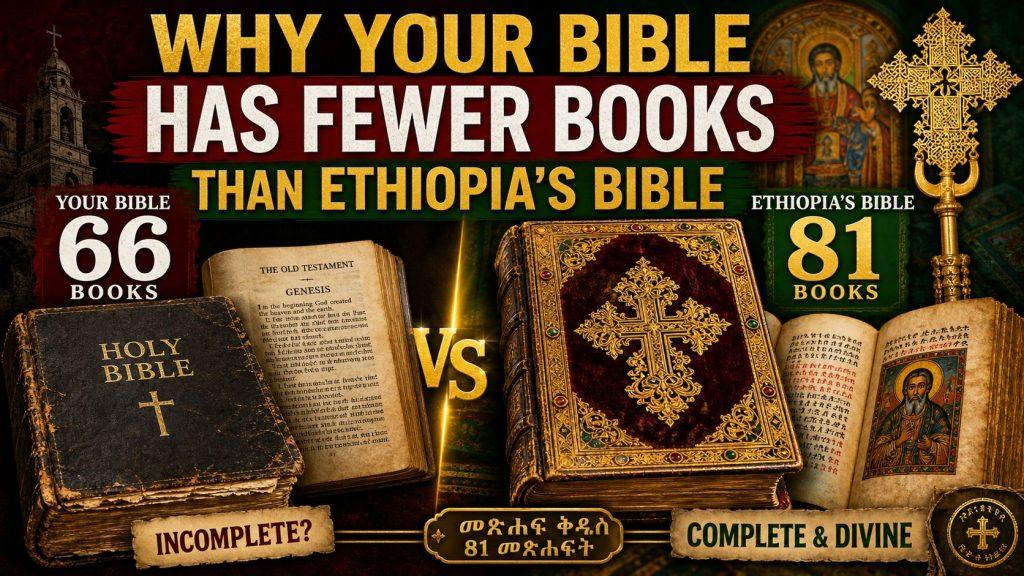
- The Ethiopian Orthodox Tewahedo canon contains eighty-one books, the Catholic canon seventy-three, and most Protestant Bibles only sixty-six, which means three Christian families are reading three different libraries.
- Catholics keep seven Old Testament books that the Reformers cut, including Tobit, Judith, Wisdom, Sirach, Baruch, and First and Second Maccabees, all of which were read as Scripture in the early Church.
- The Ethiopian canon preserves additional ancient texts such as First Enoch and Jubilees that fell out of Western use through linguistic and political accident, not through any formal Catholic rejection.
- A Catholic reading the seventy-three book Bible stands in continuity with the historic Church, but honesty requires admitting that the canon question is messier and older than most parish homilies ever explain.
Three Bibles, Three Different Tables of Contents
Walk into a Protestant bookstore, a Catholic parish, and an Ethiopian Orthodox monastery, and you will be handed three Bibles that do not match. The Protestant Bible carries sixty-six books. The Catholic Bible carries seventy-three. The Ethiopian Orthodox canon carries eighty-one, sometimes counted slightly higher depending on how certain texts are arranged. Same Christ, same Apostles, three tables of contents.
The Catholic Church teaches a fixed list of forty-six Old Testament books and twenty-seven New Testament books, received through apostolic Tradition (CCC 120). That number is not a medieval invention. Pope Damasus issued a canon list at the Council of Rome in 382, and the regional councils of Hippo in 393 and Carthage in 397 named the same books that sit in your parish lectionary today. The Reformers in the sixteenth century rejected seven of those Old Testament books and labeled them Apocrypha. Ethiopia, for its part, never reduced anything, and held onto a wider library that the Latin West eventually let slip.
This is the canon problem in plain language. Catholics did not add. Protestants subtracted. Ethiopia simply kept more.
The Seven Books the Reformers Cut
When Martin Luther translated the Bible into German in 1534, he moved seven Old Testament books into a separate appendix and labeled them as useful but not equal to Scripture. Later Protestant Bibles dropped that appendix entirely. The seven books are Tobit, Judith, Wisdom, Sirach (sometimes called Ecclesiasticus), Baruch, First Maccabees, and Second Maccabees. The book of Daniel and the book of Esther also lost sections that Catholics still read in the liturgy.
These books were not obscure. The Christians of the first four centuries quoted them, prayed them, and copied them into the great early Bibles such as Codex Vaticanus and Codex Sinaiticus. Saint Augustine defended them. Saint Athanasius used several of them. The Council of Carthage in 397, the same council that finalized the New Testament list every Protestant accepts, included these seven Old Testament books in the same breath. You cannot trust Carthage on the New Testament and reject Carthage on the Old without explaining why.
The Reformers had a real motive for the cut. Second Maccabees 12:46 explicitly endorses prayer for the dead, which contradicted the new Reformed theology. Wisdom and Sirach speak in ways that align with Catholic teaching on grace and good works. Removing the books removed the proof texts.
That is not a conspiracy theory. That is the historical record.
Why Ethiopia Has Even More
The Ethiopian Orthodox Tewahedo Church kept everything the Catholic Church kept, then added more, including First Enoch, the Book of Jubilees, and three books called First, Second, and Third Meqabyan, which are not the same as the Maccabees in your Catholic Bible. The Ethiopian New Testament also includes texts on church order such as the Didascalia and the Synodos, treating them as part of the broader scriptural witness.
First Enoch is the most striking case. The New Testament letter of Jude, in Jude 1:14-15, quotes First Enoch directly and names Enoch as the prophet speaking. Tertullian, writing in the early third century, argued the book belonged in the canon precisely because Jude treated it as prophetic. Aramaic fragments of First Enoch turned up among the Dead Sea Scrolls, confirming its currency in first-century Jewish life. Jubilees, also kept by Ethiopia, was likewise found at Qumran.
So why does the Catholic Bible not include them? The honest answer is that Saint Jerome, when producing the Latin Vulgate around 400, did not translate them, and the Latin West gradually lost them while the Ethiopian Church, working in Ge’ez from older Greek and Aramaic sources, never did. The Catholic Church has never formally condemned First Enoch or Jubilees. It simply does not receive them as Scripture in the way Ethiopia does.
What the Catholic Church Actually Teaches
A Catholic looking at the Ethiopian canon should not panic. The seventy-three book canon is binding for Catholics. The Council of Trent in 1546 settled the matter authoritatively against the Reformers, defining the books that the Church receives as inspired. The Catholic position is not that fewer books are better, nor that more books are better, but that the Holy Spirit guided the Church to recognize a specific list (CCC 120).
The Ethiopian additions are interesting, sometimes edifying, and historically significant. They are not, in Catholic teaching, divinely inspired Scripture. A Catholic can read First Enoch with profit, the way one can read Saint Augustine’s Confessions with profit, without confusing either with the Word of God. Sacred Tradition, as the Catechism explains, is what allows the Church to draw that line at all (CCC 81). Without an authoritative Church, the canon question has no answer, only opinion.
This is the part Protestants struggle with the most. Sola scriptura cannot tell you what scriptura is. Only the Church can.
The Uncomfortable Truth Most Catholics Never Hear
Most Catholics in the pew have never opened Tobit, Judith, or Sirach. They have heard about Maccabees once a year, around the feast of the Holy Innocents or the readings near All Souls. The seven books that distinguish a Catholic Bible from a Protestant one might as well not be there for many practicing Catholics.
That is a quiet scandal. The Reformers cut these books because they mattered, because they shaped doctrine. If they matter that much, a Catholic ought to read them. Sirach offers some of the deepest practical wisdom in all of Scripture. Tobit is a tender story of marriage, prayer, and the angel Raphael. Wisdom 3 is read at nearly every Catholic funeral and consoles like nothing else in the Old Testament. Second Maccabees gives the world the first clear scriptural witness to prayer for the dead, in 2 Maccabees 12:46.
If your Bible has these books, read them. They are not filler.
So, Where Does That Leave You?
The canon question forces a decision most Christians never realize they have made. If you carry a sixty-six book Bible, you are trusting a sixteenth-century editorial choice to override fifteen centuries of Christian practice. If you carry a seventy-three book Catholic Bible, you are receiving the canon as the early councils handed it on, which is the historically defensible position and the one the Catholic Church teaches as binding. If you find yourself drawn to the Ethiopian canon, you are looking at an even older preservation pattern, though one the Catholic Church does not recognize as inspired in full.
A Catholic does not need to envy the Ethiopian Bible to take the canon question seriously. What a Catholic does need to do is actually read the seven books the Reformers cut. They are in your Bible for a reason. They were defended at Carthage, preserved at Trent, and reaffirmed in the Catechism. Treating them as second-class is exactly the Protestant instinct the Church rejected. Open Tobit tonight. The case for the Catholic canon is not finally settled by argument. It is settled by reading what God preserved.
This Article Was Made Possible By Supporters Like You
Catholic Share survives on reader generosity, not corporate sponsors. If this article deepened your faith or helped you share it with someone, consider joining our Patreon. For as little as $5 per month, you sustain this ministry, and we pray for every patron by name. You can also support us with a one time gift via PayPal at catholicshare@outlook.com.