
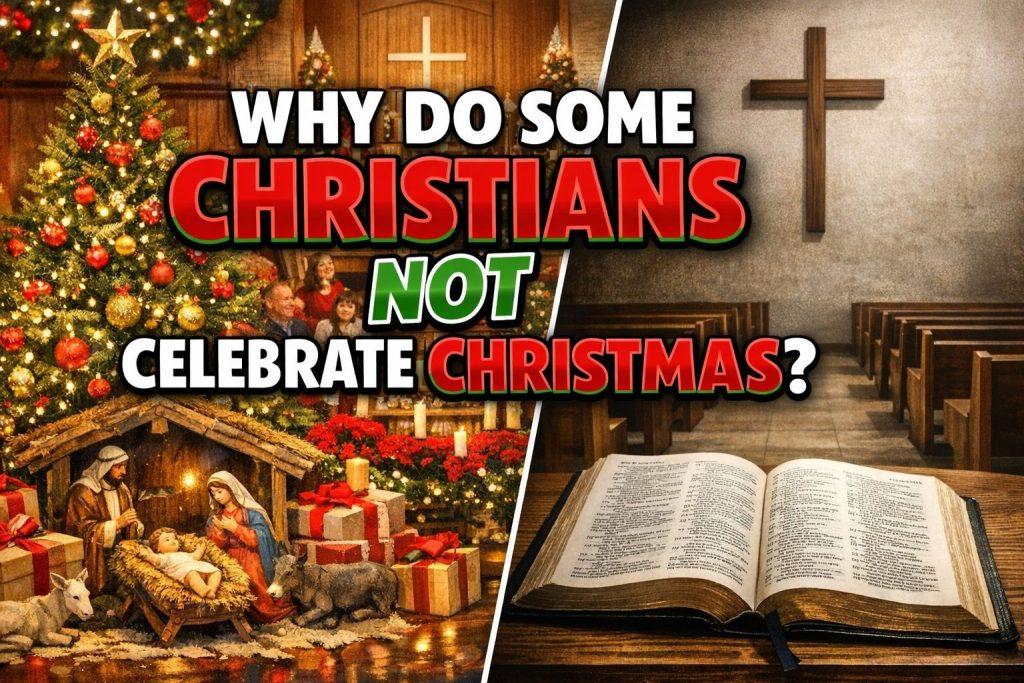
Brief Overview
- Some Christian communities believe Christmas lacks explicit biblical command and view the holiday as a human tradition rather than a divinely mandated observance.
- Reformation-era Protestant churches questioned Christmas practices and some rejected the holiday as incompatible with their understanding of Scripture alone.
- Concerns about pagan origins and cultural syncretism lead certain Christians to worry that Christmas celebrations compromise spiritual purity by mixing worldly customs with faith.
- The commercialization and consumerism surrounding modern Christmas disturbs many believers across different traditions who see it as spiritually corrupting.
- Eastern Orthodox churches, Seventh-day Adventists, Jehovah’s Witnesses, and other traditions maintain theological or practical reasons for avoiding or limiting Christmas observance.
- Catholics celebrate Christmas confidently based on Church authority and tradition while respecting that other sincere Christians have reached different conclusions about this holiday.
Why Different Christian Traditions Approach Christmas Differently
Christians throughout history have held differing perspectives on how to mark the birth of Christ. The diversity of thought on this question stems from different interpretations of Scripture, varying theological traditions, and distinct cultural histories. Some Christian communities developed their faith practices in isolation from Western Christian traditions, leading them to adopt different calendars and celebration practices. Others emerged from reform movements that deliberately rejected practices they viewed as unbiblical or corrupted by worldly influences. The question of whether to celebrate Christmas involves deeper considerations about authority, Scripture, and the purpose of Christian worship. Many Christian leaders have grappled with this issue for centuries, seeking to honor Christ while remaining faithful to their understanding of biblical principles. Geographic location and historical circumstances also shaped which denominations chose to embrace or reject Christmas. Understanding these various approaches requires looking at theological reasoning, historical context, and practical concerns that motivated different communities. Catholics benefit from knowing that their celebration of Christmas represents one valid approach among several sincere Christian perspectives. This knowledge fosters respect and understanding across denominational lines within the broader Christian family.
Biblical Foundations and Scriptural Interpretation
The Bible does not explicitly command Christians to celebrate Christmas or designate December twenty-fifth as a special observance day. Scripture records the birth narratives in the gospels but provides no instructions about establishing an annual commemoration or celebration. Those who question Christmas observance often point to this absence of biblical mandate as a significant reason for their position. The Gospels of Matthew and Luke present accounts of Jesus’ birth, yet they do not suggest that believers should mark this event yearly. This scriptural silence leads some Christian communities to conclude that Christmas falls outside the scope of biblically mandated observances. The early church did not celebrate Christmas in the way that modern Christians do, as historical records show limited attention to this practice in the first centuries. Some denominations argue that if an observance matters spiritually, Scripture would explicitly instruct followers to practice it. Others counter that Scripture does not forbid celebration and that Christians possess the freedom to commemorate significant events. The question of biblical basis remains important to many Protestant communities who prioritize direct scriptural authority. Catholics understand that the Church’s tradition and teaching authority provide additional guidance beyond Scripture alone, which explains part of the denominational divide on this question.
Reformation-Era Theological Concerns
Sixteenth-century Protestant reformers reassessed many Christian practices, including holiday observances, through the lens of biblical scrutiny. Some reformers believed that Christmas had become corrupted through centuries of cultural accretion and needed elimination or radical simplification. They worried that celebrating Christmas diverted attention from Scripture and led believers toward superstitious or worldly practices. The question of church authority versus Scripture became central to Reformation debates about which holidays to observe. Some early Protestant communities in certain regions abandoned Christmas celebrations entirely, viewing them as remnants of Catholicism they sought to reject. These reformers emphasized worshipping God throughout the year rather than concentrating spiritual focus on particular holidays. Their concerns about idolatry and spiritual misdirection influenced later Christian communities that continue to avoid Christmas celebrations today. The Puritan movement in England and America represented perhaps the most well-known rejection of Christmas during the Reformation period. These historical movements created lasting traditions in certain Protestant denominations that persist into the present day. Understanding this Reformation context helps explain why some Christian communities maintain skepticism about Christmas observance even in modern times.
Concerns About Pagan Origins and Cultural Syncretism
Some Christian communities worry that December twenty-fifth carries associations with pagan winter festivals, particularly Saturnalia or the celebration of Sol Invictus. Scholars debate the extent to which early Christians deliberately chose December twenty-fifth to coincide with existing pagan festivals. Those concerned about syncretism argue that adopting pagan celebration dates represents a compromise with worldly culture that compromises spiritual purity. They point to historical evidence that various pagan cultures celebrated significant events around the winter solstice. The concern about cultural mixing leads some Christians to reject any celebration that might inadvertently honor pre-Christian traditions. Others argue that Christians appropriated cultural moments and sanctified them through Christian meaning, which represents a valid and positive practice. The historical development of Christmas as we know it involved contributions from many different cultural contexts over centuries. Celtic, Germanic, and Roman traditions all influenced the customs and practices that surround Christmas today. This complex history creates legitimate reasons for some believers to question whether Christmas fully aligns with their understanding of spiritual integrity. Catholics understand that the Church evaluated these concerns centuries ago and determined that Christmas observance represents a valid expression of faith.
Modern Evangelical and Fundamentalist Perspectives
Many evangelical and fundamentalist churches actively celebrate Christmas while others maintain reservations or avoid observance entirely. Those with reservations often emphasize that biblical Christianity should focus on Christ’s atoning work on the cross rather than his birth. They argue that dedicating special attention to Christmas diverts spiritual energy from the gospel’s central message about redemption through Christ’s sacrifice. Some communities practice a form of deliberate indifference toward Christmas, neither celebrating nor condemning the holiday but treating it as culturally optional. Others adopt the perspective that while Christmas itself may be acceptable, most modern Christmas traditions have become hopelessly entangled with commercialism and consumerism. These evangelical communities working to reform Christmas practices often encourage believers to minimize gift-giving and emphasize spiritual reflection instead. The growth of “alternative Christmas” movements reflects an attempt to participate in seasonal observance while rejecting commercialization. Many evangelical families now emphasize services, charitable giving, and spiritual education rather than traditional festive activities. Some fundamentalist groups teach that celebrating Christmas constitutes a form of worldliness that contradicts biblical teaching about separation from worldly values. Understanding these perspectives helps Catholics recognize the genuine theological reasoning behind different Christian approaches to this holiday.
Eastern Orthodox and Early Christian Calendar Considerations
The Eastern Orthodox Church observes Christmas on January seventh according to the Julian calendar rather than December twenty-fifth. This difference in calendar systems explains much of the apparent variation in Christmas observance among ancient Christian traditions. The Orthodox Church maintains this practice as part of its historical continuity and connection to early Christian traditions. Some Orthodox communities view the December celebration as a Western adaptation that diverged from original Christian practice. The question of which date is correct involves complex questions about calendar reform and preservation of historical practice. Eastern Orthodox believers celebrate Christmas with deep reverence and theological significance, so their different date reflects calendar systems rather than resistance to the holiday itself. Various other ancient Christian traditions also developed distinctive approaches to marking the incarnation based on their own historical circumstances. Some Coptic and Armenian churches similarly observe Christmas on different dates that reflect their particular calendar traditions. These variations among ancient Christian communities demonstrate that different observance practices can coexist within genuine Christian faith. Catholics recognize that the Orthodox Church represents a legitimate and ancient expression of Christianity with valid theological traditions different from Roman Catholicism.
Seventh-day Adventist Teachings on Religious Holidays
Seventh-day Adventists approach Christmas and other religious holidays from a distinctive theological perspective grounded in their understanding of biblical law. They believe that Christians should observe the Ten Commandments and other Old Testament laws, which creates a different framework for evaluating religious practices. Adventists emphasize Sabbath observance and reject what they view as human traditions that God did not explicitly establish. Their theology teaches that religious practices should have clear biblical foundation rather than relying on church tradition or cultural convention. Some Adventist communities view Christmas as a tradition established by human authority rather than divine command, making it problematic from their perspective. They point to biblical passages warning against following human traditions that contradict God’s Word as justification for avoiding Christmas. Adventist theology maintains that celebrating based on biblical mandate proves more spiritually valid than celebrating based on cultural practice. These sincere believers demonstrate genuine faith and theological reasoning even as they reach different conclusions than Catholics do about Christmas observance. The Adventist perspective represents one coherent theological approach among several valid Christian interpretations. Catholics appreciate the Adventist commitment to biblical authority while recognizing that our tradition and teaching authority provide additional legitimate sources for guidance.
Jehovah’s Witnesses and Exclusive Community Perspectives
Jehovah’s Witnesses represent another Christian tradition that explicitly rejects Christmas observance as part of their broader theology and community identity. They teach that celebrating Christmas violates biblical principles against adopting pagan customs and worldly practices. Their theology emphasizes maintaining separation from secular culture and conforming fully to biblical standards as they understand them. Witnesses view the consumerism and commercialization of modern Christmas as evidence that the holiday represents worldly worldliness incompatible with Christian devotion. They believe that Christmas’s supposed pagan origins make it spiritually problematic regardless of how Christian believers attempt to reframe the celebration. The Witness community maintains strict discipline regarding holiday observance, treating avoidance of Christmas as an essential expression of faith commitment. Members who violate this teaching may face serious consequences, including disfellowshipping from the community. This demonstrates how strongly some Christian communities embed their Christmas stance into their broader theological and social framework. The Witness approach reflects their conviction that true Christianity requires deliberate separation from mainstream culture in specific ways. While Catholics disagree with this conclusion, we can recognize the internal consistency of their theological reasoning on this matter.
Protestant Fundamentalist Separatism and Cultural Purity
Some fundamentalist Protestant communities maintain that avoiding Christmas represents an important aspect of maintaining separation from worldly values and secular culture. They emphasize biblical passages that warn against worldliness and seek to interpret this teaching in strict and literal ways. These communities often extend their concerns about Christmas to other holidays and cultural practices that they view as spiritually compromising. Their theology teaches that Christians must remain distinct from the broader culture in visible and measurable ways. Christmas observance becomes one specific marker of whether believers have truly committed to spiritual separation and obedience. These fundamentalist communities often maintain the position that celebrating Christmas represents a moral compromise with secular materialism. They worry that participation in Christmas traditions incrementally erodes believers’ spiritual vigilance and commitment to biblical values. This concern about cultural compromise reflects a genuine theological conviction rather than simple legalism or judgmental attitudes. Many believers who hold these views do so out of sincere devotion to what they understand as biblical standards. Catholics can respect this commitment to spiritual integrity even while maintaining our own different understanding of how Christmas observance relates to faith.
Historical Context of Christmas Development in the Church
The Christian Church did not immediately or universally adopt Christmas as a major observance in its earliest centuries. Historical evidence shows that the first Christians focused primarily on celebrating Easter and the resurrection of Christ as the central Christian mystery. The development of Christmas as a formal church celebration occurred gradually over several centuries as the Church established doctrine and practice. Different regions of the Christian world adopted Christmas observance at different times, reflecting the decentralized nature of early Christianity. By the medieval period, Christmas had become firmly established in Western Christian practice as a major liturgical feast. The Eastern Orthodox Church maintained its own tradition and did not align with the Western December twenty-fifth date despite centuries of opportunity to do so. This historical development shows that Christmas observance represents a genuine development of the Church’s tradition rather than a biblical mandate. The theological legitimacy of this development rests on the Church’s authority to establish practices that express and protect the faith, even when Scripture does not explicitly require them. Understanding this historical context helps Catholics explain why we celebrate Christmas while respecting other traditions that reached different conclusions. The Church’s discernment process over many centuries provides a solid foundation for Christmas observance in Catholic practice.
The Role of Church Tradition and Magisterial Authority
The Catholic Church emphasizes that Scripture and Sacred Tradition together constitute the deposit of faith handed on by the apostles and their successors. This theological principle means that the Church possesses authority to establish practices not explicitly commanded in Scripture when they serve to express and preserve Christian faith. The Church’s teaching authority, or Magisterium, discerned that celebrating Christmas serves an important spiritual purpose in helping believers commemorate and honor the incarnation of Christ. This discernment process involved centuries of theological reflection and pastoral experience across the broader Christian community. Some Christian traditions reject this understanding of Church authority, viewing Scripture alone as the reliable source for Christian practice. Catholics understand that the Church’s teaching role includes the responsibility to guide believers in developing practices that support their faith journey. Christmas observance represents one area where the Church exercised this authority to establish a meaningful celebration that deepens Christian spirituality. The Catechism of the Catholic Church affirms the importance of liturgical celebration and the role of the Church in establishing appropriate observances, though it does not extensively discuss Christmas specifically. This theological framework explains why Catholics celebrate Christmas confidently while respecting other Christians’ different theological starting points. The Church continues to guide believers in celebrating Christmas in ways that prioritize Christ’s incarnation over commercial excess and spiritual distraction.
Christmas, Commercialism, and Spiritual Concerns Across Denominational Lines
Many Christians across various traditions share concerns about how modern secular culture has commercialized Christmas and separated it from its spiritual meaning. Evangelical, fundamentalist, and Catholic communities alike grapple with the challenge of celebrating meaningfully while resisting consumer culture pressures. Some Christian groups respond by advocating for reformed Christmas practices that minimize gift-giving and emphasize service, charity, and spiritual reflection. Others take the more extreme position that the holiday has become so corrupted by commercialism that avoiding it altogether represents the spiritually superior choice. This shared concern demonstrates that even Christians who differ on Christmas observance often agree on the dangers of allowing commercial interests to dominate religious celebration. The modern Christmas season presents a significant spiritual challenge for believers seeking to maintain focus on Christ while navigating powerful cultural forces. Some Christian leaders teach that believers should participate in Christmas in selective ways that avoid the most egregious commercial aspects. Others reason that if Christmas has become fundamentally corrupted, the most honest response involves not participating at all. The Church encourages Catholics to celebrate Christmas in ways that keep Christ central and resist consumer culture temptations. This guidance acknowledges legitimate concerns about commercialism while affirming that Christmas observance itself remains spiritually valuable when properly focused.
Beliefs About When Christ Was Actually Born
Historical scholars and theologians have long debated what time of year Jesus was actually born, noting that December twenty-five does not represent a historically certain date. Some scholars suggest that spring or autumn may be more historically probable based on scriptural evidence about shepherds in the fields. The uncertainty about the actual date of Jesus’ birth leads some Christians to question whether celebrating on an arbitrary date serves any meaningful spiritual purpose. Others reason that since the exact date remains unknown and unknowable, Christians may establish a celebration date based on pastoral and theological considerations rather than historical accuracy. The Church teaches that the theological significance of incarnation transcends the specific calendar date chosen for commemoration. Some Christian communities emphasize this uncertainty as a reason to avoid establishing special observances around a date that lacks historical foundation. The medieval Church simply adopted December twenty-five as a practical decision to give the incarnation an assigned place in the liturgical calendar. This pragmatic historical decision has roots in complex considerations involving calendar reform, cultural practice, and spiritual pedagogy. Understanding this historical uncertainty helps explain why some sincere believers question the propriety of treating December twenty-fifth as especially significant. Catholics recognize that the date’s uncertainty does not undermine the legitimacy of Christmas observance, which focuses on theological meaning rather than historical precision.
The Incarnation as Central to Christian Faith
All authentic Christian traditions affirm the incarnation of Christ as absolutely central to Christian belief and salvation history. Different Christian groups may disagree about whether celebrating this mystery requires a designated annual observance. Catholics affirm that commemorating the incarnation through Christmas serves important theological and spiritual purposes in Christian life. The incarnation represents God becoming human, entering into creation, and making redemption possible through Christ’s life, death, and resurrection. This mystery deserves reverence, meditation, and celebration within Christian worship and spiritual practice. Those who avoid Christmas observance often maintain sincere faith in the incarnation while questioning whether annual celebration proves necessary or appropriate. They may prefer to contemplate this mystery throughout the year rather than concentrating it into a single holiday observance. Some Christians believe that emphasizing Christ’s death and resurrection on Easter represents a more biblically appropriate focus than emphasizing his birth. The debate about Christmas ultimately reflects different judgments about which practices best serve Christian spiritual development. Both celebrating Christmas and thoughtfully declining to do so can emerge from genuine commitment to honoring Christ and expressing Christian faith. Catholics celebrate Christmas confident that this observance represents a valid and meaningful way to commemorate the incarnation while respecting other traditions’ different approaches.
The Development of Christmas Customs and Their Spiritual Significance
Over centuries, Catholic and other Christian traditions developed distinctive customs and practices that accompany Christmas observance. Many modern Christmas traditions including decorated trees, nativity scenes, gift-giving, and festive meals developed gradually and emerged from various cultural sources. These practices acquired spiritual meanings within Christian contexts even though their historical origins involved secular or pagan cultural elements. Catholics and other Christians often see these customs as vehicles for expressing religious devotion and teaching Christian truths to children and new believers. The transformation of cultural practices into Christian practices represents a long historical pattern in how Christianity has engaged with diverse cultures. Some Christians view this process as inappropriate syncretism that compromises spiritual purity by mixing worldly customs with religious observance. Others understand it as legitimate inculturation where the Church sanctifies cultural practices by integrating them into Christian worship and spirituality. The development of Christmas customs demonstrates how traditions grow organically within faith communities over centuries. Each generation inherits practices from previous generations while adapting them to contemporary circumstances and spiritual needs. Understanding this developmental process helps Catholics appreciate the richness of Christmas traditions while recognizing why other communities question their appropriateness.
Respecting Differences While Maintaining Catholic Practice
Catholics maintain deep respect for Christians of other traditions while confidently celebrating Christmas as an important expression of Catholic faith. The Church recognizes that sincere believers across many denominations hold genuine theological convictions about how best to honor Christ. Respectful dialogue with other Christians requires understanding their reasoning without necessarily agreeing with their conclusions. Catholics can acknowledge the serious theological concerns about commercialism, biblical authority, and cultural purity that motivate some Christians to avoid Christmas. At the same time, we affirm that the Church’s teaching supports Christmas observance as spiritually valuable and theologically grounded. The Church’s confidence in Christmas does not depend on viewing all other Christian approaches as invalid or inferior. Rather, Catholics understand that our celebration represents one coherent theological position while respecting that others have reached different conclusions. Pastoral sensitivity suggests that Catholics should support fellow believers in honoring Christ according to their own conscience and tradition. We can participate in interfaith discussions about Christmas’s spiritual meaning while remaining clear about our own Catholic perspective. Building bridges with other Christian communities involves both understanding their positions and being honest about our own beliefs.
The Mass of Christmas and Its Theological Meaning
The Catholic Church emphasizes that Christmas Mass represents the center of Christmas observance rather than secular festivities or commercial activities. The liturgical celebration brings the Church together to commemorate and participate in the mystery of the incarnation through prayer and sacrament. Multiple Masses on Christmas Morning, Day, and Evening allow Catholics multiple opportunities to attend and participate in this central celebration. The Catechism teaches about the importance of liturgical participation in expressing faith and encountering Christ sacramentally. The Christmas liturgy includes readings from Scripture that place the incarnation within the broader context of salvation history and God’s plan. Through the Mass, Catholics unite themselves with Christ’s incarnation and affirm their commitment to following him throughout the year. The Mass provides a sacred context for celebrating Christmas that keeps attention focused on Christ rather than allowing secular concerns to dominate. This liturgical celebration represents what is most important about Christmas from a Catholic theological perspective. Other Christmas activities and traditions gain spiritual meaning when they flow from and point back to the central mystery celebrated in the Mass. Catholics demonstrate their true priorities by placing the Mass at the center of their Christmas celebration.
Pastoral Guidance for Catholics Celebrating Christmas Faithfully
The Church provides guidance to help Catholics celebrate Christmas in ways that honor Christ and resist cultural pressures toward excess and materialism. Families might establish Christmas practices that emphasize prayer, charitable giving, and service to others alongside any gift-giving or festive meals. Parents can teach children about the Christmas season’s spiritual significance through nativity scenes, Advent reflections, and careful discussion of Christmas’s theological meaning. Catholics benefit from setting intentional limits on commercial consumption while maintaining joyful celebration and family connection. The season provides opportunities to practice Christian virtues including generosity, simplicity, gratitude, and fraternal charity. Parishes support families in celebrating faithfully by offering special liturgies, prayer services, and educational programs throughout the Advent and Christmas seasons. Individuals might choose to give gifts of service or charitable donations as ways of celebrating that express Christ’s values. The Church encourages Catholics to maintain perspective about Christmas’s spiritual purpose even while participating in cultural celebrations and family traditions. This balanced approach honors both the mystery we commemorate and the legitimate human desires for festive celebration and family connection. Catholic families demonstrate their faith most authentically when their Christmas observance reflects their commitment to Christ and Christian values.
Disclaimer: This article presents Catholic teaching for educational purposes. For official Church teaching, consult the Catechism and magisterial documents. For personal spiritual guidance, consult your parish priest or spiritual director. Questions? Contact editor@catholicshare.com
Sign up for our Exclusive Newsletter
- 📌 Add CatholicShare as a Preferred Source on Google
- 🎁 Join us on Patreon for Premium Content
- 🎧 Check Out These Catholic Audiobooks
- 📿 Get Your FREE Rosary Book
- 📱 Follow Us on Flipboard
-

Recommended Catholic Books
Discover hidden wisdom in Catholic books — invaluable guides enriching faith and satisfying curiosity. #CommissionsEarned
- The Early Church Was the Catholic Church
- The Case for Catholicism - Answers to Classic and Contemporary Protestant Objections
- Meeting the Protestant Challenge: How to Answer 50 Biblical Objections to Catholic Beliefs
As an Amazon Associate, I earn from qualifying purchases. Thank you for your support.