
Brief Overview
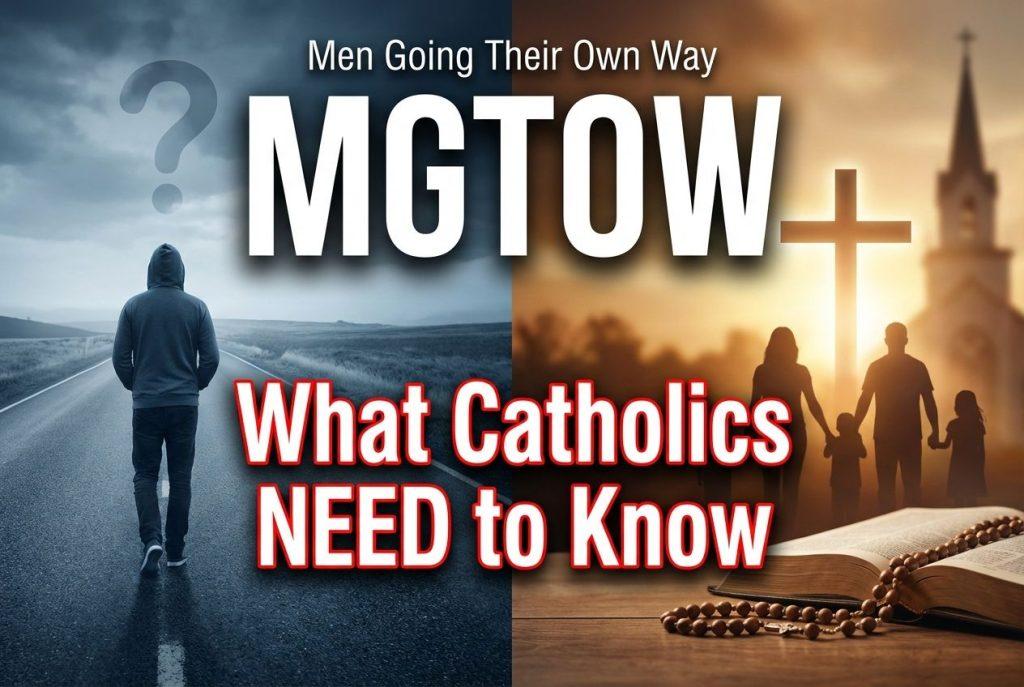
- Men Going Their Own Way is an online movement where men choose to avoid romantic and marriage relationships with women because they view modern society and legal systems as unfair to men.
- The Catholic Church teaches that marriage and family life represent a fundamental vocation that reflects God’s plan for human flourishing and the complementary nature of men and women.
- MGTOW ideology conflicts with Catholic teaching because it rejects the goodness of marriage, promotes separation between the sexes, and denies the complementarity that exists between men and women as created by God.
- Catholics are called to respect the dignity of all persons, including women, and to recognize that both men and women bear the image of God equally.
- While acknowledging real difficulties that men may face, the Church offers a different path forward through virtue, authentic masculinity modeled on Christ, and properly ordered relationships.
- The Catholic understanding of celibacy differs fundamentally from MGTOW withdrawal because consecrated celibacy is a positive choice made for the Kingdom of God rather than a rejection of women or marriage itself.
Understanding the MGTOW Movement
Men Going Their Own Way represents a contemporary social movement that has gained visibility primarily through online communities and forums. The movement consists of men who have decided to limit or eliminate their involvement with women in romantic, marital, or sometimes even professional contexts. These men often describe themselves as having been awakened to what they perceive as systemic injustices against men in modern Western societies. The movement emerged from broader online discussions about men’s issues, relationship dynamics, and perceived disadvantages that men face in contemporary culture. MGTOW adherents typically cite concerns about divorce laws, child custody arrangements, false accusations, and what they view as bias in family courts. Many participants in this movement express a sense that traditional masculinity has been attacked or devalued in modern society. The movement operates on multiple levels, with some participants simply choosing to avoid marriage while others advocate for more complete separation from women in all aspects of life. These men often share their experiences and perspectives through websites, social media platforms, and video content that reaches a global audience. The movement has no formal leadership structure, organizational hierarchy, or membership requirements.
The core principles of MGTOW center on male autonomy and self-preservation. Participants typically argue that modern marriage presents unacceptable risks for men, particularly in terms of financial obligations and legal liabilities. They point to statistics about divorce rates, alimony payments, and custody arrangements as evidence supporting their position. Many MGTOW advocates express the belief that contemporary feminism has created an environment hostile to male interests and wellbeing. The movement encourages men to focus on their own goals, careers, hobbies, and personal development rather than pursuing romantic relationships. Some adherents describe different levels of MGTOW commitment, ranging from those who simply avoid marriage while still dating, to those who refuse all romantic involvement with women, to those who minimize contact with women in all contexts. The rhetoric within these communities often reflects deep frustration, anger, and distrust toward women collectively. Members frequently share stories of failed relationships, difficult divorces, or other negative experiences with women as cautionary tales. The movement positions itself as offering men freedom from what it portrays as societal expectations and obligations that serve female interests at male expense. This worldview shapes how participants interpret current events, social trends, and interpersonal dynamics.
The cultural context surrounding MGTOW includes broader discussions about gender relations, social change, and traditional values. The movement emerged during a period of significant shifts in gender roles, family structures, and social expectations. Economic pressures, including stagnant wages and increasing costs of living, have created genuine challenges for young people forming families. Changes in divorce law, including no-fault divorce provisions, have altered the legal landscape of marriage. The rise of social media has created new platforms for discussing relationship issues and sharing grievances. Some young men report feeling that their contributions and perspectives are undervalued in educational settings and workplace environments. Mental health challenges, including depression and anxiety, affect many young men who struggle to find meaningful connection and purpose. The movement taps into real feelings of alienation, frustration, and confusion that some men experience. However, the response that MGTOW promotes involves withdrawal and separation rather than working toward understanding, healing, or positive solutions. The movement often frames gender relations in adversarial terms, viewing men and women as opposing groups rather than as complementary parts of a shared humanity. This framing prevents constructive engagement with the genuine issues that both men and women face in contemporary society.
Catholic Teaching on Human Dignity and Complementarity
The Catholic understanding of the human person begins with the truth that every human being possesses inherent dignity because each person is created in the image and likeness of God. This foundational principle appears in the opening chapters of Genesis, where Scripture records that God created humanity as male and female. The Church teaches that this creation as male and female is not incidental but reflects something essential about human nature and God’s plan. Men and women share equally in human dignity because both fully bear the divine image. Neither sex is superior to the other in terms of fundamental worth or value before God. The Church has consistently affirmed this equality while also recognizing that men and women differ in significant ways that are complementary rather than hierarchical. This complementarity means that men and women are made for each other, designed to work together in ways that reflect different aspects of God’s nature. The differences between the sexes extend beyond mere biological function to include psychological, emotional, and spiritual dimensions. Pope John Paul II developed this theology extensively in his writings, particularly in his apostolic letter on the dignity and vocation of women. The Church rejects both the idea that gender differences are purely social constructs and the notion that one sex is inherently superior to the other. Catholic teaching holds that recognizing difference does not require establishing inequality.
The complementarity between men and women finds its fullest expression in marriage and family life. God established marriage from the beginning as a covenant between one man and one woman, ordered toward mutual love and the procreation of children. The marital union reflects the communion of persons that exists within the Trinity itself. Through marriage, spouses give themselves completely to each other in a permanent and exclusive bond. This self-gift mirrors Christ’s love for the Church, which is total, faithful, fruitful, and free. The Catholic vision of marriage presents it not as a contract that serves individual interests but as a sacrament that sanctifies the couple and builds up the Church. Marriage calls spouses to grow in holiness through their life together, supporting each other in faith and virtue. The sexual difference between man and woman makes possible the procreative dimension of marriage, which cooperates with God’s creative power in bringing new life into being. Children represent the supreme gift of marriage and require the complementary contributions of both mother and father for healthy development. The family founded on marriage constitutes the basic cell of society and the domestic church where faith is first taught and lived. Catholic teaching thus presents marriage and family life as essential to both personal fulfillment and social flourishing. The Church recognizes marriage as a vocation, a calling from God to a particular way of life that serves his purposes in the world.
The Catechism of the Catholic Church articulates these truths with clarity and precision. It teaches that God created man and woman together, neither being complete without the other in the order of creation intended by God. Physical, moral, and spiritual differences and complementarity are oriented toward the goods of marriage and family life (CCC 2333). The harmony between the couple and within society depends partly on how complementarity, mutual needs, and support between the sexes are lived out. The Church understands sexuality as part of the person, not merely a biological function separate from one’s identity. Human sexuality achieves its truly personal and human meaning when integrated into the relationship of one person to another in the complete and lifelong mutual gift that constitutes marriage. The virtue of chastity directs sexual powers toward their proper end, maintaining the integrity of the person. All baptized persons are called to live chastity according to their state in life, whether as married persons, consecrated religious, or single people living in the world (CCC 2348-2349). This teaching situates human sexuality within a broader framework of meaning that connects bodily existence to spiritual reality. The Church rejects approaches that reduce sex to mere pleasure or view the body as an instrument separate from the person. Catholic teaching affirms the goodness of the body, of sexuality, and of the differences between men and women as part of God’s good creation.
The Conflict Between MGTOW and Catholic Teaching
The MGTOW movement stands in fundamental opposition to Catholic teaching about the dignity of women and the complementary relationship between the sexes. While some men involved in MGTOW may have experienced real hurts or injustices, the response promoted by the movement directly contradicts the Catholic understanding of how men should relate to women. The movement often portrays women collectively as dangers to be avoided, manipulators who use men for their own benefit, or fundamentally different beings who cannot be trusted. This characterization violates the Catholic principle that every person possesses inherent dignity that must be respected. Women, like men, are created in God’s image and deserve to be treated with honor and charity. The tendency within MGTOW communities to speak of women in derogatory or dismissive terms fails to recognize their full humanity. The movement’s emphasis on self-protection and avoidance contradicts the Christian call to self-gift and service. Catholics are called to love their neighbor, which includes members of the opposite sex, with a pure love that seeks their good. The adversarial framing that positions men and women as opposing groups rather than as complementary partners denies the fundamental unity of the human family. When MGTOW adherents withdraw from relationships with women out of fear or contempt, they reject the possibility of authentic friendship and mutual enrichment between the sexes.
The MGTOW rejection of marriage conflicts directly with Catholic teaching about the sacramental nature and goodness of matrimony. The Church presents marriage not as a burden or trap but as a path to holiness and human fulfillment. While the Church recognizes that not everyone is called to marriage, the wholesale rejection of marriage as an option represents a refusal of one of the fundamental vocations that God offers to humanity. Marriage serves essential purposes in God’s plan, including the mutual sanctification of spouses and the procreation and education of children. When the MGTOW movement portrays marriage as inevitably harmful to men, it denies the possibility that marriage can be a source of grace, growth, and happiness. The movement’s focus on legal and financial risks, while addressing real concerns, reduces marriage to a contractual arrangement rather than recognizing its deeper spiritual reality. Catholic teaching acknowledges that marriage involves sacrifice and requires spouses to die to selfishness, but this dying to self leads to resurrection and new life. The cross is not absent from marriage, but neither is it absent from any authentic Christian life. The MGTOW emphasis on avoiding risk and maintaining complete autonomy contradicts the Christian understanding that true life comes through self-gift rather than self-preservation. The movement encourages men to prioritize their own comfort and security over the possibility of love, commitment, and family.
Furthermore, the MGTOW approach to dealing with contemporary challenges related to gender relations fails to offer constructive solutions. Rather than working to address legitimate concerns about legal fairness, cultural biases, or social pressures, the movement advocates withdrawal and separation. This response does nothing to improve conditions for anyone and abandons the field to those with opposing views. Catholics are called to engage with the world, to be salt and light, transforming culture through witness and action. The Church acknowledges that contemporary society faces real problems regarding the understanding of sexuality, marriage, and gender. However, the Catholic response involves proclaiming truth, defending human dignity, supporting authentic family life, and working for just laws. The MGTOW stance of disengagement abdicates responsibility for contributing to positive change. Additionally, the movement’s tendency to blame women collectively for social problems fails to recognize that both men and women are affected by flawed ideologies and social structures. The sexual revolution, contraception, divorce culture, and other developments have harmed both sexes, though in different ways. A Catholic response requires analyzing root causes, which often include rejection of natural law and divine revelation, rather than simply targeting one group. The Church offers a vision that critiques contemporary errors while affirming the goodness of God’s design for men and women.
Authentic Catholic Masculinity
The Catholic tradition offers a rich understanding of authentic masculinity that differs dramatically from both the MGTOW approach and from distorted cultural messages. Catholic masculinity finds its model in Jesus Christ, who embodies perfect manhood. Christ demonstrated strength through service, power through humility, and authority through self-sacrifice. He showed tenderness and compassion while maintaining firmness in truth. Jesus related to women with respect and dignity, treating them as persons rather than objects or threats. He defended women, taught women, included women among his followers, and appeared first to women after his resurrection. The Gospels show Christ as fully confident in his masculine identity without needing to dominate or diminish others. His masculinity expressed itself in protecting the vulnerable, speaking truth to power, forming deep friendships, and ultimately laying down his life for those he loved. Catholic men are called to imitate Christ’s example, developing the virtues that enable them to be faithful sons, brothers, husbands, and fathers. This vision of masculinity includes courage, fortitude, self-mastery, justice, and prudence. It calls men to use their strength in service of others rather than for domination. Catholic masculinity involves taking responsibility, making commitments, and following through on obligations even when difficult.
The saints provide additional models of authentic Catholic manhood. Saint Joseph, the foster father of Jesus, exemplified quiet strength, faithful service, and loving care for his family. He protected Mary and the infant Jesus, provided for their needs, and taught Jesus his trade. Joseph responded to God’s call with trust and obedience, making difficult decisions for the sake of those entrusted to his care. Saint Paul, while acknowledging his struggles and weaknesses, courageously spread the Gospel across the ancient world, founding communities and encouraging believers. He showed tenderness toward his spiritual children while maintaining strong convictions. Saint Francis of Assisi renounced wealth and status to follow Christ in radical poverty, demonstrating that true masculinity does not depend on worldly power or possessions. Saint Thomas More remained faithful to his principles even unto death, showing integrity and courage in the face of persecution. Saint Maximilian Kolbe volunteered to die in place of another prisoner at Auschwitz, embodying the ultimate expression of self-gift. These men and countless others show that Catholic masculinity takes many forms but always involves virtue, service, and faithfulness to God. Their examples challenge contemporary distortions that reduce masculinity to aggression, autonomy, or sexual conquest. Catholic men can draw inspiration from these saints while recognizing that holiness looks different in different lives and circumstances.
The development of authentic masculinity requires intentional effort, spiritual discipline, and community support. Men need formation in virtue, which comes through practice and habituation over time. The sacraments provide essential grace for this growth, particularly the Eucharist and Reconciliation. Regular prayer keeps men grounded in their identity as sons of God and helps them maintain proper priorities. Study of Scripture and Church teaching provides the wisdom needed to make good decisions. Many men benefit from mentorship relationships with older men who can provide guidance and example. Participation in men’s groups within parishes offers fellowship, accountability, and mutual encouragement. Physical discipline through exercise, sports, or outdoor activities can help men develop self-mastery and channel their energy constructively. Service to others, whether through family responsibilities, parish ministries, or community work, gives men opportunities to exercise their strength for good purposes. Fatherhood, whether biological or spiritual, calls forth qualities of protection, provision, and guidance. Catholic masculinity flourishes not in isolation but in relationship, as men learn to give themselves in love rather than closing themselves off in self-protection.
Addressing Real Concerns About Contemporary Culture
The Catholic Church does not dismiss the genuine difficulties that men face in contemporary society. The changes of recent decades have created confusion about gender roles, expectations, and identity. Many boys grow up without strong father figures who can model authentic masculinity. Educational systems often fail to engage male students effectively, leading to lower academic achievement and graduation rates. The entertainment industry frequently portrays men as foolish, incompetent, or dangerous. Some workplace environments seem to favor certain communication styles or relational approaches over others. Economic pressures make it difficult for young people to achieve the financial stability traditionally associated with marriage and family formation. Changes in family law have created situations where fathers sometimes feel marginalized in their children’s lives. False accusations, while relatively rare, can destroy reputations and lives. The Church acknowledges these realities and recognizes the pain they cause. However, acknowledging problems differs from accepting the MGTOW solution. Catholics must distinguish between legitimate grievances and distorted responses. The Church calls for justice, which includes fair treatment of men in legal systems, workplaces, and society generally. Catholics should work for reforms that protect the rights of all parties in family law matters. The Church opposes false accusations and supports due process.
The sexual revolution and its aftermath have harmed both men and women, though in different ways. The separation of sex from marriage and procreation has reduced sexual intimacy to recreation or self-gratification. Contraception has altered relationship dynamics by removing the natural connection between sexual activity and potential parenthood. Widespread pornography has distorted understandings of sexuality and created unrealistic expectations. The hookup culture leaves many people feeling used and empty. Delayed marriage means that many young adults spend their most fertile years outside of stable, committed relationships. High divorce rates create insecurity and fear about the permanence of commitments. Children suffer when families break apart. These problems affect everyone, not just men. The Catholic response involves calling people back to the truth about human sexuality, the meaning of marriage, and the dignity of the person. The Church offers a vision that respects both freedom and responsibility, acknowledging human weakness while calling people to virtue. This vision requires conversion and grace but offers genuine happiness and fulfillment. Catholics must proclaim this teaching with confidence while showing compassion for those who struggle. The Church serves as a field hospital for wounded humanity, offering healing and hope rather than condemnation.
The Church also recognizes that authentic relationships between men and women require virtue on both sides. Women, like men, are called to holiness and must resist the temptations particular to their circumstances. Contemporary culture sometimes encourages women to view men with suspicion or contempt, to prioritize career over family, or to reject their feminine nature. These attitudes harm women themselves, the men in their lives, and society as a whole. The Church calls women to embrace their dignity and vocation, whether in marriage, consecrated life, or single life in the world. Women can model faith, strength, and love for their families and communities. They have essential contributions to make in every sphere of life. At the same time, the Church challenges women to avoid manipulation, to speak truthfully, to respect their bodies and those of others, and to honor the men in their lives. Catholic teaching applies equally to both sexes, calling everyone to conversion and holiness. The path forward involves men and women working together rather than against each other, recognizing their complementarity and mutual need. This requires patience, understanding, forgiveness, and grace. It means acknowledging past hurts while choosing hope rather than bitterness.
The Catholic Understanding of Celibacy and Single Life
The Catholic Church recognizes that not everyone is called to marriage, and celibacy holds an honored place in Church tradition. However, the Church’s understanding of celibacy differs fundamentally from the MGTOW approach to avoiding relationships. Consecrated celibacy represents a positive choice made for the Kingdom of God rather than a negative reaction against women or marriage. Those called to priestly or religious life embrace celibacy as a way of giving themselves completely to God and to service of his people. Their celibacy witnesses to the reality that God alone satisfies the deepest longings of the human heart. It points toward the ultimate fulfillment that awaits in heaven, where people will not marry but will live in perfect communion with God and each other. Celibate priests and religious typically live in community and maintain healthy relationships with both men and women. They do not withdraw from human contact but rather channel their capacity for love in ways that serve the whole Church. Their celibacy is fruitful in spiritual ways, bringing forth life through their ministry and witness. The Church honors this vocation as representing a higher calling, not because marriage is bad, but because consecrated celibacy signifies total dedication to divine realities.
Some laypeople may also discern a call to celibate single life, though this vocation is less common and less formally defined than marriage or consecrated life. Those living this call dedicate themselves to serving God and others while remaining single. They maintain chastity, which means integrating their sexuality according to their state in life rather than attempting to suppress or deny it. Single laypeople participate fully in the life of the Church through their work, their relationships, and their service. They often have particular flexibility to respond to needs in their families, parishes, or communities. Their single state allows them to pursue certain goals or ministries that might be difficult in marriage. However, even those called to single life are called to relationship, not to isolation. They need friends, community, and spiritual support. The Church does not envision single life as a path of complete independence or self-sufficiency. Rather, single persons contribute their unique gifts to the common good while receiving support and encouragement from the wider community. Some single people may be in a time of discernment, not yet certain about their ultimate vocation. The Church encourages patience in this process while maintaining standards of chastity and virtue.
The key distinction between Catholic celibacy and MGTOW withdrawal lies in motivation and attitude. Catholic celibacy is chosen for love of God and in order to love others more freely. It represents a yes to something greater rather than a no to marriage or women. Those living celibate vocations typically speak of their choice with joy and gratitude, even when they face challenges. They understand their calling as a gift that allows them to serve in particular ways. In contrast, MGTOW withdrawal often springs from fear, anger, or self-protection. It represents a rejection of relationship and vulnerability rather than an embrace of a higher calling. The MGTOW attitude often includes resentment toward women and marriage rather than recognition of their goodness. Those adopting the MGTOW stance typically emphasize what they are avoiding rather than what they are pursuing. Catholic celibacy maintains reverence for marriage and respect for the opposite sex; MGTOW typically diminishes both. Catholic celibacy remains open to friendship and appropriate relationship across gender lines; MGTOW often advocates minimizing such contact. The Church’s teaching on celibacy affirms the goodness of sexuality and marriage while showing that these goods can be sacrificed for the sake of the Kingdom. The MGTOW perspective tends to view sexuality with suspicion and marriage as a trap. These fundamental differences mean that calling the MGTOW approach a form of celibacy would distort the meaning of that term.
Living Catholic Truth in Contemporary Society
Catholics seeking to live faithfully in contemporary culture face real challenges but also have access to powerful resources. The Church provides clear teaching about human sexuality, marriage, and family life that offers an alternative to both the sexual revolution and the MGTOW reaction against it. Catholics can study these teachings through the Catechism, papal documents, and works of faithful theologians. Understanding Church teaching equips believers to evaluate cultural messages critically and make good decisions. Knowledge of Catholic anthropology helps men and women understand their identity, dignity, and purpose. This foundation enables Catholics to resist ideologies that distort or diminish the human person. Living according to Catholic principles requires courage because it often means going against cultural currents. Catholics may face misunderstanding, criticism, or pressure to conform to prevailing views. However, the Church has always called believers to live as signs of contradiction when necessary. Catholics throughout history have maintained their faith in hostile environments, drawing strength from the sacraments and from community. The witness of faithful Catholics can attract others who are searching for truth and meaning in their lives.
Practical living of Catholic teaching involves cultivating virtue in daily life. Men must work on the virtues particular to their vocation while also developing the fundamental moral virtues that all Christians need. This includes temperance, which moderates desires and helps men master their passions. It includes fortitude, which gives courage to do what is right despite difficulty or opposition. Justice requires giving others their due, including respect, honesty, and fairness. Prudence helps men make wise decisions about particular situations. Charity, the greatest virtue, directs all others toward their proper end in love of God and neighbor. Growth in virtue requires regular participation in the sacraments, especially the Eucharist and Confession. Prayer keeps men connected to God and helps them discern his will. Reading Scripture provides wisdom and inspiration. The liturgical life of the Church shapes Catholics according to the rhythms of grace. Participation in parish life connects individuals to the broader community and provides opportunities for service. Catholics can support each other through men’s groups, family activities, social events, and shared ministry. The Church is not merely an institution but the Body of Christ, where members care for one another.
Catholics must also engage constructively with contemporary culture rather than simply withdrawing from it. This means participating in public discourse, contributing to debates about important issues, and working for positive change. Catholics can advocate for policies that support families, protect children, promote justice, and uphold human dignity. They can create alternative cultural expressions through art, media, education, and business that reflect Catholic values. The Church needs talented people working in every field and profession who bring faith to their work. Catholics should form friendships with people of good will, including those who do not share their faith, finding common ground while maintaining their principles. Respectful dialogue can help others understand Catholic positions and may even lead to conversion. Catholics should also examine their own failures honestly, recognizing when they have not lived up to their ideals or when their actions have hurt others. Authentic witness requires integrity and humility. The goal is not to appear superior but to serve as instruments of God’s love in the world. This requires ongoing conversion, as Catholics continually turn away from sin and toward holiness. The Christian life is a journey, not a destination reached in this world.
Building Healthy Relationships Between Men and Women
The Catholic vision for relationships between men and women emphasizes mutual respect, authentic friendship, and recognition of complementarity. Men and women can and should form genuine friendships that enrich both parties. These friendships differ from romantic relationships but share elements of mutual regard, shared interests, and reciprocal support. Healthy friendships between the sexes require clear boundaries and chaste behavior. Both parties must respect the dignity and vocation of the other. Married persons must ensure that cross-sex friendships do not threaten the primacy of the marriage relationship. Single persons must guard against leading others into temptation or compromising their own virtue. Within these boundaries, friendships between men and women can provide valuable perspectives, challenge assumptions, and demonstrate the possibility of relating to the opposite sex in ways that are neither romantic nor adversarial. Such friendships in parishes, workplaces, and communities show that men and women can work together productively. They provide a witness against both the sexualization of all male-female interaction and the MGTOW view that such interaction should be avoided. Catholics can model a better way forward.
Dating and courtship provide specific contexts where men and women relate with the possibility of marriage in view. Catholic dating should differ from secular hookup culture by maintaining chastity, treating the other person with respect, and keeping marriage as the ultimate horizon. Young people need guidance about how to date in ways that honor both parties and prepare for possible marriage. This includes practical matters like where to go, what activities to do, how to maintain appropriate physical boundaries, and how to communicate honestly. It also includes deeper questions about compatibility, shared values, and readiness for marriage. The dating period allows couples to know each other in various contexts and to observe how the other person handles challenges, relates to family, practices faith, and lives out values. Courtship is not merely about feelings but about discerning whether this person could be a suitable spouse with whom one could build a life. Parents and other mentors can provide valuable input, though the couple themselves must make the ultimate decision. Prayer is essential in discerning a vocation to marriage with a particular person. Couples should ask God to reveal his will and give them wisdom. They should be willing to end the relationship if it becomes clear that marriage is not the right path. Those who become engaged enter a special time of preparation that should include pre-marriage counseling, discussion of practical matters, and continued attention to spiritual growth.
Marriage itself requires ongoing work to maintain and deepen the relationship between spouses. The wedding day is just the beginning of a lifelong commitment. Married couples must communicate regularly and honestly about their needs, concerns, and feelings. They must prioritize their relationship even amid the demands of work, children, and other responsibilities. Regular date nights, shared interests, and intentional time together help maintain the spousal bond. Spouses must forgive each other daily for small offenses and work through larger conflicts constructively. They need to maintain respect even during disagreements and avoid contempt or criticism that damages the relationship. Physical intimacy strengthens the marital bond when engaged in with mutual love and openness to life. Prayer together connects the couple spiritually and invites God into the center of their marriage. Seeking help when needed, whether from pastors, counselors, or trusted mentors, shows wisdom rather than weakness. Married couples also need community support through parish life, friendships with other couples, and extended family relationships. No marriage succeeds in isolation. The witness of faithful married couples provides hope and inspiration to others, especially to young people considering marriage. When Catholic marriages reflect Christ’s love for the Church, they show the world something beautiful and true.
Responding to Men Attracted to MGTOW
Catholics who encounter men attracted to MGTOW ideas must respond with a combination of compassion and truth. These men often have experienced real pain, rejection, or injustice. They may have been hurt by failed relationships, difficult family situations, or societal messages that devalue their contributions. Dismissing their concerns or condemning them harshly will likely reinforce their negative views. Instead, Catholics should listen to understand the experiences that have shaped their perspective. Acknowledging the reality of their pain does not mean accepting their conclusions or solutions. After establishing rapport and showing genuine care, Catholics can gently challenge the MGTOW worldview. This includes pointing out how the movement portrays women in ways that violate their dignity. It involves explaining the Catholic understanding of complementarity and the goodness of marriage. It requires presenting authentic masculine role models from the saints and from contemporary life. Catholics can share their own positive experiences with healthy relationships, whether in marriage or friendship. They can acknowledge the challenges while showing that better paths exist.
Offering practical support can help men who are struggling with questions about their identity and purpose. This might include inviting them to men’s groups, retreats, or parish activities where they can connect with other Catholic men. Mentorship relationships can provide guidance and example. Help with developing skills, finding employment, or pursuing education can address some of the practical challenges that contribute to feelings of alienation. Support in developing virtue and spiritual life can address deeper needs. For men dealing with anger, resentment, or other emotional challenges, counseling from a Catholic perspective may be helpful. Some men may need healing from past hurts before they can move forward. The Church’s ministry of reconciliation offers forgiveness and new beginnings. The Eucharist strengthens and nourishes for the journey. Prayer intercedes for those who struggle. Catholics should not give up on men who have embraced MGTOW ideas but should continue to witness, pray, and invite them to something better. Conversion takes time, and people need to see authentic Catholic living to understand its appeal.
The Church’s response to MGTOW should also include addressing the underlying issues that make the movement attractive to some men. This means working for just laws, equitable treatment, and social conditions that support family formation. It means strengthening marriage preparation programs to help couples build strong foundations. It means supporting married couples through the challenges they face. It means teaching children and young people the truth about sexuality, marriage, and gender from an early age. It means creating cultures in parishes and communities where authentic masculinity is honored and where men are encouraged to embrace their vocations. It means challenging feminist ideologies that promote antagonism between the sexes while also challenging distorted views of masculinity that emphasize domination or independence. The Church must proclaim the full truth about the human person in both word and deed. This requires Catholics who are willing to live differently from the surrounding culture, who prioritize faith and family, who maintain their commitments even when difficult, and who show that joy and fulfillment come through self-gift rather than self-protection. The response to MGTOW is ultimately the witness of authentic Catholic life.
The Call to Hope and Love
The Catholic faith offers hope in the midst of contemporary confusion and brokenness. God has not abandoned humanity to figure everything out alone but has revealed the truth about who we are and how we should live. He has given the Church as a teacher and mother to guide believers. He provides grace through the sacraments to strengthen people for the Christian life. The Holy Spirit continues to inspire, encourage, and transform those who are open to his work. No situation is beyond God’s ability to redeem and restore. People can change, grow, and become saints regardless of their past. The Church has witnessed countless conversions throughout history, as men and women have turned from sin and embraced holiness. Those who feel wounded, angry, or disillusioned can find healing in Christ. He came to bind up the brokenhearted, to free prisoners, and to give people abundant life. His love never fails, never gives up, and never stops pursuing. Catholics can approach every person with hope because God sees potential where others see only problems. The work of evangelization and discipleship continues in every generation, calling people to encounter Christ and be transformed by his love.
Love must motivate and characterize the Catholic response to cultural challenges and individual struggles. Christ commanded his followers to love God with all their heart, soul, mind, and strength, and to love their neighbors as themselves. This love extends to everyone, including those with whom Catholics disagree or who have caused harm. Love does not mean accepting error or condoning sin, but it does mean treating every person with respect and seeking their good. Catholics must avoid the temptation to view those who embrace problematic ideologies as enemies to be defeated rather than as people who need truth and grace. The Church’s mission is to save souls, not to win arguments. This requires patience, kindness, and willingness to accompany people on their journey. It means meeting people where they are while calling them forward to where they should be. It involves both challenge and encouragement, both truth-telling and mercy-giving. Love requires sacrifice, including the sacrifice of time, comfort, and preferences. It means putting others’ needs ahead of one’s own desires. This is the love that Christ showed, and it is the love to which he calls his followers.
The Catholic vision for human sexuality, marriage, and relationships between men and women offers a path that leads to authentic happiness and fulfillment. While the way may be narrow and require sacrifice, it leads to life in abundance. Men who embrace this vision can experience the joy of strong friendships, the satisfaction of meaningful work, the fulfillment of marriage and fatherhood, or the peace of consecrated celibacy, depending on their vocation. They can develop their gifts, serve their communities, and grow in holiness. They can know that their lives have meaning and purpose because they are participating in God’s plan. Women who embrace this vision can likewise find fulfillment in their particular vocation and use their gifts for the good of others. Together, men and women can build families, strengthen communities, and transform culture. The Catholic approach does not promise a life free from difficulty or suffering. It does promise that difficulties have meaning and that suffering can be redemptive. It promises that God walks with believers through every challenge and that his grace is sufficient. It promises that those who persevere in faith will one day experience the joy of heaven, where all tears will be wiped away and where love reigns forever. This hope sustains Catholics in the present and draws them forward toward their ultimate destiny in communion with God and with all the saints.
Disclaimer: This article presents Catholic teaching for educational purposes. For official Church teaching, consult the Catechism and magisterial documents. For personal spiritual guidance, consult your parish priest or spiritual director. Questions? Contact editor@catholicshare.com
Sign up for our Exclusive Newsletter
- 📌 Add CatholicShare as a Preferred Source on Google
- 🎁 Join us on Patreon for Premium Content
- 🎧 Check Out These Catholic Audiobooks
- 📿 Get Your FREE Rosary Book
- 📱 Follow Us on Flipboard
-

Recommended Catholic Books
Discover hidden wisdom in Catholic books — invaluable guides enriching faith and satisfying curiosity. #CommissionsEarned
- The Early Church Was the Catholic Church
- The Case for Catholicism - Answers to Classic and Contemporary Protestant Objections
- Meeting the Protestant Challenge: How to Answer 50 Biblical Objections to Catholic Beliefs
As an Amazon Associate, I earn from qualifying purchases. Thank you for your support.