
Brief Overview
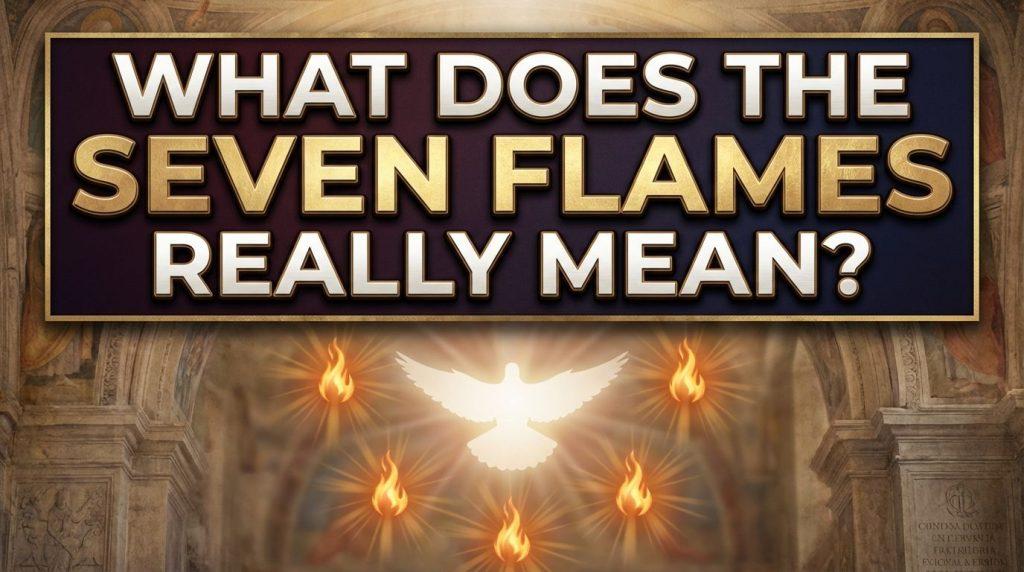
- The seven flames represent the seven gifts of the Holy Spirit given at Confirmation to strengthen believers for Christian life and witness.
- These gifts are wisdom, understanding, counsel, fortitude, knowledge, piety, and fear of the Lord, rooted in Isaiah’s prophecy about the Messiah.
- The flame imagery connects to Pentecost when tongues of fire descended on the apostles, symbolizing the Holy Spirit’s transforming power.
- Each gift perfects a different human faculty, enabling Christians to live supernatural lives beyond natural capability.
- Catholic tradition teaches that these gifts remain dormant without cultivation through prayer, sacraments, and cooperation with grace.
- The seven flames appear in Catholic art and iconography, particularly in depictions of Confirmation and the Holy Spirit’s work in the Church.
Biblical Foundation in Isaiah
The prophet Isaiah describes seven qualities that will rest upon the promised Messiah in chapter 11 of his prophecy. The text states that a shoot will come from the stump of Jesse and a branch will grow from his roots. The Spirit of the Lord will rest upon him, the Spirit of wisdom and understanding, the Spirit of counsel and might, the Spirit of knowledge and fear of the Lord (Isaiah 11:1-2). This prophecy points forward to Christ, the descendant of Jesse through David’s line. The sevenfold Spirit described here became the foundation for Catholic teaching about the seven gifts. Jewish tradition recognized this passage as messianic, expecting a future king anointed with God’s Spirit in fullness. Early Christians saw this prophecy fulfilled in Jesus at His baptism when the Holy Spirit descended on Him like a dove.
The Hebrew text of Isaiah actually lists six attributes, but the Greek Septuagint translation used by early Christians includes seven. The Hebrew pairs Spirit of the Lord with wisdom, then lists understanding, counsel, might, knowledge, and fear of the Lord. The Septuagint adds piety as a seventh gift, creating the complete list Catholics use today. Some scholars debate whether this addition represents translation error or legitimate interpretation. However, the Church has consistently used the seven-gift framework based on the Septuagint version. The number seven itself carries symbolic weight throughout Scripture, representing completeness and perfection. God created the world in seven days. Revelation frequently uses sevens including seven churches, seven seals, and seven trumpets. The seven gifts thus represent the complete outpouring of the Spirit, everything needed for Christian life.
Christ possessed these seven gifts in their fullness as the Messiah upon whom the Spirit rests without measure. His divine nature united with human nature meant the Holy Spirit dwelt in Him completely from conception. Yet Christ’s humanity genuinely received and exercised these gifts throughout His earthly life. He showed perfect wisdom in teaching, complete understanding of divine mysteries, flawless counsel to His disciples, heroic fortitude in facing death, true knowledge of God and creation, authentic piety toward the Father, and proper fear of the Lord. Christians receive these same gifts through union with Christ, though in limited measure proportional to our grace and cooperation. The gifts flow from Christ’s fullness to believers who remain united to Him through faith and sacraments. We do not possess them independently but only as members of His mystical body sharing His life.
Pentecost and the Descent of Fire
The seven flames imagery connects directly to the Pentecost event recorded in Acts 2. Fifty days after Christ’s resurrection, the apostles gathered with Mary and other disciples in Jerusalem. Suddenly a sound like rushing wind filled the house where they sat. Divided tongues as of fire appeared and rested on each person present. They were filled with the Holy Spirit and began speaking in other languages as the Spirit enabled them (Acts 2:2-4). This dramatic manifestation inaugurated the Church’s public ministry and fulfilled Christ’s promise to send the Advocate. The fire symbol communicated the Spirit’s purifying, illuminating, and empowering presence. Fire transforms whatever it touches, consuming impurities and producing light and heat. The Holy Spirit similarly transforms believers, burning away sin and producing holiness.
The tongues of fire divided and rested on each individual, showing that the Spirit gives Himself to each believer personally. This was not merely a collective experience of the group but an individual gift to every person present. Each received the fullness of the Spirit appropriate to their capacity and calling. The division into separate flames also suggests the diversity of gifts the Spirit distributes. Saint Paul teaches that the Spirit gives different gifts to different people for the common good (1 Corinthians 12:7-11). Some receive wisdom, others knowledge, others faith, healing, miracles, prophecy, discernment, tongues, or interpretation. These various gifts all come from the one Spirit working individually as He wills. The seven gifts of the Spirit discussed in Catholic theology differ from these charismatic gifts Paul lists. The seven gifts are given to every Christian at Confirmation, while charismatic gifts are distributed as the Spirit chooses for particular ministries.
Pentecost represents the definitive giving of the Holy Spirit to the Church, but individuals receive the Spirit personally through sacraments. Baptism first incorporates us into Christ and gives us the Holy Spirit’s indwelling presence. Confirmation perfects baptismal grace and imparts the seven gifts in a special way for Christian witness (CCC 1303). The bishop or priest extends hands over candidates and prays that they receive the sevenfold gift of the Spirit. He then anoints each person’s forehead with sacred chrism saying, “Be sealed with the Gift of the Holy Spirit.” This sacramental action connects present believers to the original Pentecost outpouring. What happened to the apostles continues happening to each generation as the Church administers Confirmation. The seven flames that descended at Pentecost still descend on every Christian who receives this sacrament, though usually without visible fire.
Wisdom: The First Gift
Wisdom, the first and highest gift of the Holy Spirit, enables believers to judge all things from God’s perspective. This is not worldly cleverness or accumulated knowledge but supernatural insight into divine truth. Wisdom sees creation as God sees it, recognizing His purposes and ordering all things toward Him. Solomon prayed for wisdom above all other gifts, asking God for an understanding heart to judge His people (1 Kings 3:9). God granted this request and Solomon became renowned for wisdom that surpassed all contemporaries. Yet even Solomon’s wisdom was natural and imperfect compared to the supernatural wisdom the Holy Spirit gives. The wisdom of this world is foolishness to God, as Paul writes (1 Corinthians 3:19). Human philosophy and reasoning cannot penetrate divine mysteries or guide souls to eternal life. Only wisdom from above enables right judgment about ultimate things.
The gift of wisdom perfects the theological virtue of charity, making love the lens through which we view everything. When wisdom governs our thinking, we evaluate choices based on how they affect our relationship with God and service to His will. Money, pleasure, success, and comfort no longer drive decisions. Instead, we ask whether actions lead toward or away from God, build up or tear down the Kingdom, serve self or others. This God-centered perspective transforms how we live. Career choices depend on God’s calling rather than salary or prestige. Relationships are valued for how they help us and others grow in holiness. Suffering becomes meaningful as participation in Christ’s cross rather than mere misfortune. Wisdom shows us that nothing matters except loving God and doing His will. Everything else is temporary and ultimately empty.
Growing in wisdom requires prayer, particularly contemplative prayer that focuses on God Himself rather than our needs or concerns. When we spend time silently in God’s presence, the Holy Spirit teaches our hearts divine ways of seeing and judging. Reading Scripture and Church teaching provides content for wisdom to work with, but the gift itself is given in prayer. We must also practice applying eternal perspectives to daily decisions. When tempted or facing choices, we should pause and ask what wisdom would choose. Initially this feels awkward and we often fail to live wisely. However, repeated practice gradually strengthens the habit of judging from God’s viewpoint. Over time, wisdom’s perspective becomes more natural until it governs our lives consistently. Saints demonstrate wisdom perfectly, seeing all things clearly and choosing rightly even in extremely difficult circumstances. Their example shows what this gift produces when believers cooperate fully with the Spirit.
Understanding: Penetrating Divine Truth
Understanding, the second gift of the Holy Spirit, enables believers to penetrate the inner meaning of revealed truths. This differs from simply knowing facts about faith or memorizing doctrines. Understanding grasps the deeper significance and connections between different aspects of divine revelation. It sees how Old Testament types foreshadow New Testament realities, how doctrines relate to each other, and how all Christian teaching centers on Christ. Those with developed understanding can read Scripture and suddenly perceive meanings they never noticed before. A familiar parable takes on new depth. A prophetic passage illuminates current situations. The interconnection of biblical themes becomes visible. This is the Holy Spirit teaching from within, opening minds to grasp what God reveals.
The gift of understanding perfects the theological virtue of faith, helping believers penetrate what they believe. Faith accepts divine revelation on God’s authority even when we do not comprehend it. Understanding begins to grasp what faith believes, though never exhaustively in this life. The Trinity remains an ultimate mystery, but understanding helps us grasp something of how three persons share one divine nature. The Incarnation exceeds human comprehension, but understanding illuminates how Christ can be both God and man. The Eucharist transcends natural categories, but understanding helps us perceive the fittingness of Christ’s sacramental presence. In each case, understanding does not remove mystery or reduce divine truth to human categories. Rather, it enables us to enter more deeply into mysteries that always remain beyond complete comprehension.
Developing understanding requires study of Church teaching and Scripture combined with prayerful meditation. Simply reading theology textbooks without prayer produces intellectual knowledge without spiritual understanding. Conversely, prayer without study lacks content for the Spirit to illuminate. The balanced approach combines both, reading carefully and then pondering what we read in prayer. The liturgy serves as a primary school of understanding, presenting divine truth through Scripture readings, prayers, and sacramental actions. Regular participation in Mass exposes us repeatedly to revealed truth. Over time and with attention, the Spirit opens our understanding to grasp what the liturgy proclaims. Teachers and preachers with the gift of understanding can help others by explaining doctrine clearly. However, each believer must personally seek this gift through prayer and study. No one can understand for us; the Spirit must teach each heart individually.
Counsel: Discerning God’s Will
Counsel, the third gift of the Holy Spirit, enables believers to discern God’s will in particular situations. This practical wisdom shows us what to do when facing decisions or difficulties. Life constantly presents choices where the right path is unclear. Should I accept this job or wait for something better? How should I respond to a difficult person? Is this relationship God’s will for me? Natural prudence helps somewhat, but complex situations often exceed our capacity to judge rightly. The gift of counsel provides supernatural guidance, showing us God’s preferred path. This does not mean hearing audible voices or receiving dramatic signs. Rather, it involves an interior illumination or attraction toward certain choices and away from others.
The gift of counsel perfects the cardinal virtue of prudence, which chooses appropriate means to achieve good ends. Prudence is natural wisdom developed through experience and reflection. Counsel adds supernatural insight that exceeds what prudence alone could achieve. Sometimes counsel directs us toward choices that appear foolish by worldly standards. It might prompt accepting lower pay to work in ministry, forgiving a serious wrong rather than pursuing justice, or staying in a difficult marriage rather than seeking divorce. These counter-intuitive choices reflect God’s wisdom, which differs from human wisdom. Counsel helps us recognize and follow divine guidance even when it contradicts natural inclinations. Those who develop this gift learn to distinguish the Spirit’s promptings from their own desires or demonic suggestions. This discernment develops through practice and is often aided by spiritual direction.
Obtaining good counsel requires several practices. First, we must pray specifically for guidance when facing decisions. The Holy Spirit cannot guide those who never ask for direction. Second, we should seek advice from wise Christians, especially those with mature faith and good judgment. God often provides counsel through other people rather than directly. Third, we must examine situations carefully, gathering relevant information and considering options thoroughly. The Spirit guides through our natural reasoning, not by replacing it. Fourth, we should pay attention to interior movements of peace or disturbance. Choices aligned with God’s will typically bring peace, while wrong choices produce unease. Fifth, we must be willing to follow guidance even when difficult or costly. God will not waste time showing us His will if we intend to ignore it. Those who sincerely seek and follow counsel find the Holy Spirit leads them reliably through life’s complexities.
Fortitude: Strength to Persevere
Fortitude, the fourth gift of the Holy Spirit, provides supernatural courage and endurance for Christian life. This gift differs from natural bravery or determination. It enables believers to face dangers, sufferings, and trials they could not handle through willpower alone. Martyrs demonstrated fortitude in its highest degree, enduring torture and death rather than deny Christ. Most Christians never face martyrdom, but all need fortitude for the daily struggle against sin, temptation, and worldly opposition. Modern Western culture makes following Christ costly in ways previous generations did not experience. Standing for Catholic moral teaching on marriage, sexuality, and life issues invites mockery and marginalization. Living differently from secular culture requires constant courage to resist conformity. Fortitude provides the strength to remain faithful despite costs.
The gift of fortitude perfects the cardinal virtue of courage, which faces dangers appropriately without excessive fear or recklessness. Natural courage helps soldiers face battle, firefighters enter burning buildings, and patients endure cancer treatment. Fortitude adds supernatural dimension, enabling Christians to endure specifically religious trials. It strengthens us against spiritual enemies that natural courage cannot defeat. Satan uses fear, discouragement, and weariness to make believers abandon faith. Fortitude resists these attacks, maintaining hope when circumstances suggest despair. It provides energy to continue prayer when dry, resist temptation when strong, and serve others when exhausted. This gift does not eliminate difficulties or pain but gives grace to endure them constructively. Those with developed fortitude do not quit when things become hard or abandon commitments when convenient.
Growing in fortitude happens primarily through exercising it in small ways. We cannot develop supernatural courage by avoiding challenges or always choosing comfortable paths. God allows trials precisely to strengthen this gift. When we face difficulties and persevere through the Spirit’s help, fortitude grows. Each victory over temptation makes future resistance easier. Each act of patient suffering increases capacity for endurance. We should pray for fortitude especially when facing particular challenges. The Spirit gives strength in proportion to need, sometimes sustaining believers through circumstances that would naturally crush them. Stories of Christians surviving persecution, maintaining faith through loss, or serving heroically in adverse conditions demonstrate fortitude’s power. These examples encourage us to trust that the same Spirit will strengthen us in our trials. We need not fear what future may bring because the gift of fortitude will provide whatever courage each situation requires.
Knowledge: Understanding Creation Rightly
Knowledge, the fifth gift of the Holy Spirit, enables believers to understand created things in relation to God. This differs from scientific or academic knowledge, though it does not contradict them. The gift of knowledge sees how creation reveals God’s existence, attributes, and purposes. It recognizes that everything exists because God creates and sustains it. Mountains, oceans, stars, animals, plants, and human beings all speak of their Creator to those who have ears to hear. This gift also shows us the proper relationship between Creator and creatures. God alone deserves worship; created things should be used and enjoyed but not made into idols. Many people worship money, pleasure, success, or other created goods as if they were ultimate. Knowledge corrects this disorder by showing creatures’ true value as God’s gifts pointing toward Him.
The gift of knowledge helps believers recognize how things should be used according to God’s design. Money is good when used to provide for family, support Church, and help the poor. It becomes evil when hoarded selfishly or pursued as life’s goal. Sexuality is good within marriage, bonding spouses and generating children. It becomes harmful when separated from marriage and used for selfish pleasure. Work is good as cooperation with God’s creative activity and service to society. It becomes oppressive when elevated above family or treated as source of identity. Knowledge discerns these distinctions, showing when and how to use creatures properly. This gift protects against both false asceticism that rejects good things God made and false hedonism that treats creatures as gods. The balance knowledge provides enables Christians to live in the world without being worldly.
Developing knowledge requires both study of creation and prayerful reflection on it. Scientists who study nature can develop this gift by viewing their research as exploring God’s handiwork. Artists who create beauty can recognize their talent as participation in divine creativity. Parents who raise children can see themselves as cooperating with God’s life-giving power. All legitimate human activities offer opportunities to exercise knowledge by recognizing God’s presence and purposes in created reality. Nature itself serves as a book revealing God to those who read it rightly. The order and beauty of the universe demonstrate an intelligent Creator. The vast scale of the cosmos shows His power. The intricate details of living organisms reveal His care. The Holy Spirit teaches hearts to read this book of creation, recognizing God’s fingerprints everywhere. Those who develop knowledge find that all reality becomes sacramental, mediating divine presence and teaching spiritual truths.
Piety: Right Relationship with God
Piety, the sixth gift of the Holy Spirit, establishes right relationship between believers and God as their Father. This gift is sometimes translated as reverence or godliness. It perfects the virtue of religion, which gives God the worship and honor He deserves. Piety goes beyond external religious observance to create genuine filial devotion. It makes us aware that God is not merely our Creator and Judge but our loving Father who cares for us intimately. This awareness produces confidence in approaching God, trust in His providence, and eagerness to please Him. Children naturally want to please parents they love. Similarly, piety makes us want to please our heavenly Father not from fear of punishment but from love and gratitude.
The gift of piety extends beyond relationship with God to affect how we treat other people. If God is our Father, then all Christians are our brothers and sisters. This makes the Church a true family, not merely an organization or association. Piety produces affection for fellow believers and willingness to help them. It makes us defend the Church when attacked, grieve over scandals that harm her, and work for her growth and holiness. The gift also affects how we relate to Mary, the saints, and angels. Piety recognizes Mary as our mother through spiritual adoption and the saints as our older siblings who encourage and intercede for us. It honors angels as God’s servants who assist us. All these relationships flow from recognizing God’s Fatherhood and our membership in His family.
Growing in piety requires practicing awareness of God’s fatherly care and our filial relationship to Him. Prayer should include addressing God as Father, not only formally but intimately. We should cultivate trust in His providence, believing He cares for our needs. When anxious, we remember that our Father knows what we need before we ask (Matthew 6:8). When suffering, we trust that He works all things for good for those who love Him (Romans 8:28). We should also practice treating other Christians as family members, showing them patience, forgiveness, and support. Participating in parish community, joining Church ministries, and building friendships with other Catholics strengthens the sense of belonging to God’s family. Those with deep piety naturally love the Church despite her human flaws, pray eagerly, and fulfill religious duties joyfully rather than reluctantly. They find comfort and joy in their relationship with the Father.
Fear of the Lord: Reverent Awe
Fear of the Lord, the seventh gift of the Holy Spirit, creates appropriate reverence and awe before God’s majesty. This is not servile fear of punishment or terror before a tyrant. Rather, it is filial fear of offending a loving Father, combined with profound respect for His infinite greatness. The Hebrew word for fear used in Scripture carries associations of reverence, wonder, and humble awe. Standing before the Grand Canyon, people often experience awe at nature’s vastness and beauty. Fear of the Lord produces similar awe before the Creator of the Grand Canyon and all reality. This gift recognizes the infinite distance between Creator and creature, God’s absolute holiness compared to our sinfulness, and His right to command our complete obedience.
Fear of the Lord makes presumption impossible. Some people treat God casually, assuming His mercy requires nothing from them. They sin freely, expecting easy forgiveness without repentance. This attitude shows lack of proper fear. Those with this gift recognize that while God is merciful, He is also just and holy. Sin offends His perfect goodness and damages our relationship with Him. We should fear committing sin because it wounds love, not merely because punishment might follow. A child who truly loves his parents fears disappointing them more than any punishment. Similarly, mature Christians fear offending God more than hell itself. This holy fear keeps us from presuming on grace and motivates careful examination of conscience. It produces the beginning of wisdom, as Proverbs teaches, for fear of the Lord is wisdom’s start (Proverbs 9:10).
Developing fear of the Lord requires meditation on God’s attributes and our own smallness. Reading Scripture passages describing God’s majesty helps produce appropriate awe. Isaiah’s vision of God enthroned with seraphim covering their faces, or Revelation’s scenes of heavenly worship before the divine throne, inspire reverent fear. Examining our sins honestly and comparing them to God’s holiness shows how much we need mercy. Visiting churches, especially older cathedrals built to inspire awe, can nurture this gift. The architecture, art, and atmosphere of sacred spaces remind us that we stand before the King of the universe. Bowing, kneeling, genuflecting, and making the sign of the cross are physical expressions of fear of the Lord. These gestures train bodies to express what hearts should feel. Those who develop this gift approach God with confident humility, neither presumptuous nor despairing, combining love with reverence in proper balance.
Confirmation and the Seven Gifts
The sacrament of Confirmation imparts the seven gifts of the Holy Spirit in a special way, strengthening the baptized for Christian witness. Baptism first gives the Holy Spirit’s indwelling presence and infuses sanctifying grace. Confirmation perfects baptismal grace, providing full outpouring of the Spirit (CCC 1302-1305). The bishop or authorized priest lays hands on candidates while praying that they receive the Holy Spirit with His sevenfold gifts. This gesture recalls the apostles laying hands on new believers to impart the Spirit (Acts 8:17). The anointing with sacred chrism that follows seals the gift, marking the person permanently as Christ’s witness. The words “Be sealed with the Gift of the Holy Spirit” summarize Confirmation’s essential effect. We receive not merely gifts but the Giver Himself.
Confirmation increases sanctifying grace, deepens baptismal character, and equips believers for active participation in the Church’s mission. The confirmed Christian becomes a soldier of Christ, ready to defend faith and spread the gospel. This military imagery appears in the traditional bishop’s slight slap on the candidate’s cheek, symbolizing readiness to suffer for Christ. Modern practice often omits this gesture, but its meaning remains. Confirmation commits us to witness boldly despite opposition or cost. The seven gifts provide equipment for this mission. Wisdom enables teaching truth effectively. Understanding helps explain doctrine clearly. Counsel guides evangelization efforts wisely. Fortitude gives courage to witness despite fear. Knowledge helps answer objections. Piety attracts others through authentic devotion. Fear of the Lord maintains humility and dependence on God.
The proper age for Confirmation has varied throughout Church history. Eastern Catholic churches confirm infants immediately after baptism, administering all three initiation sacraments together. Latin Rite Catholics typically confirm in adolescence or early teens, though some dioceses confirm younger children. Adults entering the Church receive all three sacraments at the Easter Vigil. The debate about timing involves balancing different values. Confirming infants or young children completes initiation early and provides the Spirit’s gifts from childhood. Confirming older children or teens allows more conscious participation and personal commitment. Regardless of timing, Confirmation’s effects remain the same. The seven gifts are given, though they remain relatively dormant until activated through use. A confirmed infant possesses the gifts but cannot exercise them until reaching the age of reason. A confirmed adult receives the same gifts and can begin using them immediately.
Cultivating the Seven Gifts
Receiving the seven gifts at Confirmation is only the beginning; believers must cultivate them through cooperation with grace. The Holy Spirit gives seeds that must be watered, tended, and allowed to grow. Without cultivation, gifts remain weak and barely noticeable. With faithful cooperation, they develop into powerful forces shaping Christian character and enabling supernatural living. The primary means of cultivating the gifts is prayer, especially daily mental prayer where we speak to God and listen for His response. When we pray regularly, the Spirit teaches us wisdom gradually. Our understanding of divine truth deepens. We receive counsel for decisions. Fortitude increases through relying on God’s strength. Knowledge grows as we see creation through spiritual eyes. Piety deepens our relationship with the Father. Fear of the Lord preserves humility and reverence.
Regular reception of sacraments also nourishes the gifts. The Eucharist provides supernatural food that strengthens all spiritual capacities. Confession removes obstacles caused by sin and restores grace. Spiritual reading supplies content for the gifts to work with, especially reading Scripture and lives of saints. We learn from saints how developed gifts look in practice and are inspired to pursue the same growth. Serving others in charity exercises several gifts simultaneously. When visiting the sick, teaching children, or helping the poor, we rely on wisdom to guide our service, counsel to know how best to help, fortitude to persevere when difficult, and piety that sees Christ in those we serve. Every act of virtue potentially engages multiple gifts.
Spiritual direction provides valuable assistance in cultivating the gifts. A wise director helps identify which gifts need special attention and suggests practices to strengthen them. He can recognize when gifts are beginning to operate and encourage their continued development. He also warns against counterfeits, since natural virtues can be mistaken for supernatural gifts. Some people confuse personality traits or acquired skills with Holy Spirit’s gifts. Natural intelligence is not understanding; human compassion is not piety; stubborn determination is not fortitude. A good director helps make these distinctions. However, spiritual direction is not absolutely necessary. The Holy Spirit can teach believers directly through Scripture, circumstances, and interior promptings. Those without access to directors should pray for the Spirit’s direct guidance and trust that He will provide what they need.
The Seven Gifts in Scripture and Tradition
Beyond the Isaiah 11 foundation, other Scripture passages illuminate the seven gifts. Jesus promises the Holy Spirit will teach believers all things and bring to remembrance everything He taught (John 14:26). This describes the gifts of wisdom and understanding teaching from within. He says the Spirit will guide believers into all truth (John 16:13), which counsel accomplishes by showing God’s will. Paul writes that God has not given us a spirit of fear but of power, love, and self-control (2 Timothy 1:7). This relates to fortitude overcoming cowardice. The letter to Hebrews states that solid food is for the mature, those whose faculties have been trained by practice to distinguish good from evil (Hebrews 5:14). This training happens as gifts develop through use.
Church Fathers wrote extensively about the seven gifts, developing detailed teaching on their nature and effects. Saint Ambrose explained each gift’s purpose and how it operates in the soul. Saint Augustine connected the gifts to the Beatitudes, showing how each gift produces specific fruits in Christian character. He taught that fear of the Lord produces the poor in spirit, piety produces the meek, knowledge produces those who mourn, fortitude produces those who hunger for righteousness, counsel produces the merciful, understanding produces the pure in heart, and wisdom produces the peacemakers. This schema demonstrated the gifts’ practical effects in producing holiness. Medieval theologians like Saint Thomas Aquinas systematized gift theology further, distinguishing gifts from virtues and explaining their relationship to beatitudes and fruits of the Spirit.
Catholic mystics and spiritual writers explored the gifts’ highest development in contemplative prayer and mystical union. Saint John of the Cross taught that the gifts are purified and perfected through the dark nights, enabling the soul to receive divine communications directly. Saint Teresa of Avila described how gifts operate in different stages of prayer as the soul advances toward union. She noted that beginners experience gifts occasionally and weakly, while advanced souls exercise them habitually and powerfully. Saint Therese of Lisieux demonstrated wisdom and counsel through her Little Way, showing how gifts can operate in ordinary circumstances and simple souls. These mystical writings prove that the seven gifts are not merely theological concepts but real spiritual realities that transform those who cultivate them. Every Catholic possesses these gifts potentially from Confirmation and can develop them through faithful cooperation with grace.
The Seven Gifts and Human Faculties
The seven gifts of the Holy Spirit perfect different human faculties, enabling supernatural operation of natural capacities. Wisdom perfects the will, orienting it toward God as the highest good. Understanding perfects the intellect, enabling it to grasp divine truth. Counsel perfects practical reason, showing how to apply general principles to particular situations. Fortitude perfects the irascible appetite, the capacity for courage and endurance. Knowledge perfects speculative reason, enabling right judgment about created things. Piety perfects the concupiscible appetite, the capacity for love and desire. Fear of the Lord perfects the entire soul by establishing right relationship to God. This schema shows how grace does not destroy nature but perfects it, elevating natural capacities to supernatural levels while respecting their essential character.
The gifts operate differently than virtues, which develop gradually through repeated acts. Virtues are habits we acquire through practice; gifts are supernatural enhancements given by the Spirit. We can develop natural prudence through experience and reflection. We cannot develop supernatural counsel through human effort; it must be given. However, gifts and virtues work together rather than competing. Natural prudence provides the foundation counsel builds on. Acquired courage is perfected by supernatural fortitude. Human love for God grows into supernatural piety. The relationship is like natural muscles strengthened by performance-enhancing training. The muscles exist and function naturally, but added help enables performance beyond natural limits. Similarly, human faculties operate naturally, but gifts enable supernatural functioning that exceeds natural capacity.
The gifts make believers docile to the Holy Spirit, responsive to His inspirations and promptings. Without gifts, we rely primarily on our own reasoning and judgment. We analyze situations, consider options, and make decisions based on natural wisdom. This process is good but limited. With gifts, we become open to divine guidance that transcends natural thinking. The Spirit can prompt courses of action we would not naturally consider. He can give insights that exceed our education or intelligence. He can strengthen us beyond our natural courage or endurance. This docility to the Spirit does not mean passivity or abandoning reason. Rather, it means holding our judgments lightly and remaining open to correction or guidance from above. Those with developed gifts learn to recognize the Spirit’s voice and follow His leading, trusting His wisdom above their own.
Common Obstacles to the Gifts
Several obstacles prevent Christians from fully developing the seven gifts. Pride blocks gifts by making us rely on our own wisdom rather than seeking divine guidance. Proud people trust their own judgment absolutely and resist correction or advice. They cannot receive counsel because they think they already know best. They lack fear of the Lord because they see themselves as self-sufficient. Humility is essential for growth in the gifts, admitting we need divine help for supernatural living. Another obstacle is attachment to sin, particularly habitual sin we refuse to renounce. The Holy Spirit cannot work fully in souls cluttered with deliberate disobedience. Mortal sin destroys sanctifying grace entirely, making the gifts inoperative until grace is restored through confession. Even venial sin weakens the gifts and makes us less responsive to the Spirit’s inspirations.
Neglect of prayer and sacraments also stunts the gifts’ development. Without regular prayer, we lose sensitivity to the Spirit’s voice and guidance. Without frequent Communion, we lack supernatural nourishment gifts require. Without regular confession, sins accumulate and grace diminishes. These spiritual practices are not optional luxuries but essential maintenance for Christian life. Just as physical muscles atrophy without exercise, spiritual gifts weaken without use and nourishment. Many Catholics receive Confirmation and never develop the gifts beyond minimal levels because they neglect these basic practices. They attend Mass irregularly, rarely pray outside church, and confess only when required. Under such neglect, gifts cannot flourish regardless of initial potential.
Worldliness prevents gifts from developing by filling minds and hearts with temporal concerns. When we constantly pursue money, pleasure, entertainment, and status, little room remains for spiritual growth. The Holy Spirit cannot teach wisdom to those fixated on earthly success. He cannot give knowledge to those who never think about eternal things. He cannot develop piety in those who treat God as an afterthought. Modern culture’s noise and busyness pose particular challenges. Constant stimulation from phones, television, internet, and social media leaves no silence for hearing the Spirit’s voice. Developing the gifts requires making space for God through simplicity, silence, and intentional withdrawal from worldly distractions. Those who want to grow spiritually must limit entertainment, practice regular digital fasts, and create times of quiet for prayer and reflection.
The Fruits of Developed Gifts
Christians who develop the seven gifts display recognizable characteristics that distinguish them from merely moral people. They demonstrate supernatural wisdom in their choices, consistently preferring God’s will over selfish desires. Their decisions reflect eternal perspective rather than short-term thinking. They show remarkable understanding of spiritual truths, grasping meanings that elude others. Their explanations of doctrine are clear and persuasive. They offer sound counsel to others facing difficulties, giving advice that proves reliably helpful. They show unusual fortitude in trials, maintaining peace and trust when circumstances would naturally produce despair. They possess accurate knowledge about creation’s proper relationship to God, neither despising material things nor becoming enslaved to them.
Their piety produces authentic devotion that attracts rather than repels others. Religious practice flows naturally from love rather than duty. They approach God with confidence born of knowing His fatherly love. Their fear of the Lord manifests in humble reverence and care to avoid sin. They take God seriously without becoming scrupulous or legalistic. These characteristics combine to produce genuine holiness that transforms every area of life. Family relationships improve as gifts enable supernatural love, patience, and forgiveness. Work becomes more meaningful as knowledge reveals its spiritual dimension. Suffering becomes bearable through fortitude and wisdom that see God’s purposes. Social interactions reflect piety’s recognition of human dignity and fear of the Lord’s prohibition against mistreating others.
The saints exemplify the seven gifts’ full development. Francis of Assisi showed perfect fear of the Lord in his reverence for God and perfect knowledge in his love for creation as God’s handiwork. Thomas Aquinas demonstrated wisdom and understanding in theological genius that still instructs the Church. Teresa of Avila exhibited counsel in her leadership of reform and fortitude in persevering despite opposition and illness. Therese of Lisieux showed wisdom in her Little Way and piety in her tender love for God as Father. These examples prove that the seven gifts are not theoretical constructs but real spiritual realities. Every Catholic possesses them potentially and can develop them to whatever degree grace and cooperation permit. We will never equal the saints in this life, but we can grow significantly beyond our current level through faithful response to the Holy Spirit.
Conclusion
The seven flames represent the seven gifts of the Holy Spirit given to every Christian at Confirmation. These gifts have their foundation in Isaiah’s prophecy about the Messiah and were manifested at Pentecost when fire descended on the apostles. Wisdom enables supernatural judgment from God’s perspective. Understanding penetrates divine mysteries. Counsel discerns God’s will for particular situations. Fortitude provides courage and endurance for trials. Knowledge shows creation’s proper relationship to God. Piety establishes filial relationship with the Father. Fear of the Lord creates reverent awe before divine majesty. These gifts perfect different human faculties, enabling supernatural operation beyond natural capacity. They are given through Confirmation’s sacramental action but must be cultivated through prayer, sacraments, and cooperation with grace. Pride, attachment to sin, neglect of spiritual practices, and worldliness obstruct their development. Those who faithfully cultivate the gifts display recognizable holiness that transforms every aspect of life. The saints demonstrate the seven gifts’ full flowering and inspire us to pursue similar growth. Every baptized and confirmed Catholic possesses these flames of the Spirit potentially and bears responsibility to tend them carefully. Through the gifts’ development, believers become effective witnesses to Christ and advance steadily toward the holiness God calls all Christians to achieve.
Disclaimer: This article presents Catholic teaching for educational purposes. For official Church teaching, consult the Catechism and magisterial documents. For personal spiritual guidance, consult your parish priest or spiritual director. Questions? Contact editor@catholicshare.com
Sign up for our Exclusive Newsletter
- 📌 Add CatholicShare as a Preferred Source on Google
- 🎁 Join us on Patreon for Premium Content
- 🎧 Check Out These Catholic Audiobooks
- 📿 Get Your FREE Rosary Book
- 📱 Follow Us on Flipboard
-

Recommended Catholic Books
Discover hidden wisdom in Catholic books — invaluable guides enriching faith and satisfying curiosity. #CommissionsEarned
- The Early Church Was the Catholic Church
- The Case for Catholicism - Answers to Classic and Contemporary Protestant Objections
- Meeting the Protestant Challenge: How to Answer 50 Biblical Objections to Catholic Beliefs
As an Amazon Associate, I earn from qualifying purchases. Thank you for your support.