
Brief Overview
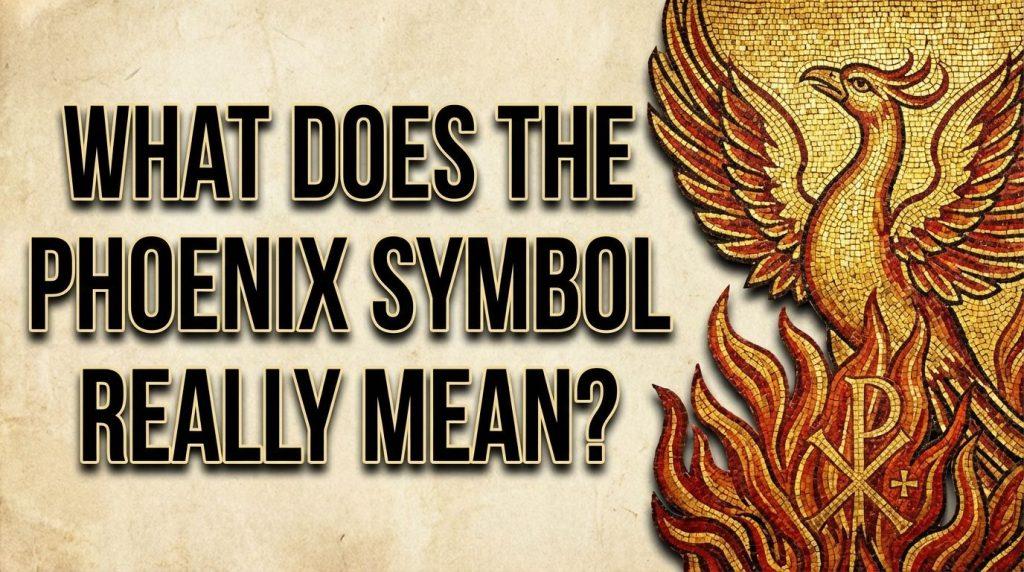
- The phoenix is a mythical bird that dies in flames and rises from its own ashes, symbolizing resurrection and eternal life in Christian tradition.
- Early Christians adopted the phoenix from ancient mythology to represent Christ’s resurrection and the believer’s hope for bodily resurrection.
- The phoenix appears in early Christian art, literature, and funerary contexts as a symbol of immortality and triumph over death.
- Ancient cultures including Egyptian, Greek, and Roman traditions featured phoenix legends before Christianity reinterpreted the symbol.
- Church fathers like Clement of Rome and Tertullian wrote about the phoenix as evidence of God’s power to raise the dead.
- Understanding the phoenix helps Catholics appreciate how the Church has historically used pagan symbols to communicate Christian truths about resurrection.
Ancient Origins of the Phoenix Legend
The phoenix legend originated in ancient Egypt before spreading throughout the Mediterranean world. Egyptian mythology featured the Bennu bird, associated with the sun god Ra and connected to cycles of death and rebirth. This sacred bird supposedly lived for hundreds of years before burning itself on a pyre and rising renewed from the ashes. Greek historians including Herodotus recorded phoenix stories they learned from Egyptian sources. The Greeks adapted the legend, making the phoenix a symbol of cyclical renewal and immortality. Roman writers continued developing the myth, adding details about the phoenix’s lifespan, appearance, and rebirth process.
Different ancient accounts provided varying details about the phoenix. Some said it lived for 500 years, others claimed 1,000 or even 1,461 years. Most descriptions agreed the phoenix was a magnificent bird with brilliant red and gold plumage. When its time came to die, the phoenix built a nest of aromatic branches and spices. It then ignited the nest through the heat of its own body or by fanning the flames with its wings. The fire consumed both nest and bird completely. From the ashes arose a new phoenix, which gathered the remains of its predecessor and carried them to the temple of the sun. This new phoenix then lived another cycle before repeating the process.
The phoenix legend resonated across cultures because it addressed universal human concerns about mortality and the desire for life beyond death. Ancient peoples observing nature’s cycles of death and renewal in seasons, plant life, and celestial movements sought symbols that captured these patterns. The phoenix provided a powerful image of life overcoming death, of renewal emerging from destruction, of hope persisting despite apparent endings. These themes made the phoenix appealing to philosophers, poets, and religious thinkers. When Christianity emerged, it found in the phoenix a ready-made symbol that could be filled with new resurrection meaning centered on Christ.
Early Christian Adoption of Phoenix Symbolism
Early Christians recognized the phoenix’s potential as a resurrection symbol despite its pagan origins. The Church fathers did not invent the phoenix but reinterpreted an existing cultural symbol through Christian lenses. This practice of baptizing pagan symbols characterized early Christian art and thought. Rather than rejecting everything from classical culture, Christians discerned what could serve the Gospel and transformed it. The phoenix underwent this transformation, becoming a symbol of Christ’s resurrection and the general resurrection of the dead that Christians awaited.
Clement of Rome, writing in the first century, provided one of the earliest Christian references to the phoenix. In his letter to the Corinthians, Clement used the phoenix legend as an argument for resurrection. He reasoned that if God enabled a bird to rise from ashes, surely God could raise human bodies from death. Clement treated the phoenix as a real creature rather than myth, following the natural history understanding of his time. Whether the phoenix actually existed mattered less for symbolic purposes than what it represented. The bird’s supposed resurrection from ashes provided a natural analogy for the supernatural resurrection Christians proclaimed.
Tertullian and other Church fathers similarly employed phoenix imagery to defend and explain resurrection doctrine. Skeptics questioned how bodies that had decayed completely could possibly rise again. The phoenix answered this objection by demonstrating through nature what seemed impossible. If a bird could burn to nothing yet live again, human resurrection was at least conceivable. This apologetic use of the phoenix helped Christians explain their faith to audiences familiar with the legend. The symbol bridged pagan and Christian worldviews, providing common ground for discussion about life after death.
The Phoenix in Early Christian Art
Archaeological evidence shows phoenixes appearing in early Christian art from the third century onward. Catacomb paintings, sarcophagi carvings, and floor mosaics featured phoenix images alongside explicitly Christian symbols like the Good Shepherd or the chi-rho monogram. Artists depicted phoenixes in various poses: emerging from flames, standing on pyres, or flying toward the sun. These representations communicated resurrection hope to believers and served as visual catechesis for the illiterate. The phoenix in burial contexts expressed confidence that the deceased would rise at the last day.
The artistic style of Christian phoenixes borrowed from classical representations while sometimes adding Christian elements. Some phoenixes appeared with crosses or other explicitly Christian symbols, making their new religious meaning clear. Others maintained traditional forms but gained Christian interpretation through context and accompanying imagery. A phoenix near a cross or beside the chi-rho communicated Christian resurrection rather than merely pagan immortality. This visual vocabulary allowed Christians to express their distinctive beliefs while employing familiar artistic conventions.
Regional variations in phoenix representation reflected local artistic traditions and theological emphases. Eastern Christian art tended toward more stylized, symbolic phoenixes. Western Christian art often attempted more naturalistic bird depictions despite the mythical nature of the subject. Byzantine mosaics featured phoenixes with jewel-like colors and formal compositions. Early medieval manuscript illumination created elaborate decorative phoenixes. These diverse artistic treatments maintained the symbol’s essential meaning across varying styles and periods.
Theological Significance of the Phoenix
The phoenix symbolizes Christ’s resurrection in Christian theology. Just as the phoenix dies and rises renewed, Christ died on the cross and rose on the third day. The parallel is not exact since Christ’s resurrection was unique and historical rather than cyclical and mythical. However, the phoenix provided a vivid image that helped believers grasp the mystery of resurrection. Christ like the phoenix conquered death through apparent defeat. Christ like the phoenix emerged from what should have ended Him, transformed and glorified. The symbol’s power lies in this dramatic reversal where death becomes the means of eternal life.
Beyond representing Christ specifically, the phoenix symbolizes the general resurrection of all believers. Saint Paul taught that Christ’s resurrection guarantees the resurrection of those who belong to Him. As Christ rose, so will Christians rise at the last day. The phoenix expresses this hope visually and memorably. Believers facing death can contemplate the phoenix and remember that their bodies, though they decay, will rise incorruptible. The phoenix transforms abstract doctrine into concrete imagery that engages imagination and emotions alongside intellect.
The phoenix also represents transformation and renewal that occurs in Christian life before physical death. Baptism involves dying to sin and rising to new life in Christ. Penance requires acknowledging spiritual death and experiencing resurrection through absolution. The spiritual life includes multiple deaths and resurrections as believers grow in holiness. The phoenix symbolizes this ongoing transformation. Each time Christians die to selfishness and rise to charity, each time they die to vice and rise to virtue, they enact the phoenix pattern. The symbol thus applies to both final resurrection and present sanctification.
The Phoenix in Medieval Christian Thought
Medieval bestiaries, illustrated manuscripts describing real and mythical animals, included phoenixes along with moral and spiritual interpretations. These texts treated the phoenix as a real creature while also reading it allegorically. Bestiary entries explained the phoenix’s death and rebirth as representing Christ’s passion and resurrection. Some bestiaries connected the phoenix’s aromatic nest to Christ’s burial with spices. The three-day period between the phoenix’s death and rebirth supposedly paralleled Christ’s three days in the tomb. These elaborate symbolic readings showed medieval Christianity’s comfort with multiple levels of meaning in natural and mythological subjects.
Medieval theologians debated whether the phoenix was real or mythical. Some accepted ancient authorities who claimed the phoenix existed. Others recognized it as legend but maintained its usefulness as a symbol. Thomas Aquinas, while not writing extensively about phoenixes, represented the scholastic approach of carefully distinguishing literal from figurative truth. What mattered for theological purposes was not the phoenix’s biological reality but its symbolic utility. A mythical creature could teach real spiritual truths through its imagined characteristics.
The phoenix appeared in medieval preaching and devotional literature as a resurrection symbol. Sermons for Easter might reference the phoenix to illustrate resurrection hope. Spiritual writings used the phoenix to encourage perseverance through suffering. The symbol reassured believers that present death, whether literal or figurative, would yield to future life. This pastoral application of phoenix symbolism served the Church’s teaching and sanctifying mission. The phoenix helped Christians understand doctrine and find comfort in hope of resurrection.
The Phoenix and Funeral Practices
Christian funeral art sometimes incorporated phoenix imagery to express resurrection hope. Tomb carvings and funerary inscriptions featured phoenixes alongside crosses, anchors, and other Christian symbols. These images proclaimed that death was not the end but a transition to new life. The deceased would rise as the phoenix rises, transformed and glorified. Mourners encountering phoenix imagery at gravesites received visual assurance that their loved ones would see resurrection.
The phoenix’s cycle of death and rebirth paralleled Christian understanding of the relationship between earthly and heavenly life. The old body dies and decays. The new resurrection body emerges at the last day. This transformation resembles the phoenix burning to ashes and arising renewed. Medieval and early modern Christians found comfort in this parallel. The phoenix made resurrection imaginable by providing a natural or quasi-natural analogy. What seemed impossible for humans appeared possible when compared to the phoenix’s legendary power.
Some funeral practices incorporated actual or symbolic fire in ways that evoked phoenix imagery. While Christians generally practiced burial rather than cremation, they understood that fire could symbolize purification and transformation. Purgatory involved purifying fire that prepared souls for heaven. The phoenix burning represented both the destructive and transformative aspects of fire. It destroyed the old life while enabling the new. This dual function made the phoenix particularly apt for funerary contexts where grief and hope intermingled.
The Phoenix in Renaissance and Early Modern Christianity
Renaissance humanism’s revival of classical learning renewed interest in ancient symbols including the phoenix. Christian humanists explored Greek and Roman phoenix texts while maintaining Christian interpretations. Dante included a phoenix in the Divine Comedy as part of his elaborate symbolic system. Renaissance artists depicted phoenixes in religious paintings and prints. These cultural productions demonstrated that the phoenix remained meaningful for Christians even as knowledge of its pagan origins became more widely known.
Protestant reformers generally accepted phoenix symbolism along with other traditional Christian imagery. Luther and Calvin did not object to phoenixes as resurrection symbols. Protestant churches might display less visual art overall than Catholic churches, but where they used symbolism, the phoenix remained acceptable. This cross-confessional acceptance shows the phoenix’s deep integration into Christian thought. The symbol transcended Catholic-Protestant divisions because it predated those divisions and addressed universally acknowledged Christian beliefs about resurrection.
Early modern emblems and devices frequently employed phoenixes with Christian mottos. These emblematic uses appeared on seals, bookplates, and decorative objects. A phoenix rising from flames might accompany words like “I rise by falling” or “Death is life.” Such emblems served as meditation prompts and expressions of personal spirituality. They communicated the owner’s Christian faith and hope for eternal life. The phoenix thus moved from explicitly religious contexts into broader Christian culture, marking objects and spaces with resurrection meaning.
Modern Catholic Understanding of the Phoenix
Contemporary Catholic use of phoenix symbolism has become less common than in earlier periods. Modern believers are more aware that the phoenix is mythical rather than real. This awareness does not eliminate the symbol’s validity but requires acknowledging its legendary status. The phoenix functions as Christian myth, a story that conveys truth through imaginative narrative rather than historical fact. Like parables, myths can teach truth without being literally true. The phoenix myth teaches resurrection truth through its dramatic story of death and rebirth.
Catholic teaching about symbols and sacramentals supports continued phoenix use despite its mythical nature. The Church has always employed material signs to point toward spiritual realities. Symbols need not be literal to be effective. A phoenix in church art or on a tomb proclaims resurrection hope as validly as any other symbol. What matters is the meaning conveyed and the faith response evoked, not the symbol’s biological accuracy or historical origin. The phoenix, properly understood, remains a legitimate Christian symbol.
Some contemporary Catholics object to phoenix symbolism because of its pagan origins or because they associate it with occult or New Age movements. These concerns deserve respectful hearing. The Church must discern which cultural elements serve the Gospel and which contradict it. However, the phoenix’s long Christian history and clear resurrection meaning suggest it need not be abandoned. Teaching the phoenix’s Christian significance helps reclaim it from misuse while maintaining its traditional role in Catholic symbolism.
The Phoenix in Contemporary Catholic Art
Modern Catholic artists occasionally incorporate phoenixes into their work, usually with explicit resurrection themes. Stained glass windows might show a phoenix emerging from flames. Sculptures or paintings for churches could include phoenix imagery in Easter contexts. These contemporary uses maintain tradition while adapting it to current aesthetic sensibilities. Modern artists bring fresh perspectives to ancient symbols, creating works that speak to contemporary believers while honoring historical meanings.
The phoenix appears in Catholic publishing through book covers, religious education materials, and devotional items. Publishers use the symbol to communicate themes of renewal, hope, and resurrection. Religious education curricula might employ phoenix imagery when teaching about Easter or the resurrection of the body. Prayer cards or holy cards occasionally feature phoenixes alongside Scripture verses about resurrection. These varied uses keep the symbol alive in Catholic culture even if it appears less frequently than more familiar symbols like crosses or doves.
Digital media provides new contexts for phoenix symbolism. Catholic websites, social media graphics, and electronic publications can incorporate phoenix images. These digital expressions reach audiences who might never encounter traditional church art or printed materials. The phoenix translates effectively into digital formats because of its dramatic visual appeal. A stylized phoenix rising from flames creates striking imagery suitable for screens. This technological adaptation demonstrates the symbol’s continuing vitality.
The Phoenix and Environmental Theology
The phoenix legend’s connection to fire and renewal relates to contemporary Catholic concern for creation care. Fire plays ambivalent roles in nature, destroying yet also renewing through processes like forest regeneration after wildfires. The phoenix captures this ambivalence, showing how destruction can serve renewal. This ecological reading enriches traditional resurrection symbolism while addressing current concerns. The phoenix reminds believers that God’s creative power operates through natural processes including those that seem destructive.
Climate change and environmental degradation create contexts where phoenix symbolism gains new urgency. Humanity faces potential ecological catastrophe resulting from exploitation of creation. The phoenix offers hope that renewal remains possible even after apparent destruction. This hope must not become complacency or excuse continued environmental damage. Rather, the phoenix inspires confidence that God can bring good from evil and life from death while calling humans to responsible stewardship. The symbol both comforts and challenges.
Liturgical celebrations focused on creation could appropriately include phoenix imagery. Earth Day or Season of Creation observances might employ the phoenix to symbolize ecological renewal and hope for creation’s restoration. The phoenix connects cosmic redemption to personal resurrection, showing that God’s saving work encompasses all creation. This holistic vision of salvation, increasingly emphasized in Catholic theology, finds apt expression in the phoenix symbol that represents transformation and rebirth.
Teaching About the Phoenix Symbol
Religious educators face challenges in presenting the phoenix to contemporary students. Unlike symbols based in Scripture or historical events, the phoenix is admittedly mythical. Teachers must explain that the phoenix never actually existed while maintaining that it teaches real truth about resurrection. This nuance requires careful pedagogy. Young children might struggle with the distinction between factual and symbolic truth. Older students can grasp that myths can convey truth through imagination rather than history.
Effective teaching about the phoenix includes its historical context. Students should know that early Christians adopted the symbol from pagan culture and transformed it. This history teaches that Christianity engages culture rather than simply opposing it. The Church discerns what from surrounding cultures serves the Gospel. This discernment process, exemplified in phoenix symbolism’s adoption, provides a model for contemporary Christians engaging their own cultures. The phoenix thus becomes a case study in inculturation and cultural apologetics.
Comparing the phoenix to other resurrection symbols helps students understand its particular emphases. The phoenix differs from the butterfly, which represents transformation through metamorphosis. It differs from the seed that dies and produces new life. The phoenix uniquely emphasizes fire, dramatic death, and arising from literal ashes. These distinctive features give the symbol its power and explain why early Christians found it useful. Understanding what makes the phoenix unique deepens appreciation for the full range of resurrection imagery available in Christian tradition.
The Phoenix and Christological Heresies
Early Church fathers used the phoenix carefully to avoid suggesting problematic theological conclusions. The phoenix dies and a new phoenix arises, which might imply that Christ was not the same person after resurrection. Orthodox Christology affirms that the risen Christ is the same Jesus who died, not a new person. The phoenix symbol had to be qualified to avoid Docetist implications that Christ only seemed to die or that resurrection involved creating a new being rather than raising the same body.
Similarly, the phoenix’s cyclical rebirth might suggest reincarnation or an endless cycle of deaths and rebirths. Christianity rejects reincarnation and affirms that Christ died once for all and rose never to die again. Human resurrection will also be final, not cyclical. Church fathers using phoenix symbolism clarified these distinctions. The phoenix served as an imperfect analogy that illuminated resurrection without exhausting its meaning. All symbols fall short of the realities they represent, requiring theological precision to prevent misunderstanding.
Contemporary use of phoenix symbolism must maintain these theological clarifications. Catechesis about the phoenix should emphasize that it is a symbol pointing toward mystery rather than a complete explanation of resurrection. The phoenix helps imagination grasp what exceeds reason, but reason must guide and correct imagination. This interplay of symbol and theology, poetry and doctrine, characterizes mature Christian thought. The phoenix serves faith when properly integrated into orthodox theological frameworks.
The Phoenix in Ecumenical Contexts
Phoenix symbolism provides common ground across Christian traditions. Orthodox, Catholic, and Protestant Christians all affirm bodily resurrection. The phoenix symbolizes this shared belief despite other doctrinal disagreements. Using the phoenix in ecumenical worship or dialogue focuses attention on fundamental unity in resurrection faith. The symbol predates Christian divisions and points toward beliefs all Christians hold in common.
However, different traditions emphasize different aspects of resurrection doctrine that phoenix symbolism might highlight. Eastern Christianity emphasizes theosis and cosmic transformation. Western Christianity often focuses on individual salvation and final judgment. The phoenix can accommodate both emphases. Its transformation represents theosis. Its individual rebirth represents personal resurrection. This flexibility makes the phoenix useful across theological traditions while allowing each to maintain its distinctive insights.
Ecumenical conversations about symbols themselves can prove valuable. Discussing why Christians historically adopted the phoenix and how different traditions have used it creates opportunities for learning and appreciation. These conversations demonstrate that Christians share not only doctrines but also symbolic languages. The phoenix, along with other traditional symbols, forms part of a common Christian heritage that transcends denominational boundaries. Recognizing this shared inheritance strengthens ecumenical relationships.
Conclusion and Contemporary Application
The phoenix stands as a meaningful though less commonly used symbol in Catholic tradition. Its dramatic imagery of death and rebirth powerfully communicates resurrection hope. From early Christian catacombs to contemporary digital media, the phoenix has served the Church’s mission of proclaiming Christ’s victory over death. Understanding the phoenix’s history and meanings enriches Catholic symbolic literacy and provides resources for expressing faith in resurrection.
Contemporary Catholics can appropriate phoenix symbolism thoughtfully and effectively. Recognizing its mythical nature need not eliminate its symbolic power. Myths convey truths through imaginative narratives that engage human hearts and minds. The phoenix myth teaches that death is not the end, that transformation surpasses preservation, that God’s power conquers every destruction. These truths remain vital for believers facing mortality and seeking hope beyond death.
The phoenix ultimately points toward the resurrection of Christ and the resurrection of believers that Christ’s victory guarantees. When Catholics encounter phoenixes in art, literature, or other contexts, they receive invitations to contemplate the central Christian mystery. Death gives way to life. Ashes become the seedbed of renewal. Apparent endings mark new beginnings. The phoenix preaches this Gospel wordlessly, its flaming rebirth proclaiming the good news that Christ is risen and death has lost its sting. This ancient symbol, baptized by Christian faith, continues offering hope to all who believe in the God who raises the dead.
Disclaimer: This article presents Catholic teaching for educational purposes. For official Church teaching, consult the Catechism and magisterial documents. For personal spiritual guidance, consult your parish priest or spiritual director. Questions? Contact editor@catholicshare.com
Sign up for our Exclusive Newsletter
- 📌 Add CatholicShare as a Preferred Source on Google
- 🎁 Join us on Patreon for Premium Content
- 🎧 Check Out These Catholic Audiobooks
- 📿 Get Your FREE Rosary Book
- 📱 Follow Us on Flipboard
-

Recommended Catholic Books
Discover hidden wisdom in Catholic books — invaluable guides enriching faith and satisfying curiosity. #CommissionsEarned
- The Early Church Was the Catholic Church
- The Case for Catholicism - Answers to Classic and Contemporary Protestant Objections
- Meeting the Protestant Challenge: How to Answer 50 Biblical Objections to Catholic Beliefs
As an Amazon Associate, I earn from qualifying purchases. Thank you for your support.