
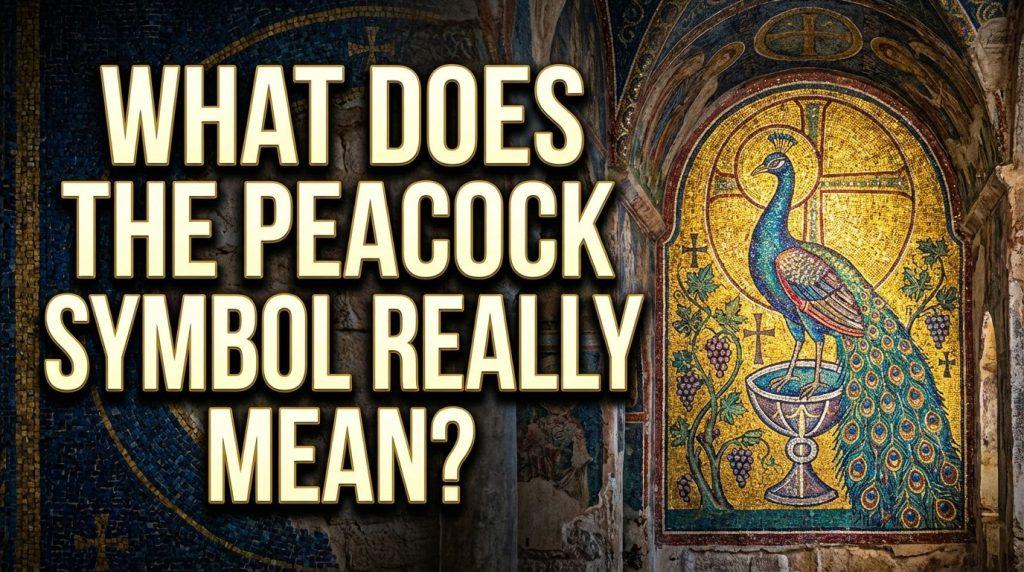
Brief Overview
- The peacock symbolizes resurrection, immortality, and eternal life in Christian tradition based on ancient beliefs about its incorruptible flesh.
- Early Christians adopted the peacock from classical culture, reinterpreting it through the lens of Christ’s victory over death.
- The bird’s brilliant plumage and renewal of tail feathers each year suggested spiritual renewal and the glory of resurrected bodies.
- Peacocks appear in early Christian art, particularly in mosaics and catacomb paintings, as symbols of paradise and eternal joy.
- The symbol represents Christ’s resurrection, the Christian’s hope for bodily resurrection, and the beauty of heaven.
- Understanding the peacock helps Catholics appreciate how the Church has historically used nature imagery to express spiritual truths about eternal life.
Ancient Beliefs About Peacock Flesh
The peacock’s adoption as a Christian symbol stems from ancient beliefs about the bird’s physical properties. Classical writers including Pliny the Elder and Saint Augustine claimed that peacock flesh resisted decay and remained incorruptible long after death. This belief, whether scientifically accurate or not, made the peacock an ideal symbol for immortality and incorruption. Ancient peoples observed or believed they observed that dead peacock meat did not rot as quickly as other birds’ flesh. This supposed resistance to corruption naturally suggested symbolic connections to eternal life and bodies that would not see decay. The physical properties attributed to the peacock provided the foundation for its later spiritual symbolism.
Saint Augustine explicitly discussed peacock flesh in his writings, reporting that he had tested the claim and found peacock meat remarkably resistant to putrefaction. Whether his experiment was conducted rigorously by modern standards matters less than the fact that a respected Church father believed and taught this property. Augustine’s authority lent credibility to the symbolism that developed around peacocks in Christian thought. His writings show that educated Christians in the early Church accepted the peacock’s special physical properties and saw theological significance in them. The bird that did not corrupt in death became an emblem of bodies that would rise incorruptible at the resurrection.
The connection between physical incorruption and spiritual resurrection reflects how early Christian thinking integrated observations about nature with theological truths. Christians did not divorce the material world from spiritual realities but saw creation as revealing its Creator. A bird whose flesh resisted decay pointed beyond itself to the greater truth that death does not have final victory over God’s creation. This sacramental imagination, which saw natural things as signs of supernatural truths, characterized patristic and medieval Christianity. The peacock functioned within this worldview as a visible sign of invisible grace and future glory.
Biblical and Theological Foundations
While peacocks receive no significant mention in Scripture, the theological truths they came to symbolize have solid biblical foundations. The resurrection of the dead stands central to Christian faith, affirmed throughout the New Testament. Jesus spoke of the resurrection when He said that God is God of the living, not the dead, and that all will rise (John 5:28-29). Saint Paul devoted an entire chapter of First Corinthians to explaining resurrection, declaring that if Christ is not raised, Christian faith is vain (1 Corinthians 15). The peacock symbol expresses this essential doctrine visually, making the abstract concept of bodily resurrection more concrete and memorable.
Paul’s description of resurrected bodies provides the closest biblical parallel to peacock symbolism. He writes that the body sown in corruption rises in incorruption, sown in dishonor it rises in glory, sown in weakness it rises in power (1 Corinthians 15:42-43). This transformation from corruptible to incorruptible, from ordinary to glorious, matches what the peacock symbolizes. The bird’s splendid plumage suggests the glory of resurrected bodies. Its supposed incorruptible flesh represents the imperishable nature believers will possess. The peacock thus provides a natural image for what Scripture teaches about the resurrection transformation.
The Catechism teaches that in death the soul separates from the body, but God will reunite them at the final resurrection (CCC 997-1001). This reunited body-soul composite will be transformed, no longer subject to suffering, death, or decay. The peacock symbol speaks to this hope, assuring believers that their bodies matter eternally and will share in Christ’s glory. Using a beautiful, incorruptible bird to represent this truth makes the doctrine accessible to people who might struggle with abstract theological language about incorruption and glorification.
The Peacock in Early Christian Art
Peacocks appear frequently in early Christian mosaics, frescoes, and catacomb paintings. These artistic representations often show peacocks drinking from fountains or vessels, symbolizing souls refreshed by grace and the waters of eternal life. The peacock’s placement near water connects to baptism and to the river of life flowing from God’s throne in Revelation. Artists also depicted peacocks in garden settings representing paradise, the restored Eden where believers will dwell with God. These peaceful, beautiful scenes communicated hope for heavenly rest and joy after earthly struggles and death.
Some early Christian mosaics show facing pairs of peacocks flanking crosses or chi-rho monograms. This arrangement emphasizes the connection between Christ’s death and resurrection and the believer’s hope for eternal life. The cross represents Christ’s sacrifice, while the peacocks represent the resurrection life that sacrifice secured. The symmetrical composition creates visual harmony that mirrors the theological harmony between redemption and glorification. These carefully composed images functioned as visual theology, teaching doctrine through artistic symbolism that transcended language barriers.
The colors of peacock feathers held symbolic meaning in Christian art. The brilliant blues and greens evoked heavenly splendor and the precious stones described in visions of the New Jerusalem. The many “eyes” in the tail feathers suggested divine omniscience and watchful care. The bird’s proud bearing and magnificent display were reinterpreted positively as representing the glory God bestows on redeemed humanity. Early Christian artists transformed classical motifs, taking symbols from pagan culture and infusing them with Christian meaning. The peacock exemplifies this creative appropriation.
The Peacock and Paradise Imagery
Christian tradition has long associated peacocks with paradise and the garden of Eden. The bird’s beauty and the spectacular display of its tail feathers suggested the splendor of creation before the fall and the restored creation believers hope to inhabit. Byzantine and medieval mosaics often included peacocks in scenes of paradise alongside other birds, trees, and flowing water. These paradise mosaics adorned church apses and baptistries, creating visual representations of the heavenly reality toward which the Church journeys. The peacock in such contexts represented not only individual resurrection but the cosmic renewal God promises.
The Book of Revelation describes the New Jerusalem with streets of gold, gates of pearl, and foundations of precious stones. While peacocks are not mentioned explicitly in these descriptions, their jewel-toned plumage naturally connects to this imagery of heavenly splendor. Early Christians seeing peacock mosaics in churches could link them to biblical descriptions of heaven’s beauty. The bird became a visual shorthand for the magnificence awaiting those who persevere in faith. This connection between peacock symbolism and eschatological hope enriched liturgical spaces and directed worshipers’ minds toward their eternal destination.
The peacock in paradise scenes also suggested the harmony between humanity and creation that characterized Eden and will be restored in the new creation. The fallen world is marked by conflict, predation, and death. The world to come will see peace between all creatures, as Isaiah prophesied when he described the wolf lying down with the lamb (Isaiah 11:6-9). Peacocks dwelling peacefully in paradise imagery pointed to this eschatological peace. The beautiful bird served as an ambassador from the future kingdom, giving believers a glimpse of coming glory.
Renewal and Transformation Symbolism
The peacock’s annual shedding and regrowth of tail feathers provided another dimension of symbolic meaning. This natural cycle of loss and renewal suggested death and resurrection, the stripping away of the old self and the emergence of the new. Medieval bestiaries noted this characteristic and drew moral lessons from it. Just as the peacock loses its glorious plumage yet grows it back more beautiful than before, Christians die but rise again in greater glory. The parallel between natural processes and spiritual realities made the peacock a multilayered symbol rich in teaching potential.
This renewal symbolism connected to baptism, where the old self dies and the new self rises to walk in newness of life. Church fathers spoke of baptism as putting off the old nature and putting on Christ. The peacock’s transformation through molt and regrowth provided a natural image for this spiritual transformation. Some baptistries included peacock mosaics or sculptures, creating visual connections between the sacrament and the symbol. Candidates for baptism could see in the peacock a representation of what was happening to them spiritually.
The renewal theme also applied to ongoing conversion and growth in holiness throughout Christian life. Just as the peacock’s plumage grows more magnificent with each cycle, believers should grow in virtue and grace through continual renewal. Penance, prayer, and sacramental participation all contribute to this transformation. The peacock thus symbolized not only the final resurrection but the present process of sanctification. This flexibility allowed the symbol to speak to multiple dimensions of Christian experience while maintaining coherence in its basic meaning.
The Peacock in Funerary Contexts
Peacock imagery appears frequently on Christian sarcophagi and in catacomb paintings associated with burial and death. This placement expressed confidence in resurrection and eternal life for the deceased. Families choosing peacock decorations for tombs proclaimed their faith that death is not the end but a transition to greater life. The incorruptible peacock represented the incorruptible glory awaiting those who die in Christ. This hopeful symbolism transformed burial places from sites of finality into way stations on the path to resurrection.
Early Christian epitaphs sometimes included peacock images alongside inscriptions expressing hope for heavenly rest. The combination of text and symbol reinforced the message of Christian hope. Visitors to cemeteries encountered these peacock symbols repeatedly, creating a visual catechesis about death and resurrection. The symbols comforted mourners by reminding them that their loved ones had not truly perished but only passed from earthly to heavenly existence. The peacock’s beauty suggested the beauty of the souls now dwelling in paradise.
Medieval and Renaissance tomb sculptures occasionally featured peacocks as decorative elements or symbolic guardians. These three-dimensional representations continued the ancient tradition of associating peacocks with death and resurrection. Wealthy patrons commissioned elaborate tombs with peacock imagery to express their faith and their hope. Even simpler graves might include carved or painted peacocks when resources allowed. The widespread use of the symbol across social classes and time periods testifies to its resonance with Christian beliefs about death and what lies beyond.
The Peacock and Christ
While the peacock primarily symbolizes the resurrection of believers, some Christian interpreters also connected it to Christ Himself. Just as the peacock’s flesh was believed incorruptible, Christ’s body did not see decay in the tomb. The Scriptures prophesy that God would not allow His Holy One to see corruption (Psalm 16:10, quoted in Acts 2:27). Christ rose on the third day before natural corruption could begin. The peacock’s incorruptibility thus pointed to Christ’s bodily resurrection, the foundation and guarantee of Christian hope.
The peacock’s brilliant plumage could represent the glory of Christ’s transfiguration, when His face shone like the sun and His garments became white as light (Matthew 17:2). This momentary revelation of Christ’s divine glory prefigured the glory He would possess permanently after His resurrection and ascension. The peacock displaying its magnificent tail feathers served as a natural image for Christ revealing His glory. This Christological interpretation enriched the symbol’s meaning and connected it more directly to the person of Jesus.
Some medieval and Renaissance art shows Christ enthroned in glory surrounded by peacocks, emphasizing His role as the resurrection and the life. These compositions proclaimed that Christ’s victory over death secured resurrection for all who are united to Him. The peacocks function as witnesses to Christ’s power and as representations of the redeemed who share His immortal life. This artistic tradition maintained the peacock’s connection to resurrection while focusing attention on Christ as the source and guarantor of that resurrection.
Medieval Bestiaries and Peacock Lore
Medieval bestiaries, illustrated manuscripts describing animals both real and mythical, devoted entries to peacocks and their symbolic meanings. These texts combined natural observation with moral and spiritual interpretation, seeing animals as teachers of divine truth. Bestiary accounts repeated the claims about peacock flesh’s incorruptibility, adding that the bird’s voice was harsh despite its beautiful appearance. Moralists used this contrast to teach about vanity and the difference between outer beauty and inner worth. The peacock became associated with both positive meanings like resurrection and negative ones like pride.
The dual symbolism of peacocks as representing both resurrection and vanity reflects Christianity’s complex engagement with beauty. Physical beauty is good as God’s creation, yet it can become an idol when pursued for its own sake or when it produces arrogance. The peacock’s magnificent appearance makes it naturally attractive, but its supposed proud bearing and harsh cry reminded medieval Christians that outer beauty matters less than inner holiness. This tension between appreciating and warning against beauty characterized much medieval moral teaching.
Despite the negative associations with pride, the positive resurrection symbolism generally predominated in liturgical and funerary contexts. When peacocks appeared in churches or on tombs, viewers understood them as symbols of eternal life rather than warnings against vanity. Context determined interpretation. A peacock in paradise imagery clearly meant resurrection, while a peacock in moral literature might represent pride. This symbolic flexibility allowed the same creature to teach multiple lessons depending on how artists and writers employed it.
The Peacock in Church Architecture
Churches throughout Christian history have incorporated peacock imagery into their architectural decoration. Stone carvings, wood sculptures, and metal work featuring peacocks adorned capitals, screens, pulpits, and other church furnishings. These decorative elements beautified the worship space while also communicating theological truths. The peacock’s presence reminded worshipers of resurrection hope and heavenly glory. Unlike purely decorative motifs, the peacock carried symbolic weight that added spiritual dimension to aesthetic pleasure.
Baptismal fonts and baptistries particularly suited peacock decoration given the symbol’s connections to death, resurrection, and new life. Some ancient baptistries featured elaborate peacock mosaics on floors, walls, or domes. The newly baptized emerged from the water to encounter visual proclamations of the resurrection life they had just entered. These architectural programs created immersive symbolic environments that reinforced sacramental teaching through multiple sensory channels. The peacock was one element in larger decorative schemes that transformed buildings into visual catechisms.
Stained glass windows sometimes included peacocks among other symbolic creatures and biblical scenes. The colorful glass naturally suited representing the peacock’s brilliant plumage. Light streaming through peacock windows created shifting patterns of color that suggested heavenly splendor and transformation. Medieval and modern church builders both found ways to incorporate the ancient symbol into their designs, maintaining continuity with tradition while adapting to contemporary styles. The peacock’s enduring presence in church architecture testifies to its continuing resonance with Christian faith.
Contemporary Relevance and Use
The peacock symbol is less familiar to contemporary Catholics than some other Christian images, yet it retains value for expressing resurrection hope. Modern religious art sometimes includes peacocks, continuing the ancient tradition in new styles and media. Catholic cemeteries might feature peacock sculptures or decorations, maintaining the symbol’s funerary associations. The peacock’s relative unfamiliarity in contemporary culture can be an asset, prompting questions and creating opportunities to teach about Christian symbols and beliefs.
Understanding historical symbols like the peacock enriches Catholic appreciation for the Church’s artistic and theological heritage. Learning that early Christians saw resurrection truths in peacocks connects modern believers to their spiritual ancestors. This historical consciousness strengthens Catholic identity and provides resources for contemporary faith expression. The peacock reminds Catholics that the Church has always used creation to point toward the Creator and that natural beauty can serve spiritual purposes.
Contemporary uses of peacock symbolism should respect both the symbol’s historical meanings and its potential for misunderstanding. The peacock’s association with pride in secular culture might cause confusion if the Christian resurrection meaning is not explained. Catechesis about the symbol becomes essential when employing it in contemporary contexts. With proper teaching, the peacock can effectively communicate Christian hope in resurrection and eternal life to audiences who may not have encountered this traditional symbol before.
The Peacock and Liturgical Seasons
The peacock’s resurrection symbolism makes it particularly appropriate for the Easter season, when the Church celebrates Christ’s victory over death. Easter decorations might include peacock imagery alongside lilies, butterflies, and other symbols of new life. The peacock’s brilliant colors suit the festive character of the Easter season. Churches using peacock symbols during Easter help congregations understand that the resurrection applies not only to Christ but to all believers who will share His glorified life.
The peacock can also connect to baptismal celebrations since baptism plunges believers into Christ’s death and resurrection. The Easter Vigil, when many adults are baptized, provides an ideal context for peacock symbolism. The newly baptized are like peacocks emerging in new splendor, having shed their old selves and risen to new life in Christ. Using the symbol in baptismal contexts recovers an ancient practice that enriched sacramental celebrations with meaningful imagery.
While less directly connected to other liturgical seasons, the peacock could appear in contexts emphasizing Christian hope and future glory. Advent’s themes of waiting and expectation include anticipation of Christ’s second coming and the final resurrection. The peacock could remind Advent worshipers of the glorious fulfillment toward which the season points. All Saints Day, celebrating those who have attained heavenly glory, naturally connects to peacock symbolism. These liturgical applications keep the symbol alive in contemporary Catholic practice.
Teaching the Peacock Symbol
Religious educators can introduce the peacock symbol as part of teaching about resurrection and eternal life. Showing students images of peacock mosaics from ancient churches helps them visualize how earlier Christians expressed their faith. Explaining the beliefs about peacock flesh’s incorruptibility provides historical context while inviting reflection on resurrection hope. Even young children can grasp the basic idea that the beautiful bird represents the beautiful new life God promises.
Stories about early Christians and their symbols engage students’ imagination and make history come alive. Teachers might describe families in the catacombs painting peacocks on the walls as they mourned their dead yet celebrated their hope. Discussing how Christians reinterpreted pagan symbols for Christian purposes teaches about inculturation and the Church’s creative engagement with culture. The peacock provides a concrete example of how faith shapes perception and transforms meanings.
Older students can explore deeper theological concepts through peacock symbolism. Discussions about the relationship between body and soul, the meaning of bodily resurrection, and the nature of glorified existence all connect to what the peacock represents. Students can compare peacock symbolism with other resurrection symbols like butterflies or phoenixes, noting similarities and differences. This comparative approach develops critical thinking while deepening understanding of Christian beliefs. The peacock thus serves educational purposes across multiple age levels and learning objectives.
The Peacock and Non-Christian Symbolism
Peacocks held symbolic meanings in various non-Christian traditions before and during Christianity’s emergence. In Greek and Roman culture, peacocks associated with the goddess Juno or Hera, representing pride and watchfulness. Eastern religions incorporated peacocks into their symbolism as well. Christians adopted the peacock from this broader cultural context, transforming and reinterpreting it through the lens of resurrection faith. This pattern of appropriation and transformation characterized how Christianity engaged with the surrounding culture’s symbolic vocabulary.
The Church’s willingness to adopt and adapt existing symbols reflects confidence that all truth ultimately comes from God. Beautiful creatures like peacocks witness to God’s creative power whether or not observers recognize that testimony. When Christians gave peacocks new Christian meanings, they were claiming these creatures for their proper purpose as God’s handiwork. This approach avoided unnecessary breaks with culture while ensuring that symbols served Christian truth. The peacock demonstrates how Christianity can be both continuous and discontinuous with surrounding cultures.
Contemporary interfaith contexts require awareness that peacocks carry different meanings in different religious traditions. Hindus and Buddhists may associate peacocks with specific deities or concepts foreign to Christianity. Respectful dialogue acknowledges these differences while explaining Christian peacock symbolism. Finding common ground where different traditions see similar positive qualities in peacocks can facilitate conversation. The peacock’s near-universal recognition as a beautiful, remarkable bird provides starting points for discussions about beauty, transcendence, and hope across religious boundaries.
Critiques and Limitations of Peacock Symbolism
The association of peacocks with pride and vanity in medieval moral literature and secular culture complicates their use as Christian symbols. Jesus taught humility and warned against pride, making the proud peacock seem an odd choice for representing Christian virtues. This tension requires addressing when teaching about the symbol. Explaining that early Christians focused on the peacock’s physical properties rather than its supposed character helps clarify the symbolism’s rationale. The flesh’s incorruptibility mattered more than the bird’s behavior or attitude.
Modern knowledge that peacock flesh is not actually incorruptible might seem to undermine the symbol’s foundation. If the premise is false, can the symbolism remain valid? This question invites reflection on how religious symbols function. Symbols communicate spiritual truths through material signs, but the sign need not possess the exact properties attributed to it for the symbolism to work. What matters is whether the symbol effectively points beyond itself to the truth it represents. The peacock can still symbolize resurrection even if ancient beliefs about its flesh were mistaken.
Some contemporary Christians may find the peacock symbol too unfamiliar or culturally specific to be useful. Symbols work best when they resonate with people’s experience and knowledge. Urban believers who have never seen live peacocks in zoos or wild may find the symbol abstract. This limitation applies to many traditional symbols that arose in contexts different from contemporary life. Whether to preserve such symbols or develop new ones for changed circumstances involves balancing continuity with tradition and relevance to current experience. The peacock presents this challenge in concrete form.
Conclusion and Ongoing Significance
The peacock stands as a meaningful though less widely known Christian symbol representing resurrection, incorruption, and eternal glory. From its origins in ancient beliefs about peacock flesh through its adoption by early Christian artists to its appearance in medieval manuscripts and church architecture, the peacock has served to express Christian hope in bodily resurrection. The bird’s beauty, its supposed incorruptibility, and its annual renewal of plumage all contributed to its symbolic richness. Contemporary Catholics can draw on this tradition to deepen their own understanding and expression of resurrection faith.
Understanding peacock symbolism enriches Catholic appreciation for how the Church has historically used nature to teach spiritual truths. The peacock exemplifies the sacramental imagination that sees creation as revealing the Creator and material things as signs of spiritual realities. This approach to nature as teacher and symbol-maker offers resources for contemporary environmental theology and spirituality. The peacock reminds believers that the natural world matters eternally and that creation itself witnesses to God’s purposes.
As Catholics continue proclaiming the Gospel in various cultural contexts, symbols like the peacock provide tools for communication that transcend language barriers. While the peacock may not be as immediately recognizable as crosses or doves, its rich history and theological depth reward study and contemplation. The beautiful bird that ancient Christians associated with immortal life can still point contemporary believers toward the resurrection hope that defines Christian faith. Whether encountered in ancient mosaics, church decoration, or deliberate contemporary use, the peacock testifies to the enduring truth that death is not the end and that God promises incorruptible glory to all who trust in Christ.
Disclaimer: This article presents Catholic teaching for educational purposes. For official Church teaching, consult the Catechism and magisterial documents. For personal spiritual guidance, consult your parish priest or spiritual director. Questions? Contact editor@catholicshare.com
Sign up for our Exclusive Newsletter
- 📌 Add CatholicShare as a Preferred Source on Google
- 🎁 Join us on Patreon for Premium Content
- 🎧 Check Out These Catholic Audiobooks
- 📿 Get Your FREE Rosary Book
- 📱 Follow Us on Flipboard
-

Recommended Catholic Books
Discover hidden wisdom in Catholic books — invaluable guides enriching faith and satisfying curiosity. #CommissionsEarned
- The Early Church Was the Catholic Church
- The Case for Catholicism - Answers to Classic and Contemporary Protestant Objections
- Meeting the Protestant Challenge: How to Answer 50 Biblical Objections to Catholic Beliefs
As an Amazon Associate, I earn from qualifying purchases. Thank you for your support.