
Brief Overview
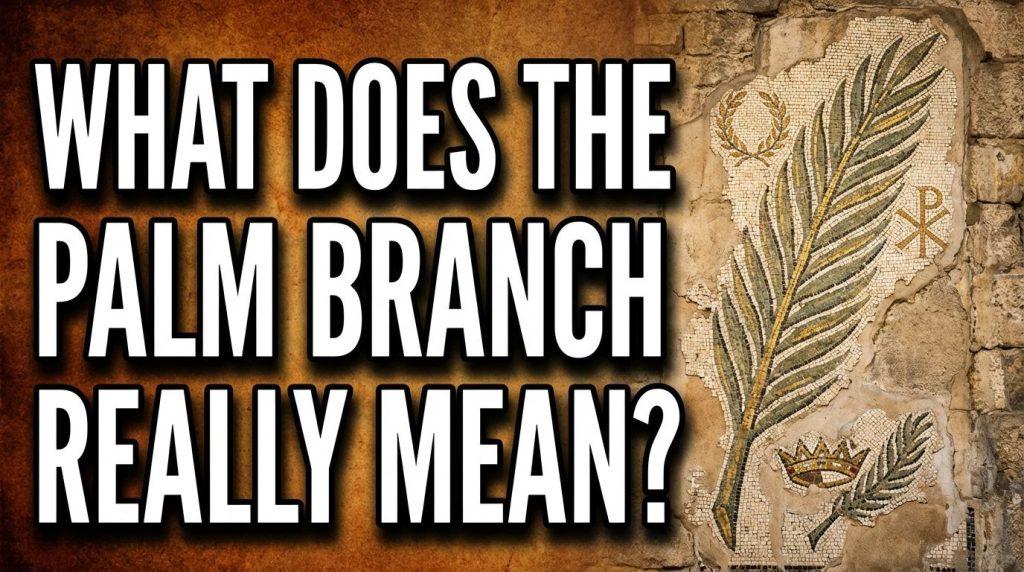
- The palm branch symbolizes victory, triumph, and martyrdom in Christian tradition, rooted in biblical and ancient cultural practices.
- Palm Sunday commemorates Jesus’s triumphant entry into Jerusalem when crowds waved palm branches and shouted “Hosanna.”
- Martyrs appear with palm branches in Christian art, signifying their victory over death through faithful witness to Christ.
- Ancient cultures associated palms with victory, using them to honor military conquerors and athletic champions before Christianity.
- The palm’s evergreen nature and ability to thrive in harsh conditions made it a natural symbol of endurance and life.
- Understanding palm symbolism helps Catholics appreciate the paradox of Christ’s kingship and the meaning of Christian victory through suffering.
Biblical Foundation in the Triumphal Entry
The Gospel accounts of Jesus’s entry into Jerusalem provide the primary biblical foundation for Christian palm symbolism. John’s Gospel records that a great crowd took palm branches and went out to meet Jesus, shouting “Hosanna, blessed is he who comes in the name of the Lord, even the King of Israel” (John 12:13). This greeting used language from Psalm 118, a psalm celebrating God’s deliverance and salvation. The crowd recognized Jesus as Israel’s messianic king and honored Him with branches as ancient peoples honored victorious rulers. The palms expressed hope that Jesus would deliver Israel from Roman occupation and restore David’s kingdom.
Matthew, Mark, and Luke do not specifically mention palms but describe people cutting branches from trees and spreading them on the road along with their cloaks (Matthew 21:8, Mark 11:8, Luke 19:36). The branches created a carpet for Jesus to ride over, a gesture of honor and submission. Different Gospel writers emphasize different details, but all four accounts present the entry as a moment of public recognition of Jesus’s authority. The crowd’s actions declared that a king was entering the city. They expected triumph, though not the kind of triumph Jesus would achieve through the cross.
The irony of Palm Sunday emerges when the passion narratives are read in light of the triumphal entry. The crowd that welcomed Jesus with branches and acclamation would within days call for His crucifixion. The palm branches that symbolized hoped-for political victory became associated with Jesus’s very different victory over sin and death. The king who entered Jerusalem on a donkey rather than a warhorse established a kingdom based on self-giving love rather than military power. Palm Sunday thus sets up the holy week drama where apparent defeat becomes true victory and where the world’s understanding of triumph gets overturned completely.
Ancient Cultural Context of Palm Symbolism
Palm branches held symbolic significance in ancient Mediterranean and Middle Eastern cultures long before Christianity. Greeks and Romans used palms to honor athletic victors and military conquerors. Winners at ancient Olympic games received palm branches along with laurel wreaths. Generals celebrating triumphs in Rome displayed palms among their victory symbols. This widespread association between palms and victory made the plant immediately recognizable as expressing triumph. When Jerusalem’s crowds waved palms at Jesus, they drew on this shared cultural vocabulary of honor and celebration.
Jewish tradition also valued palm symbolism. The Feast of Tabernacles, described in Leviticus, involved using palm branches in worship and celebration (Leviticus 23:40). These branches helped create the temporary shelters that commemorated Israel’s wilderness wandering. The palm thus connected to God’s providential care and to worship practices that predated Christianity by over a millennium. Solomon decorated the temple with carved palm trees, suggesting paradise and the presence of God. Palms appeared on Jewish coins during the Maccabean period, representing Jewish independence and identity.
The palm tree’s natural characteristics contributed to its symbolic meanings. Palms grow tall and straight, visible from great distances. They remain green year-round in most climates, suggesting eternal life and endurance. They thrive in harsh desert conditions where other plants fail, demonstrating resilience and strength. The date palm provides food, shade, and materials for building, making it economically valuable. These physical properties made palms natural symbols for positive qualities like steadfastness, vitality, and fruitfulness. Christianity inherited these associations and reinterpreted them through the lens of Christ’s death and resurrection.
Palm Sunday Liturgy and Tradition
Palm Sunday, officially called the Sunday of the Passion, begins Holy Week and commemorates Jesus’s entry into Jerusalem. The liturgy begins with the blessing and distribution of palm branches to the congregation. Priests sprinkle the palms with holy water and say prayers that acknowledge their symbolic meaning. Catholics hold their palms during the procession and the reading of the Gospel account of Jesus’s entry. This ritual reenacts the biblical event while allowing believers to participate in honoring Christ as king. The blessed palms become sacramentals, objects that through the Church’s blessing can dispose people to receive grace.
After Mass, Catholics traditionally take their blessed palms home and display them in prominent places. Palms might be placed behind crucifixes, near holy images, or in prayer corners. These displayed palms serve as reminders of Palm Sunday and of Christ’s kingship throughout the year. Some Catholics weave the palm fronds into crosses or other shapes as devotional objects. The presence of blessed palms in homes sanctifies domestic space and provides opportunities for brief prayers when people notice them. This practice extends the liturgy beyond church buildings into daily life.
The previous year’s dried palms are collected by parishes and burned to create the ashes used on Ash Wednesday. This cycle connects Palm Sunday to the beginning of Lent, showing how the Church year forms a continuous whole. The palms that celebrated Christ’s kingship become ashes that mark repentance and mortality. The transformation from palm to ash dramatizes human mortality and the need for divine mercy. This liturgical economy wastes nothing and creates symbolic connections that teach theological truths. What honored Christ becomes the matter for acknowledging human sinfulness, then both are redeemed through Easter’s resurrection.
Palm Branches and Christian Martyrdom
Early Christian art frequently depicts martyrs holding palm branches, establishing a strong connection between palms and martyrdom. The Book of Revelation describes a great multitude standing before God’s throne holding palm branches and wearing white robes, identified as those who came through the great tribulation (Revelation 7:9-14). This apocalyptic vision linked palms to those who remained faithful unto death. Martyrs had conquered through their testimony and blood, winning victory over sin, death, and the devil. The palm branch in a martyr’s hand proclaimed this triumph.
Catacomb paintings and sarcophagus carvings from the first centuries after Christ show saints and martyrs with palms. Saint Lawrence, Saint Agnes, Saint Sebastian, and countless others appear in art holding palm fronds. The palm identified them as victors who had successfully completed their race and received the crown of life. Medieval and Renaissance art continued this tradition, making the palm branch one of the standard attributes by which viewers could identify martyrs. The symbol transcended particular martyrs’ stories to represent martyrdom itself as the ultimate Christian victory.
The palm’s association with martyrdom draws on multiple meanings. First, it represents victory over death and evil. Martyrs die physically but gain eternal life, achieving the most complete victory possible. Second, it symbolizes the triumph of faith over persecution. External forces might destroy the body but cannot conquer the spirit that remains faithful to Christ. Third, it connects to Christ’s own victory through His passion. Martyrs follow their Lord through suffering to glory, their palms echoing the palms waved at His entry to Jerusalem. This rich symbolism made the palm branch an essential element in martyrdom iconography.
The Palm in Church Architecture and Art
Catholic churches incorporate palm motifs in their architectural decoration and artistic programs. Stone carvings might feature stylized palm fronds on capitals or in decorative borders. These architectural palms create visual references to victory and paradise. Mosaic programs in older churches often include palm trees, particularly in representations of paradise or heaven. The palms in these contexts suggest the blessed state of redeemed souls and the restoration of Eden through Christ. Stained glass windows sometimes show palms in scenes of martyrdom or in depictions of Palm Sunday.
Paintings of Christ’s entry into Jerusalem naturally include palm branches, often rendered with careful attention to botanical detail. Renaissance and Baroque artists depicted palms realistically while maintaining their symbolic function. Northern European artists working in regions without native palms sometimes struggled to represent them accurately, resulting in creative interpretations. These varied artistic treatments show how the symbol traveled across cultures and climates. Artists adapted the palm to their local contexts while preserving its essential meaning.
Contemporary church design continues incorporating palm symbolism though often in more abstract or stylized forms. Modern architects and artists might suggest palms through geometric patterns or simplified forms rather than realistic representation. These contemporary approaches maintain connection to tradition while speaking in visual languages suited to modern sensibilities. The palm’s symbolic vocabulary remains accessible even when expressed through minimalist or abstract design. Ancient meanings survive translation into contemporary artistic idioms.
The Palm and Paradise
Biblical imagery associates palm trees with paradise and the presence of God. The temple decorations included carved palm trees, suggesting that entering the temple meant entering a space that reflected paradise. Ezekiel’s vision of the restored temple included palm trees along its walls (Ezekiel 40:16-37). The Psalms compare the righteous to palm trees that flourish in God’s house (Psalm 92:12). These references created symbolic connections between palms, holiness, and divine presence. The palm tree marked sacred space and paradisiacal conditions.
Early Christian interpreters read these Old Testament palm references as prefiguring heaven and the Church. Just as palm trees marked the temple, they marked the heavenly sanctuary where believers would dwell eternally. Just as the righteous flourish like palms, Christians grow in grace through union with Christ. These typological readings enriched palm symbolism by connecting it to Christian hope for eternal life. The palm became not just a victory symbol but specifically the victory of reaching heaven and dwelling in God’s presence forever.
Artistic representations of paradise consistently include palm trees. Medieval and Renaissance depictions of the Garden of Eden show palms among other vegetation. Scenes of heaven or the blessed in glory often feature palm trees in the background. These artistic choices reflect the palm’s paradisiacal associations. The presence of palms signals that the scene represents restored creation and fulfilled hope. Viewers understand that where palms grow, the curse is lifted and God dwells with humanity. This symbolic vocabulary communicated theological truths through familiar natural imagery.
Palm Branches in Funeral and Memorial Contexts
Catholic funeral traditions sometimes incorporate palm symbolism, particularly for martyrs and saints but also more broadly. Funeral processions historically might include palm branches. Graves and tombs occasionally feature carved or painted palms. These uses expressed Christian hope that the deceased had won the victory over death through Christ. The palm at a funeral proclaimed faith in resurrection and eternal life. It transformed mourning into confident hope, grief into anticipation of heavenly reunion.
Memorial plaques and monuments often display palm branches as symbolic elements. Soldiers’ memorials might use palms to represent victory achieved through sacrifice. These secular uses draw on Christian symbolism even in contexts not explicitly religious. The palm’s association with victory and honor makes it appropriate for memorializing any death considered noble or sacrificial. Catholic military chaplains and veterans’ organizations have used palm imagery that connects patriotic service to Christian virtue.
Contemporary funeral practices less commonly feature actual palm branches but maintain the symbolism through other means. Funeral Mass texts proclaim themes of victory over death that palm symbolism traditionally expressed. Prayers commend the deceased to God’s mercy while affirming hope in resurrection. The paschal candle lit during Catholic funerals represents Christ’s victory, the ultimate triumph that palms symbolize. These various elements work together to create liturgical expressions of Christian hope that palms historically made visible.
The Palm and the Cross
Christian theology sees deep connections between Palm Sunday’s triumph and Good Friday’s apparent defeat. The crowd’s palm-waving welcome prefigured Christ’s true victory achieved through the cross. Both palms and cross function as victory symbols, though in very different ways. The palms represented conventional notions of triumph, power, and honor. The cross inverted these expectations, showing that God’s victory comes through weakness, suffering, and self-sacrifice. Yet both symbols belong together in Christian faith. Palm Sunday without Good Friday would be empty triumph. Good Friday without Palm Sunday and Easter would be mere tragedy.
Artistic and devotional traditions sometimes combine palm and cross imagery. A palm branch might be draped over or woven with a cross. This combination visually expresses the unity of Christ’s entry and His passion. What began with palms led to the cross, but the cross led to resurrection victory that the palms anticipated. The intertwined symbols teach that Christian triumph necessarily involves suffering. There is no crown without cross, no victory without sacrifice, no resurrection without death. The palm-cross combination makes this paradox visible and memorable.
Meditating on palms and cross together helps Catholics understand Christian discipleship. Following Christ means accepting both honor and suffering, both joy and sorrow. The Christian life includes moments of triumph that feel like Palm Sunday when God’s presence seems obvious and faith comes easily. It also includes crosses when faith is tested and God seems absent. Holding both palm and cross teaches that neither exhausts Christian experience. The faithful journey includes both, often intermingled. The symbols remind believers that current suffering will yield to victory and that present joys anticipate eternal glory.
Teaching Children About Palm Branches
Religious educators introduce children to palm symbolism through the Palm Sunday liturgy and its immediate impact. Young children enjoy receiving blessed palms and waving them during procession. They can understand that palms show Jesus is king and that we honor Him. Simple crafts like making palm crosses teach fine motor skills while reinforcing symbolic learning. Teachers might tell the Palm Sunday story with emphasis on the crowd’s excitement and Jesus riding into Jerusalem. These elementary approaches create positive associations with palms and establish basic symbolic knowledge.
As children mature, teaching can explore deeper meanings of palm symbolism. Older children can understand victory themes and begin grasping the irony that Palm Sunday’s triumph led to crucifixion. They can learn about martyrs who carry palms in art and what that means. They can discuss what kinds of victories matter and how Jesus’s victory differed from worldly conquest. These conversations connect palm symbolism to Christian values and help children develop more sophisticated understanding of their faith’s central mysteries.
Adolescents benefit from exploring how palm symbolism applies to their own lives and contemporary circumstances. They can reflect on what constitutes victory in their world and how that compares to Christian victory. They can consider what following Christ might cost and what martyrdom means in contexts where physical execution is unlikely. They can contemplate how to honor Christ as king in cultures that marginalize Christianity. These applications make ancient symbols relevant to modern experience and help teens appropriate tradition personally rather than merely inheriting it.
The Palm in Sacramental and Liturgical Contexts
Besides Palm Sunday, palms appear in other liturgical contexts throughout Catholic tradition. Some parishes use palm fronds as decoration during Easter season, extending Palm Sunday symbolism through the fifty days of paschal celebration. The palms remind worshipers that resurrection victory fulfills what Palm Sunday anticipated. Confirmation liturgies might incorporate palm imagery since this sacrament involves spiritual combat and the call to witness Christ. The palm’s martyrdom associations suit a sacrament that strengthens believers for Christian testimony.
First Communion celebrations sometimes feature palm decorations, though lilies are more common. The eucharistic connection to Christ’s sacrifice links to palm symbolism of victory through death. Ordination liturgies could appropriately include palms since priests are called to lay down their lives in service and potentially in martyrdom if circumstances demand. These various sacramental uses demonstrate the palm’s flexibility as a symbol while maintaining its core meanings of triumph, witness, and victory achieved through faithful endurance.
The palm’s sacramental character as a blessed object gives it special status in Catholic devotion. Unlike mere decorations, blessed palms have been set apart through the Church’s prayer and ritual. Catholics treating them with reverence express faith that God works through material things to convey grace. Reverent care for blessed palms, keeping them displayed respectfully and eventually returning them for burning rather than casual disposal, practices sacramental theology. The physical palm becomes a sign and instrument of spiritual realities, teaching by its very existence that matter matters in God’s economy.
Palms and Environmental Concerns
Growing awareness of environmental issues raises questions about Palm Sunday’s use of palm branches. Where do the palms come from? Are they harvested sustainably? What is the carbon footprint of shipping palms to regions where they do not grow naturally? Do some palm harvesting practices harm ecosystems or exploit workers? These practical concerns require attention from parishes seeking to celebrate liturgy responsibly. Some congregations have explored alternatives like using local branches or artificial palms, though these solutions raise their own questions about authenticity and tradition.
Catholic social teaching addresses environmental responsibility and care for creation (CCC 2415-2418). Applying these principles to Palm Sunday celebration means considering the ecological and social impacts of palm sourcing. Parishes might research suppliers to ensure ethical harvesting. They might reduce the quantity of palms distributed, encouraging families to share. They might educate parishioners about why using real palms matters symbolically while acknowledging environmental costs. These careful considerations balance liturgical authenticity with environmental stewardship.
The palm tree itself, as part of creation, speaks to the Creator’s glory and the interdependence of all living things. Reflecting on palms can lead to broader contemplation of humanity’s relationship with nature. God created palms and declared them good. Christ chose to enter Jerusalem in a way that involved palms. These facts give the plant theological significance beyond its symbolic meanings. Caring properly for creation, including palm trees, honors God and cooperates with His creative purposes. Palm Sunday can thus become an occasion for teaching ecological theology alongside traditional palm symbolism.
Regional Variations in Palm Sunday Observance
Catholic Palm Sunday celebrations vary significantly across cultures and regions. Mediterranean and Middle Eastern communities where palms grow naturally have access to authentic palm branches and elaborate local traditions. European regions without native palms have historically used willow, olive, or other locally available branches, sometimes still calling them “palms” despite botanical differences. These regional adaptations show how the Church contextualizes universal liturgy within particular cultures. The symbol’s meaning remains constant even when the specific plant varies.
Latin American Palm Sunday celebrations often include colorful processions with elaborate palm arrangements. Communities create intricate woven palm designs, sometimes enormous and highly artistic. These cultural expressions demonstrate popular devotion and artistic creativity in service of liturgy. Filipino Catholics perform passion plays during Holy Week following Palm Sunday. These dramatizations involve entire communities and extend over days. Spanish Catholics in some regions hold processions where participants dress as biblical characters. These varied cultural expressions share common palm symbolism while reflecting diverse local traditions.
African and Asian Catholic communities have developed their own Palm Sunday customs that incorporate indigenous plants and cultural practices. What matters is not the specific botanical species but the symbolic meaning conveyed. The Church’s catholicity embraces this diversity while maintaining essential unity. Palms, willows, olive branches, or other plants all serve to honor Christ and proclaim His victory when used in liturgy with proper intention and blessing. This flexibility shows that symbols can be both transcultural and culturally particular simultaneously.
Contemporary Challenges to Palm Symbolism
Modern secular culture often misunderstands or ignores traditional Christian symbols including palms. People familiar with palms only as decorative plants or tropical vacation imagery may not recognize their religious significance. When Palm Sunday gets reduced to a folk custom without theological content, the symbolism’s power diminishes. Catholics maintaining palm symbolism in increasingly secular contexts must teach explicitly what previous generations absorbed implicitly. The symbol requires explanation and catechesis rather than being self-evident.
Some contemporary Christians question whether ancient symbols remain relevant. Does palm symbolism speak meaningfully to people whose experience does not include victory processions or martyrdom? Can symbols rooted in ancient Mediterranean culture translate to postmodern global contexts? These questions deserve serious engagement rather than dismissal. Thoughtful answers explain that while cultural contexts change, the human experiences symbols address remain constant. Victory, sacrifice, witness, and hope transcend particular times and places. Palms symbolize these universal human experiences and Christian responses to them.
Digital culture presents new opportunities and challenges for transmitting symbolic knowledge. Social media allows sharing images of blessed palms and teaching about their meaning to wide audiences. Virtual liturgies during emergencies can incorporate palm symbolism through visual displays. However, digital mediation cannot fully replace the physical experience of receiving and holding blessed palms. The tactile, sensory dimension of sacramentals matters for incarnational religion. Balancing digital communication with physical practice remains an ongoing challenge for contemporary Catholicism navigating technological change.
Conclusion and Continuing Significance
The palm branch stands as a rich and multivalent symbol in Catholic tradition. From Jesus’s entry into Jerusalem through countless martyrs’ victories to contemporary Palm Sunday celebrations, the palm communicates truths about triumph, sacrifice, and Christian hope. Its meanings layer upon each other: ancient cultural associations with victory, biblical connections to paradise, liturgical links to Holy Week, artistic expressions in countless media. The palm’s simplicity as an object contrasts with its complexity as a symbol. A single green branch carries centuries of meaning.
Contemporary Catholics inheriting this symbolic tradition can engage it actively rather than merely receiving it passively. Learning the palm’s history and meanings enriches participation in Palm Sunday liturgy. Displaying blessed palms thoughtfully transforms homes into domestic churches. Reflecting on what the palm symbolizes can deepen understanding of Christ’s paradoxical kingship and the nature of Christian victory. Teaching children about palms transmits faith across generations. These practices keep ancient symbols alive and relevant.
The palm ultimately directs attention beyond itself to Christ whom it honors. When Catholics wave palms on Palm Sunday, they join the Jerusalem crowd in proclaiming Jesus as king. When they see palms in martyrdom art, they remember that following Christ may cost everything yet gains everything. When they contemplate palms’ connection to paradise, they recall the hope of eternal life. The humble palm branch, blessed and held reverently, becomes a vehicle for encountering the risen Christ who conquered death and invites all to share His victory. This power to mediate divine realities makes the palm not merely a decoration or relic but a living symbol that continues serving the Church’s mission of proclaiming Christ’s triumph.
Disclaimer: This article presents Catholic teaching for educational purposes. For official Church teaching, consult the Catechism and magisterial documents. For personal spiritual guidance, consult your parish priest or spiritual director. Questions? Contact editor@catholicshare.com
Sign up for our Exclusive Newsletter
- 📌 Add CatholicShare as a Preferred Source on Google
- 🎁 Join us on Patreon for Premium Content
- 🎧 Check Out These Catholic Audiobooks
- 📿 Get Your FREE Rosary Book
- 📱 Follow Us on Flipboard
-

Recommended Catholic Books
Discover hidden wisdom in Catholic books — invaluable guides enriching faith and satisfying curiosity. #CommissionsEarned
- The Early Church Was the Catholic Church
- The Case for Catholicism - Answers to Classic and Contemporary Protestant Objections
- Meeting the Protestant Challenge: How to Answer 50 Biblical Objections to Catholic Beliefs
As an Amazon Associate, I earn from qualifying purchases. Thank you for your support.