
Brief Overview
- The number twenty-four appears most prominently in connection with the priestly divisions established by King David for service in the temple.
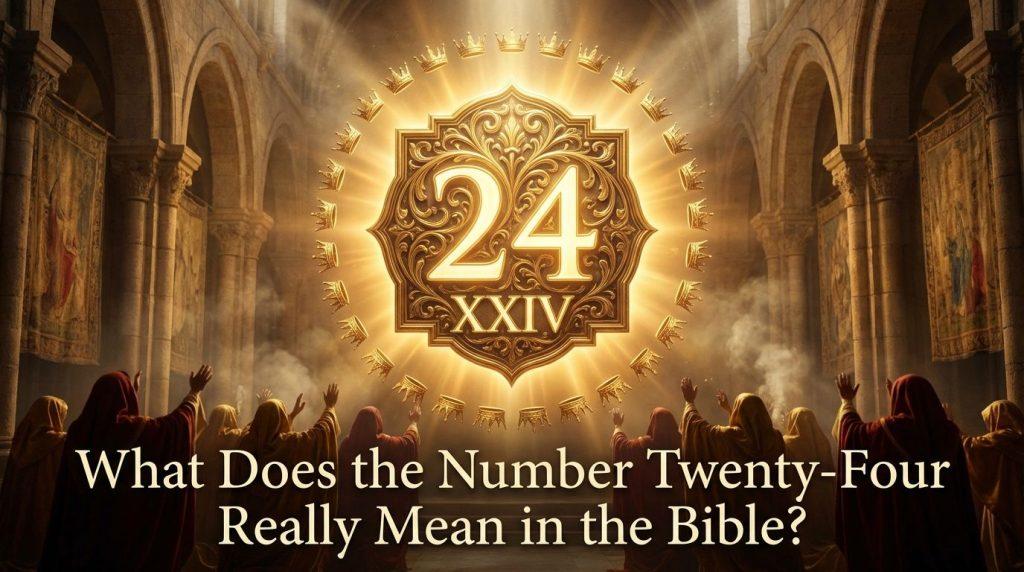
- Twenty-four elders appear in the Book of Revelation, worshiping before God’s throne and participating in heavenly liturgy.
- The temple service was organized around twenty-four courses of priests who rotated responsibilities throughout the year.
- This number represents the combination of twelve doubled, potentially signifying the fullness of God’s people or the completeness of worship.
- Catholic interpretation emphasizes examining each biblical occurrence within its specific literary and theological context rather than imposing universal symbolic meanings.
- Understanding biblical numbers requires attention to how sacred authors used them to structure narratives and convey theological truths.
The Twenty-Four Priestly Divisions
King David organized the descendants of Aaron into twenty-four divisions for temple service according to 1 Chronicles 24. The Levitical priesthood had grown considerably since the time of Moses, requiring systematic organization for orderly worship. David divided the priests into courses that would serve in rotation, ensuring continuous service without overwhelming any single group. Each division served for a specific period before being replaced by the next course. This rotation allowed all qualified priests to participate in temple service throughout the year. The arrangement showed wisdom in balancing responsibility and opportunity among the priestly families. The twenty-four divisions represented a practical solution to organizational challenges while maintaining the dignity of worship.
The text describes how David, along with Zadok and Ahimelech, cast lots to determine the order of service for each division. The first lot fell to Jehoiarib, the second to Jedaiah, and so on through all twenty-four courses. This method of selection demonstrated reliance on divine providence rather than human favoritism or politics. The casting of lots removed human bias and acknowledged God’s sovereignty over his worship. Each division received its assigned time of service, and the rotation continued perpetually. The system functioned effectively throughout the remaining monarchy period and into the Second Temple era. Zechariah, the father of John the Baptist, belonged to the division of Abijah, the eighth course mentioned in the list. His service in the temple when the angel appeared to him shows this organizational system still operating in Jesus’s time.
The Twenty-Four Elders in Revelation
The Book of Revelation presents a vision of twenty-four elders seated on thrones around God’s throne in heaven. These elders wear white robes and have golden crowns on their heads. They continuously worship God and the Lamb, falling down before the throne and casting their crowns before it. The elders participate in heavenly liturgy, singing new songs and offering prayers represented as golden bowls of incense. Their presence emphasizes the worship that surrounds God’s throne eternally. The number twenty-four in this context has generated considerable interpretative discussion among biblical scholars and Church Fathers. The symbolic nature of Revelation makes determining the precise identity and significance of these elders challenging yet rewarding.
Several interpretations of the twenty-four elders have gained support throughout Church history. Some scholars see them representing the twelve tribes of Israel combined with the twelve apostles, symbolizing the unity of Old and New Covenant peoples. This interpretation emphasizes continuity between God’s work in Israel and the Church. Others suggest the twenty-four elders correspond to the twenty-four priestly divisions from 1 Chronicles, representing worship in its fullness. This view connects earthly temple worship with heavenly reality. Still others propose that the elders represent angelic beings who serve before God’s throne. The text does not provide explicit identification, allowing for various legitimate interpretations. What remains clear is their role in worshiping God and witnessing to his glory. The twenty-four elders demonstrate that heaven resounds with continuous praise and adoration.
Twenty-Four and the Divisions of Time
The day divides naturally into twenty-four hours, a system that has ancient roots though it was not universally used in biblical times. Ancient Near Eastern cultures used various methods for dividing the day and night. The Babylonians developed a sophisticated timekeeping system based on astronomical observations. The division of the full day into twenty-four equal hours represents a mathematical and practical achievement. While the Bible does not explicitly organize time around twenty-four hours in most passages, the concept of day and night cycles remains fundamental. Jewish tradition divided daylight and darkness into twelve hours each, creating a flexible system where hour length varied by season. The New Testament occasionally references specific hours of the day, showing awareness of time divisions.
The use of twenty-four as an organizing number for time reflects human attempts to measure and structure existence. God created time by establishing day and night, seasons and years. Humans impose organizational systems on this created reality to facilitate daily life and worship. The twenty-four hour day provides a complete cycle from one dawn to the next. This completeness mirrors other uses of twenty-four in Scripture where it represents fullness or totality. The connection between twenty-four and completeness appears in both spatial organization, like the priestly divisions, and temporal measurement. However, the symbolic significance should not be pressed beyond what the biblical text itself indicates. Sometimes twenty-four functions practically rather than symbolically.
The Number Twenty-Four in Temple Architecture
While the Most Holy Place in Solomon’s temple measured twenty cubits in each dimension, creating a cube, various other measurements and appointments involved twenty-four. The temple’s decorative elements, organizational structures, and service schedules all employed numbers that conveyed theological meaning. The symmetry and proportion in temple architecture reflected the order and beauty of God’s creation. Specific measurements were not arbitrary but served both practical and symbolic purposes. The recurrence of certain numbers throughout temple descriptions suggests intentional design. Twenty-four appears less prominently in architectural measurements than in organizational structures like the priestly divisions.
The temple represented God’s dwelling among his people and required careful planning and execution. Every element, from the smallest decoration to the largest structure, contributed to the whole. The combination of practical function and symbolic meaning characterized biblical descriptions of sacred spaces. Numbers helped organize these descriptions and conveyed information about proportions and relationships. The twenty-four priestly divisions served the temple according to their appointed times. This organizational number became permanently associated with temple worship. The connection between twenty-four and worship persists into the New Testament’s apocalyptic vision of heavenly worship. The continuity suggests that earthly worship patterns reflect and participate in heavenly realities.
Twenty-Four as Double Twelve
The mathematical relationship between twenty-four and twelve invites reflection on potential symbolic connections. Twelve consistently represents the people of God throughout Scripture, from the twelve tribes to the twelve apostles. Doubling twelve to make twenty-four could intensify this symbolism or represent completeness enhanced. The twelve tribes of the Old Covenant combined with the twelve apostles of the New Covenant total twenty-four. This combination would symbolize the fullness of God’s people across both testaments. However, such symbolic readings require textual support rather than mere mathematical speculation. The Bible does not explicitly explain twenty-four through its relationship to twelve in most passages.
The interpretation of the twenty-four elders in Revelation often employs this twelve-plus-twelve framework. Seeing them as representatives of both testaments makes theological sense given Revelation’s emphasis on continuity and fulfillment. The vision shows God’s entire redeemed people worshiping together in unity. Old and New Covenant believers join in common praise of the Lamb. This unified worship demonstrates that salvation history forms a coherent whole rather than disconnected episodes. The twenty-four elders, understood this way, proclaim the completeness of God’s saving work. However, alternative interpretations remain possible and legitimate. The symbolic nature of apocalyptic literature allows for multiple layers of meaning. What matters most is recognizing that the number serves the vision’s theological purposes rather than constituting the message itself.
Catholic Teaching on Biblical Numbers
The Catechism of the Catholic Church provides essential guidance for interpreting Scripture, including questions of numerical symbolism (CCC 109-119). Catholic exegesis must occur within the Church’s living Tradition and under the Magisterium’s guidance. The literal sense of Scripture forms the foundation for all interpretative approaches. Spiritual senses, including allegorical and moral meanings, build upon the literal sense rather than replacing it. The Church cautions against arbitrary or fanciful interpretations that depart from the sacred authors’ intentions. Numbers sometimes carry symbolic significance in Scripture, but this must be determined from context and genre rather than imposed externally.
The number twenty-four appears in Scripture with varying levels of symbolic significance. The priestly divisions represent a practical organizational system with potential theological overtones. The twenty-four elders in Revelation clearly function symbolically within apocalyptic literature. Other references to twenty-four may serve primarily as factual information about quantities or measurements. Catholic interpretation evaluates each occurrence individually, considering literary genre, historical context, and theological purpose. The Church teaches that sound exegesis requires knowledge of ancient languages, cultures, and literary forms. The Holy Spirit guides authentic interpretation through the Magisterium while protecting against error. This balanced approach prevents both excessive skepticism about symbolism and uncritical acceptance of numerological speculation. The goal remains understanding what God reveals rather than constructing elaborate numerical theories.
Twenty-Four Hours and God’s Providence
The concept of a complete day spanning twenty-four hours can remind believers of God’s constant care and sovereignty. Each new day represents a gift from God and an opportunity for service and worship. The psalmist declares that God neither slumbers nor sleeps, watching over his people continuously. The perpetual nature of divine providence transcends human measurements of time. God works in every hour and moment to accomplish his purposes. The rotation of priestly divisions every twenty-four hours, if that was the practice, ensured continuous worship in the temple. Similarly, the Church’s liturgy sanctifies time through daily prayers and the celebration of Mass.
The Divine Office, or Liturgy of the Hours, structures prayer throughout the day and night. This ancient practice continues the biblical tradition of regular prayer at set times. Morning and evening prayer frame the day with explicit acknowledgment of God’s presence. The Church prays psalms and other Scripture passages at various hours, consecrating time to God. While the Divine Office does not specifically emphasize twenty-four as significant, it does treat the full day as the appropriate unit for complete liturgical worship. Each day forms a whole that begins and ends with prayer. This daily cycle reminds Catholics that all time belongs to God. The sanctification of ordinary hours transforms daily life into continuous worship and service.
The Twenty-Four Thrones and Heavenly Worship
The vision in Revelation of twenty-four elders on twenty-four thrones provides insight into the nature of heavenly worship. These thrones surround the central throne where God sits in majesty. The arrangement shows proper order and hierarchy in heaven while emphasizing God’s absolute supremacy. The elders occupy positions of honor but remain subordinate to the one they worship. Their thrones indicate authority and dignity without challenging divine sovereignty. The number of thrones, twenty-four, suggests completeness in the assembly of worshipers. All who should be present are present, and the worship lacks nothing.
The elders fall down before God’s throne repeatedly throughout Revelation’s visions. This action demonstrates humility and recognition of God’s infinite superiority. They cast their crowns before the throne, acknowledging that any authority or honor they possess comes from God alone. The gesture renounces pride and self-assertion in favor of complete submission. The golden bowls of incense they hold represent the prayers of the saints on earth. This connection between heavenly and earthly worship shows their unity and mutual relationship. The Church on earth and the Church in heaven participate together in worship of God. The twenty-four elders serve as representatives or mediators of this unified liturgy. Their continuous worship models what all believers are called to offer.
Practical Application for Catholic Life
Catholics should approach the number twenty-four with balanced perspective, recognizing its biblical uses without superstitious attachment. The number appears in important organizational and symbolic contexts, particularly regarding priestly service and heavenly worship. These scriptural uses provide material for reflection on themes of order, completeness, and continuous praise. However, twenty-four possesses no magical properties or power to determine spiritual outcomes. Daily encounters with twenty-four in times, measurements, or other contexts carry no inherent spiritual significance. Catholics avoid both superstitious interpretation and forced symbolism in ordinary life. The theological insights from biblical passages involving twenty-four do not extend to every modern occurrence.
The priestly divisions and the heavenly elders both emphasize the importance of worship in God’s plan. The organization of twenty-four courses ensured that temple service continued without interruption. Modern Catholics can reflect on how their own lives should include regular, consistent worship. The Mass and the Liturgy of the Hours provide structures for daily and weekly prayer. Participating in these liturgical rhythms connects believers with the Church’s ancient traditions. The twenty-four elders’ continuous worship challenges Christians to consider how their entire lives can become acts of worship. Every hour and activity can be offered to God when done with proper intention. This vision of life as perpetual worship transforms ordinary existence into something sacred and meaningful.
Twenty-Four and the Fullness of Worship
The use of twenty-four in connection with worship, both earthly and heavenly, suggests associations with completeness and fullness. The priestly divisions ensured that all qualified priests could serve and that worship continued throughout the year. No part of the priestly community was excluded, and no time lacked proper service. This completeness reflected the comprehensive nature of Israel’s covenant relationship with God. Worship was not occasional or partial but constant and total. The twenty-four elders in Revelation similarly represent worship in its fullness. They embody the complete people of God from both testaments joining in praise. Their presence before God’s throne shows that salvation history has reached its goal.
Catholic theology emphasizes that worship represents humanity’s proper response to God’s goodness and majesty. The entire created order exists to glorify God and reflect his perfection. Rational creatures, humans and angels, worship through conscious choice and love. The vision of continuous heavenly worship in Revelation shows what creation was always meant to be. Sin disrupted this worship and alienated humanity from God. Christ’s redemptive work restores the broken relationship and enables renewed worship. The Church’s liturgy participates in the heavenly worship even now. When Catholics celebrate Mass, they join with angels and saints in praising God. The number twenty-four, associated with this complete worship, reminds believers of their calling and destiny.
Historical Development of the Priestly Divisions
The twenty-four priestly divisions established by David continued functioning throughout the remaining monarchy period and beyond. When the Babylonians destroyed the First Temple and exiled many Israelites, the priestly organization was disrupted. After the exile, when Jews returned to rebuild the temple, they reestablished the divisions. However, not all twenty-four courses returned from Babylon in equal numbers. Some divisions had few representatives while others had many. The returning community reorganized the divisions while maintaining the symbolic number of twenty-four. This commitment to preserving the traditional structure shows how important the system had become.
By the time of Jesus, the twenty-four priestly divisions were still functioning as they had for centuries. Zechariah’s membership in the division of Abijah demonstrates this continuity. His experience in the temple, when Gabriel announced John’s birth, occurred during his division’s appointed time of service. The rotation meant that ordinary priests served in the temple sanctuary only occasionally, making Zechariah’s selection by lot particularly significant. The encounter with the angel occurred within the established liturgical framework that had existed for generations. This continuity between David’s organization and Jesus’s time shows how deeply embedded the twenty-four divisions had become in Jewish worship. The system survived the destruction of the Second Temple only in memory, as rabbinic Judaism developed without the sacrificial system.
Twenty-Four in Jewish Tradition
Jewish tradition has developed various associations with the number twenty-four beyond those explicitly stated in Scripture. The Talmud contains references to twenty-four in legal discussions and interpretative contexts. Rabbinic literature notes the twenty-four books of the Hebrew Bible according to traditional Jewish counting. This enumeration differs from Christian Old Testament organization but represents the same canonical material arranged differently. The Hebrew Bible includes Torah, Prophets, and Writings as major divisions. Traditional Jewish counting arrives at twenty-four books by combining some texts that Christians separate. This canonical number of twenty-four may relate to the priestly divisions or may simply reflect how the community organized its Scriptures.
Some Jewish mystical traditions have explored numerological aspects of twenty-four and its relationship to other significant numbers. The practice of gematria sometimes produces totals of twenty-four for words with theological significance. However, mainstream Jewish interpretation has generally avoided excessive numerological speculation. The focus remains on studying the text’s plain meaning and deriving practical applications for daily life. Catholic scholars can appreciate Jewish numerical traditions while employing their own interpretative methods. The shared biblical heritage creates common ground even as different communities develop distinct approaches. Understanding Jewish traditions helps illuminate the cultural context in which Scripture was written and preserved.
Twenty-Four and Apocalyptic Symbolism
The Book of Revelation employs numbers extensively as part of its apocalyptic symbolic system. Seven, twelve, and their multiples appear repeatedly with clear theological significance. The twenty-four elders fit within this larger numerical framework. Apocalyptic literature uses numbers to convey truths that transcend literal description. The genre invites readers to look beyond surface details to deeper spiritual realities. The twenty-four elders should be understood within this symbolic context rather than as a literal count of specific individuals. They represent something larger and more significant than their numerical value alone suggests.
Interpreting apocalyptic numbers requires understanding the genre’s conventions and purposes. Apocalyptic literature uses vivid imagery, symbolic numbers, and dramatic visions to communicate God’s sovereignty and ultimate victory. The numbers contribute to the overall message without necessarily functioning as precise mathematical data. Twenty-four elders make a theological statement about worship and God’s people. Whether exactly twenty-four entities exist in heaven matters less than what the number symbolizes. The completeness, order, and unity represented by twenty-four serve Revelation’s purposes. Catholic interpretation appreciates the symbolic richness while avoiding the error of treating apocalyptic visions as literal descriptions of heaven’s furniture arrangement.
Avoiding Numerological Speculation
While recognizing legitimate biblical symbolism, Catholics must guard against numerological obsession or excessive speculation. Some people become fixated on finding hidden meanings in every number they encounter. This approach treats numbers as mystical codes rather than as elements of narrative and teaching. The Church has consistently rejected divination and attempts to predict the future through numerical calculations (CCC 2115-2117). Numerology often assigns meanings without solid biblical or traditional foundation. Such practices can become forms of superstition that contradict Christian faith in divine providence. Believers should trust God’s revealed word rather than seeking secret knowledge through elaborate numerical systems.
Balanced Catholic interpretation recognizes that biblical authors used numbers deliberately without claiming every numerical reference carries symbolic weight. The context and literary genre determine whether a number functions symbolically or conveys factual information. The twenty-four priestly divisions represent historical organization with theological overtones. The twenty-four elders in Revelation clearly function symbolically within apocalyptic literature. Other references to twenty-four may serve primarily as measurements or quantities without deeper meaning. Readers must allow the text itself to indicate when numbers carry symbolic significance. The Church provides guidance for distinguishing legitimate observation of patterns from speculative numerology. Prayer, study, and submission to Church teaching help believers interpret Scripture authentically.
Twenty-Four in Church History
Church history shows moderate attention to the number twenty-four, primarily focused on the Revelation passage about the elders. Early Church Fathers offered various interpretations of who the twenty-four elders represent. Some patristic writers saw them as representing the biblical authors or the major prophets and apostles. Others interpreted them more broadly as symbols of the universal Church. The diversity of patristic opinion shows that the Church did not settle on a single definitive interpretation. This flexibility allows for legitimate differences in understanding while maintaining agreement on essential truths. The elders’ primary function remains clear even when their precise identity stays somewhat mysterious.
Medieval and later Catholic theology continued discussing the twenty-four elders without reaching absolute consensus. Artistic representations in churches sometimes depicted these elders in various ways. The symbolic nature of the vision allowed for creative interpretation in sacred art. What remained constant was the emphasis on heavenly worship and the unity of God’s people. The number twenty-four did not become a major organizing principle for Catholic theology or liturgy comparable to numbers like three or seven. This restraint reflects the Church’s wisdom in focusing on clear biblical teaching rather than elaborate speculation. The historical evidence suggests that while twenty-four appears in important contexts, it did not develop into a dominant theological symbol.
The Twenty-Four Books of the Hebrew Bible
Jewish tradition counts twenty-four books in the Hebrew Bible through a specific method of organization. The Torah includes five books, Genesis through Deuteronomy. The Prophets section includes eight books combining some texts that Christians separate. The Writings comprise eleven books, again combining some material differently than Christian Bibles. This arrangement produces twenty-four books total, though the content matches the Protestant Old Testament. Catholic Bibles include additional deuterocanonical books that Jewish tradition does not accept as Scripture. The different canonical boundaries between Jewish and Christian Bibles reflect distinct historical developments and theological decisions.
The number twenty-four in this canonical counting may carry symbolic significance or may simply result from practical organization. Some interpreters see connections between the twenty-four biblical books and the twenty-four priestly divisions. The parallel would suggest that Scripture, like worship, represents a complete and ordered whole. However, such connections remain speculative rather than definitively established. The canonical number reflects how the community organized its sacred texts over time. Different organizational principles could have produced different totals. The important point is that the community preserved and honored these texts as God’s word. The specific number, while interesting, matters less than the texts’ content and authority.
Twenty-Four and Temporal Cycles
Beyond the division of the day into twenty-four hours, various cultures have used twenty-four in organizing longer temporal cycles. Some ancient calendars employed multiples of twenty-four for months or years. The biblical calendar follows different principles, based primarily on lunar months and agricultural seasons. However, the prevalence of twenty-four across cultures for time organization suggests its practical utility. The number divides evenly in multiple ways, making it convenient for creating schedules and rotations. The priestly divisions rotated service in a pattern that could span the solar year efficiently. Each course served approximately two weeks per year with this arrangement.
The universal human need to organize time and space explains why certain numbers appear frequently across cultures. Twenty-four works mathematically for many purposes without necessarily carrying mystical significance. Catholic interpretation distinguishes between numbers’ practical utility and their potential symbolic meaning. A number can serve organizational purposes in one context and symbolic purposes in another. The twenty-four priestly divisions demonstrate both aspects simultaneously. The system worked practically for temple administration while also symbolizing the completeness of worship. This dual function characterizes many biblical numbers. Modern readers should appreciate both dimensions without collapsing one into the other.
Worship and the Twenty-Four Elders
The primary message associated with twenty-four in Revelation concerns worship and the proper response to God’s glory. The elders model continuous, humble adoration before the divine throne. Their worship includes singing, prostration, and offering of prayers. The descriptions emphasize joy, reverence, and complete focus on God. The elders never tire of worship or seek their own glory. Their crowns, symbols of authority and achievement, are cast before God’s throne repeatedly. This gesture demonstrates that any honor they possess derives from God and properly returns to him. The scene invites readers to examine their own worship and consider whether it reflects similar priorities.
Catholic liturgy draws inspiration from biblical descriptions of heavenly worship. The Mass includes elements that mirror the heavenly liturgy described in Revelation. The Sanctus, or Holy, Holy, Holy, echoes the worship offered by heavenly beings. The Church consciously patterns earthly worship after the heavenly model revealed in Scripture. The twenty-four elders represent one aspect of this greater reality. Their presence before God’s throne shows that worship forms the central activity of heaven. Those who enter eternal life will join this endless song of praise. Understanding this destiny should shape how Catholics approach worship now. Every Mass participates in the heavenly liturgy and prepares believers for their ultimate calling as eternal worshipers.
Conclusion and Summary
The number twenty-four appears in Scripture most significantly in connection with worship, both earthly and heavenly. King David organized the priesthood into twenty-four divisions to ensure orderly, continuous service in the temple. This practical arrangement also carried theological meaning about the completeness and dignity of worship. The twenty-four elders in Revelation represent the fullness of God’s people worshiping before the divine throne. Their continuous praise models the proper response to God’s majesty and goodness. These biblical uses demonstrate that twenty-four can carry symbolic significance within specific contexts.
Catholic interpretation requires careful attention to genre, context, and authorial intention when evaluating numerical references. The Church teaches believers to read Scripture within Tradition and under the Magisterium’s guidance. Numbers serve theological purposes without possessing inherent mystical power independent of their literary contexts. The meaning of twenty-four in any particular passage depends on how the sacred author employs it. Catholics approach biblical numbers with balanced perspective, appreciating legitimate symbolism while avoiding excessive speculation. Sound interpretation recognizes that numbers help structure biblical narratives and teachings while remaining subordinate to the theological truths they serve and support throughout salvation history.
Disclaimer: This article presents Catholic teaching for educational purposes. For official Church teaching, consult the Catechism and magisterial documents. For personal spiritual guidance, consult your parish priest or spiritual director. Questions? Contact editor@catholicshare.com
Sign up for our Exclusive Newsletter
- 📌 Add CatholicShare as a Preferred Source on Google
- 🎁 Join us on Patreon for Premium Content
- 🎧 Check Out These Catholic Audiobooks
- 📿 Get Your FREE Rosary Book
- 📱 Follow Us on Flipboard
-

Recommended Catholic Books
Discover hidden wisdom in Catholic books — invaluable guides enriching faith and satisfying curiosity. #CommissionsEarned
- The Early Church Was the Catholic Church
- The Case for Catholicism - Answers to Classic and Contemporary Protestant Objections
- Meeting the Protestant Challenge: How to Answer 50 Biblical Objections to Catholic Beliefs
As an Amazon Associate, I earn from qualifying purchases. Thank you for your support.