
Brief Overview
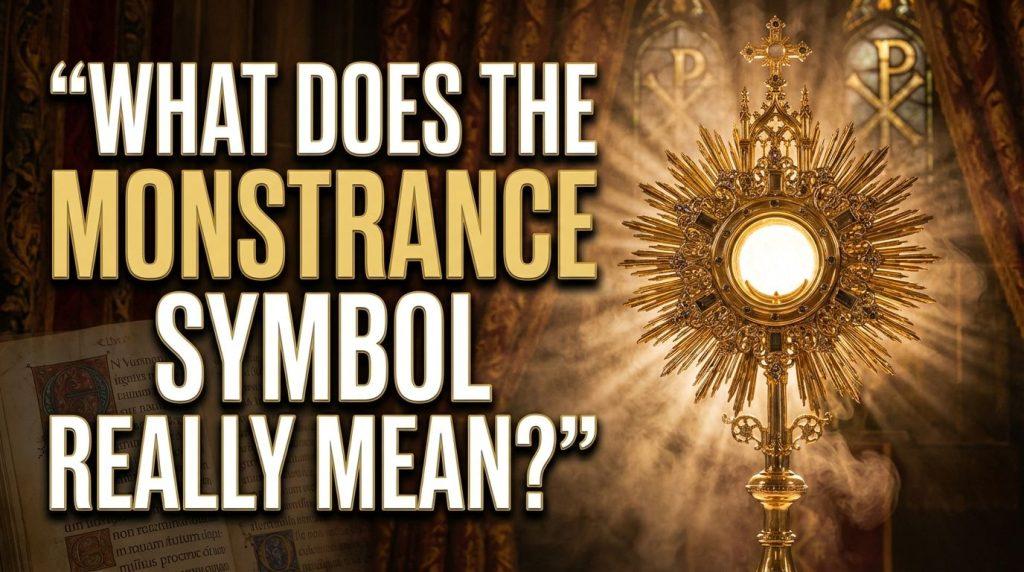
- The monstrance is a sacred vessel used to display the Blessed Sacrament for adoration, with its design symbolizing Christ’s glory and presence.
- The typical sunburst design represents Christ as the Light of the World and the radiance of divine glory.
- The central glass or crystal holder, called the luna, contains the consecrated Host and allows the faithful to see Jesus truly present.
- Monstrances developed in the medieval period as Eucharistic devotion grew and the Church emphasized Christ’s Real Presence.
- The vessel’s elaborate decoration with gold, precious stones, and sacred imagery honors the King of Kings dwelling within.
- Understanding the monstrance helps Catholics appreciate the theology of Real Presence and the proper reverence due to Christ in the Eucharist.
Historical Development of the Monstrance
The monstrance as we know it today developed gradually during the medieval period as Eucharistic theology and devotion evolved. Early Christians reserved the Blessed Sacrament primarily for sick communion rather than public adoration. The reserved hosts were kept in secure containers but not displayed. As theological understanding of Real Presence deepened and popular devotion grew, the Church developed practices for venerating the Blessed Sacrament outside of Mass. The feast of Corpus Christi, established in 1264, particularly promoted Eucharistic devotion and created liturgical contexts requiring vessels to display the Host.
The earliest forms of what would become monstrances were quite different from modern versions. Some churches used transparent containers called ostensoria that allowed viewing the consecrated bread. Others employed tower-shaped reliquaries adapted for Eucharistic use. Gothic architecture influenced early monstrance design with elaborate towers and spires. These early vessels were often made of silver or gilt metal and featured architectural details mimicking church buildings. The symbolism suggested that the monstrance itself was a small church housing Christ just as the larger church building did.
The distinctive sunburst design that characterizes modern monstrances emerged during the Baroque period in the sixteenth and seventeenth centuries. This design reflected Counter-Reformation theology emphasizing Real Presence against Protestant denials. The radiating rays surrounding the central Host communicated divine glory and Christ’s identity as Light of the World. Baroque monstrances became increasingly elaborate with multiple tiers of rays, clouds of cherubs, and intricate metalwork. These magnificent vessels expressed Catholic confidence in Eucharistic doctrine and invited awe before the Blessed Sacrament. The sunburst form has remained standard though artistic styles have varied across subsequent periods.
Theological Symbolism of the Sunburst Design
The sunburst pattern that dominates monstrance design carries rich theological symbolism rooted in Scripture and tradition. Jesus declared Himself the Light of the World who gives life to those who follow Him (John 8:12). The radiating golden rays surrounding the Host visually proclaim this truth. Just as the sun illuminates the earth and enables life, Christ illuminates souls and enables spiritual life. The monstrance’s brightness and splendor suggest divine glory that exceeds human comprehension. No earthly light compares to the uncreated light of God’s glory that shines from Christ truly present in the Eucharist.
The rays extending outward from the center also symbolize grace flowing from Christ to believers. The Eucharist is the source and summit of Christian life, the fountain from which all grace flows (CCC 1324). The visual representation of light and energy radiating from the consecrated Host teaches this theological truth. Catholics kneeling in adoration receive grace streaming from Jesus present in the sacrament. The rays are not merely decorative but express the dynamic reality of divine love pouring forth from the sacramental presence. Contemplating the monstrance’s form can deepen understanding of how the Eucharist functions as the center of Catholic spiritual life.
The sun itself held symbolic meaning in Christian tradition before monstrance design appropriated solar imagery. Malachi prophesied that the sun of justice would rise with healing in its wings (Malachi 4:2). Christians interpreted this as referring to Christ. The rising sun became a symbol for Christ’s resurrection and His victory over darkness. Liturgical architecture often oriented churches eastward so the rising sun would illuminate the altar. The monstrance concentrates this solar symbolism around the Eucharistic presence. Christ the Sun of Justice shines from within the golden sunburst, healing souls who turn toward Him in adoration. The symbolism is ancient yet ever relevant.
The Luna and the Real Presence
The luna, from the Latin word for moon, is the small holder within the monstrance that directly contains the consecrated Host. This circular glass or crystal container allows the white Host to be visible while protecting it from damage or irreverence. The luna is usually rimmed with gold or other precious metal and features a secure clasp to hold the Host in place. Some lunas include small rays or decorations around their perimeter. The luna’s transparency is essential since the whole purpose of the monstrance is displaying the Blessed Sacrament for adoration rather than merely reserving it.
The theological significance of the luna centers on making Christ’s presence visible to the faithful. Catholic doctrine teaches that Christ is truly, really, and substantially present in the Eucharist under the appearances of bread and wine (CCC 1373-1377). The Host that appears to be bread is actually Christ’s Body, Blood, Soul, and Divinity. The luna’s transparency allows believers to see the Host and direct their adoration to Jesus Himself rather than merely toward a container. This visibility strengthens faith and facilitates devotion. Kneeling before the monstrance, Catholics know they are in the immediate presence of their Lord and Savior.
The luna’s name, referencing the moon, creates interesting symbolic resonances with the surrounding sunburst design. The moon reflects the sun’s light rather than generating its own. Similarly, the Church and the Blessed Virgin Mary reflect Christ’s light and glory. Mary is sometimes called the moon to Christ’s sun in traditional Catholic symbolism. The luna holding the Host thus suggests how humanity receives and reflects divine light. This layered symbolism enriches monstrance meaning beyond simple display function. Every element teaches theological truth through visual form.
Sacred Materials and Decoration
Church law and tradition specify that monstrances should be made from precious materials befitting their sacred purpose. Canon law requires that the receptacle for the consecrated Host be made of solid material and precious metals, typically gold or silver. Base metals like iron or copper were traditionally forbidden except in regions too poor to afford precious metals. These requirements reflect the doctrine of Real Presence. If Christ the King truly dwells in the Host, the vessel containing Him should be as noble and precious as possible. Expensive materials express the infinite value of the One who is present.
Beyond precious metals, many monstrances feature gemstones, enamel work, and intricate craftsmanship. Diamonds, rubies, pearls, and other jewels might adorn the rays or base. Enamel panels could depict biblical scenes or Eucharistic symbols. Master goldsmiths and silversmiths employed their highest skills creating monstrances. The finest monstrances rank as genuine works of art that belong in museums yet serve active liturgical functions. Their beauty exists not for its own sake but to honor Christ and raise human hearts toward heaven. The lavish decoration recalls the woman who anointed Jesus with expensive perfume, whom He defended against criticism (Mark 14:3-9).
Modern monstrances continue this tradition of excellence while sometimes employing contemporary design principles. Some feature clean lines and minimalist decoration rather than Baroque elaboration. Others incorporate modern materials like stainless steel or bronze alongside traditional gold. These innovations demonstrate that reverence need not always express itself through ornate historicism. What matters is that the vessel clearly designates its contents as sacred and worthy of profound respect. Whether ornate or simple, the monstrance proclaims that Christ the King deserves honor and that believers should approach His presence with awe.
The Monstrance in Eucharistic Adoration
Exposition of the Blessed Sacrament for adoration requires a monstrance to display the Host. The priest or deacon removes the consecrated Host from the tabernacle, places it in the luna, and then places the luna in the monstrance on the altar. Candles are lit, and often incense is used to honor the exposed sacrament. The congregation then spends time in prayer before Jesus present in the Eucharist. This practice of adoration allows believers to worship Christ directly and receive grace through prayerful presence before the Blessed Sacrament. The monstrance is essential for this devotion since it makes the Host visible while treating it with proper reverence.
Different forms of Eucharistic adoration employ the monstrance in various ways. Benediction, a shorter service, includes exposition in the monstrance, prayers and hymns, and concludes with the priest blessing the people by making the sign of the cross with the monstrance. Forty Hours devotion involves continuous exposition for forty hours, recalling the time Jesus spent in the tomb. Perpetual adoration maintains continuous exposition with people signing up for specific hours to ensure the Blessed Sacrament is never left alone. All these practices require monstrances to make the adoration possible. The vessel thus enables devotions central to Catholic spiritual life.
The monstrance’s visual impact powerfully affects those who pray before it. The golden rays draw eyes toward the white Host at the center. The elevation of the monstrance on the altar places it above eye level, requiring an upward gaze that naturally disposes toward reverence. The surrounding darkness of the church contrasts with the monstrance’s brightness, creating dramatic focus. These visual and spatial elements work together to facilitate prayer and contemplation. The monstrance does not merely hold the Host but creates an environment conducive to encountering Christ. Its form serves its function by helping believers enter into adoration more deeply.
Eucharistic Processions and the Monstrance
Corpus Christi processions and other public displays of the Blessed Sacrament require special processional monstrances designed for carrying. These monstrances must be secure enough that the Host will not fall out during movement yet visible enough to fulfill the purpose of public witness. Some processional monstrances include handles or shafts that priests can hold while walking. Others rest on platforms carried by multiple people. A canopy called a baldachin or humeral veil often covers the priest carrying the monstrance, showing additional reverence and protecting the sacrament from weather and irreverence.
The public procession of the Blessed Sacrament in a monstrance makes a powerful statement about Catholic faith in Real Presence. The Church publicly proclaims that Christ is truly present and worthy of worship. Crowds lining the procession route kneel as the Eucharist passes, offering visible testimony to faith. The monstrance in such contexts functions not only as a vessel but as a witness. Its magnificence proclaims the glory of the One it contains. The very fact that the Church processes through streets with such reverence demonstrates conviction that something extraordinary occurs in the Eucharist.
Corpus Christi processions developed in medieval Europe and continue in many Catholic regions worldwide. In some countries, these processions involve entire communities and include elaborate decorations along the route. Streets receive floral carpets. Buildings display banners and lights. The monstrance passes stations where the priest gives blessings with the sacrament. These traditions vary by culture but share common elements. The monstrance always remains central, carrying Christ through the world as a visible sign of His presence and His desire to bless all people. Modern Catholics continuing these traditions connect with centuries of believers who processed behind the Eucharistic Lord.
Proper Reverence Before the Monstrance
The Church teaches specific ways to show reverence when the Blessed Sacrament is exposed in a monstrance. Catholics genuflect on both knees rather than one knee when entering or leaving a church with exposition. This fuller genuflection acknowledges the greater reverence due to the exposed sacrament compared to the reserved sacrament in the tabernacle. Silence should be maintained in the presence of exposition unless prayers are being said aloud or hymns sung. These practices train believers in recognizing Christ’s presence and responding appropriately.
Proper attire and comportment matter when coming for adoration before the monstrance. Catholics should dress modestly and respectfully as if meeting an important person, because they are meeting the King of Kings. Slouching, talking, eating, or other casual behaviors would be inappropriate. The time before the monstrance is for prayer, contemplation, and worship. Distractions should be minimized. Cell phones should be silenced. Attention should focus on Christ present in the Host. These expectations are not merely rules but helps toward entering into the mystery of the Eucharistic presence. Outward reverence both expresses and cultivates interior devotion.
When leaving exposition, Catholics typically take time to make a proper thanksgiving. They might pray prayers of gratitude, petition, or consecration. Some make acts of spiritual communion if they have not received Communion recently. Others simply rest in silent love before the Lord. The Church encourages these practices without mandating specific prayers or durations. What matters is recognizing that time before the exposed Blessed Sacrament is precious and should not be rushed through carelessly. The monstrance on the altar is not merely religious decor but holds the body, blood, soul, and divinity of Jesus Christ.
The Monstrance and Corpus Christi Feast
The feast of Corpus Christi, officially called the Solemnity of the Most Holy Body and Blood of Christ, has special connections to monstrance use and Eucharistic devotion. Pope Urban IV established this feast in 1264 at the urging of Saint Juliana of Liège, who experienced visions calling for a feast honoring the Blessed Sacrament. The feast falls on the Thursday after Trinity Sunday or, in some countries, on the following Sunday. Corpus Christi celebrations typically include processions with the Blessed Sacrament in a monstrance, making the feast day the year’s most prominent occasion for public Eucharistic devotion.
The historical development of Corpus Christi and the development of the monstrance proceeded in parallel. The feast created liturgical occasions requiring vessels to display the Host publicly. This need drove innovation in monstrance design. The feast’s theology of making Christ’s Body present and visible to the faithful found perfect expression in the monstrance’s transparency and radiating glory. The processions held on Corpus Christi demonstrated the faith that the monstrance proclaimed through its very form. Feast and vessel reinforced each other, together advancing Eucharistic devotion.
Contemporary celebration of Corpus Christi varies by region but often maintains traditional processions where feasible. Even where public processions are impractical, parishes mark the feast with special Masses and adoration. The monstrance receives special attention and decoration. Extra flowers might surround the altar. Additional candles might be lit. The feast provides opportunities to teach about the Real Presence and the proper use and meaning of the monstrance. Catholics who rarely encounter Eucharistic adoration might experience it on Corpus Christi and discover a devotion that enriches their spiritual lives.
Variations in Monstrance Design
While the sunburst design predominates, monstrances display considerable variety in specific forms and decorative choices. Some feature multiple tiers of rays creating complex patterns. Others maintain simpler single rings of rays. The proportions vary from tall and narrow to wide and squat. Some monstrances stand on elaborate bases featuring angels, saints, or symbolic animals. Others employ minimalist stands that avoid competing with the central Host. Regional and national traditions developed distinctive styles recognizable to informed viewers.
Gothic monstrances, as mentioned earlier, often resembled miniature cathedrals with towers and spires. Renaissance monstrances might incorporate classical architectural elements like columns and pediments. Baroque monstrances exploded with ornamentation, sometimes appearing almost overwhelmed by decoration. Neoclassical monstrances simplified forms while maintaining precious materials. Modern monstrances range from traditional designs that could have been made centuries ago to boldly contemporary creations employing abstract forms. This stylistic diversity shows the monstrance’s adaptability across aesthetic periods while maintaining essential function.
Cultural variations also characterize monstrance design. Spanish monstrances often feature particular styles of metalwork and enamel decoration. German monstrances might employ different proportions and ornamental approaches. Colonial period monstrances from Latin America show indigenous artistic influences blended with European forms. These regional differences enrich the global Catholic patrimony of sacred art. They demonstrate how the Church expresses universal faith through particular cultural forms. A monstrance can be immediately recognizable as Catholic while also being distinctly Spanish, German, or Mexican.
Teaching Children About the Monstrance
Religious educators can introduce children to the monstrance as part of teaching about the Real Presence and Eucharistic devotion. Young children can learn that the beautiful golden vessel holds Jesus in the Blessed Sacrament. They can understand that Catholics kneel and pray before it because Jesus is truly there. Simple craft activities might involve creating paper monstrances to reinforce learning. Taking children to adoration and explaining what they are seeing helps them develop comfort with this devotion from early ages.
As children mature, teaching can explore deeper meanings of the monstrance’s symbolism. Older children can learn about the sunburst design and what it represents. They can discover the history of how monstrances developed. They can begin to grasp the theology of Real Presence and transubstantiation in age-appropriate terms. Preparing children for First Communion provides natural opportunities to teach about the monstrance since they will hopefully encounter it in adoration. These progressive lessons build on earlier foundations while adding complexity suited to development.
Adolescents can explore questions and possible doubts about Eucharistic theology that the monstrance expresses. They can examine evidence for Real Presence in Scripture and tradition. They can consider Eucharistic miracles. They can discuss how adoration before the monstrance fits into contemporary Catholic spirituality. These more mature conversations help teens appropriate Eucharistic faith personally rather than merely inheriting it. The monstrance becomes not just an object from religious education classes but a meaningful element in their own relationship with Christ.
The Monstrance in Art and Architecture
Beyond functioning liturgical objects, monstrances appear as artistic subjects and architectural elements. Paintings might show saints adoring the Blessed Sacrament exposed in a monstrance. Stained glass windows could depict Corpus Christi processions with the priest carrying the monstrance. These artistic representations teach viewers about Eucharistic devotion while demonstrating the monstrance’s importance in Catholic life. The vessel’s distinctive form makes it immediately recognizable even in stylized artistic treatments.
Church architecture sometimes incorporates monstrance motifs in decoration. A church facade might feature a sunburst pattern recalling a monstrance. Altar designs could echo the radiating rays. These architectural references to the monstrance emphasize the building’s purpose as a house for the Blessed Sacrament. Every element of the church should point toward the Eucharistic presence. Architectural allusions to the monstrance fulfill this purpose by reminding viewers of the sacred object that holds Christ’s body.
Contemporary Catholic art continues finding new ways to represent monstrances. Photographers capture the interplay of light and metal. Digital artists create abstract interpretations. Sculptors might produce monstrances that function as art objects distinct from liturgical use. These artistic engagements with the monstrance demonstrate its continuing cultural resonance. The vessel that holds Christ inspires creativity and invites aesthetic contemplation. Through art, the monstrance reaches even those who might never encounter it in liturgical contexts, spreading knowledge of this beautiful expression of Catholic faith.
Ecumenical Perspectives on the Monstrance
Protestant Christians generally do not use monstrances since most Protestant traditions reject or substantially reinterpret Catholic Eucharistic theology. However, some Anglo-Catholic Anglicans maintain adoration practices and use monstrances similar to Catholic ones. These High Church Anglicans share Catholic understanding of Real Presence and Eucharistic devotion. For them, the monstrance serves the same purpose it serves for Catholics. This common practice provides a point of connection across Catholic-Anglican divides, though it is not universal among Anglicans.
Orthodox Christians maintain Real Presence theology but have different liturgical practices regarding the reserved sacrament. They do not typically practice adoration as Catholics do and therefore do not use monstrances. The Orthodox reserved sacrament is kept for sick communion rather than exposition. This difference in devotional practice reflects the distinct development of Eastern and Western Christianity. While both traditions affirm Christ’s presence in the Eucharist, they express devotion differently. The monstrance represents a particularly Western Catholic development.
Ecumenical dialogue about the monstrance and Eucharistic adoration can be productive despite differences. Such conversations allow Catholics to explain their theology and devotional practices. Protestants can express their concerns or alternative interpretations. Respectful discussion builds understanding even where agreement is not reached. The monstrance becomes a case study in how Christians across traditions approach Christ’s presence in the sacrament. These conversations can actually strengthen Catholic appreciation for the monstrance by requiring explicit articulation of the theology it expresses.
Conclusion and Contemporary Significance
The monstrance stands as one of Catholicism’s most distinctive and meaningful sacred objects. Its form expresses the glory of Christ present in the Eucharist while enabling the faithful to worship before His sacramental presence. From medieval origins through Baroque development to contemporary use, the monstrance has served Catholic devotion across centuries. Understanding its symbolism and purpose enriches participation in Eucharistic adoration and deepens appreciation for Real Presence doctrine.
Contemporary Catholics can engage the monstrance thoughtfully through both practice and study. Spending time in adoration before the exposed Blessed Sacrament connects believers to Jesus in profound ways. Learning about the monstrance’s history and symbolism transforms what might seem merely an ornate object into a teacher of theology. Appreciating the craftsmanship and beauty of particular monstrances cultivates aesthetic sense alongside spiritual devotion. These multiple levels of engagement make the monstrance relevant across diverse Catholic experiences.
The monstrance ultimately points beyond itself to Christ whom it holds. The golden rays, precious stones, and elaborate decoration exist to honor the humble Host that appears as mere bread yet contains the King of Glory. When Catholics kneel before a monstrance in adoration, they encounter Jesus truly, really, and substantially present under the appearances of bread. This encounter with the living God transforms hearts, answers prayers, and sanctifies souls. The monstrance facilitates these divine-human meetings by making visible what faith perceives and by creating sacred space for worship. This ancient vessel continues serving the Church’s mission of bringing believers into Christ’s presence where they can receive His grace and grow in holiness.
Disclaimer: This article presents Catholic teaching for educational purposes. For official Church teaching, consult the Catechism and magisterial documents. For personal spiritual guidance, consult your parish priest or spiritual director. Questions? Contact editor@catholicshare.com
Sign up for our Exclusive Newsletter
- 📌 Add CatholicShare as a Preferred Source on Google
- 🎁 Join us on Patreon for Premium Content
- 🎧 Check Out These Catholic Audiobooks
- 📿 Get Your FREE Rosary Book
- 📱 Follow Us on Flipboard
-

Recommended Catholic Books
Discover hidden wisdom in Catholic books — invaluable guides enriching faith and satisfying curiosity. #CommissionsEarned
- The Early Church Was the Catholic Church
- The Case for Catholicism - Answers to Classic and Contemporary Protestant Objections
- Meeting the Protestant Challenge: How to Answer 50 Biblical Objections to Catholic Beliefs
As an Amazon Associate, I earn from qualifying purchases. Thank you for your support.