
Brief Overview
- The Miraculous Medal originated from apparitions of the Blessed Virgin Mary to Saint Catherine Labouré in Paris in 1830.
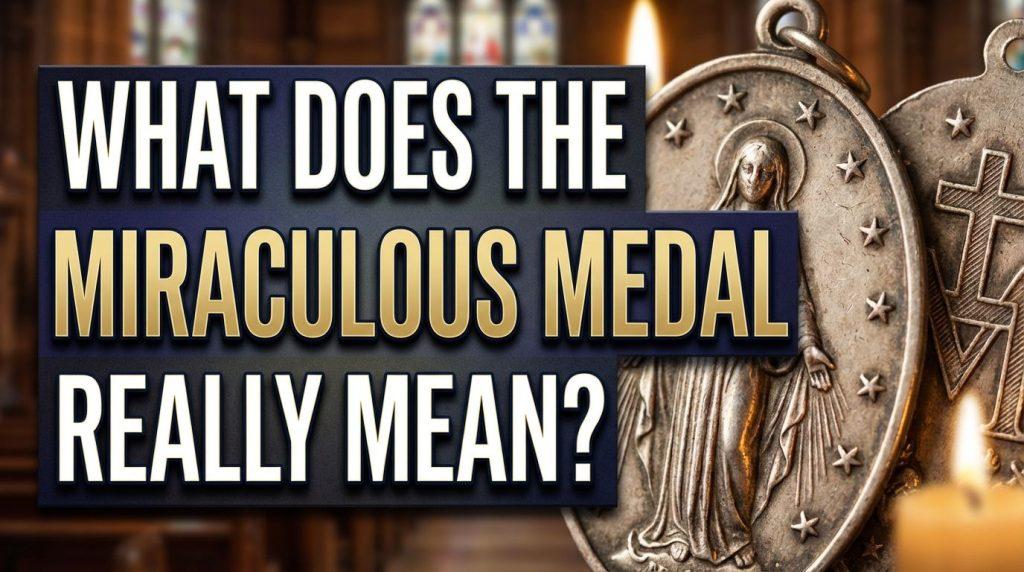
- The medal features rich symbolism including Mary standing on a globe, rays of light from her hands, and the inscription “O Mary, conceived without sin, pray for us who have recourse to thee.”
- The Church recognizes the Miraculous Medal as a sacramental that prepares Catholics to receive grace and strengthens their devotion to Mary and Jesus.
- The medal’s design proclaims the doctrine of the Immaculate Conception, which was formally defined as dogma 24 years after the apparitions.
- Countless conversions and spiritual graces have been attributed to wearing the medal with faith and devotion.
- The Miraculous Medal serves as a visible reminder of Mary’s maternal intercession and her role in leading souls to Christ.
The Historical Origins of the Miraculous Medal
The Miraculous Medal came into existence through a series of supernatural events that occurred in Paris, France during the year 1830. Catherine Labouré, a young novice with the Daughters of Charity, experienced several visions that would forever change Catholic devotion to the Blessed Virgin Mary. Catherine had entered religious life at the age of 24, joining the community at the motherhouse on Rue du Bac in Paris. She was a simple, humble woman from a rural background who showed no signs of seeking attention or fame. Her spiritual director would later testify to her ordinary demeanor and her reluctance to speak about her extraordinary experiences. The year 1830 was marked by political turmoil in France, with revolution breaking out in July of that year. In this context of social upheaval and uncertainty, heaven chose to intervene through the visions granted to Catherine. The first apparition occurred on the night of July 18, 1830, when Catherine was awakened by a child who led her to the chapel. There she encountered the Blessed Virgin Mary, who sat in a chair and spoke with Catherine for two hours. Mary warned her of coming trials for France and the world, and she prepared Catherine for a special mission. This initial vision set the stage for what would come later in November of that same year.
The most important apparition for the creation of the Miraculous Medal occurred on November 27, 1830. During evening prayer in the chapel, Catherine saw the Blessed Virgin standing on a half-globe, with her feet crushing a serpent. Mary wore rings on her fingers, and brilliant rays of light streamed from these rings down toward the earth. The Virgin explained to Catherine that these rays symbolized the graces she obtains for those who ask for them. Some gems on the rings did not emit light, and Mary explained that these represented graces that people fail to request through prayer. Then an oval frame formed around the vision, and words appeared in golden letters circling the image. The inscription read in French what would become the prayer of the medal. Catherine was instructed to have a medal struck according to this pattern, with the promise that those who wore it would receive great graces. The vision then turned to reveal the reverse side of the medal, showing the letter M surmounted by a cross, with a bar beneath it, and below these symbols were the hearts of Jesus and Mary. Twelve stars surrounded this imagery, completing the design. Catherine immediately reported these visions to her confessor, Father Jean-Marie Aladel, though he was initially skeptical and cautious about her claims.
Father Aladel eventually became convinced of the authenticity of Catherine’s experiences after careful examination and prayer. With the permission of the Archbishop of Paris, the first medals were struck in 1832. The medals were distributed widely throughout Paris and beyond, and almost immediately reports began to circulate of miraculous healings, conversions, and spiritual favors received by those who wore them. The medal quickly became known as the “Miraculous Medal” due to these numerous accounts of divine intervention. In 1836, a canonical inquiry was conducted in Paris, and the Church officially declared that the apparitions were of supernatural origin. This approval gave the medal even greater credibility and led to its spread throughout the Catholic world. Catherine herself remained in obscurity for most of her life, never seeking recognition for her role in bringing the medal to the world. She continued her simple duties as a sister in the community, working in the kitchen, the henhouse, and caring for the elderly. Only her confessor and her superior knew of her visions. It was not until shortly before her death in 1876 that Catherine revealed her identity as the visionary of the Miraculous Medal. She was canonized by Pope Pius XII in 1947, and her incorrupt body now rests in the Chapel of Our Lady of the Miraculous Medal on Rue du Bac, where pilgrims from around the world come to venerate her relics and pray before the chair where Mary sat during the first apparition.
The Symbolism on the Front of the Medal
The front of the Miraculous Medal contains several layers of theological meaning that communicate essential truths of the Catholic faith. Understanding this symbolism helps Catholics appreciate the medal as more than a simple piece of religious jewelry but as a visual catechism of important doctrines. The central image shows the Blessed Virgin Mary standing on a globe, specifically on a half-sphere that represents the earth. Her feet are crushing the head of a serpent, which recalls the protoevangelium from Genesis 3:15, where God promises that the woman’s offspring will crush the head of the serpent. This image identifies Mary as the New Eve who, through her cooperation with God’s plan of salvation, participates in the victory over sin and Satan. While Christ alone is the Redeemer who conquers evil, Mary’s role as the Mother of the Redeemer gives her a unique participation in this triumph. The image of Mary standing on the globe also signifies her universal maternal care for all humanity and her role as Queen of Heaven and Earth. She stands as a mother who watches over the entire world, interceding for all her children and directing them toward her son.
The rays of light streaming from Mary’s hands are among the most striking features of the medal’s design. These brilliant beams represent the graces that flow from Mary’s intercession to those who ask for her help. The light symbolizes both spiritual illumination and divine favor, suggesting that Mary functions as a channel through which God’s grace reaches humanity. The Virgin herself explained to Catherine that the gems from which rays did not emanate represented graces that people fail to request. This detail teaches Catholics the importance of prayer and the need to ask for divine assistance. It reminds us that God has made available countless graces for our sanctification and salvation, but we must actively seek them through prayer and devotion. Mary’s hands are extended outward in a gesture of offering and welcome, showing her maternal readiness to help all who approach her. This posture communicates her accessibility and her desire to assist her children in their spiritual needs. The image counters any notion that Mary is distant or unapproachable, instead presenting her as a loving mother eager to help.
The inscription that encircles the image reads “O Mary, conceived without sin, pray for us who have recourse to thee.” This prayer contains profound theological content and serves as the verbal expression of the visual imagery. The phrase “conceived without sin” refers to the doctrine of the Immaculate Conception, which teaches that Mary was preserved from original sin from the first moment of her conception in her mother’s womb. This privilege was given to her by God in anticipation of her role as the Mother of Christ. When the medal was created in 1830, the Immaculate Conception was a widely held belief among Catholics but had not yet been formally defined as dogma. The medal thus served as a preparation for the solemn definition that would come 24 years later in 1854, when Pope Pius IX proclaimed this truth in the apostolic constitution Ineffabilis Deus. The second part of the inscription, “pray for us who have recourse to thee,” is a direct request for Mary’s intercession. Catholics believe that Mary, as the Mother of God and the greatest of all saints, has powerful intercessory prayer before her son. By asking Mary to pray for us, we acknowledge our own spiritual poverty and our need for help, while also recognizing the unique relationship Mary has with Christ.
The date 1830 appears at the bottom of the medal, marking the year of the apparitions and the divine origin of the design. This date serves as a historical marker and a reminder that the medal comes not from human imagination but from heaven itself. It connects the medal to a specific moment in salvation history when God chose to intervene through Mary to offer humanity a particular means of grace. The overall composition of the front of the medal creates a harmonious visual theology that proclaims Mary’s purity, her maternal care, her intercessory power, and her role in God’s plan of redemption. Each element works together to communicate these truths in a way that is accessible even to those who cannot read, making the medal a form of visual catechesis. The beauty and simplicity of the design have contributed to its widespread appeal across cultures and centuries, allowing millions of Catholics to carry this testimony of faith with them wherever they go.
The Symbolism on the Reverse Side
The reverse side of the Miraculous Medal complements the front with additional rich symbolism that deepens our understanding of Catholic doctrine. At the center of the reverse is the letter M, which stands for Mary. This monogram is surmounted by a cross, with the vertical beam of the cross rising from the horizontal bar of the M. This arrangement is highly significant because it shows the inseparable connection between Mary and Jesus, between the Mother and her divine Son. The cross represents Christ’s sacrifice on Calvary, through which he redeemed humanity from sin and death. The placement of the cross above and intertwined with the M teaches that Mary’s entire life and mission were oriented toward Christ and his redemptive work. She cannot be understood apart from him, and her greatness lies precisely in her relationship to her son. The cross also serves as a reminder that following Christ involves taking up one’s cross and embracing suffering in union with him. Mary, who stood at the foot of the cross and shared in her son’s suffering, models for all Christians what it means to unite our sufferings with those of Christ for the salvation of souls.
Beneath the cross and M is a horizontal bar that represents the earth. This element connects the heavenly realities symbolized by Mary and the cross with the earthly realm where human beings live. It suggests that the graces won by Christ’s sacrifice and dispensed through Mary’s intercession reach down to touch human lives in concrete, tangible ways. The bar grounds the spiritual symbolism in the reality of daily existence, reminding us that grace is meant to transform our earthly lives and prepare us for heaven. This symbol also recalls that Mary, though now gloriously reigning in heaven, remains intimately concerned with the needs and struggles of her children on earth. The connection between heaven and earth, between the divine and the human, is a central theme of Christian theology, and this simple horizontal bar captures that truth effectively.
Below the bar are two hearts, one on the left and one on the right, each with its own distinctive features. The heart on the left represents the Sacred Heart of Jesus and is encircled with a crown of thorns. This imagery recalls Christ’s Passion and the physical and spiritual suffering he endured for our salvation. The crown of thorns is the same mocking crown placed on Jesus’ head by the Roman soldiers before his crucifixion, and it has become a symbol of his kingship through suffering and his willingness to bear the pain caused by human sin. Devotion to the Sacred Heart of Jesus emphasizes Christ’s infinite love for humanity, a love that led him to offer himself as a sacrifice for our sins. The thorn-crowned heart on the medal invites us to contemplate this love and to respond with gratitude and devotion. It also reminds us that sin causes real pain to the heart of Christ, and that reparation for sin should be part of our spiritual life.
The heart on the right represents the Immaculate Heart of Mary and is pierced with a sword. This image fulfills the prophecy of Simeon, who told Mary at the presentation of Jesus in the Temple that “a sword will pierce through your own soul also” as recorded in Luke 2:35. The sword represents the sufferings that Mary endured throughout her life, especially her compassion at witnessing her son’s crucifixion. Mary’s heart was pierced not with physical nails or thorns but with the spiritual anguish of seeing her beloved son tortured and killed. This suffering made her the Co-Redemptrix in a subordinate sense, participating in the work of redemption through her compassionate offering of her son and her union with his sacrifice. The sword-pierced heart also symbolizes the ongoing sorrow Mary experiences when her children reject God’s grace and turn away from her son. Devotion to the Immaculate Heart of Mary encourages Catholics to console her maternal heart through prayer, reparation, and faithful living.
The placement of these two hearts side by side on the medal emphasizes the unity between Jesus and Mary in the work of salvation. Their hearts beat together for the salvation of souls, and their love for humanity is complementary though not equal. Jesus’ love is that of the Redeemer, while Mary’s love is that of the Mother of the Redeemed and the Mother of the Redeemer. Together they invite humanity to respond to divine love with faith and devotion. The two hearts also represent the two great devotions that have been particularly emphasized in modern Catholic spirituality since the 17th century. These devotions remind us that true Christianity involves not just intellectual assent to doctrines but heartfelt love for God and neighbor.
Surrounding the entire reverse design are twelve stars arranged in an oval pattern. These stars carry multiple layers of meaning. They can represent the twelve apostles, who formed the foundation of the Church and spread the Gospel throughout the world. The apostles symbolize the entire Church, the community of believers that surrounds Mary and looks to her as mother and queen. The stars also recall the vision in Revelation 12:1, where Saint John sees “a woman clothed with the sun, with the moon under her feet, and on her head a crown of twelve stars.” Catholic tradition has long interpreted this woman as representing both Mary and the Church. The twelve stars thus connect Mary to her biblical type and emphasize her role as Queen of Heaven. Additionally, the twelve stars can represent the twelve tribes of Israel, connecting the Old Testament people of God with the New Testament Church and showing the continuity of salvation history. The stars, as heavenly bodies that give light in darkness, also symbolize the guidance and illumination that Mary and the Church provide to those seeking the path to salvation.
Understanding Sacramentals in Catholic Teaching
To properly understand what the Miraculous Medal really means, we must first understand what sacramentals are in Catholic theology and how they function in the life of the Church. The Catechism of the Catholic Church defines sacramentals as “sacred signs instituted by the Church” that “bear a resemblance to the sacraments” (CCC 1667). Unlike the seven sacraments, which were instituted by Christ himself and convey grace through their own power when properly received, sacramentals are instituted by the Church and prepare us to receive grace. They do not work automatically or magically but rather dispose the faithful to cooperate with God’s grace through faith and devotion. The power of sacramentals comes from the prayer of the Church and the faith of those who use them. When a Catholic wears a blessed Miraculous Medal with sincere devotion, the medal serves as a reminder of God’s love, a prompt to prayer, and a sign of the wearer’s faith commitment. The blessing that a priest or deacon imparts on the medal connects it to the official prayer of the Church and sets it apart for sacred use.
Sacramentals serve several important functions in Catholic life according to Church teaching. They sanctify different circumstances and occasions in life, helping believers to recognize God’s presence in all aspects of daily existence (CCC 1668). A sacramental like the Miraculous Medal can sanctify ordinary moments by reminding the wearer to turn their thoughts to God, to ask for Mary’s intercession, or to remember their baptismal commitment. Sacramentals also help Catholics prepare to receive the grace of the sacraments more fully. By fostering devotion and faith, they create the right interior disposition for encountering Christ in the sacramental life of the Church. For example, someone who regularly prays while holding their Miraculous Medal may develop a more prayerful attitude that helps them participate more fully in Mass or receive the sacrament of Reconciliation with greater contrition.
The Catechism teaches that sacramentals derive from the baptismal priesthood shared by all the faithful (CCC 1669). Every baptized person is called to be a blessing and to bless, though certain blessings are reserved to ordained ministers. This means that the use of sacramentals is part of the common vocation of all Christians to sanctify the world and to serve as signs of God’s grace. When Catholics wear the Miraculous Medal, they participate in this baptismal priesthood by bearing witness to their faith and by becoming channels through which others might encounter God’s love. The very visibility of the medal can prompt conversations about faith, inspire curiosity about Catholic devotion, or simply remind others of the presence of people who believe in God and his mother.
It is crucial to understand that sacramentals like the Miraculous Medal are not good luck charms, magical amulets, or superstitious objects. The Church firmly rejects any magical understanding of sacramentals and insists that they function only within the context of faith and prayer. A person who wears the Miraculous Medal while living in serious sin, refusing to repent, and expecting the medal to automatically protect them or grant them favors has fundamentally misunderstood what the medal is and how it works. The medal is not a replacement for personal conversion, for the sacraments, or for prayer. Rather, it is a help and support for those who are sincerely trying to live the Christian life. The graces associated with the medal come not from the metal itself but from God, through the intercession of Mary, in response to faith and prayer.
The proper use of sacramentals requires catechesis and pastoral guidance to prevent misunderstanding and superstition (CCC 1676). This is why the Church has always emphasized that sacramentals must be understood in relation to the sacraments and to the overall life of faith. The Miraculous Medal should lead people to the Eucharist, to Confession, to Scripture reading, and to the practice of charity. If someone’s devotion to the medal becomes disconnected from these essential elements of Catholic life, then the devotion has become unbalanced. Pastors and catechists have a responsibility to teach the faithful how to use sacramentals properly and to help them see these objects as part of a larger fabric of Catholic practice. When used correctly, sacramentals enrich and support authentic Christian living without replacing the centrality of the sacraments or the primacy of faith, hope, and charity.
Mary’s Intercessory Role and the Medal’s Purpose
The Miraculous Medal is fundamentally about Mary’s intercessory role in the economy of salvation, and understanding this role is essential to grasping the medal’s true meaning. The Catholic Church teaches that Mary continues to intercede for the Church even in her glorified state in heaven, and this ongoing intercession is one of the reasons she is honored and invoked by the faithful. Mary’s intercession is not a substitute for Christ’s mediation, which is unique and necessary for salvation, but rather a participation in it. As the Mother of the Redeemer, Mary has a special place in the communion of saints and a powerful prayer before her son. The medal serves as a tangible reminder of this truth and as an invitation to seek Mary’s maternal help in all our needs.
Scripture provides the foundation for Catholic teaching on Mary’s intercession, particularly in the account of the wedding feast at Cana recorded in John 2:1-11. At this wedding, Mary noticed that the wine had run out and brought this need to Jesus’ attention. When Jesus initially seemed reluctant to act, saying “my hour has not yet come,” Mary confidently told the servants to “do whatever he tells you.” Jesus then performed his first miracle, turning water into wine. This event reveals several important truths about Mary’s intercessory role. First, Mary notices human needs and brings them to Jesus. Second, Mary’s intercession is effective, as Jesus responds to her request even though his hour had not yet come. Third, Mary always points people toward Jesus, never toward herself. Her instruction to “do whatever he tells you” is the perennial message of Marian devotion. The Miraculous Medal follows this same pattern by directing those who wear it to seek Jesus through Mary and to listen to his voice.
The Catechism explains that Mary’s maternal care extends to all members of Christ’s body (CCC 969). Her motherhood in the order of grace began at the Annunciation when she conceived Jesus by the power of the Holy Spirit, was confirmed at the foot of the cross when Jesus entrusted John and all his disciples to her care, and continues until the eternal fulfillment of all the elect. This means that Mary’s role as spiritual mother is not a metaphor or a sentimental idea but a real relationship with concrete effects. She truly cares for the spiritual welfare of all Christians, interceding for them, protecting them from evil, and helping them grow in holiness. The Miraculous Medal expresses this maternal care in visual form, with Mary’s outstretched hands and the rays of grace flowing toward earth. When someone wears the medal, they acknowledge Mary as their mother and accept her maternal care.
The inscription on the medal, “pray for us who have recourse to thee,” teaches Catholics to actively seek Mary’s help through prayer. Having recourse to Mary means turning to her in times of need, asking for her intercession, and trusting in her maternal care. The Catechism notes that the Christian tradition includes various forms of prayer addressed to Mary, with the Hail Mary being the most common (CCC 2676-2677). When we ask Mary to pray for us, we are not bypassing Christ or treating Mary as a source of grace independent of her son. Rather, we are following the example of the Church throughout the ages in asking the saints to pray for us, and we are honoring Mary’s unique role as the Mother of God. The Second Vatican Council taught that Mary’s intercession does not diminish or overshadow Christ’s mediation but rather shows its power, since all Mary’s salvific influence flows from Christ’s superabundance.
The graces associated with the Miraculous Medal, then, are not automatic or magical but are the fruit of sincere recourse to Mary’s intercession. Those who wear the medal with faith and devotion open themselves to receive the graces that God wishes to give them through Mary’s maternal mediation. These graces may include conversion from sin, strength to resist temptation, healing of body or soul, protection from danger, growth in virtue, or the gift of final perseverance. The specific graces needed vary from person to person and from moment to moment in life. Mary, as a perfect mother, knows what each of her children needs and intercedes accordingly. The rays of light on the medal that flow from Mary’s hands symbolize this continuous stream of graces available to those who ask for them. The gems that do not emit light represent a powerful lesson: God has prepared countless graces for us, but we must ask for them through prayer. The medal thus serves as a constant invitation to prayer and a reminder of our need for divine assistance.
Famous Conversions and Miracles Associated with the Medal
The name “Miraculous Medal” was not the original designation of this devotional object. Saint Catherine referred to it simply as the Medal of the Immaculate Conception. However, the extraordinary events that began to occur soon after the first medals were distributed led people to call it miraculous, and that name has endured. These accounts of miraculous healings, conversions, and divine protection serve as testimony to the power of faith and the reality of Mary’s maternal care for those who seek her intercession. While the Church does not require belief in any particular miracle, the sheer number and variety of reported graces have contributed to the medal’s widespread popularity and have confirmed for many Catholics the authenticity of the apparitions to Saint Catherine.
The most famous conversion attributed to the Miraculous Medal is that of Alphonse Ratisbonne, an event that occurred in Rome in 1842. Ratisbonne was a wealthy Jewish banker from Alsace who harbored intense hostility toward the Catholic Church. He was described by contemporaries as virulently anti-Catholic and thoroughly secular in his outlook. While traveling in Rome, he encountered a Catholic acquaintance, Baron Théodore de Bussières, who challenged him to wear a Miraculous Medal as an experiment. Ratisbonne agreed, apparently amused by what he considered superstition. The baron also asked him to pray the Memorare prayer and to visit a church. On January 20, 1842, Ratisbonne accompanied the baron to the church of Sant’Andrea delle Fratte in Rome. While the baron attended to some business, Ratisbonne waited in the church. There, without warning or preparation, he experienced a vision of the Blessed Virgin Mary that transformed his life instantly. She appeared to him as she is depicted on the Miraculous Medal, and though she spoke no words, everything became clear to him in that moment. He emerged from the vision a completely changed man, asking immediately for baptism and instruction in the Catholic faith.
Ratisbonne’s conversion was so sudden and complete that it caused a sensation in Rome and beyond. A formal inquiry was conducted to investigate the authenticity of the vision, and numerous witnesses testified to the radical change in Ratisbonne’s character and beliefs. He was received into the Catholic Church and eventually became a Jesuit priest, dedicating his life to the conversion of his fellow Jews. His brother Theodore, also Jewish, had converted to Catholicism some years earlier and had also become a priest. Together the Ratisbonne brothers founded the Congregation of Our Lady of Sion, dedicated to prayer and work for the conversion of the Jewish people. The story of Alphonse Ratisbonne’s conversion has become one of the most powerful testimonies to the efficacy of the Miraculous Medal and to the reality of Mary’s intercessory power. It demonstrates that no one is beyond the reach of God’s grace and that Mary’s maternal care extends even to those who seem most distant from the faith.
Countless other conversions have been attributed to the Miraculous Medal over the past two centuries. Many of these involve Catholics who had fallen away from the practice of their faith and were brought back to the sacraments through the influence of the medal. Others involve non-Catholics who encountered the medal through a friend or family member and became interested in learning about the Catholic faith. The medal has proven particularly effective in opening conversations about faith, as its visual imagery and the story behind it often intrigue people and lead them to ask questions. Priests and laypeople involved in evangelization often distribute Miraculous Medals as a gentle way to share the faith, trusting that Mary will use this sacramental to draw people closer to her son.
Reports of physical healings associated with the medal have also been numerous, though the Church does not require belief in specific healing miracles. People have testified to recovery from serious illnesses, protection from accidents, and other forms of physical deliverance that they attribute to Mary’s intercession through the medal. While medical science may offer explanations for some of these occurrences, others remain mysterious and point to the possibility of supernatural intervention. More importantly, countless individuals have experienced spiritual healing through the medal, finding freedom from addictions, relief from depression and anxiety, strength to forgive those who have hurt them, and courage to make difficult moral choices. These spiritual graces, while less dramatic than physical miracles, are ultimately more valuable because they concern the salvation of the soul and the transformation of the person into the likeness of Christ.
The protection offered by the Miraculous Medal has been a theme in many testimonies over the years. Soldiers have worn the medal into battle, travelers have carried it on dangerous journeys, and parents have placed it around the necks of their children as a sign of consecration to Mary’s care. Whether or not the medal provides physical protection in the sense of preventing all harm, it certainly provides spiritual protection by reminding the wearer to pray, by signifying one’s belonging to Mary and to the Church, and by serving as a sacramental connection to the grace of God. The devil flees from signs of faith and devotion, and the medal’s visual proclamation of the Immaculate Conception and Mary’s triumph over the serpent is itself a declaration of spiritual warfare and a claim of protection under Mary’s mantle.
The Medal and the Doctrine of the Immaculate Conception
One of the most significant aspects of the Miraculous Medal is its relationship to the doctrine of the Immaculate Conception. This dogma, which teaches that Mary was preserved from original sin from the first moment of her conception, had been believed by many Catholics for centuries but was not formally defined until 1854. The medal, originating in 1830, served as a preparation for this solemn definition and as a popular proclamation of the truth before its official articulation by the papal magisterium. Understanding this connection helps us appreciate the medal’s theological importance beyond its devotional use.
The doctrine of the Immaculate Conception addresses the question of how Mary could be a worthy vessel for the incarnation of God’s Son. If Mary had been stained by original sin like all other descendants of Adam and Eve, she would have shared in the fallen human condition that alienates humanity from God. However, God chose to prepare Mary for her unique role by preserving her from the stain of original sin from the moment her soul came into existence. This preservation was not earned by Mary’s own merits but was a gift given in anticipation of the merits of Jesus Christ her son. God applied the fruits of Christ’s redemption to Mary in a special way, redeeming her by prevention rather than by cure. This singular privilege did not make Mary divine or remove her need for a savior; rather, it made her the perfect mother for the Savior and allowed her to give her free consent to God’s plan without the impediment of original sin.
The inscription on the medal, “O Mary, conceived without sin,” boldly proclaims this doctrine at a time when it was still being debated by theologians. Some Catholic scholars in the 19th century questioned whether the Immaculate Conception was truly part of the deposit of faith or merely a pious opinion. The medal’s message, presented as coming from Mary herself in the apparitions to Saint Catherine, settled this debate from the popular perspective long before the theological disputes were resolved. The faithful began wearing and venerating a medal that proclaimed Mary’s freedom from sin, and this popular devotion created a groundswell of support for the eventual dogmatic definition. By the time Pope Pius IX was considering whether to define the Immaculate Conception as dogma, the Miraculous Medal had already made this truth familiar to millions of Catholics around the world.
The formal definition came on December 8, 1854, with the promulgation of the apostolic constitution Ineffabilis Deus. In this document, Pope Pius IX declared that Mary’s Immaculate Conception was a divinely revealed truth that must be believed by all Catholics. The definition was celebrated with great joy throughout the Church, and the connection to the apparitions at Rue du Bac was not lost on anyone. Mary herself had proclaimed her sinlessness through the medal 24 years before the Church formally defined it. This sequence of events strengthened belief in the authenticity of the apparitions and demonstrated how heaven sometimes prepares the Church for doctrinal developments through private revelations and popular devotion. The medal continues to serve as a catechetical tool for teaching about the Immaculate Conception, as its inscription makes the doctrine accessible even to children and the illiterate.
Four years after the definition of the Immaculate Conception, Mary would appear again, this time to Saint Bernadette Soubirous at Lourdes, France. When Bernadette asked the beautiful lady who appeared to her to reveal her name, the lady responded in the local dialect “Que soy era Immaculada Councepciou,” meaning “I am the Immaculate Conception.” This statement confirmed the dogmatic definition and echoed the message of the Miraculous Medal. The connections between Rue du Bac, the Immaculate Conception, and Lourdes form a coherent pattern of Marian intervention in the 19th century, preparing the Church for the challenges it would face in the modern world. Together these apparitions and the devotions they inspired have strengthened Catholic faith in Mary’s singular holiness and her powerful intercession.
How to Use the Miraculous Medal Properly
Understanding what the Miraculous Medal means naturally leads to questions about how to use it properly in one’s spiritual life. The Church offers guidance on the appropriate use of sacramentals, and this guidance helps Catholics avoid superstition while maximizing the spiritual benefits of these sacred objects. The first and most important principle is that the medal should be blessed by a priest or deacon before being worn. The blessing prayer used by the Church asks God to pour out his grace upon those who wear the medal with faith and to protect them from all evil. This blessing is what transforms an ordinary piece of metal into a sacramental, setting it apart for sacred use and connecting it to the prayer of the Church. While an unblessed medal can still serve as a reminder of faith and devotion, the blessed medal has the added benefit of the Church’s official prayer and is truly a sacramental in the technical sense.
Catholics traditionally wear the Miraculous Medal around the neck on a chain, though there are no strict rules about this. Some people pin the medal to their clothing, keep it in their pocket or purse, or place it in their home or car. What matters is not the specific location of the medal but the faith and devotion of the person who uses it. A medal worn constantly around the neck serves as a steady reminder of God’s presence and Mary’s care, prompting frequent acts of prayer throughout the day. However, someone who keeps the medal in a more discreet location can also benefit from it if they regularly remember its meaning and invoke Mary’s intercession. Parents often place blessed medals in their children’s rooms or schoolbags as a way of consecrating them to Mary’s protection. This practice expresses the parents’ faith and their desire for Mary to watch over their children, even if the children are too young to understand the symbolism.
Prayer should accompany the use of the Miraculous Medal. The inscription on the medal itself provides a prayer: “O Mary, conceived without sin, pray for us who have recourse to thee.” This simple invocation can be repeated throughout the day as a way of asking for Mary’s intercession and expressing trust in her maternal care. Many Catholics make it a practice to pray this invocation while touching their medal, especially in moments of temptation, difficulty, or decision-making. Beyond this specific prayer, the medal should inspire and support all forms of prayer, including the Rosary, the Angelus, litanies to Mary, and spontaneous prayers from the heart. The medal is not a substitute for prayer but a support for it, reminding us to maintain a constant conversation with God and his mother.
The medal should lead people more deeply into the sacramental life of the Church. There is no benefit in wearing a Miraculous Medal while neglecting Mass on Sundays, avoiding the sacrament of Reconciliation, or living in serious sin. The graces symbolized by the rays on the medal flow most abundantly to those who are in a state of grace and who regularly receive the sacraments. Someone who has been away from the Church should see the medal as an invitation to return, to go to confession, and to renew their relationship with Christ in the Eucharist. The medal can be a first step in this return, a small opening that allows grace to begin working in a person’s life. Many conversion stories mention the Miraculous Medal as the starting point of a process that led eventually to full participation in Catholic life.
Devotion to the Miraculous Medal should be balanced and integrated with other aspects of Catholic spirituality. The Church encourages devotion to Mary but never in isolation from devotion to Christ and the Trinity. Someone whose faith consists only of wearing a medal and praying to Mary, without knowledge of Scripture, participation in the liturgy, or practice of charity, has an unbalanced spirituality that needs development. The medal should be one element among many in a rich and varied Catholic life. It complements but does not replace Scripture reading, liturgical prayer, acts of mercy, and growth in virtue. A well-formed Catholic will have multiple devotions and practices that together support their journey toward holiness, with the Miraculous Medal serving as one helpful tool among others.
The Miraculous Medal in Contemporary Catholic Life
Nearly two centuries after its origin, the Miraculous Medal remains a significant element in Catholic devotional life around the world. Millions of Catholics wear the medal as a sign of their devotion to Mary and their trust in her intercession. The medal has transcended cultural and linguistic boundaries, being embraced by Catholics in every nation and appearing in countless homes, churches, and public spaces. This enduring popularity testifies to the medal’s ability to communicate essential truths of the faith in a simple, accessible form. In an increasingly secular age, the visible witness of wearing a Miraculous Medal can be a form of evangelization, prompting questions and conversations about faith. The medal serves as a bridge between traditional Catholic culture and contemporary expressions of spirituality, offering a tangible connection to the richness of the Church’s devotional heritage.
The Association of the Miraculous Medal, now called the Central Association of the Miraculous Medal, was established to promote this devotion and to support the mission work of the Vincentian community. Headquartered at the National Shrine of Our Lady of the Miraculous Medal in Germantown, Pennsylvania, this organization distributes millions of medals annually and provides resources for understanding and living this devotion. The shrine itself attracts pilgrims from throughout North America and serves as a center for Marian spirituality. Similar shrines and devotional centers dedicated to Our Lady of the Miraculous Medal exist around the world, including the chapel on Rue du Bac in Paris where the original apparitions occurred. These sites offer Catholics opportunities for pilgrimage, prayer, and deeper encounter with the message of the Miraculous Medal.
In recent decades, popes have consistently supported and encouraged Marian devotion, including devotion to the Miraculous Medal. Pope John Paul II had a deep personal devotion to Mary, as expressed in his papal motto “Totus Tuus” meaning “Totally Yours.” While he emphasized many forms of Marian devotion, he also recognized the value of traditional practices like the Miraculous Medal. Pope Benedict XVI, during his pontificate, spoke about the importance of popular piety and the role of sacramentals in fostering faith. Pope Francis has frequently emphasized Mary’s maternal care and has encouraged Catholics to turn to her in times of need. This consistent papal support for Marian devotion provides assurance that the Miraculous Medal and similar devotions remain valuable means of growing in faith and holiness.
The medal has proven particularly effective as an evangelization tool in the modern context. Catholic street evangelists, parish missions, and individual faithful often distribute Miraculous Medals to strangers as a way of sharing their faith. The medal’s visual appeal and the interesting story behind it create natural opportunities for conversation. Someone might ask “What is that medal you’re wearing?” and this question opens the door to discussing Mary, the Catholic faith, and ultimately Jesus Christ. The non-threatening nature of offering a small medal makes it easier for both the giver and receiver than more confrontational forms of evangelization. The person who receives a medal might put it away and forget about it, or they might be moved by curiosity to learn more about its meaning. In either case, the giver has fulfilled their responsibility to share the faith, trusting that God and Mary will work in the other person’s heart in their own time.
The Miraculous Medal also serves an important role in family spirituality. Parents who place medals on their children, teach them the prayer, and tell them the story of Saint Catherine help pass on the faith to the next generation. This domestic catechesis, while informal, can be very effective in forming children’s Catholic identity and giving them concrete practices for their spiritual lives. Families might have the tradition of giving Miraculous Medals at baptisms, first communions, confirmations, or other milestones. These practices create memories and associations that link faith with family life and special moments. When that child grows up and faces challenges, the memory of receiving a Miraculous Medal and the trust in Mary that it represents might provide comfort and strength.
Common Misconceptions About the Miraculous Medal
Despite its widespread use and long history, several misconceptions about the Miraculous Medal persist among both Catholics and non-Catholics. Addressing these misunderstandings helps clarify what the medal truly means and ensures that devotion to it remains properly ordered within Catholic faith. Perhaps the most common misconception is treating the medal as a magical charm that automatically confers protection or grants wishes regardless of the wearer’s faith or moral state. This superstitious approach misunderstands the nature of sacramentals and reduces them to the level of pagan amulets. The medal is not magic, and it does not work independently of faith, prayer, and grace. Someone who wears the medal while living in serious sin and making no effort to convert cannot expect to receive the graces that Mary wishes to give. The medal is a support for faith, not a substitute for it.
Another misconception treats the Miraculous Medal as more important than the sacraments or as a quick fix that makes other spiritual practices unnecessary. Some Catholics might wear their medal faithfully while neglecting Sunday Mass, rarely going to confession, or ignoring the moral teachings of the Church. This unbalanced approach puts a sacramental above the sacraments and mistakes a helpful devotion for the core of Catholic life. The truth is that the medal should lead people to the sacraments and support them in living out their baptismal commitment. If devotion to the medal does not result in more frequent Mass attendance, regular confession, deeper prayer life, and greater charity toward others, then something is wrong with how that devotion is being practiced. The medal points beyond itself to Christ and to the fullness of Catholic life.
Some people mistakenly believe that there are specific rules or requirements for wearing the Miraculous Medal, such as that it must be worn in a particular way, that removing it will cause bad luck, or that one must pray a certain number of times per day for it to be effective. While tradition suggests wearing the medal around the neck and praying the inscription regularly, these are not strict requirements. The Church has not established rigid rules for how sacramentals must be used, recognizing that personal devotion can take many forms. What matters is faith and devotion, not external conformity to arbitrary regulations. Someone who wears the medal intermittently but with sincere faith receives more benefit than someone who wears it constantly but mechanically, without understanding or devotion.
A related misconception holds that there is something wrong with not wearing a Miraculous Medal or that Catholics who prefer other devotions are somehow deficient in their faith. The Catholic tradition is rich with many forms of devotion, many medals and sacramentals, and many ways of expressing love for Mary. Some Catholics might prefer the Brown Scapular, the Saint Benedict Medal, the Rosary, or other devotions. Others might not feel called to any particular external devotion but express their faith through prayer, service, and sacramental life. The Miraculous Medal is a beautiful and effective means of grace, but it is not the only one, nor is it required of all Catholics. Each person should find the devotions that help them grow closer to God, whether those include the Miraculous Medal or not.
Non-Catholics sometimes misunderstand the Miraculous Medal as evidence that Catholics worship Mary or treat her as a goddess. This accusation stems from a fundamental misunderstanding of Catholic teaching about Mary and the communion of saints. Catholics do not worship Mary; they venerate her as the greatest of all saints and the Mother of God. Worship is due to God alone, and Catholics are very clear about this distinction even when their language and practices might seem confusing to outsiders. When Catholics pray to Mary, they are asking for her intercession, not treating her as a divine being. When they honor her through medals, statues, and other images, they are expressing love and respect for a great saint, not idolatry. The Miraculous Medal, far from being evidence of Marian worship, actually demonstrates proper Catholic theology by showing Mary in her correct role as intercessor and by including symbols of Christ’s cross and sacred heart alongside symbols of Mary.
The Spiritual Fruits of Devotion to the Miraculous Medal
Those who embrace devotion to the Miraculous Medal with proper understanding and sincere faith can expect to experience various spiritual fruits in their lives. These benefits are not guaranteed in the sense that they are not automatic or mechanical, but they flow naturally from a devotion that opens the soul to grace and strengthens one’s relationship with Mary and Jesus. The first and most immediate fruit is a heightened awareness of Mary’s maternal presence in one’s life. Wearing the medal or keeping it near serves as a constant reminder that we have a mother in heaven who cares for us and who is ready to help when we call upon her. This awareness can bring comfort in times of difficulty, courage in moments of fear, and strength when facing temptation. The knowledge that Mary is watching over us with maternal love changes how we see ourselves and our circumstances, giving us confidence that we are not alone in our struggles.
Devotion to the Miraculous Medal naturally leads to increased prayer, particularly prayer to Mary. The inscription on the medal provides an easy prayer to repeat throughout the day, and this repetition helps establish a habit of turning to Mary in all situations. Over time, this frequent recourse to Mary’s intercession becomes second nature, and the person develops a conversational relationship with their heavenly mother. They begin to share their joys and sorrows with her, to ask her advice in decisions, and to thank her for her help. This constant dialogue with Mary enriches one’s overall prayer life and makes prayer less of a formal duty and more of a natural expression of relationship. The person who develops a strong devotion to Mary through the medal often finds that their prayer life as a whole deepens and becomes more personal.
The medal can serve as a powerful aid in resisting temptation and avoiding sin. When tempted, the Catholic who wears a Miraculous Medal might touch it and remember their commitment to Christ and to living in a state of grace. The physical reminder of the medal and the quick prayer it prompts can break the momentum of temptation and give the person time to think clearly about their choices. The image of Mary crushing the serpent’s head, which is central to the medal’s iconography, reminds us that evil has been defeated and that we have powerful help in the spiritual combat. Many people have testified that reaching for their medal in moments of weakness gave them the strength to say no to sin and to choose what is right and holy.
Devotion to the Miraculous Medal often leads to deeper understanding of Catholic doctrine, particularly regarding Mary and the Immaculate Conception. As people learn about the history of the medal and the meaning of its symbols, they naturally absorb important theological truths. They learn about original sin and grace, about Mary’s role in salvation history, about the communion of saints, and about the nature of prayer and intercession. This doctrinal formation happens in an organic way, through devotion rather than through formal study, though it should ideally be supplemented by catechesis. The medal becomes a teaching tool that makes abstract theological concepts concrete and memorable. A child who learns to pray the Miraculous Medal prayer is learning about the Immaculate Conception long before they can understand that term or its theological implications.
Many people report that devotion to the Miraculous Medal has helped them through specific crises or has brought particular graces at crucial moments in their lives. Some have experienced conversions, either their own or those of loved ones for whom they prayed while holding the medal. Others have found healing from illnesses, protection from danger, or resolution of seemingly impossible problems. Still others speak of more subtle graces such as peace in the midst of suffering, patience with difficult people, or clarity in making important decisions. While these testimonies cannot be verified in every case and while not every prayer is answered in the way we would like, the cumulative witness of countless Catholics over nearly two centuries suggests that the Miraculous Medal is indeed an effective channel of grace for those who use it with faith.
Perhaps the most important fruit of devotion to the Miraculous Medal is that it helps maintain hope in difficult times. The modern world presents many challenges to faith, including secularism, materialism, moral relativism, and the scandal caused by sins within the Church itself. Catholics can easily become discouraged or feel that their faith is outdated and irrelevant. The Miraculous Medal, with its message of grace, intercession, and divine love, offers an antidote to this discouragement. It reminds us that heaven is real, that the saints are alive and active, that Mary cares for us, and that God continues to pour out graces upon those who seek him. This message of hope sustained Catholics in the difficult 19th century and continues to sustain believers today. The medal is a small but powerful sign that we are not abandoned, that our struggles have meaning, and that ultimate victory belongs to Christ and his mother.
Disclaimer: This article presents Catholic teaching for educational purposes. For official Church teaching, consult the Catechism and magisterial documents. For personal spiritual guidance, consult your parish priest or spiritual director. Questions? Contact editor@catholicshare.com
Sign up for our Exclusive Newsletter
- 📌 Add CatholicShare as a Preferred Source on Google
- 🎁 Join us on Patreon for Premium Content
- 🎧 Check Out These Catholic Audiobooks
- 📿 Get Your FREE Rosary Book
- 📱 Follow Us on Flipboard
-

Recommended Catholic Books
Discover hidden wisdom in Catholic books — invaluable guides enriching faith and satisfying curiosity. #CommissionsEarned
- The Early Church Was the Catholic Church
- The Case for Catholicism - Answers to Classic and Contemporary Protestant Objections
- Meeting the Protestant Challenge: How to Answer 50 Biblical Objections to Catholic Beliefs
As an Amazon Associate, I earn from qualifying purchases. Thank you for your support.