
Brief Overview
- The Immaculate Heart refers to Mary’s heart as pure, sinless, and completely devoted to God from the moment of her conception.
- This devotion emphasizes Mary’s perfect love for God and humanity, her maternal care for all people, and her role in salvation history.
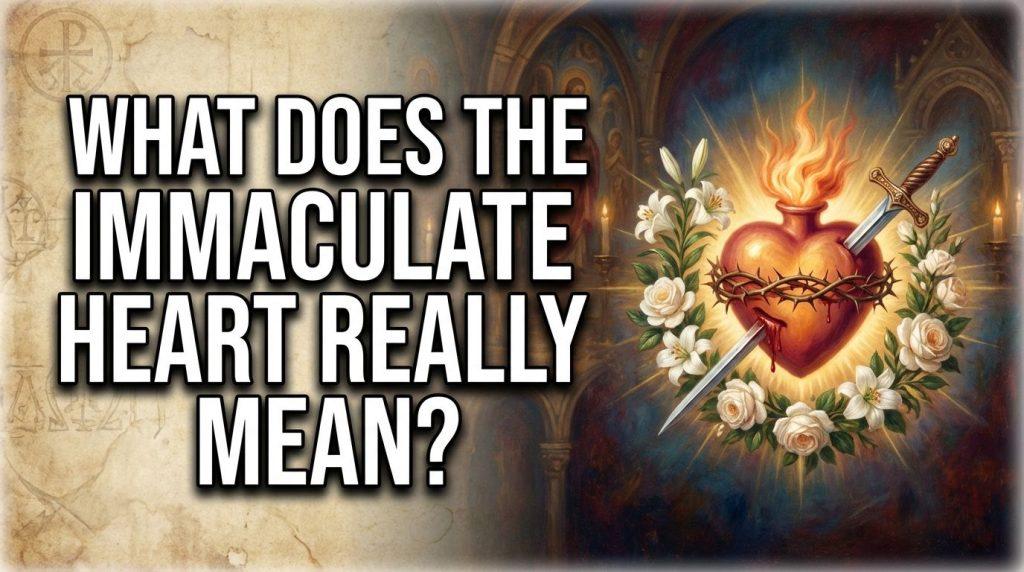
- The symbol typically shows Mary’s heart surrounded by roses or flames, pierced by a sword, representing her joys and sorrows.
- Pope Pius XII consecrated the entire world to the Immaculate Heart in 1942, and the Church celebrates its feast on the day after the Sacred Heart.
- The Immaculate Heart connects closely to the Sacred Heart of Jesus, showing Mary’s cooperation with Christ’s redemptive work.
- Understanding this devotion helps Catholics appreciate Mary’s unique holiness and her continuing intercession for the Church.
Biblical Foundations of Heart Symbolism
The concept of the heart holds deep significance throughout Scripture, representing the innermost center of a person’s being. In biblical language, the heart signifies not just emotions but the whole interior life including thoughts, will, desires, and moral character. When Scripture speaks of the heart, it refers to the seat of decision-making and spiritual orientation. Mary’s heart receives special attention in the Gospels through Luke’s observations that she “kept all these things, reflecting on them in her heart” (Luke 2:19, 51). This repeated notation indicates that Mary’s interior life was characterized by deep contemplation of God’s mysteries and careful treasuring of divine revelations.
The Old Testament background enriches understanding of Mary’s heart as immaculate. God promised through Ezekiel to remove the heart of stone and give a heart of flesh (Ezekiel 36:26). The pure heart that God creates reflects His own holiness and enables authentic worship. The Psalms speak of creating clean hearts and renewing steadfast spirits (Psalm 51:10). Mary’s Immaculate Heart represents the perfect fulfillment of these promises. From her conception, God preserved her heart from all stain of sin, giving her the pure heart that other humans must acquire through grace and struggle. Her heart never knew division between love of God and love of self.
Jesus taught extensively about the heart’s importance in moral and spiritual life. He declared that from the heart come evil thoughts, murder, adultery, and other sins (Matthew 15:19). The pure in heart will see God, He promised in the Beatitudes (Matthew 5:8). Mary’s Immaculate Heart embodies this purity perfectly. Her heart never harbored evil thoughts or sinful desires. Her interior life reflected complete transparency before God, with nothing hidden or distorted by sin’s effects. This total purity made her heart the worthy dwelling place for God Himself when He became incarnate in her womb. The Immaculate Heart provided the perfect environment for the Word to become flesh.
Historical Development of the Devotion
Devotion to Mary’s heart appears in patristic writings and medieval spirituality before developing into the specific devotion to the Immaculate Heart. Early Church fathers reflected on Mary’s interior disposition and her response to God’s call. Medieval mystics like Saint Bernard of Clairvaux meditated on Mary’s compassion and her role in salvation. Saint Mechtilde and Saint Gertrude in the thirteenth century received visions emphasizing Mary’s heart and its love for humanity. These early expressions prepared the ground for the more formal devotion that would develop later.
Saint John Eudes in the seventeenth century played a crucial role in promoting devotion to both the Sacred Heart of Jesus and the Immaculate Heart of Mary. He wrote extensively about the two hearts and established liturgical celebrations in their honor. His work connected the hearts of Jesus and Mary as perfectly united in love for God and humanity. This pairing of devotions emphasized that Mary’s heart always beat in harmony with her Son’s, never diverging from His will. Saint John Eudes showed how contemplating Mary’s heart leads naturally to contemplating Christ’s heart and how both devotions enrich Catholic spiritual life.
The apparitions at Fatima in 1917 brought the Immaculate Heart devotion to worldwide Catholic attention. Mary appeared to three children and revealed her Immaculate Heart surrounded by thorns, asking for devotion, reparation, and the consecration of Russia. She promised that her Immaculate Heart would triumph and that peace would come to the world. These apparitions, approved by the Church, gave tremendous impetus to the devotion. Subsequent popes promoted the Immaculate Heart through encyclicals, consecrations, and liturgical celebrations. The devotion moved from private practice to official Church recognition and encouragement.
The Immaculate Heart and the Immaculate Conception
The term “Immaculate Heart” connects directly to the doctrine of the Immaculate Conception, which teaches that Mary was conceived without original sin. Pope Pius IX defined this dogma in 1854, declaring that Mary was preserved from all stain of original sin from the first moment of her conception (CCC 491-492). This preservation affected her entire being, including her heart as the center of her person. An immaculate conception produces an immaculate heart. Mary’s heart remained pure because sin never touched her soul, not even for an instant.
The relationship between immaculate conception and immaculate heart shows how Catholic theology understands the integration of the whole person. A person is not divided into disconnected parts but is a unified body-soul composite. What affects the soul affects the heart and vice versa. Mary’s preservation from original sin meant her heart developed without the inclination toward selfishness and disorder that marks fallen humanity. Her desires naturally oriented toward God rather than away from Him. Her emotions remained ordered rather than chaotic. Her will chose good spontaneously rather than struggling against contrary impulses.
Understanding the Immaculate Heart requires grasping what original sin’s absence means practically. Original sin does not merely add guilt but damages human nature, weakening the will and darkening the intellect. It creates interior conflict where higher and lower impulses battle for dominance. Mary’s immaculate state meant she experienced no such conflict. Her reason, will, and emotions functioned in perfect harmony, all directed toward knowing and loving God. This interior integrity characterized her heart throughout her life. The Immaculate Heart thus represents not just moral purity but psychological wholeness and spiritual freedom that sin had not damaged.
Symbolic Representations of the Immaculate Heart
Traditional images of the Immaculate Heart show Mary’s heart in various ways that communicate theological truths visually. The heart often appears surrounded by roses, symbolizing Mary’s joys and the prayers offered to her. White roses represent her purity, while red roses signify the love burning in her heart. Some images show the heart encircled by flames, indicating the intensity of her love for God and souls. These flames parallel the fire surrounding the Sacred Heart of Jesus, showing that Mary’s love reflects and responds to Christ’s love.
A sword or multiple swords piercing the heart recall Simeon’s prophecy to Mary that a sword would pierce her soul (Luke 2:35). This prophecy found fulfillment in Mary’s suffering at the cross, where she witnessed her Son’s crucifixion. The pierced heart represents Mary’s compassion, her sharing in Christ’s suffering, and her role as co-redemptrix in a subordinate sense. The sword imagery connects the Immaculate Heart to the sorrows Mary experienced throughout her life, from the flight into Egypt to standing beneath the cross. Her heart, though immaculate, was not shielded from pain but fully experienced the sorrows that come from loving deeply.
Some representations show the Immaculate Heart crowned with lilies or surmounted by a cross. Lilies symbolize Mary’s virginity and purity, while the cross connects her heart to Christ’s redemptive sacrifice. The crown of thorns sometimes appears around the heart, paralleling the crown Jesus wore and emphasizing Mary’s participation in His passion. These various symbolic elements work together to create rich visual theology. Each element communicates a different aspect of the Immaculate Heart’s meaning, and their combination presents a comprehensive picture of Mary’s interior life and her role in salvation history.
The Immaculate Heart and Mary’s Maternal Role
Mary’s Immaculate Heart expresses her perfect motherhood of both Christ and the Church. As Jesus’s mother, her heart loved Him with the most complete maternal love possible. No sin clouded her love, no selfishness corrupted it, no impatience disturbed it. Her immaculate nature enabled her to love her Son purely and perfectly from the first moment of His conception. This pure maternal love provided Jesus with the ideal human environment for His growth and development. The Immaculate Heart nurtured the Sacred Heart during Jesus’s hidden life in Nazareth.
Mary’s spiritual maternity of all Christians extends from her physical motherhood of Christ. When Jesus gave Mary to John at the cross, saying “Behold, your mother” (John 19:27), He established her as mother to all His disciples. The Immaculate Heart now embraces all humanity with maternal love. This universal motherhood flows from her immaculate purity, which enabled her to love without the limitations that sin imposes. Her heart has room for every person, and her love extends to all without partiality or exclusion. Catholics who honor the Immaculate Heart acknowledge Mary’s maternal care for them personally.
The Immaculate Heart’s maternal love includes both tenderness and strength. Mary as mother comforts, consoles, and intercedes for her children. She brings their needs before her Son with confidence in His response. Yet her motherhood also involves formation and correction. A good mother does not merely indulge her children but guides them toward maturity and holiness. The Immaculate Heart desires the salvation and sanctification of all souls. This desire motivates Mary’s apparitions and messages throughout Church history. She appears to call people to conversion, prayer, and amendment of life because her maternal heart cannot bear to see her children lost.
Consecration to the Immaculate Heart
Consecration to the Immaculate Heart involves dedicating oneself completely to Mary’s maternal care and protection. This practice acknowledges Mary’s role in the spiritual life and asks her to guide the person or community being consecrated toward holiness. Pope Pius XII consecrated the world to the Immaculate Heart in 1942 during World War II, seeking Mary’s intercession for peace. This papal act established a precedent for both universal and particular consecrations. Later popes renewed and expanded these consecrations, demonstrating the Church’s confidence in Mary’s maternal mediation.
Personal consecration to the Immaculate Heart can follow various formulas and approaches. Some people use Saint Louis de Montfort’s method of total consecration to Jesus through Mary, adapted specifically to the Immaculate Heart. Others follow the formula provided in approved prayer books or devotional guides. The essential elements include recognizing Mary’s spiritual motherhood, entrusting oneself to her care, and committing to live according to her example. This consecration does not replace Christ as the center of devotion but rather provides a way to reach Christ more perfectly through His mother.
Living out consecration to the Immaculate Heart requires concrete practices that honor the commitment. Daily prayer to Mary, particularly the Rosary, maintains the relationship established by consecration. Regular reception of the sacraments nourishes the spiritual life that consecration aims to deepen. Avoiding sin and practicing virtue shows respect for Mary’s holiness and responds to her maternal guidance. Acts of reparation for sins against God and offenses against Mary’s honor flow naturally from consecration. These practices transform consecration from a one-time act into an ongoing lifestyle that gradually conforms the believer more closely to Mary’s example.
The Five First Saturdays Devotion
The Five First Saturdays devotion originated with Mary’s requests at Fatima, where she asked for this specific practice in reparation for offenses against her Immaculate Heart. The devotion involves receiving Communion on the first Saturday of five consecutive months, going to confession within eight days before or after, reciting five decades of the Rosary, and keeping Mary company for fifteen minutes while meditating on the Rosary mysteries. Mary promised that she would assist at the hour of death with all the graces necessary for salvation those who fulfill this devotion with the intention of making reparation to her Immaculate Heart.
The theological foundation for this devotion rests on Mary’s role in the economy of salvation and the reality that sins can offend not only God but also His saints. While all sin ultimately offends God, particular sins blaspheme, mock, or insult Mary specifically. These include denying her Immaculate Conception, attacking her perpetual virginity, rejecting her divine maternity, teaching false doctrines about her, or showing contempt for her images. The Five First Saturdays devotion makes reparation for such offenses, consoling Mary’s Immaculate Heart and repairing the damage these sins cause.
Critics sometimes question whether Mary needs consolation or can experience emotional pain in heaven. Catholic theology responds that while Mary in glory experiences perfect beatitude, she can still be displeased by sin and gratified by devotion in ways compatible with her blessed state. The language of consoling her heart uses anthropomorphic terms to describe spiritual realities. Making reparation to the Immaculate Heart means aligning oneself with God’s will regarding honor due to Mary and opposing the sins that attack her dignity. This practice expresses love for Mary and zeal for God’s glory manifested in His mother.
The Immaculate Heart and the Sacred Heart
Catholic tradition closely links devotion to Mary’s Immaculate Heart with devotion to Jesus’s Sacred Heart. The two hearts are inseparable in their love for God and humanity. Jesus’s Sacred Heart loves with divine love, while Mary’s Immaculate Heart loves with the most perfect human love possible. These two loves complement each other and work together in the economy of salvation. Mary’s heart always beats in rhythm with her Son’s heart, never deviating from His will or desires. Her perfectly attuned response to His love models what every Christian heart should become.
The liturgical calendar reflects this connection by celebrating the feast of the Immaculate Heart on the day after the Solemnity of the Sacred Heart. This placement shows that Mary’s heart follows and responds to Jesus’s heart. She is not an independent center of devotion but always leads believers to her Son. The proximity of the feasts encourages Catholics to see the two devotions as complementary rather than competing. Honoring one naturally leads to honoring the other. Understanding Jesus’s Sacred Heart deepens appreciation for Mary’s Immaculate Heart, and vice versa.
Theological reflection on the two hearts illuminates the mystery of redemption. Christ’s Sacred Heart accomplished salvation through His passion, death, and resurrection. Mary’s Immaculate Heart cooperated with this redemptive work through her fiat at the Annunciation, her faithful discipleship, and her compassion at the cross. The hearts work together, with Christ’s heart providing the efficient cause of salvation and Mary’s heart offering the created cooperation that God desired to include in His plan. This partnership of hearts reflects the broader truth that God involves human cooperation in His saving work while maintaining that all grace comes ultimately from Christ.
The Immaculate Heart in Apparitions
Marian apparitions approved by the Church frequently emphasize the Immaculate Heart and its importance for the contemporary world. At Fatima, Mary showed her Immaculate Heart to the children surrounded by thorns, explaining that these represented sins that pierce her heart. She asked for prayer, penance, and devotion specifically directed to her Immaculate Heart. At Pontmain in France in 1871, Mary’s heart was visible to the children who saw the apparition. These repeated emphases suggest that God wishes the Immaculate Heart devotion to spread widely in modern times.
The messages associated with Immaculate Heart apparitions often address contemporary threats to faith and morals. Mary warns about the consequences of sin, particularly sins against purity and family life. She calls for conversion, prayer, and sacrifice. Her maternal heart grieves over souls in danger of damnation and over the suffering that sin causes in the world. These messages are not merely private revelations but have been studied and approved by Church authority as worthy of belief. They apply biblical and doctrinal truths to specific historical situations.
The prominence of Immaculate Heart devotion in modern approved apparitions suggests its particular relevance for contemporary challenges. The materialistic and secularized culture of recent centuries has attacked Christian faith and morals with unprecedented intensity. Mary’s Immaculate Heart opposes this worldliness with the call to interior purity and transcendent values. Her maternal intervention through apparitions shows that heaven remains engaged with earth’s struggles. The Immaculate Heart represents hope that grace can triumph over sin and that maternal intercession can protect and guide the Church through difficult times.
The Immaculate Heart and Eucharistic Devotion
The Immaculate Heart shares a profound connection with the Eucharist, the source and summit of Christian life. Mary’s heart formed Jesus’s flesh in the incarnation, and that same flesh becomes present in the Eucharist. She who gave Jesus His body for the sacrifice of the cross continues to present Him to believers in the sacrament. Her Immaculate Heart recognized and adored the Real Presence of her Son during His earthly life. This same heart now intercedes for proper reverence and devotion toward the Blessed Sacrament.
Many graces associated with Immaculate Heart devotion involve the Eucharist. The Five First Saturdays devotion requires receiving Holy Communion. Consecration to the Immaculate Heart naturally leads to more fervent Eucharistic participation. Reparation to Mary’s heart includes consoling her for sacrileges against the Eucharist. These connections show that authentic Marian devotion never distracts from Eucharistic worship but rather enhances it. Mary always leads to Jesus, and her Immaculate Heart particularly directs attention to His Eucharistic presence.
Understanding Mary’s Eucharistic faith can deepen believers’ own approach to the sacrament. Mary received her Son’s body and blood at Bethlehem without needing the signs of bread and wine. She believed in His divine identity despite seeing only an infant’s flesh. This faith prepared Catholics to see that faith which recognizes Christ truly present under sacramental signs. Mary’s Immaculate Heart teaches believers how to approach the Eucharist with proper reverence, love, and devotion. Following her example, Catholics can participate more worthily in the mystery that makes Christ present.
The Immaculate Heart and Prayer
The Immaculate Heart serves as both model and means for authentic prayer. Mary’s heart was perfectly attuned to God’s will, making her prayer completely efficacious. She never asked for anything contrary to divine wisdom. Her requests always aligned with what God desired to give. The Immaculate Heart thus exemplifies the ideal disposition for prayer that Jesus taught when He told disciples to pray in His name and according to His will. Mary’s heart naturally prayed this way because sin had not distorted her desires or clouded her understanding.
Praying to the Immaculate Heart means asking Mary’s intercession while acknowledging her perfect union with God. Catholics direct prayers to Mary’s heart because they trust her maternal love and her powerful advocacy before the throne of grace. She understands human needs because she shared human nature. She has access to her Son because of their relationship. Her Immaculate Heart combines perfect empathy with complete holiness, making her the ideal mediatrix of grace. Prayers to the Immaculate Heart acknowledge all these truths while seeking Mary’s help.
Specific prayers to the Immaculate Heart have developed in Catholic tradition. The “O Immaculate Heart of Mary” prayer asks for her protection and guidance. Litanies to the Immaculate Heart invoke Mary under various titles related to her heart’s virtues and prerogatives. Acts of consecration address Mary’s heart directly. These formal prayers provide structure and content for devotion. They also teach doctrine by articulating truths about the Immaculate Heart in prayer form. Using traditional prayers connects contemporary Catholics to generations of believers who have honored Mary’s heart before them.
The Immaculate Heart and Suffering
The Immaculate Heart’s freedom from sin did not mean freedom from suffering. Mary experienced pain throughout her life, from Simeon’s prophecy through the flight into Egypt, the loss of Jesus in the temple, and ultimately the crucifixion. Her immaculate nature meant she experienced suffering more intensely rather than less. Sin partially numbs people to spiritual realities. Mary’s purity made her acutely sensitive to the horror of sin and the agony of witnessing innocent suffering. Her heart felt deeply every wound inflicted on her Son.
The sword that pierced Mary’s soul at the cross affected her Immaculate Heart most intensely. She watched her beloved Son tortured and executed. She shared His suffering through maternal compassion while unable to prevent or alleviate it. Her heart broke at the cross in a way that paralleled Jesus’s physical heart breaking. Yet even in this extreme suffering, her heart remained sinless. She did not rebel against God’s will or question His goodness. Her Immaculate Heart accepted suffering redemptively, uniting it to her Son’s sacrifice. This shows that holiness does not eliminate suffering but rather enables it to bear fruit.
Contemporary Catholics can draw comfort and strength from the Immaculate Heart’s experience of suffering. When people face pain, loss, or sorrow, Mary’s example shows that suffering does not contradict God’s love. Her Immaculate Heart suffered more than any sinful heart could, yet this suffering accomplished redemptive purposes. Believers experiencing trials can entrust their sorrows to Mary’s heart, knowing she understands and intercedes. The Immaculate Heart pierced by the sword at Calvary now gathers all human suffering and presents it to her Son as part of the ongoing work of redemption.
Contemporary Relevance of Immaculate Heart Devotion
The Immaculate Heart devotion addresses contemporary spiritual needs with particular effectiveness. Modern culture promotes individualism, materialism, and moral relativism that attack the foundations of Christian life. Mary’s Immaculate Heart opposes these cultural trends with purity, selflessness, and moral clarity. Her heart represents an alternative vision of human flourishing centered on love for God and neighbor. Promoting Immaculate Heart devotion provides a spiritual antidote to toxic cultural messages.
The devotion’s emphasis on purity particularly challenges contemporary sexual confusion and exploitation. Mary’s Immaculate Heart remained pure in thought, word, and deed throughout her life. Her example refutes claims that chastity is impossible or that sexual restraint damages psychological health. The Immaculate Heart shows that purity produces joy and freedom rather than repression. Young people especially need this witness in a culture that equates sexual activity with personal identity and dismisses virginity as worthless. Mary’s Immaculate Heart offers an alternative model that respects both sexuality and self-control.
The maternal aspect of Immaculate Heart devotion speaks to contemporary needs for guidance and protection. Many people today grew up in broken families without experiencing healthy maternal love. Others struggle with feelings of abandonment or unworthiness. Mary’s Immaculate Heart offers maternal care to everyone regardless of their background or struggles. Her love heals wounds left by dysfunctional families or absent mothers. Devotion to the Immaculate Heart can provide the maternal presence and acceptance that some people never received from earthly sources. This healing dimension makes the devotion especially valuable for contemporary pastoral ministry.
Conclusion and Practical Application
The Immaculate Heart represents Mary’s perfect love for God and humanity, her complete purity from all sin, and her maternal care for the Church. This devotion has deep biblical roots, substantial historical development, and strong magisterial support. Understanding the Immaculate Heart enriches appreciation for Mary’s unique holiness and her continuing role in salvation history. The symbol speaks to both theological truths about Mary’s nature and practical realities about her intercession for believers.
Catholics can incorporate Immaculate Heart devotion into their spiritual lives in multiple ways. Regular praying of the Rosary honors Mary and contemplates the mysteries of Christ’s life through her eyes. The Five First Saturdays devotion offers a structured practice with specific graces promised. Personal or family consecration to the Immaculate Heart establishes a formal relationship with Mary as mother and guide. These practices transform abstract doctrine into lived relationship with Mary. They make the Immaculate Heart relevant to daily life rather than merely a topic for theological study.
The Immaculate Heart ultimately leads believers to the Sacred Heart of Jesus. Authentic Marian devotion always points toward Christ and serves His reign. The Immaculate Heart teaches how to love Jesus perfectly and how to respond to His love with complete generosity. By honoring Mary’s heart, Catholics learn to conform their own hearts more closely to the image of Christ. This transformation of hearts represents the goal of all Christian spirituality and the promise of the Immaculate Heart devotion. Mary’s pure heart guides believers toward the Sacred Heart where they find their true home and ultimate fulfillment.
Disclaimer: This article presents Catholic teaching for educational purposes. For official Church teaching, consult the Catechism and magisterial documents. For personal spiritual guidance, consult your parish priest or spiritual director. Questions? Contact editor@catholicshare.com
Sign up for our Exclusive Newsletter
- 📌 Add CatholicShare as a Preferred Source on Google
- 🎁 Join us on Patreon for Premium Content
- 🎧 Check Out These Catholic Audiobooks
- 📿 Get Your FREE Rosary Book
- 📱 Follow Us on Flipboard
-

Recommended Catholic Books
Discover hidden wisdom in Catholic books — invaluable guides enriching faith and satisfying curiosity. #CommissionsEarned
- The Early Church Was the Catholic Church
- The Case for Catholicism - Answers to Classic and Contemporary Protestant Objections
- Meeting the Protestant Challenge: How to Answer 50 Biblical Objections to Catholic Beliefs
As an Amazon Associate, I earn from qualifying purchases. Thank you for your support.