
Brief Overview
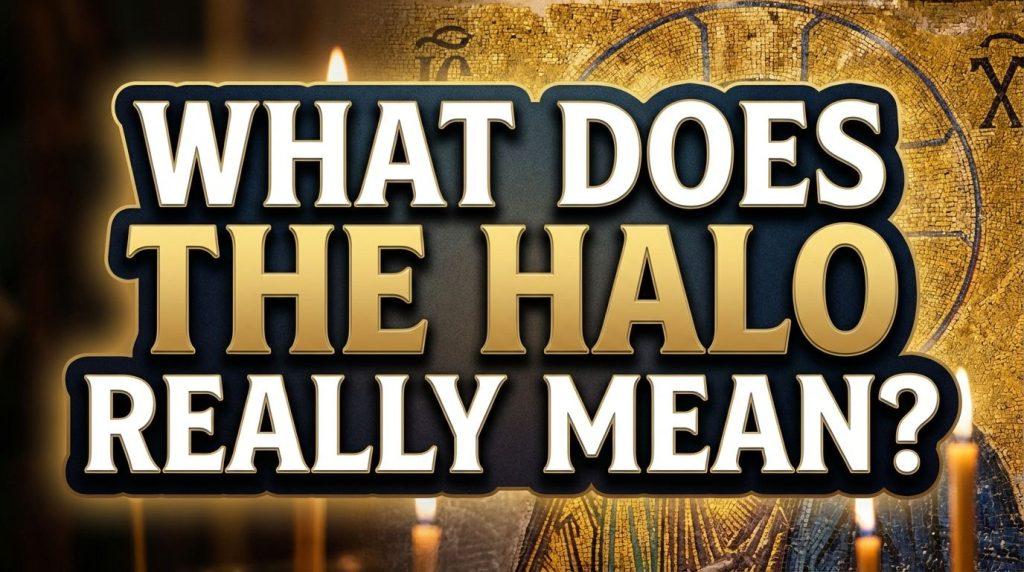
- The halo is a circle of light surrounding the head in religious art that symbolizes holiness, divine grace, and closeness to God.
- This artistic convention developed from ancient traditions of depicting divine figures with radiance or light emanating from them.
- In Catholic art, halos distinguish saints, angels, and divine persons from ordinary humans, marking their sanctified status.
- Different types of halos carry specific meanings, with Christ often shown with a cruciform halo containing a cross within the circle.
- The halo represents the light of God’s glory shining through holy persons who have been transformed by grace.
- While halos are artistic symbols rather than literal physical phenomena, they point to the real spiritual transformation holiness produces.
Ancient Origins of the Halo
The use of radiance or light to indicate divine or exalted status predates Christianity by many centuries. Ancient Egyptian art depicted gods with sun disks above their heads, representing their divine nature and power. Greek and Roman artists showed gods and emperors with rays of light emanating from their heads. Apollo, the sun god, appeared with radiating beams suggesting his connection to light and truth. Roman emperors adopted similar imagery to claim divine status or special favor from the gods. Coins and statues showed emperors with radiant crowns or nimbi, circular halos of light. This practice served political purposes, elevating rulers above ordinary mortals and justifying their absolute authority. The visual language of divinity expressed through light was thus well established in Mediterranean culture before Christianity emerged.
Buddhist and Hindu art also employed circular halos around enlightened beings and deities. Buddha statues frequently show a halo or nimbus surrounding the head, indicating spiritual enlightenment and transcendence of earthly concerns. Bodhisattvas and various Hindu gods appear with similar radiance. This parallel development across unconnected cultures suggests something universal about associating holiness with light. Human beings across civilizations recognized that light symbolizes knowledge, purity, goodness, and divine presence. Darkness represents ignorance, evil, and absence of the divine. The use of halos to mark holy figures thus draws on deeply rooted human intuitions about the relationship between light and spiritual reality. These pre-Christian precedents do not invalidate Christian use of halos but show how the Church adopted and transformed existing visual vocabulary to communicate new truths.
Early Christians initially avoided using halos because of their association with pagan gods and Roman imperial cult. The first few centuries of Christian art showed Christ and saints without halos, distinguishing Christian imagery from pagan conventions. However, as Christianity became the dominant religion of the Roman Empire, artists began incorporating halos into Christian iconography. The earliest Christian halos appear in fourth-century art, coinciding with Christianity’s legalization and imperial favor. Artists adapted the familiar symbol of divine radiance to express Christian beliefs about sanctity and grace. This transition shows the Church’s ability to baptize pagan culture, taking symbols that pointed toward truth and filling them with fuller Christian meaning. The halo in Christian art no longer suggested false divinity or imperial pretension but genuine holiness flowing from union with the true God.
Biblical Foundation for Light Symbolism
Scripture consistently associates light with God’s presence and holiness, providing theological foundation for using halos in Christian art. The creation account begins with God creating light, separating it from darkness (Genesis 1:3-4). This primordial light represents order, goodness, and divine presence conquering chaos. The psalms frequently describe God as dwelling in light. Psalm 104 says God covers Himself with light as with a garment. First Timothy declares that God dwells in unapproachable light (1 Timothy 6:16). No human can see this light and live because its intensity exceeds mortal capacity. Yet God graciously reveals Himself to humanity, veiling His glory enough that we can perceive Him without being destroyed. The light imagery communicates both God’s holiness and the necessary distance between Creator and creature.
The transfiguration of Jesus provides the most direct biblical foundation for the halo symbol. Matthew, Mark, and Luke all record this event when Jesus took Peter, James, and John up a high mountain. There He was transfigured before them, His face shining like the sun and His clothes becoming white as light (Matthew 17:2). This temporary revelation of Christ’s divine glory showed the disciples who He truly was beyond His ordinary human appearance. The shining face and radiant garments communicated His divine nature, the glory He possessed before the Incarnation and would possess after the Resurrection. Moses and Elijah appeared with Him, also shining with glory. The three apostles fell on their faces, overwhelmed by the vision. This biblical account of visible divine radiance surrounding Christ’s person directly inspired Christian artists to show Him with a halo.
Moses also experienced physical manifestation of divine glory. After speaking with God on Mount Sinai, his face shone so brightly that the Israelites could not look at him (Exodus 34:29-35). Moses had to wear a veil when speaking to the people, removing it only when entering God’s presence. This shining face resulted from proximity to divine glory. Being in God’s presence literally transformed Moses’ appearance, making him radiant. Saint Paul references this account when discussing how Christians are transformed by beholding the Lord’s glory (2 Corinthians 3:18). We are being changed from one degree of glory to another by the Spirit. The halo in Christian art expresses this transformation visually, showing that holy persons have been so filled with God’s presence that His light shines through them.
Development in Christian Art
The earliest Christian use of halos appears in fourth-century mosaics and manuscript illuminations. Christ received a halo first, marking His unique divine nature. Artists initially reserved halos exclusively for depicting the Son of God. As artistic conventions developed, angels received halos as purely spiritual beings without bodies or sin. Mary gradually received the halo as her unique holiness and role as Mother of God became more emphasized in theology and devotion. The apostles and martyrs eventually were shown with halos, recognizing their sanctity and place in heaven. By the medieval period, any recognized saint could be depicted with a halo, though living persons were never shown with this symbol. The halo became the standard visual indicator that distinguished saints from ordinary people in religious art.
Different artistic traditions developed distinct halo styles. Byzantine iconography employed flat, golden disk halos with no attempt at three-dimensional realism. These stylized halos emphasized the spiritual rather than physical nature of what they represented. Western European art eventually developed more naturalistic halos that appeared as rings of light surrounding the head in perspective. Renaissance artists sometimes reduced halos to thin golden circles or eliminated them entirely in pursuit of realism. However, traditional religious art maintained the halo convention even as secular portraiture abandoned it. Eastern Orthodox iconography has consistently preserved the full golden disk halo, seeing it as essential to proper sacred art. This divergence between East and West reflects different approaches to religious representation, with Orthodoxy maintaining more stylized sacred art and Catholicism allowing greater naturalism.
The materials and techniques used to create halos varied by period and medium. Mosaicists used gold glass tiles to create brilliant, reflective halos that caught light and seemed to glow. Manuscript illuminators applied gold leaf to create halos that shimmered on the page. Painters used gold paint or yellow pigments to suggest radiance. Some artists painted halos as transparent circles of light, while others made them opaque golden disks. The texture, color, and style of halos changed with artistic movements and available materials. Yet despite stylistic variations, the basic meaning remained constant. The halo marks this person as holy, as united to God, as possessing divine life through grace. Whether executed in Byzantine gold or Renaissance naturalism, the halo communicates the same essential truth about sanctity.
Types and Variations of Halos
Catholic art developed several distinct types of halos with specific meanings. The circular halo, a simple disk or ring of light around the head, is the most common form. This basic halo marks any saint or holy person. Angels receive the same circular halo, showing their holiness and proximity to God. Mary receives a circular halo but often with additional elements like a crown or stars, reflecting her queenly dignity as Mother of God. The twelve stars sometimes surrounding Mary’s halo reference the woman clothed with the sun in Revelation 12. These additions distinguish her halo from those of other saints while maintaining the basic circular form. Prophets, patriarchs, apostles, martyrs, confessors, and virgins all receive circular halos, the universal sign of sanctity.
Christ receives a distinctive cruciform halo, also called a cross nimbus. This halo contains a cross within or formed by the circle, marking Christ as the crucified Redeemer. Sometimes the cross includes the Greek letters omicron, omega, and nu, spelling the word “on,” meaning “being” or “the one who is.” This connects Christ to God’s self-identification as “I AM” in Exodus 3:14. The cruciform halo appears only on images of Christ, never on saints or angels, because it specifically identifies the Son of God who died on the cross. When the Second Person of the Trinity is depicted before the Incarnation, such as in Old Testament theophanies, He may receive the cruciform halo to show He is the pre-existent Christ. The Father and Holy Spirit do not typically receive halos when depicted symbolically, though some medieval art showed God the Father with a triangular halo representing the Trinity.
Square halos occasionally appear in medieval and Renaissance art, indicating a living person who has not yet died. Popes, bishops, and donors who commissioned artworks sometimes appear with square halos, showing they are holy but still earthly. This convention prevented presumption about who would actually achieve heavenly glory while honoring living persons’ piety. After death, if the Church recognized them as saints, their halos would be depicted as circular in subsequent art. The square shape suggests earthly existence and imperfection, while the circle represents heavenly perfection and eternity. Hexagonal halos appear rarely, sometimes used for allegorical figures like virtues or the liberal arts. These are not persons who lived and died but concepts personified. The hexagon distinguishes them from actual saints who merit circular halos.
Theological Meaning of the Halo
The halo symbolizes sanctifying grace, God’s own life dwelling in the soul. Catholic theology teaches that grace makes us partakers of the divine nature (2 Peter 1:4), elevating human nature to share in God’s own life. This participation transforms the person fundamentally, not changing their substance but adding supernatural quality to their being (CCC 1996-1999). The halo makes visible what is invisible, showing that this person possesses divine life through grace. Just as Moses’ face shone after speaking with God, saints shine with interior grace that transforms them. The halo does not suggest that saints become gods or cease being human. Rather, it shows that grace perfects nature, bringing human beings to their intended fulfillment through union with God. The light surrounding the saint’s head represents the light of God dwelling within.
The halo also symbolizes glory, the perfected state of those who see God face to face in heaven. Scripture describes the righteous shining like the sun in their Father’s kingdom (Matthew 13:43). This glory is not merely figurative but represents a real transformation of the resurrected body that reflects the soul’s union with God. The Catechism teaches that in glory, body and soul will participate perfectly in divine life (CCC 1023). The halo anticipates this glorified state, showing saints as they truly are in eternity even when depicted in their earthly lives. When we see a saint with a halo in religious art, we see both the historical person and the glorified saint simultaneously. The halo reminds us that these holy men and women who once lived on earth now live in heaven, their sanctity confirmed and their transformation complete.
The halo represents wisdom and enlightenment, the illumination of the mind by divine truth. Sin darkens the intellect and blinds spiritual perception. Grace restores and elevates the intellect, enabling it to perceive spiritual realities and divine truth. Saints possess supernatural wisdom that comes from knowing God intimately and seeing reality as He sees it. The light around their heads suggests this interior illumination. They no longer walk in darkness but have the light of life. Their understanding has been opened to grasp mysteries hidden from the worldly wise. The halo thus points to the transformation of the whole person, body and soul, intellect and will, by sanctifying grace. It is a comprehensive symbol of holiness affecting every aspect of human nature.
Halos and the Cult of Saints
The development of halos in Christian art closely connects to the developing cult of saints in the early Church. As Christians began venerating martyrs and holy persons who had died, visual methods of identifying these saints became necessary. Churches contained relics of martyrs, and pilgrims visited their tombs seeking intercession. Frescoes and mosaics depicted scenes from saints’ lives and martyrdoms. The halo provided a clear visual indicator that distinguished saints from ordinary people in these narratives. A viewer could immediately identify which figures were saints by their halos. This pedagogical function made halos particularly valuable in an era when most Christians could not read. Images taught what texts could communicate only to the literate few.
The halo also expressed theological truths about the communion of saints. Catholics believe that those in heaven remain united to the Church on earth and can intercede for us (CCC 954-959). The saints are alive in Christ, not dead, and they continue loving and praying for their brothers and sisters still on earth. The halo shows that death did not end these persons’ existence but transformed it. They live in glory, possessed of the beatific vision, yet remain connected to the pilgrim Church. When Catholics pray to saints, asking their intercession, we address living persons who hear us through God’s power. The halo reminds us that these are not mere memories or ideals but actual persons who exist now in perfected form, able to help us on our earthly way.
Some Protestant traditions rejected halos along with veneration of saints, seeing both as unbiblical innovations. The Reformation criticized Catholic practices surrounding saints as bordering on idolatry or at least causing confusion about Christ’s unique mediatorship. These concerns led Protestant art to abandon halos and focus exclusively on biblical scenes. Catholic and Orthodox Christianity maintained halos as legitimate visual theology. The halo does not claim the saint is divine or merits worship. It simply marks this person as holy, as one who has reached the goal of Christian life through grace. Far from competing with Christ, saints point to Him as the source of their holiness. The halo around a saint’s head ultimately directs attention to the light of God that makes them shine.
Halos in Different Cultural Contexts
As Christianity spread globally, the halo symbol was adapted to different cultural artistic traditions. Ethiopian Christian art developed distinctive halos with elaborate patterns and local color preferences. Indian Christian art sometimes shows Christ and saints with halos that incorporate design elements from Hindu and Buddhist traditions, where radiance around enlightened beings is common. Chinese Catholic art during the Jesuit missionary period depicted saints with halos that followed local artistic conventions while maintaining recognizable Christian meaning. These adaptations show the halo’s flexibility as a symbol. The basic concept of light indicating holiness translates across cultures, though the artistic execution varies by context.
Some missionary situations required careful explanation of halo symbolism to avoid misunderstanding. Cultures with existing traditions of depicting gods with radiance sometimes confused Christian halos with pagan practices. Missionaries had to teach that Christian halos do not indicate the person is a god but rather a human being transformed by the one true God’s grace. The catechetical challenge resembled the early Church’s need to distinguish Christian use of halos from imperial cult practice. In each case, the visual symbol required verbal explanation to ensure proper understanding. This suggests an important principle about sacred art. Images do not stand alone but exist within a catechetical context. The Church teaches what symbols mean, preventing misinterpretation and connecting visual language to theological truth.
Contemporary Catholic art in diverse cultural settings continues developing the halo tradition. African Catholic art may show saints with halos alongside traditional African patterns and symbols. Latin American popular religious art uses bright colors and folk art styles while maintaining traditional halos. Asian Catholic communities commission sacred art that merges Christian symbolism with local artistic heritage. This inculturation of sacred art follows the principle that faith seeks cultural expression in every context. The halo remains recognizable across these variations, a universal Christian symbol adapted to particular cultural languages. The Church encourages this healthy diversity while maintaining essential unity in faith and core symbolic meanings.
Criticism and Defense of Halos
Some modern critics argue that halos in religious art promote unrealistic ideas about saints, making them seem remote from ordinary human experience. They suggest that depicting saints as glowing figures discourages regular Catholics from pursuing holiness, thinking it unattainable for normal people. This criticism has some merit. If halos create the impression that saints were fundamentally different from us, possessing natural qualities we lack, then they might discourage rather than inspire. However, proper catechesis can prevent this misunderstanding. Saints were ordinary people who cooperated with God’s grace. The halo marks the grace working in them, not their natural superiority. Any Christian can become holy through grace because holiness comes from God, not from human effort alone.
Other critics approach halos from a rationalist perspective, dismissing them as primitive superstition incompatible with modern scientific understanding. They argue that educated people know light does not actually surround saints’ heads, so depicting halos propagates false beliefs. This criticism misunderstands the nature of religious symbolism. No one claims halos are literal photographic documentation. They are artistic conventions conveying theological truths, like the triangle representing the Trinity or the lamb representing Christ. Symbols point beyond themselves to invisible realities. The halo points to the invisible reality of grace, glory, and holiness. Eliminating halos from religious art would not make it more rational but would remove a valuable teaching tool and impoverish visual vocabulary.
Defenders of halos argue they serve essential functions that alternative approaches cannot replace. The halo immediately identifies holy persons in complex compositions showing multiple figures. Without halos, viewers might not distinguish saints from ordinary people in crowd scenes or narratives. The halo also maintains continuity with centuries of Christian artistic tradition. Abandoning halos breaks connection with how Christians have depicted saints for over 1,500 years. This continuity matters because tradition teaches. When modern Catholics see art with halos, they connect to the faith of their ancestors who understood these same symbols. The Church is not merely a contemporary community but spans across time, uniting believers of every century. Maintaining traditional symbols like halos expresses this temporal unity. Finally, halos are simply beautiful and make sacred art more visually striking. Beauty itself serves theological purposes by drawing people toward God through created things that reflect His beauty.
Halos and Modern Catholic Practice
Contemporary Catholic art treats halos with varying approaches. Traditional sacred art for churches often maintains halos in classical styles, particularly in Eastern Catholic and conservative Western parishes. These communities value continuity with historical practice and prefer art that clearly identifies saints through established conventions. Iconographers writing icons follow strict traditional rules requiring halos for all holy figures. The iconographic tradition sees these elements as doctrinally significant, not merely aesthetic choices. Modern innovations are viewed with suspicion because they might compromise the icon’s theological content. For these communities, the halo remains essential to proper sacred art.
Progressive Catholic artists sometimes eliminate or modify halos, seeking more contemporary visual language. Some replace traditional circular halos with subtle light or aura effects. Others abandon obvious holiness indicators entirely, showing saints as ordinary-looking people to emphasize their humanity and accessibility. Still others incorporate halos but render them in abstract or stylized ways that acknowledge the symbol while updating its execution. These varied approaches reflect ongoing debate about how sacred art should relate to contemporary culture. Should it maintain clear distinction from secular art through traditional symbols? Or should it engage modern artistic language even at risk of losing immediate recognizability? The question has no simple answer, and the Church permits diverse approaches within appropriate bounds.
Individual Catholics encounter halos primarily through traditional art in churches, prayer cards, and religious goods. Most accept halos as normal parts of religious imagery without reflecting deeply on their meaning. Catechesis about sacred art symbolism is often lacking in modern religious education. Many Catholics could not explain what halos represent beyond a vague sense that they mark holy people. This ignorance suggests need for better teaching about sacred art’s theological content. Understanding what symbols mean enriches prayer and devotion. When Catholics grasp that the halo represents grace transforming a person, it becomes a visual reminder of their own calling to holiness. The saint with a halo is not a different species but a human being who cooperated with grace. That same grace is available to every baptized Christian.
The Halo and Personal Holiness
The halo symbol has implications for how individual Catholics understand their own spiritual calling. Every Christian is called to holiness, to become a saint (CCC 2013). This is not optional or reserved for extraordinary people but the universal vocation of all baptized believers. Baptism gives us sanctifying grace, the divine life that makes holiness possible. Confirmation strengthens this grace and empowers us for mission. The Eucharist nourishes supernatural life, providing food for the journey toward holiness. These sacraments provide everything necessary to become saints. The halo in religious art shows where this process leads. Those who cooperate with grace throughout life and persevere to the end will shine with glory in heaven. They will possess the reality the halo represents.
Reflecting on halos can motivate pursuit of holiness by making the goal visible. When we see saints in art surrounded by light, we see our own potential destiny. We are meant to become like them, transformed by grace until we shine with God’s glory. This is not presumption but hope grounded in God’s promises. He wants us to be holy and provides all means necessary for achieving holiness. The main question is whether we will cooperate with grace or resist it. Each daily choice either moves us toward the holiness represented by the halo or away from it. Prayer, sacraments, virtue, and charity increase grace and advance sanctification. Sin, worldliness, and neglect of spiritual life diminish grace and impede progress. The halo reminds us that there is a goal, that Christian life is not aimless wandering but directed movement toward transformation.
We should also recognize that holiness is possible in any vocation or life circumstance. Saints shown with halos include married couples, single laypeople, priests, religious, rich, poor, educated, simple, young, old, and people from every background. The halo does not require extraordinary deeds or dramatic conversion stories. It marks those who faithfully lived Christian life in their particular circumstances. Parents changing diapers can become saints. Students doing homework can become saints. Workers at ordinary jobs can become saints. The key is not what we do but how we do it. Acting from love of God and in obedience to His will sanctifies any legitimate activity. The halo awaiting us in heaven depends not on impressive accomplishments but on faithful love expressed through daily fidelity. This should encourage rather than discourage ordinary Catholics. We need not be extraordinary to become saints, only faithful.
Conclusion
The halo is a circular light surrounding the head in religious art that symbolizes holiness, grace, and divine glory shining through saints. This artistic convention developed from ancient traditions of depicting divine figures with radiance and was adopted by Christians to mark Christ, angels, Mary, and saints. Biblical foundation exists in accounts of Moses’ shining face, Christ’s transfiguration, and scriptural associations between light and God’s presence. Different types of halos carry specific meanings, with Christ receiving a distinctive cruciform halo and living persons sometimes shown with square halos. The halo represents sanctifying grace dwelling in the soul, the glory of heaven, and the illumination of the mind by divine truth. It serves pedagogical functions by identifying saints in complex artworks and expresses belief in the communion of saints across earthly and heavenly realms. The halo symbol has adapted to diverse cultural contexts while maintaining essential meaning, though critics question whether it makes saints seem remote or represents primitive thinking. Modern Catholic practice includes varied approaches from traditional preservation to contemporary adaptation of halos. Understanding halo symbolism helps Catholics appreciate their own call to holiness and recognize that saints were ordinary people transformed by grace. The light surrounding saints’ heads in art represents real spiritual transformation that grace produces and points toward the glory awaiting all who persevere in faith. Every Christian is called to become what the halo represents, a person so filled with God’s presence that His light shines through them visibly. This symbol connects Catholic tradition across centuries, teaches theological truth visually, and inspires believers to pursue the holiness that transforms ordinary people into radiant saints who dwell forever in God’s glorious presence.
Disclaimer: This article presents Catholic teaching for educational purposes. For official Church teaching, consult the Catechism and magisterial documents. For personal spiritual guidance, consult your parish priest or spiritual director. Questions? Contact editor@catholicshare.com
Sign up for our Exclusive Newsletter
- 📌 Add CatholicShare as a Preferred Source on Google
- 🎁 Join us on Patreon for Premium Content
- 🎧 Check Out These Catholic Audiobooks
- 📿 Get Your FREE Rosary Book
- 📱 Follow Us on Flipboard
-

Recommended Catholic Books
Discover hidden wisdom in Catholic books — invaluable guides enriching faith and satisfying curiosity. #CommissionsEarned
- The Early Church Was the Catholic Church
- The Case for Catholicism - Answers to Classic and Contemporary Protestant Objections
- Meeting the Protestant Challenge: How to Answer 50 Biblical Objections to Catholic Beliefs
As an Amazon Associate, I earn from qualifying purchases. Thank you for your support.