
Brief Overview
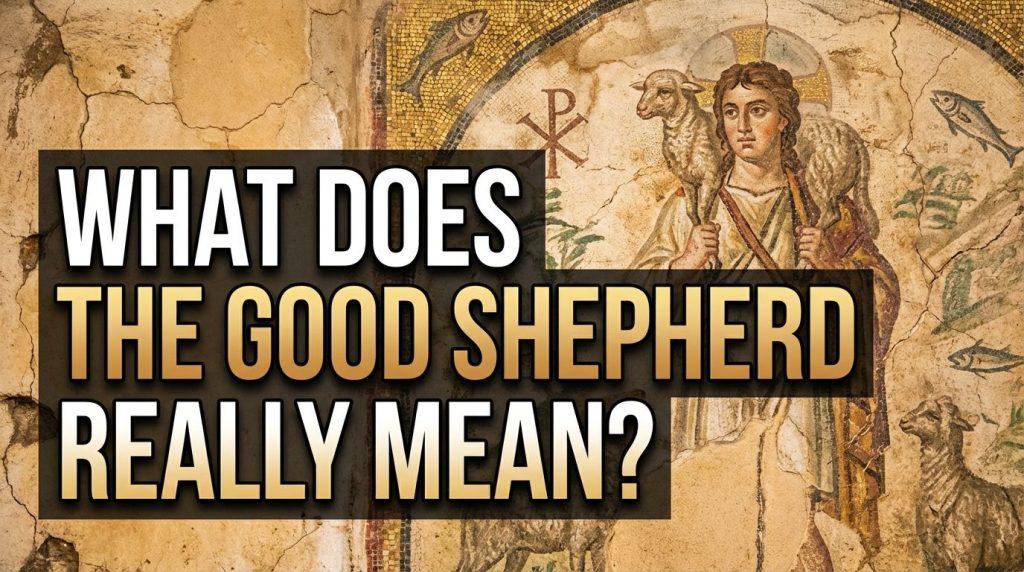
- The Good Shepherd imagery in John 10:11-18 reveals Jesus Christ as the divine caretaker who knows, protects, and lays down His life for His sheep.
- This teaching contrasts Christ’s selfless love with hired hands who abandon the flock when danger appears.
- The shepherd metaphor builds on Old Testament imagery where God is described as Israel’s shepherd who guides and protects His people.
- Jesus emphasizes that He knows His sheep personally and they recognize His voice, establishing an intimate relationship between Himself and believers.
- The Good Shepherd willingly sacrifices His life for the sheep, demonstrating the greatest love possible.
- This teaching extends to the universal Church, as Jesus speaks of other sheep not yet in the fold whom He must bring into one flock under one shepherd.
The Biblical Foundation of Shepherd Imagery
The image of God as shepherd appears throughout the Old Testament, providing essential background for understanding Jesus’ teaching. Psalm 23 begins with the famous declaration, “The Lord is my shepherd, I shall not want,” describing God’s provision, guidance, and protection. The psalmist portrays God as leading His people to green pastures and still waters, restoring their souls and guiding them in right paths. Even when walking through the valley of the shadow of death, the believer fears no evil because the divine shepherd is present. This psalm established shepherd imagery as a central metaphor for God’s relationship with His people. The prophet Ezekiel also uses extensive shepherd imagery in chapter 34, where God condemns the failed shepherds of Israel who fed themselves rather than the flock. These leaders scattered the sheep, failed to strengthen the weak, heal the sick, or seek the lost. God promises to remove these false shepherds and become the shepherd of His people Himself. He will search for His sheep, gather them from where they were scattered, and feed them on good pasture. This prophetic promise finds fulfillment in Jesus Christ, who comes as the Good Shepherd God promised to send.
The shepherd metaphor was particularly meaningful in ancient Near Eastern culture where shepherding was a common occupation. Everyone understood the shepherd’s responsibilities: leading sheep to food and water, protecting them from predators, searching for lost sheep, and caring for the weak and injured. Shepherds lived with their flocks, developing intimate knowledge of each animal’s personality and needs. They called their sheep by name, and the sheep recognized their shepherd’s voice among many voices. This daily reality provided perfect imagery for describing God’s relationship with His people. Palestinian shepherds typically led rather than drove their flocks, walking ahead while the sheep followed. They did not force or coerce but attracted sheep through relationship and trust. The sheep followed because they knew the shepherd would lead them to what they needed. This leadership style contrasts sharply with how thieves or hired hands treat animals as mere property to be exploited or used.
Jesus delivers the Good Shepherd discourse in John 10 immediately after healing a man born blind and the resulting controversy with the Pharisees. The religious leaders had cast the healed man out of the synagogue for defending Jesus. Jesus then introduces the shepherd imagery, implicitly condemning the Pharisees as false shepherds who scatter rather than gather God’s people. He positions Himself as the true shepherd promised in Scripture who will gather all of God’s sheep into one flock. The timing of this teaching shows Jesus addressing the failure of Israel’s current leadership while establishing His own authority. The Pharisees prided themselves on being teachers and guides of God’s people, yet they rejected the Messiah and expelled those who believed in Him. Their actions proved them to be hired hands who cared nothing for the sheep. Jesus offers Himself as the alternative, the genuine shepherd who truly knows and loves the flock. This confrontation reveals the stark difference between religious authority based on position and authentic spiritual leadership based on sacrificial love.
Jesus Declares Himself the Good Shepherd
In John 10:11, Jesus makes the emphatic declaration, “I am the good shepherd.” This statement belongs to the series of “I am” pronouncements found throughout John’s Gospel, each revealing a different aspect of Christ’s identity and mission. The Greek word kalos translated as “good” means not merely morally good but beautiful, noble, excellent, and ideal. Jesus is not just a good shepherd among many but the perfect shepherd, the standard by which all others are measured. He represents the fulfillment of every promise God made about caring for His people. His goodness encompasses both moral character and complete competence in shepherding. He possesses both the will and the ability to care for the flock perfectly. This claim to be the Good Shepherd asserts Jesus’ divinity, for the Old Testament consistently identifies God Himself as Israel’s shepherd. By taking this title, Jesus equates Himself with the God who promised in Ezekiel to personally shepherd His people.
The definite article “the” is significant in this declaration. Jesus is not merely a good shepherd but the Good Shepherd, unique and without equal. Many leaders might claim to care for people, but Jesus alone perfectly fulfills the shepherd role. His shepherding is not partial, temporary, or flawed but complete and eternal. He knows every sheep perfectly, loves each one individually, and provides everything needed for abundant life. No other religious teacher, political leader, or spiritual guide can make this claim honestly. They may offer partial guidance or temporary help, but only Christ offers total care of body and soul for time and eternity. The exclusivity of this claim challenges every competing authority or ideology. Those who follow other shepherds follow ones who cannot ultimately save them. Only the Good Shepherd can lead people to eternal life because He alone is the way, the truth, and the life.
This declaration appears at a crucial moment in Jesus’ ministry when opposition from religious authorities was intensifying. He had performed numerous miracles, taught with unique authority, and attracted large crowds. Yet the Pharisees and other leaders rejected Him, questioning His credentials and claiming He blasphemed by making Himself equal with God. By declaring Himself the Good Shepherd, Jesus directly challenges their authority and exposes their failure. He presents people with a clear choice: follow the religious establishment that has proven itself a false shepherd, or follow Him as the true shepherd sent by God. This binary choice admits no middle ground. One cannot follow both Jesus and those who reject Him. The shepherd imagery makes the choice vivid and personal. Sheep must follow one shepherd or another; they cannot wander independently and survive. Similarly, human beings need spiritual guidance and cannot thrive by following their own wisdom alone. The question is not whether we need a shepherd but which shepherd we will follow.
The Shepherd’s Intimate Knowledge of the Sheep
Jesus emphasizes that the Good Shepherd “knows his sheep and his sheep know him” (John 10:14). This knowledge goes far beyond superficial familiarity or factual information. The Greek word ginosko indicates deep, personal, experiential knowledge. It is the same word used to describe the intimate knowledge between Father and Son in the Trinity. Jesus knows each sheep individually, completely, and perfectly. He knows their strengths and weaknesses, their wounds and fears, their potential and limitations. Nothing about them is hidden from His sight. He knows their past failures, present struggles, and future challenges. This comprehensive knowledge enables Him to provide exactly what each sheep needs at every moment. He does not treat the flock as an undifferentiated mass but relates to each member personally. Catholic teaching on God’s providence reflects this intimate knowledge. God knows and cares for every sparrow that falls, and we are worth far more than many sparrows.
The reciprocal nature of this knowledge is equally important. The sheep also know the shepherd, recognizing His voice and following Him. This knowledge develops through relationship and experience rather than abstract study. Sheep learn their shepherd’s voice by hearing it regularly, following where it leads, and finding that it guides them truly. Similarly, Christians come to know Christ through prayer, sacraments, reading Scripture, and obedience. We learn to distinguish His voice from the many competing voices in the world. His voice speaks truth, offers peace, and leads to life. Other voices may sound appealing but ultimately lead to confusion or destruction. The ability to recognize Christ’s voice is a gift of grace, yet it requires our cooperation. We must spend time in His presence, listen attentively to His word, and practice following His guidance. Those who rarely pray or read Scripture should not be surprised if they struggle to hear His voice clearly.
This intimate knowledge between shepherd and sheep creates a relationship of trust that enables the sheep to follow even when they do not understand where the path leads. Sheep do not need to comprehend the shepherd’s overall plan or see the final destination. They simply need to know the shepherd is trustworthy and follow where he leads. Christians likewise follow Christ through faith, trusting His wisdom even when circumstances make no sense. We do not always understand why He allows certain trials or where He is leading us through difficulties. Yet we know Him well enough to trust His love and goodness. This trust develops gradually through consistent experience of His faithfulness. Each time we follow His leading and find it was right, our confidence grows. Each time He provides in unexpected ways or brings good from apparent disaster, we learn to trust Him more completely. The shepherd-sheep relationship is not static but grows deeper through time and shared experience.
The Shepherd Lays Down His Life
The defining characteristic of the Good Shepherd is His willingness to lay down His life for the sheep (John 10:11, 15). This voluntary self-sacrifice distinguishes the true shepherd from hired hands who flee when wolves attack. The hired hand works for wages, not love, and therefore abandons the flock when personal danger appears. His concern is for himself, not the sheep. But the Good Shepherd values the sheep above His own life and willingly dies to protect them. This is not the death of tragic accident or unavoidable fate but deliberate choice. Jesus makes clear that He lays down His life of His own accord; no one takes it from Him (John 10:18). He has authority to lay it down and authority to take it up again. This claim points toward the Passion, death, and Resurrection, the supreme act of shepherding love. Jesus would soon demonstrate the literal truth of these words by going to the cross.
The concept of a shepherd dying for sheep would have shocked Jesus’ original audience. Shepherds might risk their lives protecting sheep from predators or thieves, but actually dying for sheep seemed absurd. Sheep were valuable property but not worth a human life. Yet Jesus turns this calculation upside down, declaring that He values the sheep so highly that He willingly dies for them. This reveals the infinite love of God for human beings. We are not merely God’s property or servants but beloved children worth the ultimate sacrifice. The Father loves us so much that He sent His only Son to die for our salvation. The Son loves us so much that He freely chose to become human and offer His life as ransom for many. This love is not theoretical or sentimental but practical and costly. It was demonstrated in the actual historical events of Good Friday when Jesus hung on the cross and gave His life for the world.
Catholic theology sees Christ’s death as not merely an inspiring example of love but the means of humanity’s redemption. His sacrifice on the cross satisfied divine justice, defeated sin and death, and opened the gates of heaven (CCC 613-618). By taking on Himself the punishment due to human sin, Jesus freed us from the slavery of sin and death. His death was substitutionary, offered in our place, and representative, uniting all humanity to God. The efficacy of His sacrifice flows from who He is: both God and man, the perfect mediator between heaven and earth. As God, His sacrifice has infinite value capable of atoning for all sin. As man, He can represent the human race and offer a genuinely human act of love and obedience. No mere human being could have accomplished this redemption because a finite creature cannot make satisfaction for offenses against the infinite God. Only the God-man could bridge the chasm between humanity and divinity, reconciling us to the Father through His blood shed on Calvary.
The Contrast with Hired Hands
Jesus explicitly contrasts the Good Shepherd with hired hands who abandon the flock when danger appears (John 10:12-13). The hired hand works for payment rather than love and therefore has no real commitment to the sheep. When a wolf comes, the hired hand flees because he cares more about his own safety than the welfare of the flock. His relationship with the sheep is transactional rather than relational. He performs his duties as long as conditions remain safe and comfortable, but he will not sacrifice himself. This imagery targets false religious leaders who claim to care for God’s people but actually serve their own interests. They hold positions of authority for prestige, power, or profit rather than genuine concern for souls. When persecution, controversy, or cost arises, they abandon their responsibilities. The Pharisees whom Jesus confronted exemplified this hired-hand mentality, caring more about their status and rules than about people’s relationship with God.
Throughout Church history, the contrast between true shepherds and hired hands has remained relevant. Bishops, priests, and religious leaders are called to be shepherds following Christ’s example, laying down their lives in service of the flock. Many have fulfilled this calling heroically, enduring persecution, poverty, and martyrdom for the sake of the gospel. These faithful shepherds demonstrate that Christ’s Spirit continues to animate His Church. However, history also records tragic examples of hired hands who betrayed their calling. Some clergy have pursued wealth, power, or pleasure rather than holiness and service. Some have abandoned the flock in times of persecution or compromised truth to avoid conflict. Some have even preyed upon those entrusted to their care. These failures cause immense scandal and suffering. Yet the sins of unfaithful leaders do not invalidate Christ’s promise to remain with His Church or negate the faithful service of countless good shepherds who truly follow the Good Shepherd.
The laity must also examine themselves in light of this teaching. While most Catholics are not ordained shepherds, all share responsibility for caring for others in the body of Christ. Parents serve as shepherds to their children, teachers to students, and mature Christians to new believers. We all influence others through our example and words. Do we act as true shepherds, willing to sacrifice for others’ good, or as hired hands who help only when convenient? When someone needs correction, counsel, or practical assistance, do we respond with sacrificial love or make excuses? When living the faith costs us socially or professionally, do we stand firm or compromise? The hired-hand mentality easily infects anyone who treats faith as just another life category rather than total commitment. Christ calls every Christian to shepherd others in appropriate ways, reflecting His own self-giving love in all our relationships. This does not mean we must die literally for others, though some are called to martyrdom. It means we must consistently choose others’ good above our own comfort and convenience.
The Unity of the Flock
Jesus speaks of having “other sheep that do not belong to this fold” whom He must bring in, so there will be “one flock, one shepherd” (John 10:16). This statement reveals the universal scope of His mission. Jesus came first to the lost sheep of Israel, as He often emphasized during His earthly ministry. However, His salvation extends to all nations, races, and peoples. The “other sheep” primarily refers to Gentiles who would be incorporated into the Church alongside Jewish believers. The early Church struggled with this reality, as recorded in Acts and Paul’s letters. Many Jewish Christians initially thought Gentile converts needed to adopt Jewish customs and law. The Council of Jerusalem, described in Acts 15, resolved that Gentiles could enter the Church without becoming Jews first. This decision recognized that Christ creates one unified flock from all peoples.
The Catholic Church sees itself as the one flock gathered by the Good Shepherd. The word “catholic” means universal, reflecting the Church’s call to embrace all peoples in every place and time. This universality is not merely geographic expansion but an essential characteristic of the Church founded by Christ (CCC 830-831). The Church is one because it has one Lord, one faith, one baptism, and one Holy Spirit animating its members. Despite diversity of language, culture, and custom, all Catholics share the same essential beliefs, sacraments, and hierarchical communion with the Pope. This unity does not mean uniformity; the Church celebrates legitimate diversity within orthodox faith. Eastern and Western Catholics maintain distinct liturgical and theological traditions while remaining one Church. Various religious orders emphasize different aspects of Christian life while sharing the same core faith. All these expressions unite in following the one Good Shepherd.
Christ’s desire for unity among His followers challenges the scandal of Christian division. Protestantism emerged in the 16th century, fracturing Western Christianity into thousands of denominations. These separated communities maintain varying degrees of Christian truth and practice, yet they lack full communion with the Catholic Church. Vatican II’s decree on ecumenism acknowledges elements of truth and sanctification found in non-Catholic Christian communities while maintaining that the fullness of Christ’s Church subsists in the Catholic Church (CCC 816-819). Catholics should pray and work for restoration of Christian unity, not through compromise of truth but through conversion of hearts. Christ’s prayer that all believers might be one (John 17:21) remains unfulfilled while Christianity remains divided. The Good Shepherd continually calls all Christians toward the unity He desired from the beginning. This does not mean accepting false teaching or abandoning distinctive Catholic beliefs. Rather, it means living the faith so attractively that others are drawn to its fullness.
The Voice of the Shepherd
Jesus emphasizes repeatedly that His sheep hear His voice and follow Him (John 10:3-5, 27). This teaching addresses how believers recognize and respond to Christ’s guidance. The shepherd’s voice represents His word, both the written Scripture and His ongoing communication through the Holy Spirit. Christians learn to recognize Christ’s voice primarily through regular reading and meditation on Scripture. The Bible contains God’s revealed truth, and the Holy Spirit illuminates its meaning for those who approach it with faith and humility. The Church has always encouraged believers to read Scripture daily, allowing God’s word to shape their thinking and desires. When we saturate our minds with biblical truth, we develop the ability to distinguish Christ’s voice from counterfeits. False teachers and worldly philosophies may sound appealing, but those grounded in Scripture can identify their errors.
The voice of the Good Shepherd also speaks through the teaching authority of the Church. Christ established the Church with apostolic leadership to preserve and proclaim the faith accurately. The Pope and bishops in communion with him serve as authentic interpreters of divine revelation, guided by the Holy Spirit to teach without error in matters of faith and morals (CCC 888-892). When the Church defines doctrine or issues moral teaching, Christ Himself speaks through His appointed shepherds. This does not mean every opinion of every bishop carries the same authority as defined dogma. Rather, it means that the Church’s magisterial teaching represents Christ’s voice for believers seeking guidance. Those who reject Church teaching in favor of personal interpretation risk following their own voice rather than the Good Shepherd’s. Private judgment unmoored from apostolic tradition easily drifts into error.
Christ’s voice also speaks through individual conscience properly formed by truth. The Catechism teaches that conscience is the interior voice calling us to do good and avoid evil (CCC 1776-1794). This inner voice reflects the natural moral law written on every human heart, though sin can distort or suppress it. Catholics have a serious obligation to form their consciences according to objective truth found in Scripture and Church teaching. When conscience is properly formed, it becomes a reliable guide for recognizing Christ’s voice in specific situations. However, conscience does not operate independently of revelation. We cannot claim to follow Christ while ignoring what He teaches through Scripture and Church. Some people misuse conscience as justification for sin, claiming their personal feelings override moral teaching. This represents following one’s own voice rather than the Good Shepherd’s. Authentic conscience harmonizes with objective truth, not private preference. When we hear competing voices claiming to guide us, we must test them against Scripture, tradition, and Church teaching.
The Abundant Life Christ Offers
Jesus declares that He came so His sheep “may have life and have it abundantly” (John 10:10). This statement reveals the positive purpose of His mission. He is not primarily a lawgiver imposing restrictions but a life-giver offering fullness. The abundant life He promises includes both natural and supernatural dimensions. On the natural level, Christ’s teaching provides wisdom for human flourishing. His moral law protects us from self-destructive behaviors and guides us toward genuine happiness. When we follow His commandments, we avoid many forms of suffering caused by sin. We build healthy relationships, maintain integrity, and experience inner peace. These natural benefits of following Christ are real and significant. However, they are not the primary meaning of abundant life.
The abundant life Jesus offers is primarily supernatural, the very life of God shared with human beings through grace. This divine life begins at baptism when we receive sanctifying grace and become adopted children of God (CCC 1266-1270). We enter into relationship with the Trinity, becoming temples of the Holy Spirit. This supernatural life transforms us from within, enabling us to know God, love Him, and participate in His divine nature. The abundant life includes the theological virtues of faith, hope, and charity, which orient our entire existence toward God. It includes the gifts of the Holy Spirit, which perfect our natural faculties for supernatural operation. It includes actual graces, which help us in specific situations to do good and avoid evil. All these supernatural realities constitute the abundant life that far exceeds anything possible for human nature alone.
This abundant life reaches its fullness in heaven, where we will see God face to face and enjoy perfect happiness forever. Eternal life is not merely endless duration but a quality of existence, sharing fully in God’s own life without any limitation or imperfection (CCC 1023-1029). However, abundant life begins now for those who remain in Christ. Even in this world, Christians experience a richness of meaning, purpose, and joy that the world cannot provide or take away. We have hope that transcends circumstances, peace that survives trials, and love that sacrifices self for others. We belong to a global family of believers spanning centuries and continents. We have access to Christ Himself through prayer and sacraments. We possess certainty about our ultimate destiny and the meaning of existence. These spiritual riches constitute the abundant life available now to all who follow the Good Shepherd. Material poverty, physical suffering, or social rejection cannot rob us of this interior abundance. Those who grasp this truth often find they need less from the world than they thought.
The Protection of the Shepherd
The Good Shepherd protects His sheep from dangers that threaten their welfare and salvation. Jesus specifically mentions wolves, representing enemies who seek to scatter and destroy the flock (John 10:12). These enemies include Satan and demons, who constantly work to separate believers from Christ. Saint Peter warns that the devil prowls like a roaring lion seeking someone to devour (1 Peter 5:8). Spiritual warfare is real, though many modern people dismiss or ignore it. The evil one uses temptation, deception, accusation, and despair as weapons against Christians. He exploits our weaknesses, magnifies our doubts, and suggests that sin will satisfy our desires. Without the Good Shepherd’s protection, we would quickly fall prey to these attacks. Christ guards us through the sacraments, especially the Eucharist and Confession. He strengthens us through prayer and Scripture. He warns us through conscience and Church teaching. He fights for us through His angels and saints.
The shepherd’s protection also shields us from false teachers who distort truth and lead people astray. Jesus warned that false prophets would arise, appearing as sheep but inwardly being ravenous wolves (Matthew 7:15). Throughout history, heresies have threatened to destroy Christian faith by denying essential truths about Christ, the Trinity, salvation, or the Church. The Good Shepherd protected His flock by raising up defenders of orthodoxy like Athanasius, Augustine, and Thomas Aquinas. He guided Church councils to define doctrine clearly and refute errors. He preserved the apostolic succession, ensuring that authentic teaching would continue generation after generation. In our own time, false teachers abound both outside and inside the Church. Some deny Christ’s divinity, His resurrection, or His real presence in the Eucharist. Some promote moral relativism, claiming no objective right or wrong exists. Some reduce Christianity to social activism, eliminating its supernatural dimension. The Good Shepherd continues to protect His flock by maintaining the teaching office of the Church and inspiring faithful theologians to defend truth.
The shepherd’s care extends to protecting sheep from their own foolishness and tendency to wander. Sheep are not particularly intelligent animals; they easily get lost, fall into danger, or follow bad leaders. Similarly, human beings often make poor choices that endanger our spiritual welfare. We convince ourselves that sin will bring happiness, that we can manage life without God, or that our own wisdom surpasses divine revelation. The Good Shepherd protects us from these self-destructive tendencies through various means. He allows consequences of sin to teach us its real nature. He sends trials that humble our pride and reveal our dependence. He provides mentors, spiritual directors, and communities that support faithful living. He gives us second chances when we fail, welcoming us back like the prodigal son. His protection is not overriding control that eliminates human freedom but loving guidance that respects our agency while preventing us from destroying ourselves.
The Sacramental Life and the Good Shepherd
The Catholic sacraments serve as primary means through which the Good Shepherd cares for His flock. Baptism incorporates people into the flock, making them members of Christ’s body and children of God. Through baptism, we receive the character of Christ’s sheep, marked permanently as belonging to Him (CCC 1272-1274). This sacrament removes original sin, infuses sanctifying grace, and implants the theological virtues. The newly baptized person becomes a temple of the Holy Spirit and gains the right to participate in the other sacraments. Baptism is the gate through which people enter the sheepfold, leaving behind their former life under sin’s dominion. Parents who have their children baptized entrust them to the Good Shepherd’s care, confident that He will guide and protect them throughout life. The baptismal promises renewed annually at Easter remind Catholics of their identity as Christ’s sheep.
The Eucharist serves as the Good Shepherd’s supreme gift to His flock, providing supernatural nourishment for the Christian life. Jesus called Himself the bread of life and promised that those who eat His flesh and drink His blood would have eternal life (John 6:54). The Mass makes present Christ’s sacrifice on Calvary, the very act of laying down His life for the sheep. When Catholics receive Holy Communion, they consume the actual Body and Blood of Christ under the appearances of bread and wine. This sacramental union with Christ strengthens the bond between shepherd and sheep. It increases sanctifying grace, forgives venial sins, and preserves us from mortal sin. It unites us more closely to Christ and to one another as members of His body. The Eucharist is called the source and summit of Christian life because it contains Christ Himself and from it flows all other graces (CCC 1324). Regular participation in Mass and worthy reception of Communion are essential for maintaining our relationship with the Good Shepherd.
The sacrament of Reconciliation manifests the Good Shepherd’s mercy toward straying sheep. Jesus told parables about the shepherd leaving ninety-nine sheep to search for one that was lost (Luke 15:4-7). This parable illustrates God’s desire that no one be lost and His joy when sinners repent. When Catholics confess their sins to a priest, Christ Himself forgives through the priest’s ministry. The Good Shepherd welcomes us back to the flock no matter how far we have wandered or how often we have failed. This sacrament restores sanctifying grace to those in mortal sin and strengthens those struggling with venial sins and bad habits. Many Catholics underutilize this powerful gift, confessing rarely or never. They deprive themselves of the healing and renewal that comes from regular confession. The Good Shepherd wants to forgive, cleanse, and restore all who have separated themselves from Him through sin. He searches for the lost, calls them back, and celebrates their return.
The Role of Human Shepherds
Christ appointed Peter to feed and tend His sheep, establishing the office of Pope as chief shepherd under Christ (John 21:15-17). Peter and the other apostles received authority to teach, sanctify, and govern the Church. This apostolic authority continues through their successors, the bishops in communion with the Pope. These human shepherds do not replace Christ but serve as His representatives and instruments. They make His shepherding present and visible in each generation and location. When bishops teach, sanctify through sacraments, and guide the faithful, Christ Himself acts through them. The authority they exercise is not their own but Christ’s, delegated to them through apostolic succession (CCC 861-862). This hierarchical structure protects the flock from confusion and division. Instead of each person deciding individually what to believe and how to worship, Christians have authoritative guides appointed by Christ Himself.
Priests share in the bishops’ shepherding ministry, especially through celebrating sacraments and proclaiming the gospel. The word “pastor” means shepherd, and parish priests truly serve as shepherds to local communities. They offer Mass, hear confessions, visit the sick, counsel the troubled, and teach the faith. Good priests model their ministry on the Good Shepherd, laying down their lives daily in service of the flock. They make themselves available at all hours for emergencies. They sacrifice comfort and wealth to serve in difficult assignments. They study constantly to provide sound teaching. They pray for their people and carry their burdens. The priesthood is demanding and often thankless work, yet countless priests faithfully fulfill their calling. Catholics should pray for priests daily, support them generously, and cooperate with their legitimate authority. Criticism of priests who fail in their duties is sometimes necessary, but it should be balanced by gratitude for the many who serve well.
Parents also exercise a form of shepherding within their families. They have the primary responsibility to teach their children the faith, form their consciences, and guide them toward holiness (CCC 2221-2226). Parents introduce children to prayer, bring them to Mass, and model Christian living. They answer questions about faith, correct wrong ideas, and provide age-appropriate religious instruction. They protect children from spiritual dangers like harmful media, bad companions, or false teachings. This parental shepherding is not optional but an essential duty. Parents who neglect religious formation abandon their children to wander spiritually without guidance. In an increasingly secular culture, parents must be intentional about passing on the faith. They cannot assume children will absorb Catholicism automatically or that school religious education suffices. Home is the first and most important school of faith. When parents take their shepherding role seriously, children typically remain faithful. When parents neglect it, children often drift away from the Church.
The Cost of Following the Good Shepherd
Following the Good Shepherd requires surrendering our will to His and accepting whatever He asks. Jesus told prospective disciples to count the cost before committing to follow Him (Luke 14:28-33). Discipleship is not a casual hobby or social club membership but total life commitment. It means putting Christ above all other relationships, possessions, and goals. It means taking up our cross daily and walking the narrow path that leads to life. The Good Shepherd does not promise earthly comfort, success, or popularity to those who follow Him. He promises abundant life, but much of that abundance is spiritual and eternal rather than material and temporal. Many who follow Christ face persecution, poverty, or suffering. They sacrifice career advancement to maintain integrity. They accept social marginalization for refusing to compromise moral truth. They endure family conflict over religious differences. These costs are real and should not be minimized.
Yet those who pay the cost of discipleship discover it is worth far more than the price. Saint Paul considered everything loss compared to the surpassing worth of knowing Christ Jesus (Philippians 3:8). Earthly treasures are temporary and ultimately empty, but the treasure of knowing and loving Christ satisfies completely. The peace He gives surpasses all understanding and remains unshaken by external circumstances. The joy He provides runs deeper than happiness based on favorable conditions. The love He commands and enables transforms all relationships and gives life meaning. The hope He offers makes even death a doorway rather than a dead end. Those who have tasted the abundant life Christ offers would not trade it for anything the world can give. They may face hardships, but they face them with Christ and therefore never face them alone. They may lack many things, but they lack nothing essential because they possess the one thing necessary.
The call to follow the Good Shepherd is universal but the response is individual. Christ calls every person to enter His flock, receive His care, and participate in His abundant life. However, He forces no one. Each person must choose whether to hear His voice and follow or to ignore Him and go a different way. This choice has eternal consequences. Those who follow Christ as their shepherd will dwell in His Father’s house forever. Those who reject Him will be separated from the source of all life and goodness. The urgency of this decision should make every person pause and consider carefully. Are you following the Good Shepherd, or are you following your own path? Do you recognize His voice and respond, or do you ignore Him and listen to other voices? These questions determine your destiny both now and forever. The Good Shepherd stands ready to receive all who come to Him. He does not reject anyone who seeks Him sincerely. He does not demand perfection before accepting us but accepts us as we are and transforms us gradually into what we should be.
The Good Shepherd and Mary
Catholic tradition recognizes Mary’s unique role in relation to Christ the Good Shepherd. She is Mother of the Good Shepherd, having given Him His human nature and raised Him in Nazareth. She is also Mother of the Church, caring for all Christ’s sheep as her spiritual children. Jesus gave Mary to John at the foot of the cross, and through John to all believers (John 19:26-27). This gift expresses Christ’s desire that His mother continue to care for His flock after His ascension. Mary exercises her maternal care by interceding for all Christians, drawing them closer to her Son. She does not replace or rival Christ but serves His shepherding work. Just as a shepherd might appoint helpers to assist with the flock, Christ appointed His mother to help guide and protect His sheep. Her apparitions throughout history often include warnings about spiritual dangers and calls to prayer, penance, and conversion. These messages reflect her maternal concern for souls wandering from the Good Shepherd.
The Rosary serves as a primary means through which Catholics invoke Mary’s intercession and maternal guidance. By meditating on the mysteries of Christ’s life while praying the Hail Mary, believers contemplate the Good Shepherd’s earthly ministry and saving work. Mary leads us through these mysteries as she pondered them in her heart (Luke 2:19). She helps us understand who Jesus is and what He accomplished for our salvation. She presents our needs to her Son with the confidence of a mother who knows He will not refuse her requests. The wedding at Cana demonstrates Mary’s intercessory power; when she brought the problem of insufficient wine to Jesus, He performed His first public miracle at her request (John 2:1-11). She continues this intercessory role in heaven, bringing our needs before the Good Shepherd and encouraging us to do whatever He tells us.
Marian devotion properly understood does not distract from Christ but leads to Him. True love for Mary necessarily includes love for her Son; one cannot honor the mother while dishonoring the Son. Mary herself would never tolerate such confusion, as her entire life was oriented toward glorifying God and serving His purposes. When Catholics pray to Mary, they do not worship her as divine but honor her as the greatest of all created beings and invoke her prayers. This is comparable to asking a friend to pray for us, not substituting that friend for God. Mary has no power of her own to save; she is herself saved by Christ’s grace. Yet her prayers are particularly efficacious because of her unique holiness and her mother’s relationship with Jesus. The Good Shepherd listens to His mother’s intercession and grants her requests for the welfare of His flock. Catholics who practice genuine Marian devotion find it strengthens their relationship with Christ rather than competing with it.
The Universal Call to Holiness
The Good Shepherd calls every member of His flock to holiness, not just priests, religious, or extraordinary saints. Vatican II emphasized the universal call to holiness, teaching that all Christians are called to the perfection of charity (CCC 2013-2014). This represents the normal goal of Christian life, not an optional extra for spiritual elites. God desires all people to be saved and to come to knowledge of the truth (1 Timothy 2:4). He provides sufficient grace for every person to reach the holiness appropriate to their state in life. Parents can become saints by faithful marriage and child-rearing. Workers can become saints by performing their labor with excellence and integrity. The sick can become saints by accepting suffering with faith and hope. Students can become saints by studying diligently and treating others charitably. No vocation or circumstance excludes anyone from holiness; rather, each provides unique opportunities for growth in love.
Holiness means being transformed into the likeness of Christ, bearing His character and living according to His will. The Good Shepherd desires to produce this transformation in all who follow Him. He provides everything necessary through grace, sacraments, teaching, and community. Our part is to cooperate with His work, responding to grace rather than resisting it. This cooperation includes regular prayer, frequent reception of sacraments, study of the faith, and practice of virtue. It means accepting daily crosses and opportunities for self-denial. It requires examining conscience and confessing sins regularly. It involves serving others and sharing the gospel. These practices are not burdensome regulations but practical means of remaining close to the Good Shepherd and allowing His life to flow into us. Those who faithfully practice them will grow in holiness whether they feel holy or not.
The goal of holiness should shape how Catholics approach every aspect of life. We should ask in each situation: What would Christ do? How can I respond in a way that reflects His character? What choice will draw me closer to Him? These questions keep us focused on our true purpose and prevent us from drifting into mediocrity. The Good Shepherd did not sacrifice Himself so we could live comfortably sinful lives; He died to make us holy as He is holy. He calls us to perfection not because He is demanding but because He loves us and knows we can find true happiness only in becoming what He created us to be. The path to holiness may be narrow and demanding, but it is also the path to joy, peace, and fulfillment. Those who walk it faithfully reach the destination where they will see the Good Shepherd face to face and rejoice in His presence forever.
Conclusion
The Good Shepherd teaching in John 10 reveals Jesus Christ as the divine caretaker who knows, protects, and lays down His life for His sheep. This imagery builds on Old Testament promises of God shepherding His people and finds fulfillment in Christ’s incarnation, ministry, passion, and resurrection. The Good Shepherd offers intimate knowledge, complete protection, and abundant life to all who hear His voice and follow Him. He contrasts sharply with hired hands who serve for personal gain rather than sacrificial love. His shepherding extends to all nations and peoples, gathering one flock under one shepherd. The Catholic Church recognizes Christ’s continuing presence as Good Shepherd through the sacraments, teaching authority, and Holy Spirit’s guidance. Individual Catholics participate in Christ’s flock through baptism, remaining connected through Eucharist and Reconciliation. Human shepherds including Pope, bishops, priests, and parents extend Christ’s care to specific communities and families. Following the Good Shepherd requires surrendering personal will and accepting the cost of discipleship. Yet this cost is far exceeded by the value of knowing Christ and receiving the abundant life He offers. Every Christian is called to respond personally to the Good Shepherd’s voice, entering His flock and committing to follow wherever He leads. This choice determines both present quality of life and eternal destiny. The Good Shepherd stands ready to receive all who come to Him, offering forgiveness, transformation, and eternal life to every person willing to trust His love and guidance.
Disclaimer: This article presents Catholic teaching for educational purposes. For official Church teaching, consult the Catechism and magisterial documents. For personal spiritual guidance, consult your parish priest or spiritual director. Questions? Contact editor@catholicshare.com
Sign up for our Exclusive Newsletter
- 📌 Add CatholicShare as a Preferred Source on Google
- 🎁 Join us on Patreon for Premium Content
- 🎧 Check Out These Catholic Audiobooks
- 📿 Get Your FREE Rosary Book
- 📱 Follow Us on Flipboard
-

Recommended Catholic Books
Discover hidden wisdom in Catholic books — invaluable guides enriching faith and satisfying curiosity. #CommissionsEarned
- The Early Church Was the Catholic Church
- The Case for Catholicism - Answers to Classic and Contemporary Protestant Objections
- Meeting the Protestant Challenge: How to Answer 50 Biblical Objections to Catholic Beliefs
As an Amazon Associate, I earn from qualifying purchases. Thank you for your support.