
Brief Overview
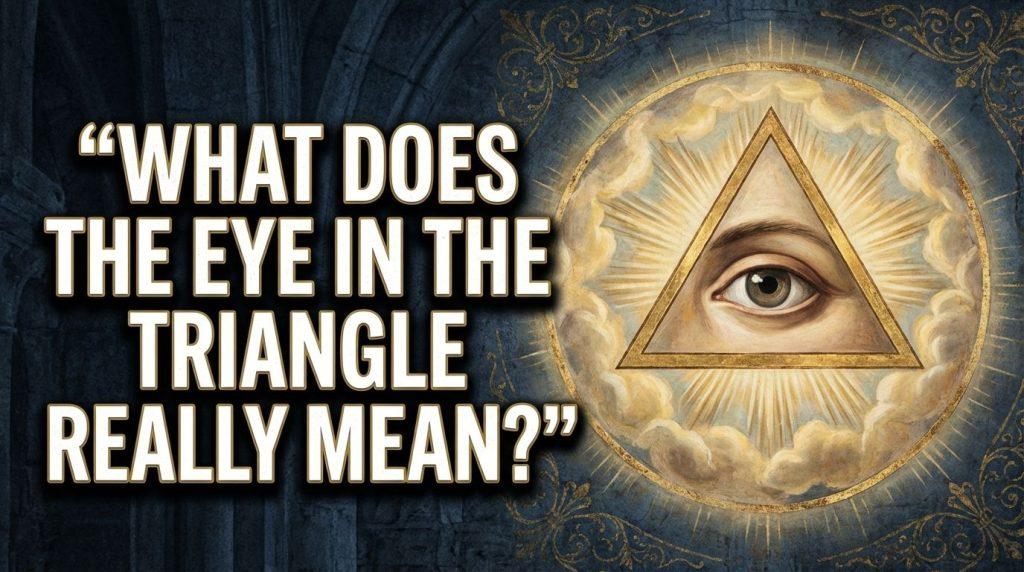
- The eye within a triangle, known as the Eye of Providence, symbolizes God’s all-seeing nature and the Holy Trinity in Christian tradition.
- The triangle represents the three Persons of the Trinity while the eye symbolizes God’s omniscience and watchful care over creation.
- This symbol appears in Catholic churches, particularly from the Baroque period onward, often on altars or in ceiling decorations.
- The eye symbol has biblical roots in passages describing God as seeing all things and knowing the hearts of humanity.
- While sometimes confused with Masonic symbols, the Catholic Eye of Providence predates and differs from fraternal organization uses.
- Understanding this symbol helps Catholics appreciate how visual imagery communicates theological truths about God’s nature and providence.
Biblical Foundations of Divine Vision
Scripture repeatedly describes God as seeing all things and knowing everything that occurs. The Psalms declare that the eyes of the Lord are in every place, watching the evil and the good (Proverbs 15:3). Psalm 33 states that from heaven the Lord looks down and sees all humankind, observing all their deeds (Psalm 33:13-15). These passages establish that God’s vision is comprehensive, penetrating, and inescapable. Nothing remains hidden from divine sight. No darkness obscures God’s view. No distance places anything beyond His observation. This biblical teaching about God’s all-seeing nature provided theological foundation for representing God through an eye symbol.
The eye imagery in Scripture carries both comforting and challenging implications. God’s watchfulness means believers receive His providential care and protection. Like a shepherd watching his flock or a parent watching a child, God attentively guards those who trust Him. The Psalms express confidence that God’s eyes are upon the righteous, attending to their prayers (Psalm 34:15). Yet divine vision also means accountability. Nothing humans do escapes God’s notice. Secret sins, hidden motives, and private thoughts all lie open before Him who sees all. This dual aspect of comfort and accountability characterizes biblical teaching about God’s sight.
Jesus taught that even sparrows do not fall without the Father knowing, and that the very hairs on believers’ heads are numbered (Matthew 10:29-30). This teaching emphasized God’s detailed knowledge and care extending to the smallest matters. The divine eye misses nothing, from cosmic events to individual lives to minute details. This comprehensive vision demonstrates both God’s transcendence and His immanence. He is great enough to observe all creation simultaneously yet cares enough to notice each particular thing. The eye symbol captures this paradox visually.
The Triangle as Trinity Symbol
The equilateral triangle became a standard Christian symbol for the Holy Trinity during the medieval and early modern periods. Its three equal sides represent the three Persons: Father, Son, and Holy Spirit. The triangle’s unity despite having three sides illustrates how the three Persons share one divine nature. This geometric symbol provided a visual way to express the Trinity’s mysterious nature. The triangle’s shape reinforces that the three Persons are equal in divinity. None is greater or lesser than the others, just as the triangle’s three sides are equal.
The triangle’s use as a Trinity symbol gained prominence in Western Christianity particularly after the medieval period. Artists and theologians found it useful for teaching this complex doctrine to laypersons who could not read theological texts. The visual simplicity of three sides equaling one shape helped communicate what words struggled to express. Church decoration increasingly employed triangle symbolism. Architectural elements might incorporate triangular forms. Windows could be shaped as triangles. Altar pieces featured prominent triangles. These various uses surrounded worshipers with visual reminders of Trinitarian faith.
The triangle pointing upward suggested divine transcendence and heaven. Its apex directed viewers’ attention toward God. This orientation distinguished the Trinity triangle from other triangular forms that might appear in church decoration. The upward-pointing triangle specifically referred to the Godhead and heavenly realities. Some symbolic interpretations saw the triangle’s three corners as representing the Trinity’s three attributes: power, wisdom, and goodness. Others connected them to creation, redemption, and sanctification. These varied interpretations showed the triangle’s flexibility as a theological teaching tool.
Combining Eye and Triangle
The combination of eye and triangle brought together two powerful symbols into one composite image. The result was greater than the sum of its parts. The eye represented God’s vision and knowledge. The triangle represented the Trinity. Together they proclaimed that the three-personed God sees all things. This combined symbol appeared in Catholic art from the sixteenth century onward with increasing frequency. Baroque churches particularly favored the Eye of Providence in their decorative programs. The symbol appeared on altars, in ceiling frescoes, above doorways, and in other prominent locations.
Artists depicted the eye in various styles depending on period and regional traditions. Renaissance and Baroque versions often showed a realistic eye with detailed iris and lashes surrounded by rays of light suggesting divine glory. Later neoclassical treatments might use more simplified, stylized eyes. Some versions included clouds around the triangle to emphasize heavenly nature. Others showed the triangle surrounded by radiant beams. Hebrew letters spelling God’s name sometimes accompanied the symbol. These variations adapted the basic form to different aesthetic contexts while maintaining essential meaning.
The positioning of the eye within the triangle carried significance. Usually the eye appeared centered, symbolizing that God’s vision extends equally in all directions. The pupil gazing forward engaged viewers directly, suggesting God’s personal attention to each person. Some artistic traditions showed the eye looking slightly downward as if observing earthly activities from heaven. These compositional choices shaped how viewers experienced the symbol and what theological truths it emphasized. The eye’s placement within rather than outside the triangle indicated that divine omniscience belongs inherently to God’s Trinitarian nature.
The Symbol in Church Architecture
Catholic churches from the Baroque period forward incorporated the Eye of Providence prominently in their architectural decoration. The symbol often appeared in the apse behind the main altar, placing it at the church’s focal point where it could be seen by the entire congregation. This positioning emphasized God’s presence during liturgical celebrations. When priests celebrated Mass facing the altar, they did so under the watchful eye of God. When congregations received Communion, they approached under divine observation. The symbol’s presence sanctified worship space and reminded participants that God witnessed their devotion.
Ceiling decorations frequently featured the Eye of Providence looking down on worshipers. This placement had obvious symbolic power. The congregation literally raised eyes toward heaven and encountered the divine eye gazing back. This visual interaction created powerful psychological and spiritual effects. Worshipers felt seen by God, known by Him, and accountable to Him. The ceiling eye also suggested God’s transcendence and His heavenly dwelling while paradoxically emphasizing His watchful engagement with earthly events. The symbol bridged the gap between earth and heaven within church space.
Some churches incorporated the Eye of Providence into doorways and entrance portals. This placement reminded those entering that they came into God’s presence and under His observation. It set proper dispositions for worship by making explicit what faith already taught. Parish churches, cathedrals, and pilgrimage sites all used the symbol in various locations. Regional and national traditions developed distinctive approaches to the Eye of Providence. Italian Baroque churches might feature elaborate stucco versions with dramatic lighting. Spanish churches could include the symbol in retablos. These regional variations enriched Catholic visual culture while maintaining symbolic consistency.
Distinguishing Catholic from Masonic Symbols
The Eye of Providence symbol requires careful distinction from similar imagery used by Freemasons and other fraternal organizations. Masonic lodges adopted eye and triangle symbolism in the eighteenth century, adapting it from Christian usage for their own purposes. The Masonic version typically appears on buildings, regalia, and documents associated with that organization. While visually similar to the Catholic Eye of Providence, the Masonic symbol carries different meanings related to that organization’s philosophy and values. Catholics should not assume that every eye in a triangle is Masonic or that the symbol itself is problematic.
The historical priority of Catholic usage over Masonic adoption matters for clarifying these symbols’ relationships. Christian art employed the Eye of Providence decades before Masonic organizations existed in their modern form. When Masons adopted eye and triangle imagery, they drew on existing Christian symbolism rather than inventing something new. The Church’s use of the symbol predates and is independent of Masonic use. Catholics can confidently interpret eye and triangle symbols in churches as representing Christian teaching about God’s providence and the Trinity without needing to reference fraternal organizations.
Context determines interpretation when encountering eye and triangle symbols. A symbol in a Catholic church built in the seventeenth century clearly represents Christian teaching. A symbol on a Masonic lodge built in the nineteenth century clearly represents that organization’s values. The same visual form carries different meanings in different contexts. This reality reflects how symbols function generally. They gain meaning through use within particular communities and traditions. Catholics should attend to context when interpreting eye and triangle symbols rather than assuming one universal meaning across all instances.
Theological Meaning of God’s Omniscience
The Eye of Providence symbolizes God’s omniscience, His complete and perfect knowledge of all things. Catholic theology teaches that God knows everything that has happened, is happening, and will happen. He knows all possibilities, all thoughts, all hidden realities (CCC 268). This comprehensive knowledge does not mean God merely observes but that He comprehends fully. He understands motives, sees consequences, and penetrates to the essence of all matters. The eye symbol suggests this depth of divine knowledge that exceeds human knowing as heaven exceeds earth.
God’s omniscience relates to His omnipresence and eternity. Because God exists outside time, He sees all moments simultaneously rather than sequentially. Past, present, and future exist as an eternal present to Him. This divine perspective explains how God knows future events without determining them coercively. The eye seeing all things represents this timeless vision that encompasses all history without negating human freedom. Catholic teaching carefully maintains both divine foreknowledge and human responsibility, though how these reconcile remains mysterious.
The comfort and challenge of divine omniscience appear in the Eye of Providence symbol. Believers find comfort knowing God sees their sufferings, understands their struggles, and witnesses their faithfulness. Nothing believers endure escapes God’s notice. He knows when they are mistreated, misunderstood, or alone. This knowledge consoles those who feel forgotten or overlooked by human authorities. Simultaneously, God’s all-seeing nature challenges believers to authenticity. Hypocrisy becomes pointless when God sees hearts. Secret sins cannot remain hidden. The eye summons believers to integrity and honesty before the One who knows all.
The Symbol and Divine Providence
The term “Eye of Providence” explicitly connects the symbol to God’s providential care for creation. Providence refers to God’s governance and care of all He has made. Nothing happens by pure chance or blind fate. God orders all things according to His wise and loving purposes. The eye symbolizes this active divine governance. God does not merely observe but guides, protects, and provides. The watching eye is not passive but engaged, caring for what it sees.
Jesus’s teaching about sparrows and lilies exemplifies divine providence that the eye symbolizes. God knows when sparrows fall and how He clothes the flowers. He certainly knows and cares for human needs. The Eye of Providence in church architecture reminded believers of this teaching. Looking at the symbol prompted trust in God’s care. Worshipers facing economic hardship, illness, or persecution could lift eyes to the divine eye and remember that their struggles were known and that God would provide. The symbol functioned as visual encouragement to faith and trust.
Providence does not mean God prevents all suffering or grants every request. The eye sees suffering but divine wisdom sometimes permits it for greater purposes. Providence operates according to God’s eternal plan rather than human expectations. The Eye of Providence thus calls believers to trust God’s wisdom when His ways remain mysterious. The eye that sees all things understands what humans cannot grasp. Believers can rest in God’s knowledge and care even when circumstances seem to contradict divine goodness. The symbol provides a focus for this difficult but essential faith.
The Eye of Providence in Popular Culture
The Eye of Providence appears on the United States one-dollar bill above an unfinished pyramid. This use has generated much speculation and conspiracy theory. The symbol on currency represents the founding fathers’ generally Christian or Deist worldview, though it carries national rather than explicitly ecclesiastical meaning. The dollar bill’s Eye of Providence differs from Catholic versions by appearing above a pyramid rather than within a triangle. This distinction matters though popular imagination often conflates the images.
Conspiracy theories often misinterpret the Eye of Providence as evidence of secret societies controlling world events. Such theories reflect anxiety about power and secrecy rather than accurate understanding of the symbol’s history or meaning. Catholics encountering these theories can respond with historical facts about the symbol’s Christian origins and meanings. Grounding discussion in verifiable history counters sensationalized interpretations. The Eye of Providence symbolizes God’s sovereign care, not human schemes.
Contemporary popular culture uses eye and triangle imagery in various contexts from album covers to fashion. These uses often appropriate the symbol’s visual power without understanding or intending its traditional meanings. Such cultural appropriation can create confusion about the symbol’s significance. Catholics encountering eye and triangle imagery in popular culture should attend to context for interpretation. Not every such image refers to divine providence or Trinity. Many contemporary uses are merely aesthetic choices exploiting recognizable forms. Discernment distinguishes authentic religious symbolism from superficial cultural appropriation.
Teaching About the Eye of Providence
Religious educators can introduce the Eye of Providence as part of teaching about God’s attributes and the Trinity. Young children can understand that the eye means God sees everything and the triangle represents Father, Son, and Holy Spirit. Simple explanations suit young minds while establishing foundations for deeper learning later. Children visiting churches can be taught to notice the Eye of Providence and remember what it symbolizes. This practice of reading church architecture and decoration educates in faith through beauty and symbol.
Older students can explore more complex theological concepts related to the symbol. They can learn about omniscience, providence, and divine transcendence. They can discuss how symbols communicate truths that exceed verbal expression. They can compare different artistic treatments of the Eye of Providence across time periods and cultures. These deeper engagements develop theological literacy and appreciation for Catholic artistic tradition. Students learning to interpret symbols gain skills for reading sacred art and understanding how faith expresses itself visually.
Addressing Masonic and conspiracy theory associations requires age-appropriate honesty. Older adolescents and adults encountering confused or hostile interpretations of eye and triangle symbols need clear information about Christian usage and meanings. Teachers should explain historical facts without getting drawn into conspiracy theory rabbit holes. The goal is equipping Catholics to understand their own tradition and explain it accurately to others. Knowledge inoculates against misinformation while enabling effective evangelization and catechesis.
The Symbol in Marian Contexts
While primarily associated with the Trinity and divine providence generally, the Eye of Providence occasionally appears in Marian contexts. Mary’s perpetual virginity sometimes receives symbolic representation through an all-seeing eye, suggesting that her purity remained inviolate and known to God. Mary’s immaculate heart, depicted surrounded by various symbols, might include divine eyes witnessing her sinless perfection. These Marian uses extend the providence symbol’s meanings while maintaining connections to its primary Trinitarian significance.
Some Catholic traditions connect the Eye of Providence to Mary’s role as mediatrix and her intercession for humanity. Mary’s maternal care mirrors divine providence in Catholic piety. As God watches over His children, so Mary watches over those entrusted to her. Artists occasionally showed Mary beneath the Eye of Providence, indicating her submission to divine will and her place within God’s providential plan. These compositional choices taught theological truths about Mary’s relationship to the Trinity through visual arrangement.
The Eye of Providence in Marian shrines or on devotional images emphasizes that devotion to Mary remains always ordered toward God. Mary points to her Son rather than to herself. The divine eye overseeing Marian imagery makes this theological relationship explicit. Marian devotion that fails to lead to deeper love for God and neighbor deviates from authentic Catholic practice. The Eye of Providence in Marian contexts guards against potential excesses by maintaining proper theological priorities visually.
Liturgical and Devotional Uses
The Eye of Providence symbol sometimes appears on liturgical vessels, vestments, and furnishings. Chasubles might include embroidered eyes and triangles as decorative and symbolic elements. Altar cloths could feature the symbol in their designs. These liturgical uses sanctify worship by reminding celebrants and congregations of God’s presence. When priests vest for Mass wearing garments decorated with the Eye of Providence, they acknowledge performing sacred actions under divine observation. This awareness cultivates proper reverence and attention.
Personal devotional items occasionally incorporate the Eye of Providence. Prayer cards, holy cards, and devotional images might show the symbol. Rosaries or medals could include it. These personal uses of the symbol extend its teaching function into private spiritual life. Catholics praying before an image including the Eye of Providence remember God’s presence and attentiveness. The symbol focuses attention and aids concentration by providing a visual reference point. Material objects decorated with sacred symbols become aids to prayer and meditation.
Blessing prayer books and devotional guides sometimes include the Eye of Providence on their covers or as decorative elements within. These books guide Catholics in prayer and spiritual reading. The symbol on such books indicates their sacred character and purpose. It assures users that their prayers, though private, occur under God’s watchful care. The eye witnesses devotions and carries them to the throne of grace. This assurance encourages perseverance in prayer particularly during dry periods when God seems distant.
Artistic Styles Across Periods
Renaissance treatments of the Eye of Providence reflected that period’s emphasis on realistic representation and classical forms. Artists rendered eyes with anatomical accuracy. They placed them within perfectly geometric triangles showing mathematical precision. Surrounding rays followed rules of perspective and light. These Renaissance versions demonstrated mastery of artistic technique while communicating theological content. The combination of technical skill and spiritual meaning characterized Renaissance sacred art.
Baroque artists developed more dramatic, emotional versions of the Eye of Providence. They surrounded eyes with swirling clouds, dramatic light effects, and elaborate ornamentation. Baroque versions often appeared in large scale on church ceilings where their visual impact could overwhelm viewers. The style’s theatricality suited Counter-Reformation Catholicism’s emphasis on engaging emotions and senses in worship. Baroque Eyes of Providence invited awe and inspired devotion through spectacular beauty and grandeur.
Neoclassical and later artistic movements brought different sensibilities to the symbol. Some artists simplified forms, removing Baroque embellishments in favor of cleaner lines. Others maintained traditional approaches while adapting them to new materials and techniques. Modern and contemporary Catholic art continues finding ways to represent the Eye of Providence. Abstract versions suggest the eye through geometric forms. Minimalist treatments reduce the symbol to essential elements. These varied approaches demonstrate the symbol’s adaptability across changing artistic styles and cultural contexts.
Conclusion and Contemporary Relevance
The Eye of Providence remains a meaningful though less commonly recognized Catholic symbol. Its representation of God’s omniscience, the Holy Trinity, and divine providence connects believers to theological truths central to faith. From biblical foundations through medieval and early modern development to contemporary uses, the symbol has served Catholic teaching and devotion. Understanding its history and meanings enriches appreciation for Catholic artistic tradition and symbolic language.
Contemporary Catholics can engage the Eye of Providence thoughtfully and fruitfully. Recognizing the symbol in churches prompts meditation on God’s attributes and Trinitarian nature. Learning to distinguish Catholic usage from Masonic or other appropriations develops discernment. Teaching about the symbol transmits faith and artistic literacy to new generations. These practices keep traditional symbols alive and relevant rather than allowing them to become merely historical artifacts.
The Eye of Providence ultimately directs attention to the God it represents. The symbol is not an end in itself but a means to encounter divine reality. When Catholics contemplate the eye within the triangle, they contemplate the three-personed God who sees all things, knows all things, and cares for all things. This meditation can lead to deeper trust in divine providence, greater awareness of God’s presence, and renewed commitment to living faithfully under the gaze of the One who sees all yet loves all. The ancient symbol continues offering these gifts to believers who engage it with understanding and faith.
Disclaimer: This article presents Catholic teaching for educational purposes. For official Church teaching, consult the Catechism and magisterial documents. For personal spiritual guidance, consult your parish priest or spiritual director. Questions? Contact editor@catholicshare.com
Sign up for our Exclusive Newsletter
- 📌 Add CatholicShare as a Preferred Source on Google
- 🎁 Join us on Patreon for Premium Content
- 🎧 Check Out These Catholic Audiobooks
- 📿 Get Your FREE Rosary Book
- 📱 Follow Us on Flipboard
-

Recommended Catholic Books
Discover hidden wisdom in Catholic books — invaluable guides enriching faith and satisfying curiosity. #CommissionsEarned
- The Early Church Was the Catholic Church
- The Case for Catholicism - Answers to Classic and Contemporary Protestant Objections
- Meeting the Protestant Challenge: How to Answer 50 Biblical Objections to Catholic Beliefs
As an Amazon Associate, I earn from qualifying purchases. Thank you for your support.