
Brief Overview
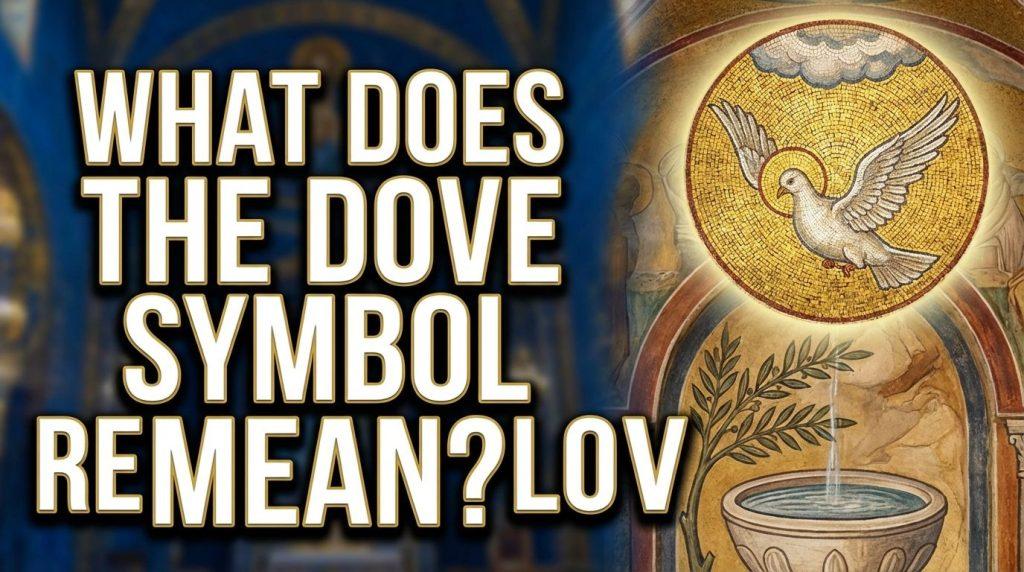
- The dove symbolizes the Holy Spirit in Christian tradition, based on the Gospel accounts of Christ’s baptism where the Spirit descended like a dove.
- In Scripture, the dove also represents peace, purity, gentleness, and God’s presence with His people.
- The dove appears at key moments in salvation history, from Noah’s ark to the Annunciation to Pentecost.
- Early Christians adopted the dove as one of their primary symbols, using it in catacomb art and on liturgical objects.
- Understanding the dove symbol helps Catholics recognize the Holy Spirit’s work and presence in the sacraments and daily life.
- The dove remains a powerful visual reminder of the Third Person of the Trinity and His sanctifying mission in the Church.
The Dove at Christ’s Baptism
The most significant biblical foundation for the dove as a Christian symbol comes from the accounts of Jesus’s baptism in the Jordan River. All four Gospels describe the Holy Spirit descending upon Jesus at His baptism, with three of them explicitly comparing this descent to a dove. Matthew records that Jesus saw “the Spirit of God descending like a dove and coming upon him” (Matthew 3:16). Mark writes that Jesus “saw the heavens being torn open and the Spirit, like a dove, descending upon him” (Mark 1:10). Luke states that “the holy Spirit descended upon him in bodily form like a dove” (Luke 3:22). John’s Gospel has the Baptist testify, “I saw the Spirit come down like a dove from the sky and remain upon him” (John 1:32). This consistent testimony across all four Gospels establishes the dove as the definitive symbol for the Holy Spirit’s visible manifestation.
The dove’s appearance at Jesus’s baptism marks a crucial moment in salvation history when the Trinity becomes manifest. The Father’s voice speaks from heaven, declaring Jesus as His beloved Son. The Son stands in the Jordan, identifying Himself with sinful humanity despite being sinless Himself. The Holy Spirit descends visibly, anointing Jesus for His public ministry. This Trinitarian revelation shows that the three divine Persons, though distinct, work together in perfect unity to accomplish human salvation. The dove makes the invisible Spirit visible, allowing witnesses to see what would otherwise remain hidden. This visible sign confirmed John the Baptist’s testimony about Jesus and provided evidence that God was truly present and acting in this moment.
The choice of a dove rather than some other bird or symbol carries theological significance. Doves were known for their gentleness, harmlessness, and beauty in the ancient world. Jesus Himself later told His disciples to be “shrewd as serpents and simple as doves” (Matthew 10:16), associating doves with innocence and purity. The Holy Spirit, while powerful enough to create the universe and raise the dead, typically works gently and quietly in human hearts rather than through dramatic displays of force. The dove’s peaceful nature reflects the Spirit’s characteristic way of operating. Unlike birds of prey that seize and destroy, the dove comes gently and remains peacefully. This image helps believers understand that the Spirit invites and attracts rather than coercing or overpowering human freedom.
Old Testament Background of the Dove Symbol
The symbolic use of doves in Scripture predates the New Testament, appearing in significant Old Testament passages. The most famous Old Testament dove appears in the story of Noah and the flood. After the waters began to recede, Noah sent out a dove to see if dry land had emerged. The dove returned carrying an olive branch in its beak, signaling that the flood was ending and God’s judgment was giving way to renewed blessing (Genesis 8:11). This dove became a symbol of peace, hope, and divine mercy. The connection between the dove, peace, and God’s favorable disposition toward humanity prepared the way for later Christian use of the dove to represent the Holy Spirit who brings divine peace to troubled souls.
The Song of Songs uses dove imagery in a different but related way, comparing the beloved to a dove several times. The lover addresses the beloved as “my dove” and praises her dove-like eyes (Song of Songs 2:14, 5:2). This poetic use associates doves with beauty, purity, and the intimate relationship between lovers. Early Christian interpreters read the Song of Songs allegorically as depicting the relationship between Christ and the Church or between God and the individual soul. The dove imagery in this context came to represent the soul’s beauty when united to God and the tender intimacy of divine love. This interpretive tradition enriched Christian understanding of the dove symbol beyond its primary meaning as a representation of the Holy Spirit.
Sacrificial laws in Leviticus specified doves and pigeons as acceptable offerings, particularly for those who could not afford larger animals. Mary and Joseph offered “a pair of turtledoves or two young pigeons” when they presented Jesus in the temple, following the law for purification after childbirth (Luke 2:24). This detail shows the Holy Family’s poverty and their faithful observance of the law. The acceptability of doves as sacrifices indicates their purity and their association with worship and approach to God. When the Holy Spirit later descends as a dove, the image carries overtones of acceptable offering and pure worship. The Spirit who comes as a dove makes believers themselves into acceptable offerings to God, living sacrifices holy and pleasing to Him.
The Dove in Early Christian Art and Symbolism
Early Christians living under periodic persecution needed symbols that could communicate their faith to fellow believers while remaining obscure to hostile outsiders. The dove served this purpose well, appearing frequently in catacomb paintings, on sarcophagi, and in other early Christian art. A dove might represent the Holy Spirit, the soul of the deceased, peace, or the Church herself, depending on context. Artists often painted doves drinking from fountains or vessels, symbolizing souls refreshed by the grace of the Holy Spirit or believers drawing living water from Christ. These images combined multiple layers of meaning in ways that deepened devotion and taught doctrine through visual means.
Baptismal contexts frequently featured dove imagery in early Christian art. Mosaics in ancient baptistries often included doves, reminding candidates of the Spirit’s descent at Christ’s baptism and the same Spirit’s work in their own baptism. The dove symbol helped catechumens understand that baptism was not merely a ritual washing but an encounter with the Holy Spirit who would dwell within them. Some early baptismal fonts were shaped like doves or decorated with dove mosaics. The visual presence of the dove at the site of baptism created a connection between the Jordan River where Jesus was baptized and the local church where new Christians received the sacrament.
The catacombs of Rome contain numerous examples of dove symbolism that reveal how early Christians understood death and resurrection. Doves appear on tomb markers, often holding olive branches or standing near water, symbols of peace and eternal life. Sometimes seven doves surround a central figure, representing the seven gifts of the Holy Spirit. These images expressed Christian hope that the deceased had entered into rest and peace through the Spirit’s power. The dove on a Christian tomb proclaimed faith in the resurrection and confidence that the Holy Spirit who gives life had not abandoned the dead but would raise them to new life. This use of the dove transformed burial places from sites of despair into locations of hope.
The Holy Spirit as Dove in Sacramental Theology
Catholic theology understands the Holy Spirit as the principal agent in all seven sacraments, making the dove symbol relevant to the whole sacramental life of the Church. At baptism, the Holy Spirit comes upon the person being baptized just as He came upon Jesus in the Jordan. The Spirit cleanses from sin, brings new life, and incorporates the baptized into Christ’s Body. The dove symbol helps believers grasp that baptism involves personal encounter with the Third Person of the Trinity. When parents see a dove on the baptismal font or in the church’s baptistry, they are reminded that their child will receive not just water but the Holy Spirit Himself.
Confirmation explicitly invokes the Holy Spirit and strengthens the grace received in baptism. The bishop prays that the Spirit will come upon those being confirmed and asks God to send the sevenfold gifts of the Spirit. Ancient art sometimes showed seven doves representing these seven gifts: wisdom, understanding, counsel, fortitude, knowledge, piety, and fear of the Lord. The dove symbol reminds those preparing for confirmation that they are about to receive more fully the same Spirit who descended on Jesus at His baptism and on the apostles at Pentecost. This sacrament is not merely a ceremony but a genuine outpouring of the Spirit who transforms and empowers believers for Christian witness.
The Eucharist, while primarily focused on Christ’s Body and Blood, also involves the Holy Spirit’s action. The priest invokes the Spirit over the bread and wine, asking Him to transform these elements into Christ’s Body and Blood. This prayer, called the epiclesis, acknowledges that the Spirit works with the Word to accomplish the eucharistic mystery. Some ancient eucharistic prayers use dove imagery or explicitly mention the Spirit’s descent at Christ’s baptism. The Spirit who came upon Jesus continues to come upon the Church’s offerings, making Christ present under the signs of bread and wine. Understanding the Spirit’s role in the Eucharist prevents people from seeing this sacrament as merely commemorative or symbolic and helps them appreciate the real transformation that occurs.
The Dove and the Annunciation
While the Gospel of Luke does not explicitly use dove imagery in the Annunciation narrative, Christian tradition and art have often connected the Holy Spirit’s overshadowing of Mary with the dove symbol. When the angel Gabriel announced to Mary that she would conceive and bear a son, he explained, “The holy Spirit will come upon you, and the power of the Most High will overshadow you” (Luke 1:35). This coming of the Spirit upon Mary parallels the Spirit’s descent upon Jesus at His baptism. Artists throughout Church history have shown a dove descending toward Mary during the Annunciation, visually representing the Spirit’s action in the Incarnation.
The connection between the dove, the Spirit, and Mary’s conception of Jesus emphasizes that the Incarnation was the work of the entire Trinity. The Father sent His Son and His Spirit. The Son freely accepted human nature in Mary’s womb. The Spirit formed Jesus’s human body from Mary’s flesh without the involvement of a human father. This Trinitarian cooperation in the Incarnation shows that salvation comes entirely from God’s initiative and power. Mary’s role, while essential, was to consent to what God proposed to do in and through her. The dove symbol helps believers grasp that Christ’s conception was miraculous, accomplished by divine power rather than natural processes.
Marian theology has sometimes associated Mary herself with dove imagery based on the Song of Songs and her role in salvation history. If the Church is the dove descending to draw living water, Mary is the preeminent member of that Church. Her purity and her complete openness to the Holy Spirit make her a model of what the Spirit desires to accomplish in all believers. Some medieval art shows Mary with a dove near her, representing either the Spirit’s presence with her or her own dove-like qualities of gentleness and purity. While the primary meaning of the dove symbol remains the Holy Spirit, its secondary application to Mary reflects her unique relationship with the Spirit and her exemplary cooperation with His grace.
Pentecost and the Dove
The coming of the Holy Spirit at Pentecost, while described in Acts 2 with images of wind and fire rather than a dove, represents the fulfillment of what the dove at Christ’s baptism prefigured. Just as the Spirit came upon Jesus to empower Him for ministry, the Spirit came upon the Church to empower her for mission. The visible signs differed because the circumstances and purposes differed, but the same Holy Spirit was at work. The dove that descended on one man at the Jordan became the fire and wind that filled many people in the upper room. This progression shows how God’s saving work expands from Jesus to His Body the Church.
Christian artists have sometimes depicted Pentecost with dove imagery despite the biblical text’s use of fire and wind. These artistic choices emphasize the Spirit’s identity rather than the particular form of His manifestation. Whether appearing as a dove, as tongues of fire, or as mighty wind, the Holy Spirit remains the same divine Person. The dove, having become established as the Spirit’s primary symbol through the baptism accounts, naturally extends to other contexts where the Spirit acts. This artistic flexibility helps maintain continuity across different biblical scenes and reinforces recognition that the same Spirit who descended on Jesus continues to work in the Church.
The Catechism explains that the visible missions of the Son and the Holy Spirit reveal and accomplish the Trinity’s eternal plan of salvation (CCC 689). The dove at Christ’s baptism and the fire at Pentecost are both visible missions of the Holy Spirit that correspond to invisible grace. Understanding this helps Catholics recognize that the Spirit’s work continues today even without visible manifestations like doves or fire. The same Spirit who descended visibly at key moments in Scripture now dwells invisibly in believers through baptism and confirmation. The dove symbol points beyond itself to the invisible reality of the Spirit’s presence and activity in the Church and in individual souls.
The Dove as Symbol of Peace
Beyond its primary meaning as a representation of the Holy Spirit, the dove has served throughout Christian history as a symbol of peace. This association stems partly from the Noah narrative where the dove brought news that God’s wrath had subsided and partly from the gentle nature of doves themselves. When Jesus sent out His disciples, He told them to be as innocent as doves, suggesting that His followers should pursue peace rather than conflict. The connection between the Holy Spirit and peace appears in Paul’s letter to the Galatians, where peace is listed among the fruits of the Spirit (Galatians 5:22). The Spirit who comes as a dove produces peace in human hearts and relationships.
The greeting “peace be with you” carries special weight in Christian tradition because it was Jesus’s first word to His disciples after the Resurrection. John’s Gospel records that Jesus appeared to the disciples, showed them His hands and side, and said, “Peace be with you.” Then He breathed on them and said, “Receive the holy Spirit” (John 20:21-22). This sequence connects peace directly with the gift of the Spirit. The Spirit brings the peace that Jesus gives, a peace different from what the world offers. This divine peace transcends circumstances and remains stable even amid trials. The dove symbolizes both the Spirit who grants this peace and the peace itself that marks His presence.
Prayers for peace often invoke the Holy Spirit or use dove imagery. The beautiful prayer “O Holy Spirit, descend plentifully into my heart” asks the Spirit to come as He did at Pentecost, bringing His gifts and fruits. Peace activists and movements have adopted the dove as their symbol, sometimes without explicit religious meaning but drawing on its deep Christian roots. While secular uses of peace dove symbols may lose the connection to the Holy Spirit, Christians can reclaim this imagery by remembering that genuine peace comes from the Spirit’s presence. Working for peace in families, communities, and nations becomes a form of cooperation with the Holy Spirit who desires to bring divine peace to the whole world.
The Seven Gifts of the Holy Spirit
Medieval and Renaissance art often depicted the seven gifts of the Holy Spirit as seven doves, each representing one of the gifts listed by Isaiah and applied to the Spirit’s work in believers’ lives. These gifts are wisdom, understanding, counsel, fortitude, knowledge, piety, and fear of the Lord. Isaiah prophesied that the Spirit of the Lord would rest upon the Messiah and enumerated these gifts (Isaiah 11:2-3). Christian tradition teaches that the same Spirit who rested upon Jesus shares these gifts with all who are united to Him through baptism and confirmation. Each gift enables believers to live faithfully and to grow in holiness.
Wisdom, the first gift, enables people to see reality from God’s perspective and to order their lives accordingly. Understanding helps believers grasp the truths of faith more deeply and perceive the meaning of Scripture and Church teaching. Counsel provides guidance for making good decisions and knowing the right course of action in particular situations. Fortitude gives strength to do what is right even when it is difficult or costly. Knowledge helps distinguish truth from error and recognize God’s presence and action in the world. Piety fosters loving reverence for God and filial devotion in prayer and worship. Fear of the Lord creates healthy respect for God’s holiness and dread of sin that would offend Him.
The image of seven doves representing these gifts helps people remember that the Spirit’s work in their lives is multifaceted and comprehensive. The Spirit does not give only one type of help but equips believers in various ways for the various challenges they face. Someone struggling with a difficult decision can ask the Holy Spirit for the gift of counsel. Someone facing opposition for their faith can invoke the Spirit for fortitude. Someone trying to understand a difficult teaching can seek the gift of understanding. The seven doves remind Catholics that the Spirit who came upon Jesus at baptism comes upon them with abundant gifts, ready to help in every situation if they open themselves to His grace.
The Dove in Liturgy and Worship
Catholic churches often incorporate dove imagery into their architecture and sacred art. Stained glass windows may show the dove descending at Christ’s baptism or hovering over Mary at the Annunciation. Carvings or paintings of doves might appear near the baptismal font or in the apse above the altar. Some churches suspend a dove sculpture over the altar or tabernacle, representing the Spirit’s presence in the Eucharist and in the worship of the Church. These artistic choices create visual catechesis, teaching the faith through images that people see each time they enter the church. The repeated exposure to dove symbols reinforces understanding of the Holy Spirit and His work.
The liturgy itself sometimes makes explicit reference to the dove and the Spirit’s descent. The Gloria, sung or recited at Sunday Mass outside of Advent and Lent, addresses the Holy Spirit directly within a Trinitarian hymn of praise. Eucharistic prayers invoke the Holy Spirit and ask Him to transform the offerings and sanctify those who receive Communion. Blessings often conclude with invocation of the Trinity, including the Holy Spirit who is present wherever believers gather in Jesus’s name. While these prayers do not always use dove imagery explicitly, understanding the dove symbol enriches participation in liturgy by making the Spirit’s presence more tangible and recognizable.
Hymns and sacred music frequently employ dove symbolism to praise the Holy Spirit or to pray for His coming. Traditional hymns like “Come, Holy Ghost” and “Come Down, O Love Divine” ask the Spirit to descend, echoing the Gospel accounts of the dove’s descent. Contemporary worship music continues this tradition with songs that invoke the Spirit using various biblical images including the dove. Singing these hymns helps congregations internalize the theology they express and creates affective connection with spiritual truths. Music engages both mind and heart, making it a powerful vehicle for teaching about the Holy Spirit and inviting His presence.
Personal Devotion to the Holy Spirit
While Catholic devotion has traditionally focused more on Christ and Mary than on the Holy Spirit, the Church encourages believers to develop personal relationship with the Third Person of the Trinity. The Holy Spirit is not an impersonal force but a divine Person worthy of worship, prayer, and love. Praying to the Holy Spirit should be as natural as praying to the Father or the Son. Understanding the dove symbol can help people feel more comfortable addressing the Spirit, giving them a concrete image to focus their prayers. When people pray, “Come, Holy Spirit,” they can visualize the gentle dove descending, making their prayer more vivid and personal.
The Sequence for Pentecost, “Veni Sancte Spiritus,” provides a beautiful prayer text for personal devotion to the Holy Spirit. This ancient hymn asks the Spirit to come as light, rest, and refreshment to souls. It acknowledges human weakness and asks the Spirit to wash, heal, and strengthen. Each line offers material for meditation and personal appropriation. Praying this sequence slowly and reflectively throughout the year, not only at Pentecost, deepens relationship with the Holy Spirit. The dove imagery implicit in the prayer’s invitation for the Spirit to come helps believers imagine the Spirit’s gentle approach and presence.
Daily invocation of the Holy Spirit can transform ordinary life into collaboration with divine grace. Starting the day with a brief prayer asking the Holy Spirit’s guidance helps people remain aware of His presence throughout their activities. Before important decisions or difficult conversations, pausing to ask the Spirit for wisdom or counsel brings divine help into practical situations. Praying to the Holy Spirit when tempted or discouraged accesses the strength and consolation He offers. These simple practices make relationship with the Spirit real rather than theoretical. The dove symbol serves as a reminder that this relationship is possible and that the Spirit genuinely desires to be known and loved by those He indwells.
The Dove and the Church
Patristic and medieval theologians sometimes applied dove imagery to the Church herself, seeing the bride of Christ as beautiful and pure like a dove. This usage draws on the Song of Songs where the beloved is called a dove. When understood allegorically, the Church is the dove who seeks her divine lover and responds to His call. This poetic image emphasizes the Church’s essential nature as holy despite the sins of her members. Christ makes the Church holy through His Spirit, and that fundamental holiness remains even when individuals fail to live according to it. The dove represents what the Church truly is in God’s eyes and what she is called to become more fully.
The dove as an image for the Church also appears in contexts emphasizing unity. Jesus prayed that His followers would be one, and the Church’s unity comes from the Holy Spirit dwelling in all believers. Paul asks the Ephesians to “preserve the unity of the spirit through the bond of peace,” using language that connects spirit and peace, both associated with the dove (Ephesians 4:3). When Christians are divided by conflict or schism, they betray the dove-like nature that should characterize the Church. Ecumenical efforts to restore Christian unity can be understood as returning to the Church’s true identity as the one dove animated by the one Spirit.
Missionary work and evangelization flow from the Church’s participation in the Spirit’s mission. Just as the dove descended on Jesus and empowered Him for ministry, the Spirit fills the Church and sends her out to proclaim the Gospel. The same Spirit who overshadowed Mary at the Annunciation continues to work through the Church’s proclamation, bringing Christ to birth in human hearts through faith. When missionaries go out, they go in the power of the Spirit symbolized by the dove. When evangelists proclaim the Gospel, the Spirit accompanies their words and opens hearts to receive the message. Recognizing this helps believers see that evangelization is not primarily human effort but divine action in which humans are privileged to participate.
Contemporary Applications and Challenges
Modern Catholics may find dove symbolism less familiar than earlier generations did because visual religious literacy has declined in secular cultures. Many younger people do not immediately recognize the dove as representing the Holy Spirit because they have not been exposed to traditional Christian art and symbols. Catechesis needs to include teaching about symbols like the dove, explaining their biblical basis and theological meaning. Religious education programs can use art, stories, and hands-on activities to help children learn these symbols. When people understand what the dove represents, they can recognize and appreciate its presence in church buildings, liturgical items, and sacred art.
Environmental awareness has increased appreciation for God’s creation and can provide new entry points for understanding the dove symbol. People who care about birds and their habitats may be more receptive to dove imagery than to abstract theological concepts. Drawing connections between the Holy Spirit’s life-giving work and the natural world’s beauty and vitality can help contemporary people grasp spiritual truths. The Spirit who hovered over the waters at creation and descended as a dove at Christ’s baptism continues to renew the face of the earth. This cosmic dimension of the Spirit’s work resonates with contemporary concerns about ecology and care for creation.
The dove symbol also speaks to contemporary desires for peace amid global conflict and division. In a world marked by war, terrorism, political polarization, and social fragmentation, the dove’s message of peace remains urgently needed. Christians who work for peace can draw on the dove symbol’s rich meaning, understanding their efforts as cooperation with the Holy Spirit. Prayer for peace takes on deeper significance when people recognize that they are asking the Spirit, represented by the dove, to bring the divine peace that surpasses human understanding. The dove reminds believers that genuine peace cannot be achieved by human effort alone but requires the Spirit’s transforming presence in hearts and communities.
The Dove in Catholic Popular Devotion
Various expressions of popular piety incorporate dove imagery in ways that connect ordinary believers to the Holy Spirit. Confirmation gifts often include dove symbols on medals, cards, or wall plaques. These items serve as tangible reminders of the sacrament and the Spirit received in it. Parents and godparents can use dove images to teach children about the Holy Spirit in simple terms appropriate to their age. A dove picture in a child’s room can become a focus for bedtime prayers asking the Holy Spirit to watch over them through the night.
Holy cards featuring dove images provide another means of promoting devotion to the Holy Spirit. These cards might show the dove at Christ’s baptism, the Annunciation, or Pentecost. Distributing such cards at confirmations, retreats, or other occasions gives people something concrete to take home and use in personal prayer. Some Catholics keep holy cards in their wallets or prayer books, using them as visual aids for meditation. The dove image helps focus wandering minds during prayer and reminds people of the Spirit’s presence even during busy days when formal prayer time is limited.
Pentecost celebrations in parishes sometimes incorporate dove decorations, banners, or symbols as part of the festive environment. Red vestments and church decorations recall the tongues of fire, while white dove images represent the Spirit’s gentle presence. Some communities release white doves during outdoor celebrations, though this practice requires careful consideration of animal welfare and local regulations. When done appropriately, such visible symbols help the whole community celebrate the Spirit’s coming and renew their openness to His gifts. These celebrations combat the tendency to neglect the Holy Spirit in favor of more familiar devotions to Jesus or Mary.
Theological Depth of the Dove Symbol
The dove symbol carries profound theological content that rewards careful study and meditation. At the baptism of Jesus, the dove reveals the Trinity’s presence and action. The Father speaks, the Son is baptized, and the Spirit descends. This manifestation of the three Persons shows that they are distinct yet united in one divine nature. The dove makes visible what is normally invisible, helping limited human minds grasp something of the Trinity’s mystery. Christian art that depicts the dove at the baptism serves as a visual theology lesson, teaching the Trinity through images rather than words.
The incarnational principle that underlies the dove symbol applies broadly to Catholic sacramental theology. Just as the invisible God became visible in Jesus Christ, invisible spiritual realities become visible through material signs in the sacraments. Water, oil, bread, wine, and yes, even artistic representations like doves, all serve to make divine grace tangible and accessible. The dove does not contain the Holy Spirit or make Him present in the way that consecrated bread contains Christ’s Body. Rather, the dove points beyond itself to the Spirit and helps believers recognize His presence and action. This pointing beyond itself to invisible reality is the function of all religious symbols.
Understanding the dove symbol also involves appreciating the limits of all symbols. No image or sign can fully capture the reality it represents, especially when that reality is God Himself. The Holy Spirit is infinitely more than what the dove suggests. While the dove emphasizes gentleness, peace, and purity, the Spirit also acts with power that raises the dead and transforms sinners into saints. The mighty wind and tongues of fire at Pentecost show aspects of the Spirit that the dove image alone does not convey. Catholics need multiple images and symbols to begin approaching adequate understanding of who the Holy Spirit is and how He works. The dove remains primary among these symbols but should not be considered exhaustive.
The Dove and Spiritual Discernment
The Holy Spirit’s guidance, symbolized by the dove, plays a crucial role in spiritual discernment and decision making. Catholics believe that the Spirit leads believers into truth and helps them recognize God’s will for their lives. Learning to listen to the Spirit requires practice and spiritual maturity. The gentle nature of the dove suggests that the Spirit’s voice is often quiet rather than loud, easily missed amid the noise and distractions of daily life. People need to create space for silence and prayer in order to hear the Spirit’s gentle movements in their hearts.
Discernment involves distinguishing between different inner movements and determining which come from the Holy Spirit and which from other sources. Saint Ignatius of Loyola developed detailed guidelines for discernment of spirits that help people recognize the Spirit’s characteristic ways of working. The Spirit typically produces peace, joy, courage, and clear thinking. Movements that create anxiety, confusion, discouragement, or obsessive worry usually come from other sources. The dove symbol reminds people that the Spirit’s guidance feels gentle and peaceful even when it challenges them to make difficult choices. The Spirit does not manipulate or coerce but invites and attracts.
Important life decisions benefit from intentionally seeking the Holy Spirit’s guidance through prayer. Before choosing a vocation, selecting a career, making major purchases, or undertaking significant commitments, people should ask the Spirit for wisdom and clarity. This seeking should include both active consideration of options and quiet waiting for the Spirit to illuminate the best path. The dove symbol can serve as a visual focus during such prayer, helping people remain open to the Spirit’s gentle leading. Trust that the Spirit who guided Jesus and the apostles continues to guide believers today enables people to make decisions with confidence rather than paralyzing anxiety.
The Dove in Sacred Scripture Beyond the Gospels
While the Gospels provide the primary biblical foundation for the dove as a symbol of the Holy Spirit, other New Testament texts also contribute to understanding this imagery. Paul’s letters mention the Spirit frequently, describing His gifts, fruits, and work in believers’ lives. Though Paul does not use dove imagery explicitly, his teaching about the Spirit’s gentleness and the fruit of peace connects to the symbolism. When Paul describes the Spirit as crying “Abba, Father” in believers’ hearts, he shows the Spirit creating intimate relationship with God (Romans 8:15). The dove’s association with tenderness and love fits this aspect of the Spirit’s work.
The Book of Revelation uses various symbols for the Holy Spirit, though not specifically the dove. The seven spirits before God’s throne likely represent the fullness of the Holy Spirit and His sevenfold gifts (Revelation 1:4). The river of living water flowing from God’s throne connects to Jesus’s teaching about the Spirit as living water (Revelation 22:1; John 7:37-39). These images complement the dove symbol rather than replacing it. Together, the various biblical images provide a fuller picture of the Spirit’s identity and activity. Each image highlights particular aspects, and together they begin to approach the inexhaustible richness of the Spirit’s person and work.
The Old Testament prophet Hosea uses dove imagery in a way that early Christians would have understood as prefiguring the Holy Spirit’s work. Hosea writes that Ephraim will “come trembling like a dove from the land of Egypt” when God restores His people (Hosea 11:11). This return like a dove suggests gentle restoration and renewed relationship with God. Christians reading this text through the lens of Christ see the Holy Spirit as the one who brings scattered people back to God. The Spirit who descended as a dove on Jesus continues to gather people into the Church, the new Israel. The dove thus becomes a symbol not only of the Spirit Himself but of His gathering and unifying work.
Conclusion and Ongoing Significance
The dove symbol has served Christian faith for two millennia, communicating profound truths about the Holy Spirit and His work in the world. From its biblical origins at Christ’s baptism through its development in Christian art and liturgy, the dove has helped countless believers recognize and respond to the Spirit’s presence. This ancient symbol remains relevant today, offering contemporary Catholics a visual and conceptual tool for understanding the often-mysterious Third Person of the Trinity. The dove makes the invisible Spirit more accessible without reducing Him to human comprehension or control.
Understanding the dove symbol enriches sacramental life, personal prayer, and theological reflection. When people see a dove in church, on a holy card, or in Christian art, they are reminded of the Holy Spirit who dwells within them through baptism and confirmation. This reminder can prompt brief prayers asking the Spirit’s help or thanking Him for His constant presence. The symbol functions as a doorway into deeper relationship with the Spirit, inviting believers to know and love the one who sanctifies them. As people grow in devotion to the Holy Spirit, they discover resources of grace, strength, and joy that transform their lives.
The Church continues to need the Holy Spirit’s guidance, power, and presence as much today as in any previous era. The challenges facing contemporary Catholics require more than human wisdom or effort to overcome. Only the Spirit who hovered over chaos at creation and descended on Jesus at baptism can bring order out of confusion and empower believers for faithful witness. The dove symbol calls the Church back to dependence on the Spirit and confidence in His power. As Catholics embrace this symbol and the reality it represents, they position themselves to receive the abundant grace the Spirit desires to pour out. The gentle dove brings nothing less than the infinite love and power of God Himself, making all things new.
Disclaimer: This article presents Catholic teaching for educational purposes. For official Church teaching, consult the Catechism and magisterial documents. For personal spiritual guidance, consult your parish priest or spiritual director. Questions? Contact editor@catholicshare.com
Sign up for our Exclusive Newsletter
- 📌 Add CatholicShare as a Preferred Source on Google
- 🎁 Join us on Patreon for Premium Content
- 🎧 Check Out These Catholic Audiobooks
- 📿 Get Your FREE Rosary Book
- 📱 Follow Us on Flipboard
-

Recommended Catholic Books
Discover hidden wisdom in Catholic books — invaluable guides enriching faith and satisfying curiosity. #CommissionsEarned
- The Early Church Was the Catholic Church
- The Case for Catholicism - Answers to Classic and Contemporary Protestant Objections
- Meeting the Protestant Challenge: How to Answer 50 Biblical Objections to Catholic Beliefs
As an Amazon Associate, I earn from qualifying purchases. Thank you for your support.