
Brief Overview
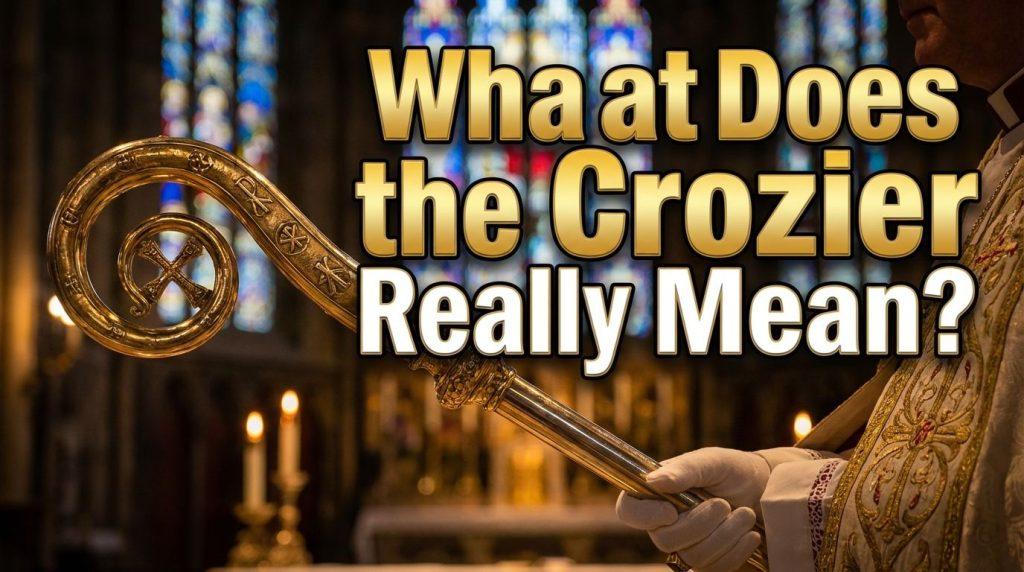
- The crozier is a liturgical staff carried by bishops and abbots as a symbol of their pastoral authority and shepherding role in the Church.
- This sacred object derives its meaning from the biblical image of Christ as the Good Shepherd who cares for His flock.
- The curved top of the crozier represents the shepherd’s crook used to guide and gather sheep back to safety.
- Bishops receive the crozier during their ordination as a visible sign of their office and responsibility to lead the faithful.
- The symbolism extends beyond mere decoration to embody the bishop’s duty to teach, sanctify, and govern his diocese.
- Understanding the crozier helps Catholics recognize the hierarchical structure and pastoral mission of the Church established by Christ.
Historical Origins of the Crozier
The crozier has ancient roots in the Church’s liturgical tradition, dating back to at least the fourth century when bishops first began using staffs as symbols of authority. Historical records indicate that early Christian communities adopted this practice from both Jewish and Greco-Roman cultural contexts where staffs signified leadership and guidance. The word “crozier” itself comes from the Old French “crossier,” which relates to the cross-like shape at the top of the staff. Early bishops used simple wooden staffs that gradually evolved into more ornate designs as the Church developed its liturgical customs. Archaeological evidence shows that by the sixth century, croziers had become standard equipment for bishops throughout the Christian world. The designs varied by region, with Eastern and Western churches developing distinct styles that reflected their theological emphases. Some early croziers featured serpents wrapped around the staff, symbolizing wisdom and the power to overcome evil. Others incorporated crosses, floral patterns, or images of saints to convey specific spiritual meanings. The materials used also evolved from simple wood to precious metals, ivory, and jeweled decorations that displayed the dignity of episcopal office. These historical developments reflect how the Church gradually formalized its liturgical practices while maintaining the core symbolic meaning of pastoral care.
The biblical foundation for the crozier rests primarily in the image of the shepherd, which appears throughout both Old and New Testaments as a metaphor for spiritual leadership. In Psalm 23, David describes God as a shepherd who guides his people with rod and staff, providing comfort and protection. The prophet Ezekiel received strong words from God about shepherds who failed to care for their flocks, establishing the accountability that comes with pastoral leadership (CCC 896). Jesus explicitly identified Himself as the Good Shepherd in John 10:11, declaring that He lays down His life for His sheep. This self-description became central to Christian understanding of leadership, where authority exists for service rather than domination. The Acts of the Apostles shows Paul addressing the elders of Ephesus, telling them to keep watch over the flock that the Holy Spirit has made them overseers (Acts 20:28). Peter likewise instructs church elders to shepherd God’s flock willingly and eagerly, not lording it over those in their charge (1 Peter 5:2-3). These passages establish that Christian leadership follows the model of Christ the Shepherd, who knows His sheep individually and leads them to good pasture. The crozier makes this biblical teaching visible, reminding both bishop and faithful of the shepherd-flock relationship. When a bishop carries his crozier, he proclaims his commitment to imitate Christ’s pastoral care. The physical object thus becomes a constant call to faithful service according to the Gospel pattern.
Symbolic Meaning and Design Elements
The curved top of the crozier carries profound symbolic significance that connects to practical shepherding and spiritual care. Ancient shepherds used crooks to gently guide sheep along safe paths and to rescue animals that wandered into dangerous places. The hook could reach into thorny bushes or over cliff edges to pull straying sheep back to safety without harming them. This gentle correction reflects how bishops should guide their people with patience and care rather than harsh force. The inward curve also suggests the bishop’s role in gathering the faithful together for worship, sacraments, and communal life. Some theologians interpret the curve as representing the bishop’s responsibility to bend down to meet people where they are in their spiritual condition. The hook points inward toward the bishop’s heart, symbolizing that pastoral care must flow from genuine love and personal holiness. Medieval designs sometimes featured elaborate carvings within the curve, depicting scenes from Christ’s life or images of the Good Shepherd. The curve also creates a space that can symbolically “hold” the people under the bishop’s care, expressing his protective role. This design element thus communicates multiple layers of meaning about leadership, care, correction, and gathering in the Christian community.
The shaft of the crozier represents the bishop’s authority to support and uphold the faith, providing stability for the Church in his care. A straight, strong shaft symbolizes the unwavering nature of Catholic teaching that bishops must preserve and transmit faithfully. The length of the staff suggests that episcopal authority extends beyond what the bishop can reach with his hands alone, representing his spiritual influence. In practical terms, the shaft also serves as a walking staff, recalling the pilgrim nature of Christian life as we walk toward our heavenly home. Some croziers feature sections or nodes along the shaft, representing different aspects of episcopal ministry such as teaching, sanctifying, and governing. The material of the shaft varies but traditionally reflects both beauty and durability, qualities needed in spiritual leadership. Wood from significant trees sometimes gets used, connecting the crozier to creation and to biblical images like the tree of life. Metal shafts can represent strength and permanence, qualities that the faith itself possesses across generations. The shaft’s vertical orientation points both toward heaven and toward earth, symbolizing the bishop’s role as mediator who brings divine truth to human reality. When the bishop plants the crozier firmly during liturgical celebrations, it demonstrates the firm foundation of the Church built on Christ.
The Crozier in Episcopal Ordination
The presentation of the crozier during a bishop’s ordination ceremony marks a defining moment when he officially receives the pastoral office. This occurs after the laying on of hands and the prayer of consecration, which are the essential elements of the sacrament of Holy Orders (CCC 1573). The principal consecrating bishop hands the newly ordained bishop his crozier while speaking words that explain its meaning and the responsibilities it represents. The formula typically includes instruction to be vigilant and attentive in caring for the flock, to strengthen the weak, heal the sick, and seek the lost. This ritual action makes visible the invisible grace and authority conferred through ordination, helping the faithful understand what has taken place. The new bishop grasps the crozier as a public acceptance of his duties, making a commitment before God and the Church. The moment carries emotional weight for the bishop himself, as he physically receives the instrument that will accompany him throughout his ministry. Witnesses to the ordination see the transfer of pastoral responsibility from one generation of bishops to the next. The crozier thus serves as a tangible link in the apostolic succession that traces back to the apostles themselves. After receiving the crozier, the bishop may use it immediately in the continuation of the ordination Mass, beginning his public exercise of episcopal ministry.
The symbolism of receiving the crozier emphasizes that episcopal authority comes from Christ through the Church rather than from personal merit or ambition. Bishops do not claim authority for themselves but receive it as a gift and responsibility from God (CCC 1558). The physical act of another bishop handing over the crozier demonstrates that this authority passes through the apostolic succession established by Christ. The new bishop does not make or purchase his own crozier before ordination; he receives it from the Church as part of his ordination. This reception illustrates that ministry exists for the sake of others rather than personal advancement or honor. The bishop accepts both the privileges and burdens that come with pastoral leadership, symbolized by the weight of the crozier itself. In some traditions, the crozier is blessed before presentation, setting it apart for sacred use in service to God’s people. The blessing invokes God’s grace upon both the object and the one who will carry it in fulfilling his episcopal duties. The crozier becomes a daily reminder that the bishop serves under Christ’s authority rather than exercising independent power. Each time he takes up his crozier, the bishop renews his commitment to shepherd the flock with Christ-like care and dedication.
Practical Use in Liturgical Celebrations
Bishops carry their croziers during various liturgical celebrations as a visible sign of their presence and authority within the sacred mysteries. During Mass, the bishop typically holds the crozier while entering the church, processing to the altar, and during other solemn moments. The crozier remains nearby when the bishop sits in his chair, available for specific ritual actions that require its use. When blessing the people, the bishop may hold the crozier in one hand while making the sign of the cross with the other. During the reading of the Gospel, some liturgical traditions have the bishop stand holding his crozier as a sign of his role as guardian and teacher of the faith. The crozier gets set aside during the Liturgy of the Eucharist itself, as the bishop needs both hands free for the sacred actions at the altar. This setting aside also emphasizes that in the Mass, the bishop acts primarily as priest offering sacrifice rather than as shepherd governing. After communion, the bishop may take up the crozier again for the final blessing and dismissal. The careful choreography of when to hold and when to set down the crozier helps distinguish different aspects of episcopal ministry. These practical uses make the crozier an active participant in the liturgy rather than mere decoration or museum piece.
The way a bishop handles his crozier during liturgy communicates respect for the sacred office and the people he serves. Proper liturgical practice requires that the bishop hold the crozier with the curve facing outward toward the people, symbolizing his care extending toward them. An assistant often helps manage the crozier during complex liturgical actions, ensuring it doesn’t become cumbersome or distracting. The bishop should carry the crozier with dignity but without ostentation, avoiding any appearance that he values the ornate object more than the people. During confirmations, ordinations, and other sacramental celebrations, the crozier’s presence reinforces the bishop’s unique role as the ordinary minister of these sacraments. When visiting parishes within his diocese, the bishop brings his crozier as a sign that he comes in his official capacity as shepherd. The crozier helps the faithful recognize their bishop even in large gatherings where many clergy might be present. Servers and assistants receive training in properly handling the crozier when helping the bishop, treating it with the reverence due to sacred objects. The crozier must be maintained in good condition, as its appearance reflects on the dignity of the episcopal office and the Church itself. Through these practical considerations, the crozier functions as both symbol and tool in the bishop’s pastoral ministry.
Differences Between Episcopal and Abbatial Croziers
While both bishops and abbots carry croziers, important differences exist in design and symbolic meaning that reflect their distinct roles in the Church. An abbot’s crozier traditionally has the curve turned inward, toward himself, symbolizing his authority limited to his monastic community rather than a wider diocese. This inward orientation represents the abbot’s primary responsibility for the spiritual welfare of the monks under his care. A bishop’s crozier curves outward toward the people, symbolizing his care for all the faithful within his territorial jurisdiction. The abbot exercises authority over those who have voluntarily placed themselves under his rule by entering religious life. The bishop, by contrast, has authority over all Catholics in his diocese regardless of their personal choice. Some abbatial croziers include a white cloth called a sudarium hanging from the staff, which bishops’ croziers typically do not have. This cloth historically served the practical purpose of protecting the abbot’s hand from cold metal but gained symbolic meaning related to service and humility. Abbots receive their croziers during their blessing or installation ceremony, though this is not a sacrament like episcopal ordination. The blessing of an abbot confers jurisdiction and authority within the monastic community according to the Rule of Saint Benedict.
The theological basis for these differences rests on the Church’s hierarchical structure established by Christ and developed through centuries of practice (CCC 874-896). Bishops receive the fullness of the sacrament of Holy Orders, making them successors to the apostles with authority to teach, sanctify, and govern. Abbots, while exercising genuine spiritual authority, do so by delegation from the bishop and according to the charism of religious life. A bishop’s authority comes directly from his sacramental ordination and appointment by the Pope to a specific diocese. An abbot’s authority derives from his election by the monastic community and confirmation by ecclesiastical superiors. Bishops can ordain priests and deacons, consecrate churches, and perform other actions reserved to the episcopal order. Abbots ordinarily cannot perform these sacramental actions, though they may receive certain permissions for their communities. The crozier designs visually express these theological distinctions in authority and jurisdiction. When both a bishop and an abbot participate in the same liturgy, protocol determines who has precedence based on these hierarchical relationships. Understanding these differences helps Catholics appreciate the various forms of leadership that serve the Church’s mission in complementary ways.
Regional and Cultural Variations
Eastern Catholic churches developed crozier traditions that differ significantly from Western practices while maintaining the core symbolism of pastoral care. In Byzantine tradition, bishops carry a staff topped with two serpents facing a cross, representing wisdom and vigilance in guarding the faith. This design draws from Christ’s instruction to be wise as serpents and innocent as doves (Matthew 10:16). Eastern croziers often feature rich decorative elements reflecting the theological emphasis on the beauty of divine worship. Some Eastern traditions use different terms for the pastoral staff, though the fundamental meaning remains consistent across cultures. The materials, craftsmanship, and artistic styles vary according to local traditions and available resources in different regions. Orthodox bishops who have entered into full communion with Rome typically retain their traditional crozier designs. These variations demonstrate how the Church maintains unity in essential matters while allowing legitimate diversity in customs and expressions. The same pastoral office finds expression through different cultural lenses, enriching the universal Church with particular gifts.
Within the Latin Church, regional styles emerged over centuries that reflect local artistic traditions and historical circumstances. French croziers developed elaborate Gothic designs with intricate metalwork and architectural elements during the medieval period. Italian croziers often featured Renaissance artistic motifs with classical proportions and balanced compositions. Spanish croziers sometimes incorporated influences from Moorish art, creating unique hybrid styles. English croziers showed particular attention to naturalistic details in wood carving and precious metal work. German regions produced croziers with bold, clear designs that communicated spiritual truths through strong visual symbols. Modern croziers range from simple, austere designs to highly ornate creations depending on the bishop’s preferences and resources. Some bishops choose croziers made by local artisans as a way of supporting their diocesan community and using materials from their region. Others inherit historical croziers that have been used by their predecessors for generations, maintaining continuity with the past. The variety of styles shows how human creativity serves sacred purposes while the essential symbolism remains constant across all legitimate variations.
The Crozier and Papal Authority
The Pope, as Bishop of Rome and successor to Saint Peter, traditionally does not carry a crozier in the same manner as other bishops. This practice reflects the unique nature of papal authority as supreme pastor of the universal Church rather than solely a diocesan bishop. Instead of a traditional crozier, popes carry a different style of staff topped with a crucifix, emphasizing the sacrificial nature of leadership. The papal staff called the ferula shows Christ crucified, reminding both Pope and faithful that authority in the Church must conform to Christ’s self-giving love. This design choice makes a theological statement about the source and character of all Christian authority. Pope Paul VI introduced the modern papal ferula with its distinctive cross design, departing from earlier papal ceremonial objects. The cross-topped staff visually proclaims that the Pope leads by pointing to Christ rather than to himself or his office. When the Pope visits dioceses around the world, he carries this ferula rather than adopting local crozier styles. The distinction between papal and episcopal staffs helps maintain proper understanding of the different levels of authority within the Church’s structure.
The absence of a curved crook on the papal staff also carries symbolic meaning related to the universal scope of papal ministry. While diocesan bishops shepherd specific local churches with defined boundaries, the Pope’s pastoral care extends to the entire Catholic Church worldwide. The straight staff with cross suggests that papal authority reaches in all directions rather than curving back to gather a particular flock. This does not diminish the Pope’s pastoral role but rather indicates its universal character as pastor of all the baptized. The Pope exercises immediate and universal jurisdiction over all particular churches, a reality that the ferula’s design reflects (CCC 882). Historical popes used various ceremonial staffs and crosses, showing that specific designs are not essential to the papal office itself. The current practice developed gradually and could change again as the Church continues to express its traditions in new contexts. What remains constant is the theological truth that papal authority serves the unity and mission of the whole Church under Christ’s headship. The visual difference between papal and episcopal staffs helps the faithful understand these distinct but complementary roles in the Church’s hierarchical communion.
Theological Significance of Pastoral Leadership
The crozier embodies profound theological truths about the nature of Christian leadership as service rather than domination or worldly power. Christ explicitly taught His disciples that authority among His followers must differ radically from secular models of rulership (Matthew 20:25-28). He washed the feet of the apostles to demonstrate that the greatest must become servants of all (John 13:1-17). This pattern of servant leadership becomes visible when a bishop carries the shepherd’s staff rather than a sword or scepter. The crozier symbolizes guidance, protection, and care rather than coercion or force in spiritual matters. Bishops exercise authority to build up the body of Christ, not to control people for personal benefit or institutional gain. The teaching authority of bishops exists to preserve and transmit the deposit of faith received from the apostles (CCC 888-892). Their sanctifying authority provides the sacraments through which Christ’s grace flows to believers. Their governing authority maintains order and unity so the Church can effectively fulfill its mission. All three aspects of episcopal ministry flow from Christ and aim at serving His people rather than asserting human power.
The crozier’s presence in liturgy constantly reminds both bishop and people of the accountability that comes with pastoral office. Christ will judge shepherds based on how faithfully they cared for the flock entrusted to them (Hebrews 13:17). The crozier symbolizes both privilege and burden, honor and responsibility, authority and service held together in tension. Bishops must answer to God for every soul in their diocese, a sobering reality that should inspire holy fear and careful attention. The ornate beauty of many croziers can tempt bishops toward pride, making humility an essential virtue for those in high office. Church history records both saintly bishops who used their authority to serve and corrupt bishops who exploited their position for personal gain. The crozier itself cannot make a man holy, but it can remind him daily of what his office requires. Saints like Francis de Sales, Charles Borromeo, and John Chrysostom demonstrate how episcopal ministry looks when lived according to Gospel principles. Their example shows that genuine pastoral care requires personal holiness, not merely correct liturgical practices or proper use of symbols. The crozier points beyond itself to Christ the Good Shepherd, who alone provides the perfect model of leadership.
The Crozier in Popular Catholic Culture
The crozier appears frequently in Catholic art, architecture, and devotional materials as a readily recognizable symbol of episcopal authority and the Church’s hierarchical structure. Statues of bishop saints typically include the crozier among their identifying attributes, helping the faithful recognize which saint is depicted. Paintings of important Church councils show bishops holding their croziers, symbolizing the teaching authority gathered to define doctrine. Stained glass windows in cathedrals often feature bishops with croziers in scenes from Church history or local diocesan traditions. These artistic representations help form Catholic imagination and understanding of how the Church is organized and governed. Children learning about the Church see pictures of bishops with croziers, beginning their education about ordained ministry. The crozier also appears on diocesan coats of arms, letterheads, and official seals as a symbol of episcopal jurisdiction. This widespread use in Catholic visual culture makes the crozier familiar even to those who may never attend a pontifical liturgy. The symbol transcends language barriers, communicating instantly across different cultures and educational levels. Through constant repetition in various contexts, the crozier becomes deeply embedded in Catholic consciousness and identity.
Modern media coverage of Church events has made the crozier visible to wider audiences beyond practicing Catholics. News photographs of papal Masses, bishops’ conferences, and major liturgical celebrations regularly show croziers in use. Television broadcasts of ordinations and other ceremonies bring these objects into homes around the world. Social media allows bishops to share images from their ministry that often include their croziers. This visibility can spark questions from non-Catholics about the meaning and purpose of these staffs. Bishops themselves sometimes use their croziers as teaching opportunities, explaining the symbolism to curious observers. The visual distinctiveness of the crozier makes it memorable and conversation-starting in public settings. Some critics view ornate croziers as symbols of wealth and privilege that contradict Gospel simplicity and poverty. Defenders respond that beautiful liturgical objects honor God and express the dignity of sacred worship rather than personal vanity. This ongoing dialogue about symbolism and simplicity reflects broader conversations in contemporary Catholicism about how to be faithful to tradition while responsive to modern sensibilities. The crozier remains relevant in these discussions precisely because it visibly embodies questions about authority, service, and the proper use of material things in spiritual life.
Practical Care and Maintenance
Croziers require proper care and maintenance to preserve them for future generations and maintain their dignity as sacred objects. Many croziers are valuable works of art created by skilled craftsmen using precious materials that demand careful handling. Wood components need protection from excessive moisture, extreme temperatures, and direct sunlight that can cause warping or cracking. Metal parts may require periodic cleaning to prevent tarnish or corrosion, using appropriate methods for different metals. Jewels or decorative elements need secure settings to prevent loss during use or transport. Professional conservators with expertise in liturgical objects should handle major repairs or restoration work. Diocesan archives or sacristies provide appropriate storage conditions when croziers are not in use. The crozier should be displayed or stored in ways that prevent damage while allowing appropriate access for liturgical use. Some bishops commission custom cases or stands designed specifically for their particular crozier’s dimensions and features. Insurance coverage for valuable croziers protects against loss, theft, or accidental damage during transport or use. These practical concerns show that respecting sacred symbols includes taking proper care of the physical objects themselves.
The responsibility for a crozier’s care typically falls to the bishop’s staff or the cathedral sacristy personnel who manage liturgical items. Clear procedures ensure that the crozier is available when needed for liturgical celebrations and properly secured afterward. Transportation to parish visitations or other events requires protective cases and careful handling to prevent damage. Some bishops maintain multiple croziers of varying styles and values for different occasions or pastoral needs. A simpler crozier might be used for regular parish visits while a more ornate one is reserved for major solemnities. This practical approach balances reverence for sacred objects with realistic concerns about security and appropriate use. When a bishop dies or retires, decisions must be made about what happens to his personal crozier. Some croziers become part of diocesan collections, preserved as historical artifacts and available for use by future bishops. Others may be buried with the bishop if he expressed that wish, symbolizing his pastoral office continuing into eternity. Family members sometimes receive permission to keep a retired bishop’s crozier as a personal memorial. These various practices show how the Church balances material preservation with spiritual meaning in handling sacred objects across generations.
The Crozier and Contemporary Challenges
Modern bishops face the challenge of making ancient symbols like the crozier meaningful to contemporary Catholics who may not understand traditional religious imagery. Many people today lack the agricultural background that would make shepherd symbolism immediately accessible and relatable. Urban and suburban Catholics may have never seen an actual shepherd with a crook tending real sheep. This cultural distance requires bishops to actively teach about the crozier’s meaning rather than assuming people automatically understand. Homilies, catechesis, and educational materials can help bridge this gap by explaining the biblical and historical foundations. Some bishops write pastoral letters or record videos explaining the symbols of their office, including the crozier. Social media provides new platforms for teaching about traditional practices in accessible, contemporary language. The challenge lies in maintaining authentic Catholic tradition while communicating it effectively to modern audiences. Bishops must avoid either abandoning meaningful symbols or preserving them without explanation. The crozier can become a starting point for deeper conversations about leadership, service, and Christ’s presence in the Church today.
Contemporary debates about authority, gender, and power structures in society affect how people perceive symbols like the crozier. Some view any symbol of hierarchical authority with suspicion, seeing it as perpetuating unjust power dynamics. Feminist theologians have questioned whether masculine shepherd imagery adequately expresses God’s maternal care and feminine wisdom. Critics of clericalism worry that ornate symbols of office encourage pride and separation from ordinary believers. Defenders maintain that legitimate authority rightly receives symbolic expression while acknowledging that symbols can be misused. The sex abuse crisis has complicated discussions about episcopal authority, as some bishops failed catastrophically in their pastoral duties. This betrayal has made some Catholics question the value of symbols that represent an office some holders have dishonored. Faithful bishops must reclaim the authentic meaning of the crozier through humble service and accountability. The symbol itself remains valid even when particular individuals fail to live up to its demands. These contemporary challenges require ongoing dialogue about how ancient symbols continue to speak truth in new contexts.
Formation and Education About Sacred Symbols
Catholic seminaries include instruction about liturgical objects like the crozier as part of preparing future priests who may assist at episcopal ceremonies. Seminarians learn the proper names, meanings, and handling procedures for various sacred items used in worship. This education ensures that the next generation of clergy can explain symbols to the laity and use them correctly. Understanding the crozier helps priests appreciate the episcopal office and their relationship to their bishop. Formation programs for permanent deacons likewise include teaching about assisting bishops during pontifical liturgies. Lay liturgical ministers such as masters of ceremonies receive specialized training in the choreography of events involving the crozier. Catholic schools ideally teach children about the crozier as part of broader education about the Church’s structure and sacraments. Religious education programs for adults should include opportunities to learn about sacred symbols and their meanings. Many Catholics have gaps in their knowledge about basic Church practices despite years of participation. Adult faith formation addresses these gaps, helping mature believers understand what they have long observed.
Parish visits by the bishop provide excellent opportunities for teaching moments about the crozier and other aspects of episcopal ministry. Priests can prepare their parishioners beforehand by explaining what to expect and what various elements mean. Children especially benefit from seeing the bishop with his crozier and learning about his role as shepherd. Question and answer sessions during episcopal visits allow people to ask directly about things they have wondered about. Cathedral tours and diocesan museums can display historical croziers with explanatory materials about their significance. Virtual resources make information about sacred symbols accessible to anyone with internet access. Well-produced videos and websites extend educational reach beyond those who attend formal programs. Publishers produce books, pamphlets, and study guides that explain Catholic symbols in accessible language. This multi-faceted approach to education ensures that knowledge about the crozier and other sacred symbols passes to new generations. Without active teaching, the meaning of these symbols can be lost even while the objects themselves remain in use.
The Crozier as Call to Holiness
For bishops themselves, the crozier serves as a daily reminder of the call to holiness that their office demands. Every time a bishop takes up his crozier, he can renew his commitment to serve Christ’s flock with love and dedication. The weight of the staff in his hand reminds him of the weight of responsibility he carries for souls. The beauty of the crozier can inspire him toward beauty of soul through virtue and grace. The public nature of carrying the crozier calls him to live transparently, as his life is visible to those he shepherds. Saints who served as bishops often spoke of how their office simultaneously humbled and elevated them. The crozier symbolizes both the honor of being chosen for leadership and the burden of accountability before God. Bishops need deep prayer lives to sustain them in meeting the demands their office places upon them. The sacramental grace of Holy Orders provides supernatural help, but cooperation with grace requires ongoing effort and openness. Bishops benefit from spiritual directors, regular confession, and fraternal support from brother bishops. The crozier can become a focus for prayer, a tangible reminder to seek Christ’s guidance in pastoral decisions.
The crozier also challenges bishops to examine whether their ministry truly reflects the Good Shepherd or merely goes through motions. Does the bishop know his people as Christ knows His sheep, or does he remain distant and disconnected? Does he seek out the lost and marginal, or does he only attend to the comfortable and powerful? Does he protect the vulnerable from predators, or does he prioritize institutional reputation over justice? These hard questions cut to the heart of what episcopal ministry should be according to Gospel standards. The crozier, carried in good conscience, represents fidelity to these standards. Carried hypocritically, it becomes a condemnation of the one who holds it. History remembers both bishop-saints who embodied Christlike shepherding and bishop-sinners who scandalized the faithful. The difference lay not in possessing the crozier but in how they understood and lived their calling. Contemporary bishops inherit both this mixed legacy and the opportunity to add their own witness. Their holiness or lack thereof will shape how future generations understand what the crozier really means. The object points beyond itself to the spiritual reality it represents, which is ultimately Christ’s own pastoral care for His people.
Conclusion: Living Symbol of Christ’s Care
The crozier endures as a powerful symbol because it connects to the fundamental biblical image of God as shepherd of His people. This image runs throughout salvation history from the patriarchs through the prophets to Christ Himself. The Church continues Christ’s shepherding ministry through the apostles and their successors, making the crozier perpetually relevant. As long as the Church needs visible leadership structures, symbols like the crozier will communicate spiritual truths. The staff reminds Catholics that they belong to a flock under Christ’s ultimate care, mediated through human shepherds. It demonstrates that spiritual authority exists within the Church according to divine institution rather than human invention. The crozier’s visibility in liturgy makes abstract theological concepts concrete and accessible. Children and adults alike can grasp that the bishop carries a shepherd’s staff because he shepherds Christ’s sheep. This simple but profound symbolism resists reduction to mere decoration or antiquated custom. The crozier means what it has always meant, even as the Church continues to unfold its implications in new situations.
The crozier ultimately points beyond itself to Christ the Good Shepherd, who gave His life for His sheep and rose to lead them to eternal life (John 10:11-18). Every bishop who carries a crozier proclaims this central Christian truth through visible symbol. The staff itself has no power apart from what it represents and the grace that works through ordained ministry. Christ alone saves, heals, guides, and protects His flock with perfect love. Bishops participate in His shepherding through sacramental ordination and apostolic succession, but they remain dependent on His grace. The crozier should inspire humility rather than pride, service rather than domination, love rather than mere duty. When used and understood properly, it becomes a beautiful expression of how Christ continues to care for His Church. The faithful who see their bishop carrying his crozier can trust that Christ has not abandoned them but provides shepherds for their spiritual welfare. This trust depends on bishops actually fulfilling their calling rather than merely displaying its symbols. The crozier challenges everyone, ordained and lay alike, to take seriously the pastoral mission of the Church. May all who see it remember that we belong to Christ’s flock and follow Him as our true Shepherd, now and forever.
Disclaimer: This article presents Catholic teaching for educational purposes. For official Church teaching, consult the Catechism and magisterial documents. For personal spiritual guidance, consult your parish priest or spiritual director. Questions? Contact editor@catholicshare.com
Sign up for our Exclusive Newsletter
- 📌 Add CatholicShare as a Preferred Source on Google
- 🎁 Join us on Patreon for Premium Content
- 🎧 Check Out These Catholic Audiobooks
- 📿 Get Your FREE Rosary Book
- 📱 Follow Us on Flipboard
-

Recommended Catholic Books
Discover hidden wisdom in Catholic books — invaluable guides enriching faith and satisfying curiosity. #CommissionsEarned
- The Early Church Was the Catholic Church
- The Case for Catholicism - Answers to Classic and Contemporary Protestant Objections
- Meeting the Protestant Challenge: How to Answer 50 Biblical Objections to Catholic Beliefs
As an Amazon Associate, I earn from qualifying purchases. Thank you for your support.