
Brief Overview
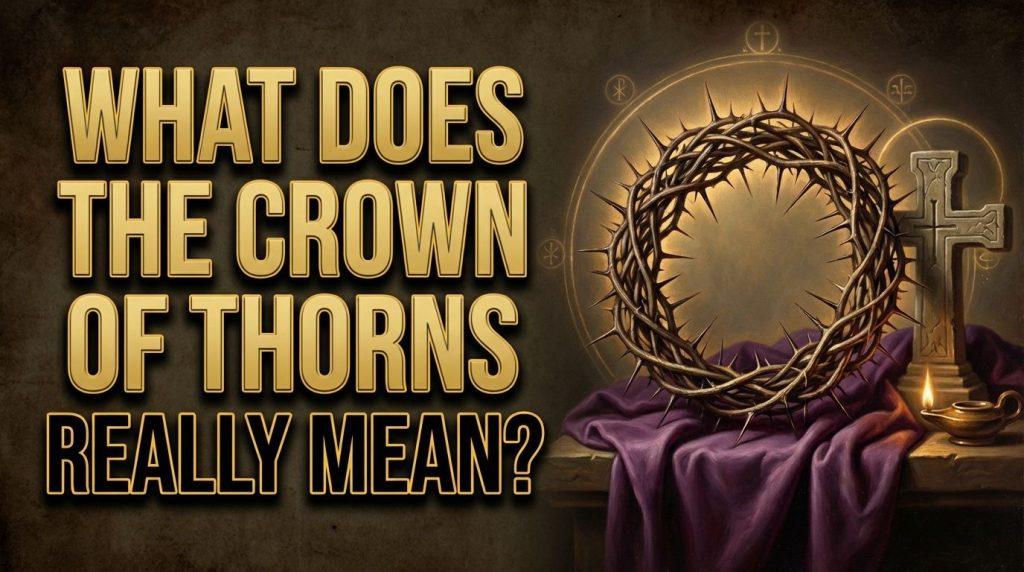
- The crown of thorns was placed on Jesus’s head by Roman soldiers as a mock symbol of kingship during His passion.
- This instrument of torture and humiliation has become a powerful Christian symbol of suffering, redemption, and Christ’s true kingship.
- The thorns represent the curse of sin that Jesus bore on behalf of humanity, transforming suffering into salvation.
- Veneration of the Crown of Thorns relic in Paris dates back centuries and continues to inspire Catholic devotion worldwide.
- The symbol appears in art, architecture, and devotional practices as a reminder of Christ’s sacrifice and love.
- Understanding the Crown of Thorns helps Catholics appreciate the depth of Christ’s humiliation and the paradox of His kingship through suffering.
The Biblical Account of the Crown of Thorns
The Crown of Thorns appears in three of the four Gospels as part of Jesus’s passion narrative. Matthew records that after Pilate handed Jesus over for crucifixion, soldiers stripped Him, put a scarlet robe on Him, twisted together a crown of thorns and set it on His head, and put a staff in His right hand (Matthew 27:27-30). They then mocked Him, saying “Hail, King of the Jews” while striking Him on the head. Mark’s account includes similar details, describing the crown as woven from thorns and noting the soldiers’ brutal mockery (Mark 15:17-19). John’s Gospel mentions that Pilate brought Jesus out wearing the crown of thorns and purple robe, saying “Behold the man,” though John does not describe the crown’s placement in as much detail (John 19:2-5).
The historical context helps explain why Roman soldiers chose this particular form of mockery. Jesus had been accused of claiming to be a king, a charge that threatened Roman authority. The soldiers’ actions created a grotesque parody of royal investiture. Kings wore crowns of gold or laurel leaves. Jesus received a crown of thorns. Kings held scepters of precious metals. Jesus held a reed. Kings wore fine robes of purple. Jesus wore a soldier’s cast-off cloak. Every element mocked His claim to kingship while inflicting pain and humiliation. The soldiers unknowingly created a symbol that would resonate through centuries of Christian reflection.
The specific choice of thorns carries additional symbolic weight beyond simple mockery. Thorns in biblical tradition represented the curse placed on creation after the fall. God told Adam that because of his sin, the ground would produce thorns and thistles (Genesis 3:18). Thorns symbolized the pain and difficulty that entered the world through sin. Jesus’s wearing of thorns therefore represented His taking upon Himself the consequences of human sin. The crown made from cursed plants became a sign that Jesus bore the curse for humanity. This theological symbolism emerges from reflection on the event rather than being explicitly stated in the Gospel accounts, yet it profoundly shapes Christian understanding.
Theological Significance of the Crown
The Crown of Thorns encapsulates the paradox central to Christian faith: that weakness becomes strength, humiliation becomes glory, and death brings life. Jesus accepted a crown of mockery that revealed His true kingship more perfectly than any golden crown could. His kingdom operates by different rules than earthly kingdoms. He reigns not through power and domination but through self-giving love and willing suffering. The Crown of Thorns makes this paradox visible. What appeared as the ultimate defeat and humiliation was actually the moment of greatest victory. The king crowned with thorns conquered sin and death through accepting their consequences.
Catholic theology sees the Crown of Thorns as part of Christ’s redemptive suffering that accomplished salvation. Jesus could have avoided this suffering by abandoning His mission or calling on divine power for protection. His willing acceptance of the crown demonstrates His complete obedience to the Father’s will and His love for humanity. Each thorn penetrating His head caused real pain. The mockery wounded His human dignity. Yet Jesus transformed this suffering into the means of redemption. The Catechism teaches that Christ’s passion and death have redemptive value because of who He is and His free acceptance of suffering out of love (CCC 599-618).
The Crown of Thorns also represents the integration of Jesus’s two natures, divine and human, in the work of redemption. As God, Jesus could not suffer. As man, He experienced real pain, humiliation, and sorrow. The crown pressed into a truly human head, causing genuinely human suffering. Yet this human suffering had infinite value because of the divine person who endured it. The Crown of Thorns thus becomes a symbol of the hypostatic union, the mysterious joining of divine and human natures in one person. Contemplating the crown leads to deeper understanding of the incarnation and its necessity for salvation.
The Crown and Old Testament Prophecy
Christian tradition has long connected the Crown of Thorns to Old Testament prophecies about the suffering servant. Isaiah’s description of the servant despised and rejected, a man of suffering who bore our infirmities, finds fulfillment in Jesus crowned with thorns (Isaiah 53). The prophet wrote that the servant was wounded for our transgressions and bruised for our iniquities. The Crown of Thorns makes these words literally true. The thorns wounded Jesus’s head. The mockery bruised His spirit. All of this happened not for His own sins but for humanity’s sins.
The Psalms contain passages that Christians read as prophesying Christ’s passion. Psalm 22, which begins with the words Jesus spoke on the cross, describes mockery and suffering that match the Gospel accounts. The psalmist writes of being scorned and despised, of people shaking their heads and mocking. This describes precisely what happened when soldiers placed the crown on Jesus and struck Him while jeering. The psalm connects Old Testament worship and prophecy to New Testament fulfillment. The Crown of Thorns becomes one point where promise meets reality.
The contrast between thorns representing curse and the crown representing kingship creates rich theological symbolism. In ancient Israel, kings were anointed and crowned in ceremonies that conferred authority and glory. Jesus’s coronation with thorns inverts this ceremony while fulfilling it more truly. He takes on the curse to break its power. He wears the symbol of sin’s consequences to remove those consequences from humanity. This substitutionary aspect of the Crown of Thorns shows how Christ’s suffering was not pointless but purposeful. Every thorn served redemptive ends.
The Crown of Thorns Relic
The Crown of Thorns relic preserved in Paris ranks among Christianity’s most significant relics. Historical accounts trace this relic to Jerusalem in the early centuries of Christianity. Emperor Constantine’s mother Helena supposedly found many passion relics during her pilgrimage to the Holy Land in the fourth century. The Crown of Thorns passed through various hands over subsequent centuries. Byzantine emperors kept it in Constantinople. When the Latin Empire needed money, Emperor Baldwin II sold it to Louis IX of France. The saintly king built Sainte-Chapelle in Paris specifically to house the Crown and other passion relics.
The relic’s authenticity cannot be verified with scientific certainty, as with most relics from Christ’s time. The Church does not require belief in any relic’s authenticity as a matter of faith. However, the Crown’s historical documentation and the veneration it has received for centuries give it significant credibility. Even if the actual thorns wore away or were distributed as smaller relics over time, the object preserved in Paris carries the devotion and faith of countless believers. Its spiritual value transcends questions of material authenticity. The relic serves as a focal point for meditation on Christ’s passion regardless of whether it contains original thorns.
The Crown of Thorns survived the devastating fire at Notre Dame Cathedral in April 2019, along with other major relics. Firefighters and clergy worked to rescue sacred objects from the burning building. The Crown’s preservation was seen by many as providential or miraculous. It now resides temporarily in other locations while Notre Dame undergoes restoration. When the cathedral reopens, the Crown will return to its place where millions of pilgrims and tourists have venerated it. This continuity of devotion across centuries and through disasters testifies to the Crown’s enduring power as a symbol.
The Crown in Catholic Art and Architecture
Artists throughout Christian history have depicted the Crown of Thorns in paintings, sculptures, and other media. Crucifixion scenes almost always show Jesus wearing the crown. Passion narratives in art include the crowning with thorns as a distinct scene showing soldiers placing it on Jesus’s head. These artistic representations serve didactic purposes, teaching viewers about the passion while evoking emotional and spiritual responses. The crown’s visual impact comes partly from its contrast with traditional royal crowns and partly from its obvious association with pain and cruelty.
Different artistic periods have approached the Crown of Thorns with varying emphases. Medieval art often showed Jesus wearing a simple circlet of thorns without excessive realism about the wounds. Renaissance and Baroque artists created more dramatic and detailed depictions that emphasized Christ’s suffering. The thorns became longer and sharper. Blood flowed more abundantly. These choices reflected theological and devotional trends that emphasized meditation on Christ’s physical suffering as a path to spiritual growth. Modern and contemporary art continues depicting the Crown while sometimes abstracting or stylizing it.
Church architecture incorporates Crown of Thorns symbolism in various ways. Gothic cathedrals featured the crown in stained glass windows, stone carvings, and metalwork. Sainte-Chapelle in Paris served as a massive reliquary for the Crown, with its entire architectural program oriented around housing this sacred object. Stations of the Cross displayed in Catholic churches typically include a station showing Jesus crowned with thorns. These architectural uses surround worshipers with reminders of Christ’s passion and call them to contemplate what He endured for their salvation.
The Crown and the Sacred Heart
Catholic devotion often connects the Crown of Thorns to the Sacred Heart of Jesus. Visual representations of the Sacred Heart typically show it crowned with thorns, surrounded by flames, and sometimes topped with a cross. This combination of symbols presents a comprehensive picture of Christ’s love and suffering. The heart represents His love. The thorns represent the sins that wounded His love. The flames show love’s intensity. The cross points to where love achieved its greatest work. Together these symbols teach that Christ’s love involved real suffering and that suffering was redemptive.
The theological connection between Crown and Sacred Heart runs deep. Jesus wore the Crown during His passion, when His love for humanity manifested most clearly. The thorns pressed into His head while His heart broke with sorrow over sin and love for sinners. The physical crown touching the physical head connects to the spiritual love emanating from the spiritual heart. Both symbols deal with the interior reality of Christ’s experience, though they approach it from different angles. The Crown emphasizes suffering, while the Sacred Heart emphasizes love, but suffering and love intertwine inseparably in Christ’s redemptive work.
Devotion to the Sacred Heart often includes meditation on the thorns that wound Christ’s heart. These thorns represent sins, particularly sins of ingratitude and coldness toward His love. Acts of reparation to the Sacred Heart aim to console Jesus for these wounds and to remove the thorns through conversion and love. This devotional practice extends the Crown of Thorns symbolism beyond the historical passion to ongoing spiritual reality. Christ’s heart can still be wounded by sin, though not in the same way it was wounded at Calvary. The Crown reminds believers that their choices affect Christ’s heart.
Stations of the Cross and the Crown
The Stations of the Cross, a devotional practice that meditates on Christ’s passion, includes the crowning with thorns as one of its stations. Different versions of the Stations organize the events slightly differently, but most include a station focused specifically on Jesus receiving the Crown. This practice encourages believers to imagine themselves present at the scene, to contemplate Jesus’s suffering, and to consider how their sins contributed to His passion. The Crown of Thorns station typically evokes sorrow for sin, gratitude for redemption, and determination to avoid future sin.
Praying the Stations of the Cross with attention to the Crown of Thorns station helps Catholics understand several theological truths. First, it emphasizes that Christ’s suffering was real, not merely symbolic or apparent. The thorns genuinely hurt. The mockery genuinely humiliated. Second, it shows that Christ accepted this suffering voluntarily out of love. He could have avoided it but chose to endure it. Third, it reveals that human sin made the passion necessary. Without sin, no crown of thorns would have been needed. These theological insights emerge naturally from prayerful meditation on the station.
Contemporary celebrations of the Stations sometimes add artistic or dramatic elements that make the Crown of Thorns station more vivid. Live Stations performed by actors might show the actual placing of the crown with realistic effects. Artistic Stations created by contemporary Christian artists might present the Crown in new ways that speak to modern sensibilities. These adaptations demonstrate that the ancient symbol remains powerful and that each generation finds ways to appropriate it meaningfully. The Crown’s significance transcends any particular artistic or devotional expression.
The Crown and Good Friday Veneration
Good Friday liturgy includes veneration of the cross, during which the Crown of Thorns naturally comes to mind. While the veneration focuses on the cross itself, the thorns form part of what believers contemplate during this solemn ceremony. The crown represents one element of the passion that made the cross necessary and gave it redemptive power. Good Friday readings recount the passion narratives that include the crowning with thorns. Homilies often reflect on the crown’s significance. The entire liturgical celebration invites believers to meditate on Christ’s suffering love, which the Crown symbolizes.
Some Good Friday services include specific veneration or processions featuring a Crown of Thorns replica or image. These practices vary by culture and local tradition. In some places, the Crown receives the same reverence as the crucifix, with believers approaching to kiss or touch it. Such practices externalize interior devotion and create communal expressions of faith. The Crown becomes not just a historical artifact or artistic symbol but a living part of Catholic worship. Good Friday transforms historical meditation into liturgical participation.
The paradox of Good Friday’s name reflects the paradox of the Crown of Thorns. The day commemorates Christ’s death, yet Christians call it good because through death came salvation. Similarly, the Crown inflicted suffering yet accomplished redemption. The thorns wounded yet healed. What enemies intended for humiliation became the instrument of glory. This transformative power characterizes Christian understanding of suffering. Evil can become the occasion for greater good. God’s providence works through and despite human malice. The Crown of Thorns teaches these truths as powerfully as any theological treatise.
The Crown as Symbol of Christian Suffering
The Crown of Thorns has inspired Christians facing persecution and suffering throughout Church history. Martyrs contemplated Christ’s thorns while enduring their own tortures. Confessors meditated on the Crown while imprisoned for faith. Missionaries thought of Jesus crowned with thorns when hostile peoples rejected their message. The symbol provided both consolation and motivation. Consolation came from knowing that Christ had suffered worse. Motivation came from the Crown’s reminder that suffering can serve redemptive purposes when united with Christ’s passion.
Catholic theology of suffering draws heavily on Crown of Thorns symbolism. Saint Paul wrote of filling up in his flesh what is lacking in Christ’s afflictions for the sake of His body, the Church (Colossians 1:24). This mysterious statement does not mean Christ’s suffering was insufficient for redemption but that believers participate in applying redemption through their own sufferings. The Crown of Thorns shows how Christ’s suffering saves. Christian suffering that consciously unites with His passion shares in that saving work. Each thorn Christians bear patiently can become like a thorn in Christ’s crown, redemptive rather than merely painful.
Contemporary Catholics facing illness, loss, injustice, or persecution can draw strength from Crown of Thorns devotion. The symbol assures them that God understands suffering because He experienced it. Jesus knows physical pain from the thorns and emotional pain from the mockery. He does not observe suffering from a distance but entered into it personally. This divine empathy comforts those who suffer. Additionally, the Crown’s transformation from instrument of torture to symbol of victory gives hope that present suffering can yield future glory. The thorns did not defeat Jesus but became part of His triumph. Similarly, suffering need not defeat Christians but can become part of their sanctification.
The Crown and Humility
The Crown of Thorns powerfully symbolizes Christ’s humility and calls believers to imitate it. The Second Person of the Trinity, equal to the Father in glory, accepted humiliation and mockery. He who deserved every honor received scorn instead. He who created the universe was crowned with plants He had made. This stunning condescension shows God’s character and provides a model for Christian life. If God Himself chose humility, how much more should creatures embrace it?
Scripture records that Christ emptied Himself, taking the form of a servant and humbling Himself to death on a cross (Philippians 2:7-8). The Crown of Thorns makes this hymn’s theology visible. The crown shows the extent of Christ’s self-emptying. He accepted not just physical death but also mockery, not just suffering but also humiliation. His humility went beyond what necessity required. This excessive humility demonstrates the abundance of divine love and provides an example that calls Christians beyond comfortable virtue to heroic self-giving.
Practicing humility in light of the Crown of Thorns means several things practically. It means accepting criticism and mockery without responding in kind. It means serving others without seeking recognition. It means acknowledging dependence on God rather than boasting in personal achievements. It means choosing obscurity when necessary rather than always seeking prominence. The Crown transforms humility from mere social grace into profound spiritual virtue. Christians humble themselves not primarily to appear virtuous but to imitate Christ who wore thorns out of love.
Teaching Children About the Crown
Religious educators face the challenge of presenting the Crown of Thorns to children in age-appropriate ways. Young children need to know that Jesus was hurt but should not be traumatized by excessive focus on suffering. Teachers can explain that bad people put sharp thorns on Jesus’s head to hurt Him, but that Jesus let this happen because He loved everyone so much. This simple explanation conveys the basic facts while emphasizing love rather than violence. Age-appropriate images show the Crown without excessive blood or graphic detail.
As children mature, teaching about the Crown can include more theological depth. Older children can understand that Jesus chose to suffer to save people from sin. They can grasp that the Crown represents how Jesus took punishment that others deserved. They can begin connecting the Crown to their own choices and responsibilities. Adolescents can reflect on what the Crown reveals about God’s character and human nature. They can consider how the Crown calls them to respond to bullying, injustice, and suffering in their own lives. Progressive education builds on earlier foundations while adding complexity appropriate to development.
Stories of saints who meditated on the Crown of Thorns provide concrete examples for children. Saint Catherine of Siena experienced mystical marriage to Christ and meditated on His passion. Saint Francis of Assisi received the stigmata after contemplating Christ’s wounds. These stories show children that adults throughout history have found the Crown meaningful. They also demonstrate various ways to respond to the Crown’s message. Some saints focused on suffering, others on love, still others on humility. This variety shows that the Crown speaks to different personalities and circumstances while maintaining its core message about Christ’s redemptive work.
The Crown in Popular Culture
The Crown of Thorns appears in various forms in popular culture, sometimes respectfully and sometimes controversially. Films about Christ’s life and passion typically include the crowning with thorns, though directors make different artistic choices about how graphic to make the scene. Mel Gibson’s “The Passion of the Christ” showed the crowning in brutal detail that disturbed many viewers. Other films take more restrained approaches. These cinematic representations introduce the Crown to audiences who might not encounter it otherwise, though they risk reducing a sacred symbol to entertainment.
Literature and poetry have engaged with Crown of Thorns symbolism for centuries. Gerard Manley Hopkins, John Donne, and countless other Christian poets have written about the thorns and their meaning. Contemporary Christian literature continues this tradition. The Crown appears in devotional books, theological texts, and spiritual memoirs. These literary treatments help readers reflect deeply on the symbol’s significance. They translate visual symbolism into verbal meditation and analysis. Through literature, the Crown reaches people who learn better through reading than through visual arts.
Some contemporary uses of Crown of Thorns imagery border on sacrilege or misappropriation. Fashion designers have created thorn crowns as accessories without religious significance. Musicians and artists have used the symbol in ways that trivialize or distort its meaning. These problematic uses reflect secular culture’s tendency to appropriate religious symbols while emptying them of content. Catholics encountering such misuses can respond with gentle correction and explanation. Rather than only condemning inappropriate uses, believers can seize opportunities to teach what the Crown truly means and why it deserves respect.
Conclusion and Contemporary Application
The Crown of Thorns stands as one of Christianity’s most powerful and multivalent symbols. It represents Christ’s suffering, His mockery by enemies, His humble acceptance of the Father’s will, His bearing of sin’s curse, and His ultimate triumph. The crown that was meant to humiliate actually glorifies. The instrument of torture becomes a sign of victory. This paradox defines Christian faith and shapes how believers understand suffering, kingship, and redemption. The Crown of Thorns concentrates these mysteries into one concrete historical object that continues speaking to each generation.
Contemporary Catholics can draw on Crown of Thorns symbolism in their spiritual lives through various practices. Meditation on the passion, particularly during Lent, should include reflection on the Crown and what it represents. Visual representations of the Crown in homes or churches can prompt brief prayers and remembrance of Christ’s sacrifice. Accepting suffering patiently while uniting it to Christ’s passion transforms pain into participation in redemption. These applications make the ancient symbol relevant for contemporary faith.
The Crown of Thorns ultimately points beyond itself to the love that motivated Christ to accept it. Understanding the Crown requires understanding that Jesus could have avoided the thorns but chose to wear them. He endured mockery to show mercy. He accepted humiliation to accomplish exaltation. The thorns pierced a head that thought only loving thoughts about those who placed them there. This stunning love, willing to suffer anything for the beloved, defines Christian faith and calls believers to respond with corresponding love. The Crown of Thorns teaches that love proves itself through sacrifice and that true kingship means service unto death.
Disclaimer: This article presents Catholic teaching for educational purposes. For official Church teaching, consult the Catechism and magisterial documents. For personal spiritual guidance, consult your parish priest or spiritual director. Questions? Contact editor@catholicshare.com
Sign up for our Exclusive Newsletter
- 📌 Add CatholicShare as a Preferred Source on Google
- 🎁 Join us on Patreon for Premium Content
- 🎧 Check Out These Catholic Audiobooks
- 📿 Get Your FREE Rosary Book
- 📱 Follow Us on Flipboard
-

Recommended Catholic Books
Discover hidden wisdom in Catholic books — invaluable guides enriching faith and satisfying curiosity. #CommissionsEarned
- The Early Church Was the Catholic Church
- The Case for Catholicism - Answers to Classic and Contemporary Protestant Objections
- Meeting the Protestant Challenge: How to Answer 50 Biblical Objections to Catholic Beliefs
As an Amazon Associate, I earn from qualifying purchases. Thank you for your support.