
Brief Overview
- The aspergillum is a liturgical implement used in the Catholic Church to sprinkle holy water during various ceremonies and sacramental rites.
- The name aspergillum derives from the Latin verb “aspergere,” which means “to sprinkle,” and connects directly to the ancient practice described in Psalm 51:7.
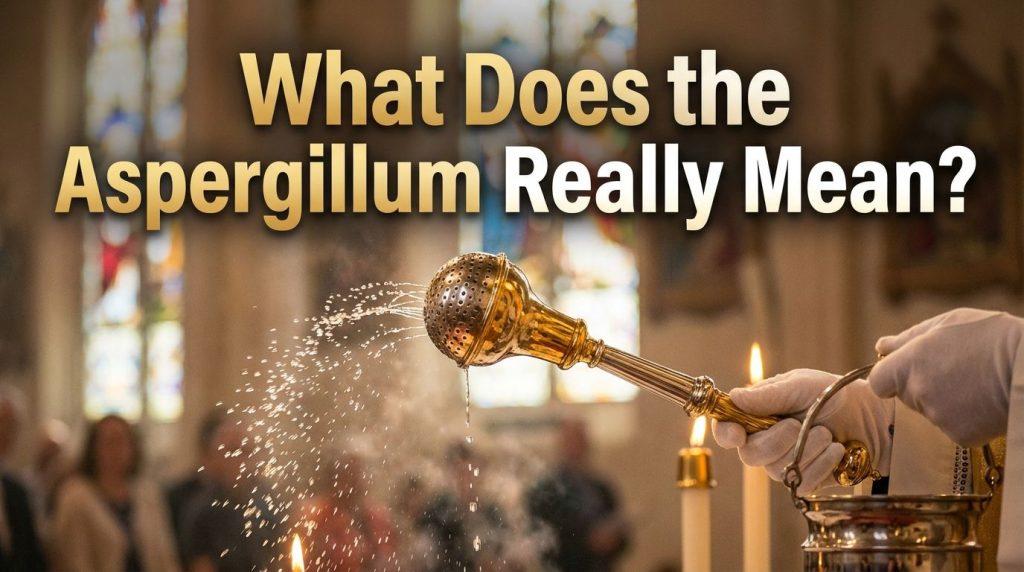
- This sacred tool comes in two common forms: a brush-like bundle dipped in water and shaken, or a perforated metal ball attached to a handle.
- The use of the aspergillum has deep biblical roots in Jewish purification rituals, particularly those described in Leviticus 14 involving hyssop branches.
- Holy water sprinkled through the aspergillum serves as a sacramental that reminds Catholics of their baptism and disposes them to receive grace.
- The aspergillum plays an important role in Sunday Mass, funeral rites, home blessings, and especially during the Easter season when the faithful renew their baptismal promises.
The Historical and Biblical Foundations of the Aspergillum
The aspergillum carries a rich history that stretches back thousands of years to ancient Jewish religious practices. Understanding this implement requires an appreciation of its biblical foundations and how the early Church adopted and transformed these traditions for Christian worship. The Old Testament provides clear examples of ritual sprinkling with water as a means of purification, which the Catholic Church has continued in her liturgical life. The book of Leviticus describes elaborate purification ceremonies where priests used hyssop branches to sprinkle water on people and objects requiring cleansing. These rituals were not merely symbolic gestures but were understood as genuine means by which God restored His people to a state of ritual purity. The hyssop plant, a small bushy herb native to the Middle East, became the instrument through which this purifying water was applied. When King David composed his great psalm of repentance after his sin with Bathsheba, he called upon God using language drawn directly from these purification rites. In Psalm 51:7, David pleads with God saying, “Purge me with hyssop, and I shall be clean; wash me, and I shall be whiter than snow.” This verse became the foundation for the Catholic practice of aspersion, and the Latin words “Asperges me” taken from this psalm gave their name to the entire rite of sprinkling with holy water before Mass.
The early Christian community, composed initially of Jewish converts, naturally understood the significance of these purification rituals. However, the Church saw in them a deeper spiritual reality that pointed toward the sacrament of Baptism and the cleansing power of Christ’s sacrifice on the cross. The transition from the Old Covenant practice of using hyssop branches to the more formalized aspergillum of Christian liturgy occurred gradually over centuries. By the ninth century, the practice of sprinkling the congregation with holy water before the principal Sunday Mass had become well established throughout the Western Church. Pope Leo IV is credited with giving official form to this practice during his pontificate in the mid-ninth century. The rite served as a preparation for the Holy Sacrifice of the Mass, helping the faithful to enter into the sacred mysteries with properly disposed hearts and souls. The aspergillum itself evolved from simple bundles of herbs or branches into more elaborate instruments crafted from precious metals and designed to last for generations. Medieval craftsmen created beautiful examples decorated with religious imagery and inscriptions, treating the aspergillum with the reverence due to any sacred vessel used in divine worship.
The connection between the aspergillum and baptism became central to Catholic understanding of this liturgical implement. Water blessed by a priest with special prayers takes on sacramental power through the Church’s intercession with God. When this holy water is sprinkled upon the faithful using the aspergillum, it serves as a tangible reminder of the waters of baptism through which they first received sanctifying grace. The Church teaches that holy water is one of the sacramentals, defined in the Catechism as “sacred signs which bear a resemblance to the sacraments” (CCC 1667). While sacramentals do not confer grace in the same manner as the seven sacraments instituted by Christ, they prepare people to receive grace and dispose them to cooperate with God’s action in their souls. The aspergillum becomes the instrument through which this sacramental power is distributed to the faithful, making it far more than a simple tool or ceremonial accessory. It participates in the Church’s ministry of sanctification, helping to make holy the ordinary circumstances of Christian life. The physical act of sprinkling water combined with the prayers of the Church creates a powerful spiritual reality that affects both body and soul.
The Physical Forms and Proper Use of the Aspergillum
The aspergillum appears in Catholic worship in several distinct physical forms, each suited to different liturgical contexts and practical needs. The most traditional form resembles a brush, with bristles made from various materials arranged in a bundle attached to a handle. This brush-style aspergillum is dipped directly into holy water and then shaken over the people or objects to be blessed, releasing droplets in a wide spray pattern. The bristles may be made from natural plant fibers, animal hair, or synthetic materials, though metal bristles are also common in more ornate versions. The handle typically measures between six and twelve inches in length, allowing the priest or deacon to reach easily across spaces while maintaining proper liturgical dignity. The second common form consists of a perforated metal sphere attached to a rod or handle. This hollow ball contains small holes throughout its surface, and when dipped in holy water and shaken, it releases a fine mist of droplets. This design offers more control over the amount of water distributed and creates a more uniform spray pattern. Some versions include decorative elements such as crosses, religious symbols, or elaborate metalwork that reflects the sacred nature of the implement.
The most ancient form of aspergillum, still occasionally used in some contexts, is a freshly cut branch of hyssop or another suitable plant. This practice maintains the closest connection to the biblical tradition described in the Old Testament. During certain outdoor ceremonies or in regions where traditional plants used in biblical times grow naturally, priests may choose this more rustic option. The living plant serves as a powerful reminder of the organic connection between nature, scripture, and sacramental practice. However, for regular parish use, the manufactured brush or perforated ball designs prove more practical and durable. The aspergillum is always used in conjunction with an aspersorium, which is the bucket or vessel that holds the holy water. The aspersorium may be a simple utilitarian container or an elaborate work of liturgical art, often matching the aspergillum in style and decoration. Some sets include stands or holders that allow the aspergillum to rest in or beside the aspersorium when not in active use. The proper handling of these sacred vessels requires training and attention to liturgical norms, as their use is reserved to ordained ministers or, in certain circumstances, to those who have received specific delegation from the bishop.
The technique for using an aspergillum requires both skill and reverence. The minister first dips the implement into the holy water held in the aspersorium, allowing it to absorb sufficient liquid without becoming overly saturated. The motion used to sprinkle the water should be deliberate and graceful, using a flick of the wrist that releases droplets in an arc over the people or objects being blessed. The minister typically moves processionally through the space, making the sign of the cross with broad gestures while shaking the aspergillum at appropriate intervals. This creates a visual and tactile experience for the faithful, who may feel the cool drops of holy water landing upon them as a physical reminder of God’s blessing. The amount of water released should be moderate, enough to be noticeable without being uncomfortable or excessive. In large churches or outdoor gatherings, the minister may need to move systematically through different sections to ensure all present receive the blessing. During the Easter season, when the sprinkling rite frequently replaces the penitential act at the beginning of Mass, the priest often processes down the main aisle and along the sides of the church, blessing the congregation as they stand in their pews. This procession creates a sense of participation and community as all share in the blessing together.
The Church provides specific liturgical texts and rubrics governing the use of the aspergillum during various ceremonies. The Roman Missal contains prayers for the blessing of water before its use in the sprinkling rite at Mass. These prayers invoke God’s protection and sanctification, asking that those sprinkled with this water may be cleansed from sin and defended against evil. The minister may recite or sing these prayers while blessing the water, making the sign of the cross over it before beginning the aspersion. During the actual sprinkling, appropriate hymns or antiphons are sung by the congregation or choir. The traditional Latin antiphon “Asperges me, Domine, hyssopo, et mundabor” draws directly from Psalm 51, while during the Easter season it is replaced with “Vidi aquam egredientem de templo” based on Ezekiel 47:1-2. These texts reinforce the theological meaning of the rite and help the faithful to enter more deeply into its spiritual significance. The aspergillum thus functions not merely as a mechanical device for distributing water, but as an integral part of a complete liturgical action that engages sight, sound, touch, and the spiritual senses of the faithful. Its proper use requires both technical competence and genuine liturgical sensitivity.
The Theological and Spiritual Meaning of Aspersion with Holy Water
The act of sprinkling holy water with an aspergillum carries profound theological meaning within Catholic tradition. At its deepest level, this practice points toward the mystery of baptism, the first sacrament through which believers are initiated into the Christian life. Baptism cleanses the soul from original sin and all personal sins, imparts sanctifying grace, and incorporates the baptized person into the Body of Christ. The Catechism teaches that sacramentals like holy water serve to remind us of baptism and help us to live out our baptismal calling (CCC 1668-1669). When a priest sprinkles the congregation with holy water using the aspergillum, he is not repeating the sacrament of baptism, but rather renewing its effects in the hearts of the faithful. This renewal is particularly evident during the Easter season, when the sprinkling rite is most commonly celebrated. The Easter Vigil includes the solemn blessing of the baptismal water and the renewal of baptismal promises by all present. The newly blessed water is then sprinkled over the congregation as a sign of their participation in Christ’s resurrection and their commitment to live as faithful disciples. This creates a powerful connection between the central mysteries of the faith and the daily lived experience of Catholics.
Holy water sprinkled through the aspergillum possesses what theologians call “ex opere operantis Ecclesiae,” meaning it works through the prayer and intention of the Church rather than producing its effects automatically. This distinguishes sacramentals from sacraments, which work “ex opere operato” or by the very fact of their performance when properly administered. Nevertheless, the Church has consistently taught that holy water and its proper use can produce real spiritual benefits for those who receive it with faith and devotion. Saint Thomas Aquinas, the great medieval theologian, taught that holy water can remit venial sins and temporal punishment due to sin. He explained that venial sins do not require a new infusion of sanctifying grace for their forgiveness, and therefore the sacramental action of the Church through holy water can effectively cleanse the soul of these lesser offenses. This teaching has been maintained throughout Catholic tradition and provides one important reason why the faithful should receive the aspersion with reverence and proper disposition. The degree of spiritual benefit received depends largely upon the faith, devotion, and love of God present in the person being sprinkled. Those who approach the rite casually or without attention may receive less spiritual benefit than those who consciously prepare themselves to receive God’s grace.
The symbolism of water itself enriches the theological meaning of aspersion. Throughout scripture, water appears as a symbol of life, cleansing, and transformation. In Genesis 1, the Spirit of God hovers over the waters at creation. The flood in the time of Noah both destroys the wicked and saves the righteous through water. The Israelites pass through the Red Sea to escape slavery in Egypt. The prophet Ezekiel envisions a river flowing from the Temple that brings life wherever it goes. John the Baptist uses water to call people to repentance and prepare for the coming of the Messiah. Jesus transforms water into wine at Cana and promises living water to the Samaritan woman at the well. He is baptized in the Jordan River at the beginning of his public ministry and washes the feet of his disciples at the Last Supper. Water and blood flow from his pierced side on the cross. These scriptural images inform Catholic understanding of holy water and its use in liturgical rites. The aspergillum becomes the instrument through which these rich biblical themes are made present and active in the life of the Church today.
The act of sprinkling also connects to the concept of purification from the defilement of sin and the power of evil. The prayers used in blessing holy water explicitly invoke God’s protection against demonic forces and ask that the water may serve as a defense against evil. This reflects the Catholic understanding that the material world has been affected by original sin and that Satan seeks to lead people away from God. Blessed water and its proper use help to sanctify spaces, objects, and people, marking them as belonging to God and protected by His grace. Churches, homes, religious articles, and individuals are all appropriate recipients of aspersion with holy water. The practice of blessing homes with holy water at Epiphany or other occasions represents an extension of the Church’s liturgical life into domestic space. Families may keep holy water in their homes and use it regularly as a reminder of their baptism and as a means of sanctification. The aspergillum used in church ceremonies finds its parallel in the small containers or fonts of holy water that Catholics maintain in their homes for personal devotional use.
The Aspergillum in Different Liturgical Contexts
The aspergillum appears in numerous liturgical contexts throughout the Church year, each highlighting different aspects of its spiritual meaning. The most common use occurs during the Rite of Blessing and Sprinkling Holy Water at the beginning of Sunday Mass. This rite may replace the penitential act, particularly during the Easter season, though it can be used at any time of the year. The rubrics of the Roman Missal provide specific instructions for this ceremony. The priest first blesses the water, either at the chair or at the baptismal font, using one of several approved prayer formulas. He may add salt to the water according to a traditional practice that symbolizes preservation and purification. After blessing the water, the priest processes through the church sprinkling the congregation with the aspergillum. The assembly stands during this procession and may sing an appropriate hymn or antiphon. Upon returning to the sanctuary, the priest sprinkles the altar as a sign of reverence for this sacred place where the Eucharistic sacrifice is offered. The rite concludes with a brief prayer asking God to cleanse the faithful from sin and keep them faithful to the grace of baptism. The sprinkling rite replaces both the penitential act and the recitation of the Creed, as the renewal of baptismal promises implicit in the rite fulfills the same function.
During funeral liturgies, the aspergillum plays a significant role in the final commendation of the deceased. After the Eucharistic liturgy has concluded, the priest approaches the coffin and blesses it with holy water using the aspergillum while prayers are offered for the repose of the soul of the departed. This action recalls the person’s baptism and expresses the Church’s hope in the resurrection of the dead. The use of holy water at funerals has ancient roots in Christian tradition and reflects the belief that death is not the end but a passage to eternal life through the power of Christ’s resurrection. The water sprinkled on the coffin symbolizes the washing away of any remaining temporal punishment due to sin and the purification of the soul as it enters into God’s presence. Family members and friends present at the funeral witness this action and are reminded of their own baptism and their own future death and resurrection. The aspergillum thus serves as an instrument of hope and comfort in the midst of grief, pointing beyond present sorrow to the promise of eternal joy.
The Easter Vigil represents the most solemn and significant use of the aspergillum in the entire liturgical year. During this night, the Church celebrates the resurrection of Christ and welcomes new members through the sacraments of initiation. After the candidates have been baptized and confirmed, all present renew their baptismal promises. The priest then takes the aspergillum and processes through the church, generously sprinkling the congregation with the newly blessed baptismal water. This creates a powerful sensory experience that connects all the faithful with the newly baptized and with their own baptism regardless of how many years have passed since that event. The abundant use of water during the Easter Vigil contrasts with the more moderate sprinkling at other times of year, reflecting the special joy and significance of this night. The congregation may hold lighted candles during this procession, another reminder of baptism when each person received a candle as a sign of the light of Christ. The combination of fire, water, light, and darkness creates a rich symbolic environment that engages the whole person in the celebration of the paschal mystery.
The aspergillum is also used in the blessing of sacred spaces and objects. When a new church building is dedicated, the bishop sprinkles the walls with holy water as part of the consecration ceremony. This action sanctifies the physical structure and sets it apart for divine worship. Similarly, new altars, sacred vessels, vestments, bells, and other liturgical items receive a blessing that includes sprinkling with holy water. The blessing of homes, particularly at Epiphany when priests visit the families of their parish, involves the use of holy water and the aspergillum. The priest moves through the rooms of the house, sprinkling holy water and offering prayers for God’s blessing upon all who live there. This practice extends the sanctifying power of the Church’s liturgy into the domestic setting where most of Catholic life is actually lived. Families may request such blessings at other times as well, such as when moving into a new home or after significant renovations. The aspergillum carried by the priest becomes the visible sign of the Church’s maternal care for her children and her desire that every aspect of their lives be touched by divine grace.
Practical Considerations and Contemporary Practice
The proper care and maintenance of the aspergillum reflects the reverence due to all sacred vessels and liturgical implements. The aspergillum should be kept clean and in good repair, stored in a dignified manner when not in use. After each use, it should be shaken out to remove excess water and allowed to dry properly to prevent deterioration of materials or the growth of mold and bacteria. Metal aspergilla should be polished periodically to maintain their appearance and prevent tarnishing or corrosion. The aspersorium that accompanies the aspergillum requires similar care, with special attention to preventing the accumulation of mineral deposits from the holy water. Some parishes maintain multiple sets of aspergilla and aspersoriums of different sizes and styles for use in various contexts. A larger, more ornate set might be used for solemn liturgies while a simpler, more portable set serves for home blessings and other pastoral visits. The church’s sacristy should provide appropriate storage for these items, ideally in a dedicated cabinet or closet along with other liturgical vessels and implements.
Training in the proper use of the aspergillum forms part of the liturgical formation that priests and deacons receive during their preparation for ordained ministry. Seminarians learn not only the mechanical technique of using the implement but also the theological significance of the rite and the proper disposition required for its celebration. This formation helps ensure that the sprinkling rite is celebrated with appropriate dignity and reverence rather than becoming a merely routine or mechanical action. Servers and others who assist at liturgies should also receive instruction in handling the aspergillum and aspersorium when their duties require it. This might include carrying the vessels in procession or holding the aspersorium while the priest uses the aspergillum. Even lay faithful benefit from catechesis about the meaning and purpose of aspersion with holy water so they can participate more fully and consciously in the rite when it occurs during Mass or other ceremonies.
Contemporary liturgical practice has seen something of a revival in the use of the aspergillum and the sprinkling rite, particularly during the Easter season. Many parishes that had largely abandoned this practice after the Second Vatican Council have reintroduced it as part of a broader renewal of liturgical life. This return to tradition reflects a growing appreciation for the richness of Catholic sacramental practice and the importance of physical, sensory experiences in worship. The sprinkling rite engages the body as well as the mind and spirit, helping people to participate more fully in the liturgy. The cool touch of holy water on the face or hands creates a memorable moment that stays with worshippers long after Mass has ended. Children especially respond to this tangible sign of God’s blessing, and many parishes use the sprinkling rite as an opportunity to teach young Catholics about baptism and the sacramental life. Some parishes have introduced the practice of using the aspergillum monthly or on certain feast days rather than only during Easter, helping to spread this form of devotion throughout the year.
The aspergillum also appears in ecumenical contexts, as Anglican, Lutheran, and some other Protestant traditions maintain similar practices of blessing with holy water. This shared liturgical heritage provides opportunities for mutual understanding and appreciation among Christians of different denominations. While theological interpretations may differ in some details, the basic symbolism of water as cleansing and life-giving remains consistent across traditions. Catholic parishes that engage in ecumenical relations can explain their use of the aspergillum to Christian visitors, helping them to understand Catholic sacramental theology while also recognizing common roots in biblical tradition. The implement itself, with its connections to Old Testament practice and early Christian usage, serves as a tangible link to the shared history of the Church before later divisions occurred. In an age of increasing secularization and religious indifference, such visible symbols of faith take on additional importance as witnesses to the reality of the sacred in everyday life. The aspergillum, properly understood and reverently used, can help Catholics and other Christians alike to maintain awareness of God’s presence and action in the world.
The Aspergillum as a Sign of the Church’s Maternal Care
The use of the aspergillum reveals something important about the nature of the Catholic Church and her mission in the world. The Church does not merely teach abstract doctrines or impose moral obligations upon her children. Rather, she acts as a loving mother who provides her children with concrete helps and supports for their spiritual life. The aspergillum and the holy water it distributes represent the Church’s desire to sanctify every aspect of her children’s existence, from the most solemn liturgical celebration to the ordinary routines of daily life. This maternal solicitude extends to both spiritual and temporal needs, recognizing that human beings are not pure spirits but embodied creatures who require physical signs and sensory experiences to grasp invisible realities. The Church’s institution of sacramentals like holy water demonstrates her wisdom in accommodating divine truths to human nature. She knows that we need tangible reminders of God’s presence and concrete means of experiencing His grace.
The blessing formula used when holy water is prepared reflects this understanding of the Church’s role. The priest does not merely ask God to make the water effective for spiritual purposes. Rather, he asks this blessing through the intercession of the Church and by virtue of his ordained ministry. The prayer acknowledges that God works through the visible structures and hierarchical order that Christ established. The priest’s action in blessing the water and his use of the aspergillum to distribute it are not private devotions but official acts of the Church’s public worship. This ecclesial dimension of the aspergillum’s use prevents it from being reduced to a personal preference or individual piety. Instead, it integrates the individual believer into the larger communion of the Church and connects personal devotion to the Church’s official liturgy. When Catholics receive the aspersion with holy water, they are not simply engaging in a quaint custom but participating in the Church’s maternal ministry of sanctification.
The aspergillum also serves as an instrument of the Church’s authority to bless and to bind. Christ gave His apostles power to forgive sins and to govern His flock, and this authority continues in the bishops and priests who are their successors. While the aspergillum itself has no inherent power, its use by an ordained minister acting in the Church’s name makes it an effective means of grace. This represents a profound truth about Catholic sacramental theology, namely that God chooses to work through material signs and human agents rather than acting directly and invisibly upon souls. The aspergillum, crafted from metal or wood or plant fibers, becomes an instrument of divine power when taken up by the Church’s ministers and used according to her rites. This elevation of material things to serve spiritual purposes reflects the goodness of creation and the dignity that God bestows upon physical reality. It also points toward the ultimate sanctification of matter in the resurrection of the body and the new creation that will follow the final judgment.
The distribution of holy water through the aspergillum creates bonds of unity among the faithful. All who participate in the sprinkling rite receive the same blessing from the same water consecrated through the same prayers of the Church. Rich and poor, old and young, educated and simple, all are treated equally when the priest processes through the church with the aspergillum. No one is excluded or receives a lesser blessing based on worldly status or personal achievements. This equality before God, made visible through the common reception of holy water, serves as a powerful reminder of the fundamental dignity shared by all the baptized. The aspergillum levels distinctions and creates community, binding together those who might otherwise remain strangers to one another. In a world marked by division, conflict, and isolation, this unifying function of the aspergillum takes on special importance. It reminds Catholics that they belong to something larger than themselves, a communion of faith that transcends individual preferences and unites believers across time and space.
The Aspergillum and the Renewal of Catholic Identity
In the contemporary context, the aspergillum can serve as a powerful tool for renewing Catholic identity and deepening understanding of the faith. Many Catholics today lack clear knowledge of the Church’s liturgical traditions and the theological meanings behind various practices and symbols. The aspergillum provides an accessible entry point for catechesis about sacramentals, baptism, grace, sin, and the Church’s maternal role. When priests take time to explain the sprinkling rite before celebrating it, or when religious education programs include lessons about holy water and its use, Catholics gain a richer appreciation for their tradition. This knowledge helps to combat the reductionism that treats faith as merely intellectual assent to doctrines or moral conformity to rules. Instead, it reveals Catholicism as a comprehensive way of life that engages the whole person and sanctifies all of human existence. The aspergillum, small and simple as it is, becomes a window into this larger vision of Catholic Christianity.
The recovery of traditional practices like the sprinkling rite with the aspergillum can also help address the crisis of lukewarmness and indifference that affects many Catholics. When Mass becomes routine and lacks sensory richness, people easily grow bored or distracted. The addition of the sprinkling rite, especially if celebrated with solemnity and beauty, awakens attention and engages the body as well as the mind. The physical sensation of being sprinkled with water creates a moment of awareness that cuts through habitual inattention. People are more likely to remember a Mass where they experienced aspersion than one that followed an identical pattern to hundreds of previous celebrations. This does not mean that liturgy should seek novelty for its own sake or turn worship into entertainment. Rather, it recognizes that the liturgical tradition itself contains abundant resources for keeping worship fresh and engaging when these resources are properly utilized. The aspergillum represents one such resource, ancient yet ever new, capable of speaking to contemporary Catholics just as effectively as it spoke to medieval peasants or early Christian converts.
Families can extend the use of holy water and the principles behind the aspergillum into their homes and daily routines. Keeping holy water in the home and using it regularly, perhaps when blessing children before bed or when family members depart for work or school, creates small moments of sacredness in ordinary time. Parents can teach children to bless themselves with holy water and explain its connection to baptism. Teenagers preparing for Confirmation can learn about the theology of sacramentals and the Church’s understanding of grace. Adults seeking to deepen their spiritual lives can incorporate the reverent use of holy water into their prayer routines. These domestic practices do not require an aspergillum, of course, but they flow from the same sacramental imagination that gave rise to the liturgical use of the implement in church. By bringing blessed water into the home, families participate in the Church’s mission of sanctification and create environments where God’s presence is acknowledged and celebrated.
The aspergillum also connects contemporary Catholics to the long history of the Church and to believers of previous generations. When a priest takes up the aspergillum to sprinkle his congregation, he performs an action that his predecessors have performed for more than a thousand years. The physical form of the implement may have changed somewhat over the centuries, but the basic gesture and its meaning remain constant. This continuity with tradition provides stability and identity in a rapidly changing world. It reminds Catholics that they are not inventing a new religion but inheriting an ancient faith that has been handed down from the apostles. The aspergillum thus becomes a link in the chain of tradition, connecting present believers to past saints and to future generations who will continue to use holy water in their worship of God. This historical consciousness helps to combat the presentism that afflicts much contemporary culture, the assumption that only what is new and current matters. The aspergillum silently testifies that old things can remain meaningful and that ancient practices often contain wisdom that the modern world has forgotten.
Conclusion and Continued Reflection
The aspergillum, this small liturgical implement used to sprinkle holy water, contains within itself a wealth of theological meaning and spiritual significance. It connects the Church of today to biblical practices recorded in the Old Testament and to traditions maintained by Christians since the earliest centuries. Its use in the liturgy makes visible the invisible reality of grace and provides a tangible reminder of the baptism by which believers enter into the Christian life. The aspergillum serves the Church’s maternal mission of sanctifying her children and protecting them from spiritual harm. It creates community among the faithful by distributing the same blessing to all without distinction. It engages the body as well as the spirit, providing sensory experiences that help human beings to grasp divine truths. The aspergillum reveals the genius of Catholic sacramental theology, which sees material things not as obstacles to spirituality but as means chosen by God to communicate grace.
Understanding the aspergillum properly requires moving beyond a merely functional view that sees it as just a tool for getting people wet. Instead, it must be appreciated as an integral part of the Church’s liturgical life, connected to deep truths about creation, incarnation, redemption, and sanctification. The water it distributes has been set apart by the Church’s blessing and made effective through her prayer. The gesture of sprinkling recalls both ancient purification rites and the baptism of Christ in the Jordan. The recipients of this blessing are drawn into the paschal mystery and reminded of their identity as children of God. All of this happens through the simple action of shaking droplets of water from a brush or perforated ball. Such is the power of sacramental signs to carry meaning far beyond their physical substance.
Catholics who encounter the aspergillum in use during Mass or other ceremonies should receive the sprinkling with faith and devotion. This means preparing oneself to be receptive to God’s grace, acknowledging one’s need for purification from sin, and consciously recalling one’s baptism. The brief moment when the holy water touches one’s person can become an occasion for genuine spiritual renewal if approached with proper disposition. Rather than treating it as an interruption or a mere formality, believers should see it as an opportunity to experience God’s blessing in a concrete way. Parents should help children to understand what is happening and why, teaching them to value this practice and to participate in it reverently. Pastors should explain the rite in homilies and catechetical sessions, helping their flocks to appreciate the richness of Catholic liturgical tradition.
The aspergillum will likely continue to serve the Church for centuries to come. As long as Christians gather for worship and seek God’s blessing, there will be a need for this implement and the holy water it distributes. New generations will learn its meaning and experience its effects. Craftsmen will create new examples, perhaps using materials and techniques not yet invented, while still maintaining the basic form and function that have characterized the aspergillum throughout history. The implement may seem insignificant when compared to more prominent liturgical vessels like the chalice and paten, but its humble service in distributing holy water makes it a fitting symbol of the Church herself. Both the Church and the aspergillum exist not for their own glory but to bring God’s grace to human beings, to cleanse and sanctify and prepare souls for union with Christ. In this shared mission, the aspergillum finds its true meaning and reveals the profound truth that God uses simple things to accomplish great works.
Disclaimer: This article presents Catholic teaching for educational purposes. For official Church teaching, consult the Catechism and magisterial documents. For personal spiritual guidance, consult your parish priest or spiritual director. Questions? Contact editor@catholicshare.com
Sign up for our Exclusive Newsletter
- 📌 Add CatholicShare as a Preferred Source on Google
- 🎁 Join us on Patreon for Premium Content
- 🎧 Check Out These Catholic Audiobooks
- 📿 Get Your FREE Rosary Book
- 📱 Follow Us on Flipboard
-

Recommended Catholic Books
Discover hidden wisdom in Catholic books — invaluable guides enriching faith and satisfying curiosity. #CommissionsEarned
- The Early Church Was the Catholic Church
- The Case for Catholicism - Answers to Classic and Contemporary Protestant Objections
- Meeting the Protestant Challenge: How to Answer 50 Biblical Objections to Catholic Beliefs
As an Amazon Associate, I earn from qualifying purchases. Thank you for your support.