
Brief Overview
- The anchor symbolizes Christian hope and steadfastness in faith, particularly hope in eternal life through Christ.
- The symbol derives from Hebrews 6:19, which describes hope as “an anchor of the soul, sure and firm.”
- Early Christians used the anchor as a disguised cross during times of persecution, since anchors resemble the cruciform shape.
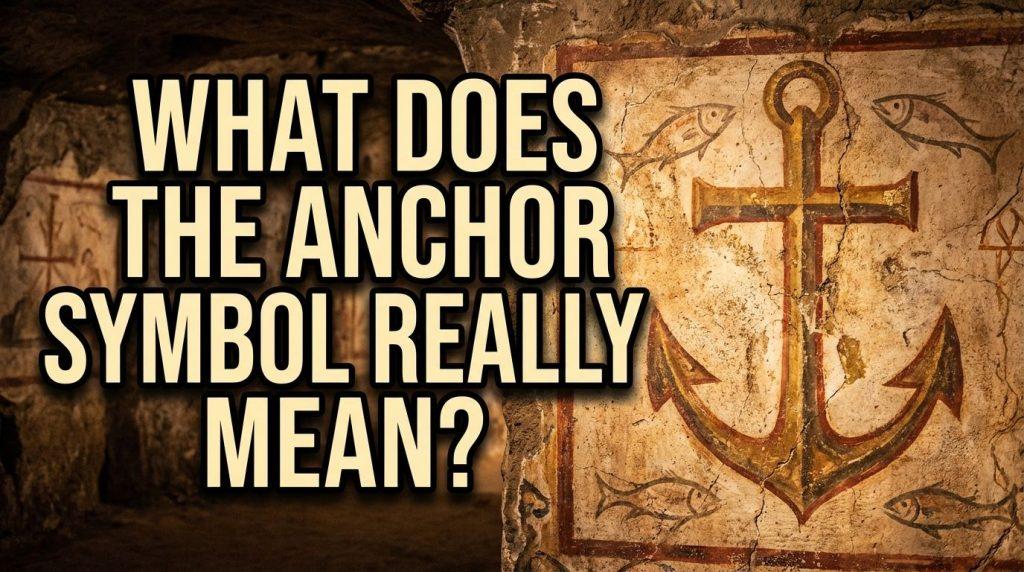
- The anchor appears frequently in catacomb art and on early Christian tombs, expressing confidence in salvation.
- The symbol represents stability, security, and the Christian’s firm foundation in Christ amid life’s storms.
- Understanding the anchor helps Catholics appreciate how hope differs from wishful thinking and provides genuine spiritual security.
Biblical Foundation in Hebrews
The anchor symbol’s primary biblical source comes from the Letter to the Hebrews, which uses maritime imagery to describe Christian hope. The author writes about Jesus as the forerunner who entered the sanctuary behind the veil on our behalf, then declares, “This we have as an anchor of the soul, sure and firm, which reaches into the interior behind the veil” (Hebrews 6:19). This passage establishes the anchor as representing hope that is both certain and secure. Unlike worldly hopes that may disappoint, Christian hope anchors the soul firmly because it rests on God’s promises and Christ’s accomplished work. The imagery suggests that just as a ship’s anchor provides stability in rough seas, faith-based hope keeps believers steady through life’s difficulties.
The context surrounding this anchor reference in Hebrews emphasizes God’s unchangeable promise and oath. God swore to Abraham that He would bless him and multiply his descendants. Because God cannot lie, His promise provides absolute certainty for those who trust Him. The anchor metaphor captures this certainty and reliability. When storms threaten to drive a ship onto rocks, a good anchor dug deep into the sea floor holds the vessel secure. Similarly, hope grounded in God’s character and promises holds believers secure when circumstances threaten to overwhelm them. The anchor does not prevent storms but ensures the ship survives them.
The Letter to the Hebrews addresses Christians facing persecution and temptation to abandon their faith. The anchor symbol would resonate powerfully with readers experiencing trials. They needed assurance that their hope was not misplaced, that persevering in faith would lead to the promised reward. The anchor represented this assurance visually and concretely. Early Christian artists and communities adopted the symbol because it so effectively communicated the message of unwavering hope that Hebrews proclaimed. The anchor became shorthand for the entire theology of hope that pervades the letter.
The Anchor as Disguised Cross
Beyond its connection to the Hebrews passage, the anchor symbol served a practical purpose during periods of Christian persecution. The anchor’s shape naturally resembles a cross, with a vertical shaft and horizontal crossbar. Christians could display anchors without immediately revealing their religious identity to hostile observers. A merchant ship owner or sailor displaying an anchor symbol would arouse no suspicion. Yet fellow Christians would recognize the hidden cross and understand the deeper religious significance. This dual nature made the anchor ideal for the early Church’s situation.
The disguised cross function of the anchor demonstrates the creativity early Christians employed to maintain their identity and communicate their faith under persecution. They could not openly display crosses without risking arrest or death. The anchor provided a solution that balanced the need for discretion with the desire to express faith symbolically. Catacombs and Christian burial sites show anchors carved on tombs and painted on walls, often with clear cruciform emphasis. Some ancient anchors are depicted with the crossbar at the top, making the cross resemblance even more obvious to those who knew what to look for.
The anchor’s double meaning as both nautical implement and religious symbol reflects how early Christians lived in two worlds simultaneously. They participated in ordinary Roman society with its commercial and social activities while maintaining their distinct religious identity and community. The anchor symbol allowed them to move between these worlds, appearing normal to outsiders while signaling fellowship to insiders. This balancing act required wisdom and discretion that the anchor symbol facilitated. The symbol’s success in serving both functions testifies to its appropriateness for the Church’s circumstances.
The Theological Virtue of Hope
Catholic theology identifies hope as one of three theological virtues, along with faith and charity. These virtues relate directly to God and are infused by Him through grace rather than acquired through human effort alone. Hope specifically relates to trusting in God’s promises, desiring eternal life, and relying on Christ’s grace and the Holy Spirit’s help to achieve salvation (CCC 1817-1821). The anchor symbol represents this theological virtue visually, making abstract doctrine more concrete and memorable. Understanding hope as a virtue rather than mere optimism elevates the anchor symbol’s meaning beyond positive thinking to genuine spiritual reality.
The virtue of hope stands between two opposing vices: presumption and despair. Presumption assumes salvation without proper conversion and cooperation with grace, treating God’s mercy as automatic regardless of one’s choices. Despair gives up on the possibility of forgiveness and salvation, denying God’s mercy and power to save. Hope avoids both extremes by trusting God’s promises while acknowledging human responsibility to respond to grace. The anchor symbol captures hope’s balanced nature. An anchor that is too light fails to hold the ship secure, while one that is too heavy becomes immovable. Proper hope, like a well-sized anchor, provides security without fostering passivity.
Hope differs from wishful thinking or vague optimism in its object and foundation. Hope does not rest on probabilities or positive attitudes but on God’s revealed promises and demonstrated faithfulness. The anchor reaches “into the interior behind the veil,” meaning hope extends into heavenly realities already secured by Christ. Christians do not hope that God might save them if circumstances align favorably. They hope because Christ has already accomplished redemption and promised to bring believers to share His glory. This certainty about the outcome, despite uncertainty about earthly circumstances, characterizes Christian hope and justifies using an anchor as its symbol.
The Anchor in Early Christian Art
Catacomb paintings from the first centuries of Christianity frequently feature anchor symbols, often combined with other Christian images like fish, doves, or the chi-rho monogram. These underground burial chambers provided spaces where Christians could decorate more freely than in public areas. Artists painted anchors on walls and ceilings, establishing visual connections between the symbol and Christian burial practices. The anchor in funerary contexts expressed confidence that the deceased had not truly died but only passed from earthly life to heavenly existence. Death became a transition rather than termination, secured by the anchor of hope in resurrection.
Stone carvers inscribed anchors on sarcophagi and grave markers throughout the Roman world. Some of these carved anchors show remarkable artistry and detail, while others are simple line drawings. The variety suggests that the symbol was used across social classes and skill levels. Wealthy Christians could afford elaborate carved anchors on expensive marble sarcophagi. Poor Christians scratched simple anchors into cheaper materials. The symbol’s accessibility meant everyone could employ it regardless of resources. This democratic quality suited Christianity’s appeal across social boundaries.
The artistic style of early Christian anchors evolved over time. Initially, anchors appeared alone or with minimal additional decoration. Later examples show anchors entwined with dolphins, a symbol of salvation and Christ. Some anchors sprout flowers or branches, suggesting life growing from death. The crossbar of anchors sometimes curves upward at the ends, creating additional cross references. These artistic elaborations enriched the symbol’s meaning while maintaining its essential form. The anchor’s visual flexibility allowed artists to adapt it creatively while preserving recognizability.
The Anchor and Maritime Culture
The anchor symbol resonated particularly with early Christian communities in Mediterranean port cities where maritime trade and fishing provided livelihoods for many. These believers understood anchors’ practical function through daily experience. They had seen ships secure themselves in harbor or ride out storms at anchor. They knew that poor anchors meant disaster, while good ones saved lives. This experiential knowledge made the theological symbolism more vivid and meaningful. When they heard or read about hope as an anchor, they could visualize exactly what that meant.
Biblical imagery frequently draws on maritime themes because of the Mediterranean world’s seafaring culture. Jesus called fishermen as disciples, taught from boats, calmed storms, and walked on water. Jonah’s story involves a ship and a great fish. Paul’s missionary journeys included extensive sea travel and a dramatic shipwreck. The Book of Revelation describes heavenly worship with imagery of a sea of glass. This maritime context made anchor symbolism natural for early Christianity. The anchor connected to broader nautical themes running through Scripture and Christian experience.
Modern Catholics less familiar with sailing and anchors may find the symbol less immediately meaningful than ancient believers did. However, the basic concept of stability and security translates across cultures and time periods. Everyone understands needing something solid to hold onto during difficult times. Even without maritime experience, people grasp the anchor’s function as providing steadiness. Teaching about the anchor symbol can include both its historical context and its continuing relevance for contemporary spirituality. The symbol works because the human need for hope remains constant even when cultural expressions change.
Hope and the Christian Life
Christian hope shapes how believers approach daily life and long-term planning. Hope does not mean passive waiting for heaven while ignoring earthly responsibilities. Rather, it provides motivation for virtuous living and perseverance in difficulties. Because Christians hope for eternal life with God, they strive to live according to His will now. The anchor of hope keeps them oriented toward their true destination while they work, serve, and love in the present. This future-focused hope paradoxically makes believers more engaged with current realities rather than less.
The anchor symbol reminds Christians that their ultimate security comes from God rather than from wealth, health, relationships, or achievements. These good things may fail or be taken away, but hope anchored in God’s promises remains secure. This perspective helps believers maintain proper priorities and avoid making idols of created goods. When people trust in things that cannot ultimately save them, they build on sand rather than rock. The anchor represents the solid foundation of hope in God that allows everything else to find its proper place.
Hope also enables Christians to face suffering and death without despair. The anchor does not prevent storms but ensures survival through them. Similarly, Christian hope does not eliminate pain but provides the strength to endure it meaningfully. Believers throughout history have testified that hope sustained them through persecution, illness, loss, and martyrdom. The anchor symbol appeared on tombs and in places of execution because Christians faced death with confidence in resurrection. This hope was not denial of suffering’s reality but trust in God’s greater power and ultimate vindication of those who remain faithful.
The Anchor in Liturgy and Prayer
While the anchor symbol does not appear as prominently in Catholic liturgy as some other symbols, its meaning pervades Christian worship. Every Mass looks forward to Christ’s return and the fulfillment of God’s promises. The prayers express hope for mercy, forgiveness, and eternal life. The Eucharist itself is “a pledge of future glory,” providing a foretaste of the heavenly banquet that Christians hope to share fully. When believers receive Communion, they receive the anchor of their hope, Christ Himself who holds them secure.
The funeral liturgy particularly emphasizes themes of Christian hope that the anchor symbolizes. Prayers commend the deceased to God’s mercy and express confidence in resurrection. The Paschal candle, lit at the Easter Vigil and burned at funerals, represents Christ the light who conquered death. White vestments signify the hope of resurrection rather than despair at loss. The entire ritual proclaims that death is not the end but a passage to new life. These liturgical expressions embody the same hope that the anchor symbol represents visually.
Personal prayer can incorporate reflection on the anchor and the hope it represents. Morning prayers might include asking God to keep one’s hope firmly anchored in His promises throughout the day. Evening prayers could thank God for sustaining hope despite difficulties. In times of particular trial or temptation to despair, consciously recalling the anchor symbol and what it represents can strengthen resolve and restore perspective. The symbol serves as a mental and spiritual tool for maintaining proper orientation toward God and His promises.
The Anchor and Modern Challenges
Contemporary culture often promotes optimism and positive thinking while avoiding serious engagement with suffering and mortality. This superficial positivity differs fundamentally from Christian hope. The anchor symbol represents hope that acknowledges life’s storms while trusting in divine security beyond them. Modern believers facing job loss, illness, relationship breakdown, or other crises need the genuine hope the anchor represents rather than empty reassurances that everything will work out fine. Christian hope prepares for heaven even if earthly circumstances never improve.
Anxiety and depression afflict many people in contemporary society. Mental health challenges can make hope seem impossible or irrational. The anchor symbol and the hope it represents do not negate the reality of mental illness or substitute for professional treatment. However, they can provide spiritual resources that complement therapeutic interventions. Faith-based hope offers a transcendent perspective that relativizes present suffering without denying its reality. Believers struggling with mental health issues can draw strength from knowing their ultimate security rests in God rather than in their changing feelings or circumstances.
Environmental concerns and global challenges sometimes generate apocalyptic anxiety that undermines hope. Christians facing climate change, political instability, and social fragmentation need the anchor of hope to avoid either paralysis or despair. The symbol reminds believers that God remains sovereign over history and creation. Human responsibility to care for the earth and serve the common good continues, but ultimate outcomes rest with God. This perspective frees Christians to work for justice and peace without bearing the impossible burden of believing everything depends on their efforts alone.
The Anchor in Catholic Devotion
Various Catholic devotional practices and traditions incorporate anchor imagery or themes of steadfast hope. The Litany of Loreto invokes Mary as “Ark of the Covenant,” connecting to nautical imagery and the idea of God’s presence dwelling securely with His people. Prayers to Mary often ask her intercession for the grace of final perseverance, the ultimate anchoring in faith until death. Marian devotion and anchor symbolism both emphasize security, protection, and the hope of reaching heaven safely.
Devotion to Christ’s Sacred Heart includes meditation on His mercy and love as sources of hope for sinners. The promises Jesus made to Saint Margaret Mary Alacoque about blessings for those devoted to His Sacred Heart provide concrete grounds for hope. These promises function like an anchor, giving believers specific divine commitments on which to rest their trust. The combination of devotional practice and theological hope represented by the anchor creates a spirituality both affective and intellectually grounded.
Religious orders and congregations sometimes incorporate anchor symbolism into their spirituality or emblems. Communities dedicated to serving seafarers or located in port cities might naturally adopt the anchor. Orders emphasizing hope as central to their charism could use the symbol to express their identity and mission. Catholic institutions like hospitals or schools might display anchors to signify their commitment to providing security and hope to those they serve. These various uses keep the ancient symbol alive in contemporary Catholic life.
The Anchor and Saints
Several saints have strong associations with maritime themes and anchor symbolism. Saint Clement of Rome, an early pope and Church father, was reportedly martyred by being tied to an anchor and thrown into the sea. His feast day and iconography often include anchors, connecting the symbol to both his martyrdom and his witness to Christian hope even unto death. Churches dedicated to Saint Clement frequently feature anchor decoration and imagery. His story demonstrates that the anchor as symbol of hope applies even when facing execution, indeed especially then.
Saint Nicholas of Myra, the fourth-century bishop whose life inspired Santa Claus traditions, served as patron saint of sailors. Stories tell of him calming storms and saving ships from destruction. His patronage of mariners connected him to nautical symbols including anchors. Prayers to Saint Nicholas often invoke his protection for those traveling by sea. The anchor in connection with Nicholas represents both physical safety at sea and spiritual security through Christian hope. His intercession offers both kinds of help to those who ask.
Other saints associated with maritime life or themes can be connected to anchor symbolism even when not explicitly linked in tradition. Saint Brendan the Navigator, Saint Francis Xavier who traveled extensively by ship as a missionary, and Saint Paul who survived shipwreck all relate to seafaring experiences. Their lives demonstrate faith remaining firm through literal storms at sea, making the anchor symbol particularly appropriate for remembering and honoring them. Contemporary Catholics seeking models of steadfast hope can draw inspiration from these and other saints who embodied the virtues the anchor represents.
Teaching Children About the Anchor
Religious educators can use the anchor symbol to teach children about hope in age-appropriate ways. Young children understand the basic concept of something holding steady when pushed or pulled. Teachers can show pictures of anchors or even small anchor models, explaining their physical function first. Then they can connect this to spiritual hope by explaining that just as anchors keep boats safe, hope in Jesus keeps our hearts safe. This concrete-to-abstract progression suits how children learn and makes theological concepts accessible.
Story-based teaching about the anchor works well with children. Educators might tell about early Christians using the anchor symbol in catacombs, or Saint Clement’s martyrdom, or biblical stories with maritime themes. Children remember narratives better than abstract principles, so embedding the anchor’s meaning in stories increases retention and understanding. Craft activities where children make their own anchor drawings or decorations can reinforce learning through hands-on engagement. These creative expressions help children appropriate the symbol personally.
As children mature, teaching about the anchor can deepen to include more theological content about hope as a virtue, the Hebrews passage, and how Christian hope differs from wishful thinking. Older children and teens can handle discussions about facing difficulties with hope rather than despair, about death and resurrection, and about finding security in God rather than changeable circumstances. The anchor symbol provides continuity across these developmental stages, familiar from childhood while capable of carrying increasingly sophisticated meanings as understanding grows.
The Anchor in Heraldry and Design
Ecclesiastical heraldry sometimes incorporates anchors into coats of arms for dioceses, religious orders, or church officials. A coastal diocese might use an anchor to represent both its geographical location and the hope it proclaims. Religious congregations serving sailors or founded in port cities could adopt anchors in their emblems. These heraldic uses connect the ancient Christian symbol to contemporary institutional identity. The anchor in such contexts declares that the institution grounds its mission in Christian hope and seeks to provide spiritual security to those it serves.
Architecture and decoration in Catholic churches occasionally feature anchor motifs. Coastal churches particularly might incorporate anchors into their design vocabulary. Stained glass windows could show anchors along with other Christian symbols. Stone carving or metalwork might include anchor details. Baptismal fonts in some churches feature anchor decoration, connecting to hope’s relationship with baptismal grace. These architectural uses surround worshipers with visual reminders of the theological truths the community professes.
Contemporary Catholic design and visual arts can draw on anchor symbolism for fresh artistic expressions. Modern artists might reinterpret the ancient symbol in new styles and media while maintaining its essential meaning. Graphic designers creating materials for Catholic organizations or events could incorporate anchors when hope themes are relevant. The symbol’s simple form lends itself to various artistic treatments from minimalist to ornate. Keeping traditional symbols like the anchor alive through contemporary artistic engagement ensures their continued vitality and relevance.
Ecumenical Dimensions of the Anchor
The anchor symbol, rooted in Scripture and used by the early undivided Church, provides common ground for Christians across denominational lines. Protestants, Catholics, and Orthodox all can affirm the anchor as representing hope in Christ and His promises. The symbol predates the schisms that split Christianity and points to beliefs held in common. Using the anchor in ecumenical contexts emphasizes unity in essential faith despite differences in church structure or theological emphases. The symbol witnesses to the shared heritage all Christians possess.
Different Christian traditions may emphasize various aspects of the hope the anchor represents. Protestant theology often focuses on assurance of salvation through faith alone. Catholic teaching emphasizes hope working together with faith and charity, including the role of good works and sacraments. Orthodox Christianity stresses the mystery of salvation and the process of theosis or deification. Yet all these traditions affirm that Christian hope rests on Christ’s redemptive work and God’s faithful promises. The anchor can accommodate these different emphases while maintaining its core meaning.
Ecumenical dialogue about hope and salvation can use the anchor symbol as a starting point for discussing both agreements and disagreements. The symbol itself creates no controversy since all parties recognize it as legitimately Christian. Conversations about what grounds Christian hope, how believers appropriate salvation, and what role human cooperation plays in the process can proceed from this common starting point. The anchor thus serves as both a unifying symbol and a discussion prompt for engaging differences charitably.
Conclusion and Ongoing Significance
The anchor stands as one of Christianity’s most meaningful and enduring symbols. From its biblical foundation in Hebrews through its use by persecuted early Christians to its appearance in catacomb art and funerary monuments, the anchor has represented steadfast hope in God’s promises. Its dual function as disguised cross during dangerous times and as clear expression of theological virtue demonstrates the symbol’s versatility and depth. The anchor speaks to the universal human need for security and stability while pointing to the only genuine source of such security, God Himself.
Understanding the anchor symbol enriches Catholic spiritual life by clarifying what Christian hope means and how it functions. Hope is not vague optimism but confident trust in God’s character and promises. It is not passive waiting but active perseverance grounded in certainty about ultimate outcomes. The anchor represents this hope visually, making abstract doctrine concrete and memorable. When Catholics encounter the anchor in art, architecture, or devotional objects, they receive reminders to maintain hope regardless of circumstances. The symbol calls believers to ground their lives firmly in faith rather than in changeable worldly supports.
As the Church continues her mission across changing cultural contexts, the anchor symbol retains relevance for expressing and strengthening Christian hope. Contemporary believers face challenges different from those early Christians endured, yet the need for genuine hope remains constant. The anchor testifies that God’s promises are sure and firm, that Christ’s redemptive work accomplished what He intended, and that those who trust in Him will not be disappointed. This ancient symbol continues to serve the Church by proclaiming the hope that anchors souls securely in the love and faithfulness of God who cannot lie or fail.
Disclaimer: This article presents Catholic teaching for educational purposes. For official Church teaching, consult the Catechism and magisterial documents. For personal spiritual guidance, consult your parish priest or spiritual director. Questions? Contact editor@catholicshare.com
Sign up for our Exclusive Newsletter
- 📌 Add CatholicShare as a Preferred Source on Google
- 🎁 Join us on Patreon for Premium Content
- 🎧 Check Out These Catholic Audiobooks
- 📿 Get Your FREE Rosary Book
- 📱 Follow Us on Flipboard
-

Recommended Catholic Books
Discover hidden wisdom in Catholic books — invaluable guides enriching faith and satisfying curiosity. #CommissionsEarned
- The Early Church Was the Catholic Church
- The Case for Catholicism - Answers to Classic and Contemporary Protestant Objections
- Meeting the Protestant Challenge: How to Answer 50 Biblical Objections to Catholic Beliefs
As an Amazon Associate, I earn from qualifying purchases. Thank you for your support.