
Brief Overview
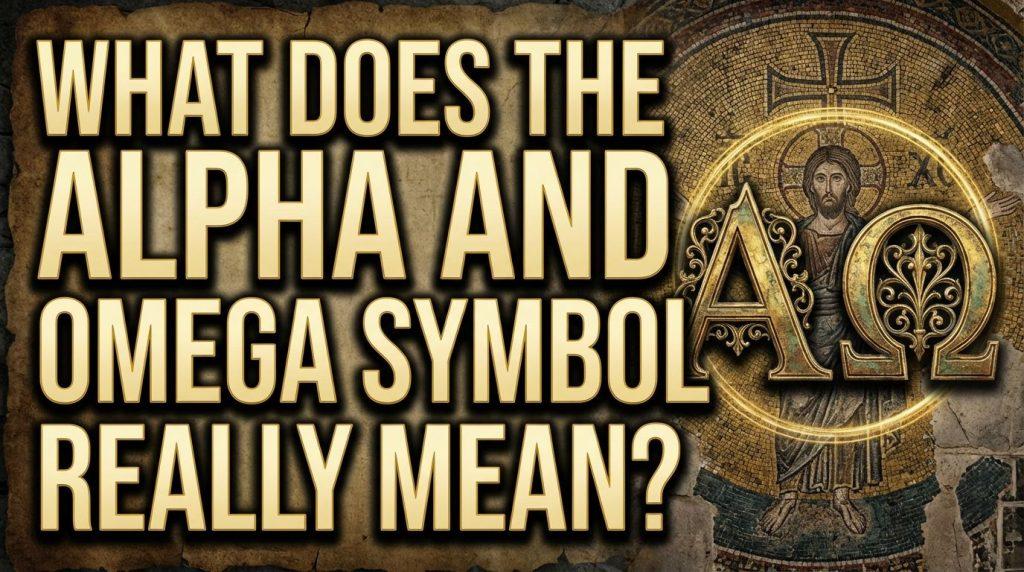
- Alpha and Omega are the first and last letters of the Greek alphabet, symbolizing that God encompasses all of existence from beginning to end.
- The symbol appears in the Book of Revelation where Christ identifies Himself as “the Alpha and the Omega, the first and the last, the beginning and the end.”
- Early Christians adopted this symbol to proclaim Christ’s divinity and His eternal nature as true God.
- The Alpha and Omega symbol appears frequently in Christian art, architecture, and liturgical items throughout Church history.
- Understanding this symbol helps Catholics grasp the fullness of Christ’s identity as the eternal Lord of all creation.
- The symbol reminds believers that Christ is present at every moment of time and holds authority over all things.
Biblical Origins of Alpha and Omega
The Alpha and Omega symbol finds its primary source in the Book of Revelation, the final book of the New Testament written by Saint John the Apostle. In Revelation 1:8, God declares, “I am the Alpha and the Omega, the one who is and who was and who is to come, the almighty.” This statement establishes the symbol’s connection to God’s eternal nature and supreme authority over all creation. The use of the first and last letters of the Greek alphabet serves as a literary device that encompasses everything in between, signifying totality and completeness. God is not merely present at the beginning and end but fills all of time and space with His presence and power. The Greek-speaking early Christians who first heard or read Revelation would have immediately understood this imagery as claiming absolute sovereignty for God.
The symbol appears again in Revelation 21:6 where God speaks from His throne, saying, “It is done. I am the Alpha and the Omega, the beginning and the end.” This passage occurs in the context of the new creation, when God makes all things new and dwells with His people forever. The repetition of the Alpha and Omega title emphasizes that God who began creation will also bring it to its intended fulfillment. Nothing falls outside His plan or escapes His control. The declaration “It is done” signals the completion of God’s redemptive work and the final establishment of His kingdom. This connection between the Alpha and Omega title and the consummation of all things gives the symbol eschatological significance, pointing toward the ultimate fulfillment that God promises to His people.
Most significantly, Christ Himself claims the Alpha and Omega title in Revelation 22:13, declaring, “I am the Alpha and the Omega, the first and the last, the beginning and the end.” This self-identification by Jesus asserts His divinity in the strongest possible terms. By taking to Himself the title that God the Father uses in earlier chapters of Revelation, Jesus claims equality with the Father and shares in the divine nature. The early Church recognized this claim as one of the clearest biblical affirmations of Christ’s divinity. When Christians use the Alpha and Omega symbol, they are confessing that Jesus is not merely a great teacher or prophet but is God Himself, eternal and sovereign. This confession stands at the heart of Christian faith and distinguishes Christianity from religions that view Jesus as only human or as a created being subordinate to God.
The Greek Alphabet and Ancient Symbolism
The Greek alphabet consists of 24 letters, beginning with Alpha and ending with Omega. Ancient Greeks used these letters not only for writing but also for numerical notation, with each letter representing a number. Alpha represented the number one, while Omega represented 800, the highest value in the system. This numerical dimension added another layer of meaning to the Alpha and Omega symbol, suggesting that Christ encompasses all things from the smallest to the greatest, from the first to the last. The choice of Greek rather than Hebrew or Latin for this symbol reflects the cultural context in which Christianity first spread, as Greek was the common language of the eastern Mediterranean world where most early Christian communities formed.
Greek philosophical traditions had already invested letters and language with symbolic significance before Christianity emerged. Philosophers discussed the relationship between words and reality, exploring how language reflects or shapes understanding of truth. Some Greek thinkers saw the alphabet as containing mysterious knowledge or representing fundamental principles of existence. Early Christian use of Alpha and Omega drew on this existing cultural awareness of symbolic meaning in letters while transforming it with specifically Christian content. Instead of abstract philosophical principles, the letters now pointed to a concrete person, Jesus Christ, who claimed to be the ultimate reality behind all existence. This transformation of existing symbols for Christian purposes became a common pattern in early Church history.
The visual forms of the Greek letters Alpha and Omega also contributed to their effectiveness as Christian symbols. Alpha resembles an A with a horizontal bar, while Omega looks like an inverted U with small extensions at the bottom, resembling a horseshoe. These distinct shapes made them easily recognizable and simple to inscribe or carve on various surfaces. Artists could incorporate them into designs alongside other Christian symbols like the cross, the chi-rho monogram, or images of Christ. The letters worked well in different artistic media, from mosaics and frescoes to metalwork and stone carving. Their geometric simplicity meant that even relatively unskilled craftsmen could reproduce them accurately, helping spread their use throughout Christian communities regardless of artistic resources or expertise.
Early Christian Use and Artistic Representations
Archaeological evidence shows that Christians began using Alpha and Omega symbols very early in Church history, probably within the first few centuries after Christ. The letters appear in catacomb paintings, on sarcophagi, in church mosaics, and on liturgical vessels from the ancient world. Often the letters flank a cross or the chi-rho monogram, positioned on either side to emphasize Christ’s eternal nature. This arrangement created a visual statement of faith that combined multiple symbols into a comprehensive declaration of Christian belief. The placement of Alpha and Omega on funerary monuments held special significance, proclaiming faith in Christ who has power over death and promises resurrection to those who believe in Him.
Early Christian artists developed various ways of incorporating Alpha and Omega into their work. Sometimes the letters appeared alone, simply carved or painted on walls or objects. Other times they formed part of more complex compositions that included figures of Christ, angels, saints, or biblical scenes. The letters might be suspended from the arms of a cross, woven into decorative borders, or placed in prominent positions within architectural spaces. Byzantine church decoration frequently featured Alpha and Omega in apse mosaics, where Christ in majesty would be shown with these letters nearby, making explicit the connection between the visual image and the divine title. These artistic choices helped teach Christian doctrine to congregations that included many who could not read, using visual symbols to communicate theological truths.
The color and materials used for Alpha and Omega symbols also carried meaning in early Christian art. Gold letters on blue backgrounds suggested the glory and transcendence of God. Red letters evoked Christ’s sacrificial blood and His divine love. White or silver letters represented purity and the light of God’s truth. Artists working in mosaic might use precious materials like gold tesserae to create the letters, signifying the supreme value and worth of Christ. Stone carvers would sometimes cut the letters deeply into marble or granite, creating permanent marks that would endure through the centuries. These material choices reflected the communities’ desire to honor Christ and to create lasting testimonies to their faith that would instruct future generations.
Theological Significance of Eternal Existence
The Alpha and Omega symbol expresses the Christian doctrine that God exists eternally, without beginning or end. This stands in sharp contrast to created beings, all of whom came into existence at some point and will exist only as long as God sustains them. God alone is self-existent, depending on nothing outside Himself for His being. The Catechism explains that God reveals Himself as “He who is,” the one whose very nature is to exist (CCC 212). When Christ claims the title Alpha and Omega, He asserts His participation in this divine self-existence. He is not a creature who came to be at some point but shares in the eternal being of God Himself. This truth forms the foundation for Christian worship of Jesus and for the doctrine of the Trinity.
The concept of God as Alpha and Omega also addresses the question of God’s relationship to time. While human beings experience time as a sequence of moments flowing from past through present into future, God transcends this temporal flow. He sees all of time at once, present simultaneously to every moment that has been, is, or will be. This does not mean God is timeless in the sense of being static or unchanging in relation to creation, but rather that He is not limited or constrained by temporal succession as creatures are. The Alpha and Omega title captures this truth by identifying God with both the beginning and the end, suggesting that all points in time exist in relation to Him. Christians can trust that God knows and cares about every moment of their lives because He holds all of time in His eternal present.
Understanding Christ as Alpha and Omega has practical implications for Christian faith and life. If Jesus truly encompasses all of existence from beginning to end, then no situation falls outside His knowledge or power. Believers need not fear that their problems are too great for God to handle or that their circumstances have escaped His awareness. The symbol assures Christians that the same Christ who created the world and will judge it at the end of time is present with them in their current struggles and joys. This confidence in Christ’s comprehensive authority and presence provides comfort in suffering and encouragement in service. The Alpha and Omega symbol thus functions not merely as an abstract theological statement but as a source of real hope and strength for those who face challenges in their daily lives.
Connection to God’s Names in the Old Testament
The Alpha and Omega title connects to God’s self-revelation in the Old Testament, particularly the divine name YHWH revealed to Moses at the burning bush. When Moses asked God’s name, God replied, “I AM WHO I AM,” instructing Moses to tell the Israelites that “I AM sent me to you” as recorded in Exodus 3:14. This mysterious name emphasizes God’s absolute existence and self-sufficiency. He simply is, without qualification or limitation. The Alpha and Omega title functions similarly, declaring that God encompasses all of existence without depending on anything external to Himself. Early Christian theologians saw clear connections between the I AM name and Christ’s claim to be Alpha and Omega, understanding both as revelations of divine nature.
The prophet Isaiah contains passages that anticipate the Alpha and Omega language used in Revelation. God declares in Isaiah 44:6, “I am the first and I am the last; besides me there is no god.” This statement asserts both God’s uniqueness and His sovereignty over all of history. When Christ applies similar language to Himself in Revelation, He is claiming the same unique divine status that God proclaimed through Isaiah. The early Church understood this as evidence that Jesus is the same God who spoke through the Old Testament prophets. The continuity between Old and New Testament divine titles demonstrates that Christianity represents the fulfillment of Israel’s faith rather than a completely new religion unconnected to what came before.
Catholic theology sees the Alpha and Omega symbol as revealing the unity between creation and redemption. The same divine Word who existed from the beginning and through whom all things were made is the one who became incarnate to redeem what He had created. This unity of Creator and Redeemer means that salvation is not an afterthought or emergency response to human sin but flows from God’s eternal plan. The Alpha who began creation is also the Omega who will bring it to completion. Nothing in God’s relationship with the world is accidental or improvised. The symbol encourages Christians to see their lives as part of a coherent divine story that stretches from creation to the end of time, with Christ at both the beginning and the end as well as at every point in between.
The Symbol in Liturgy and Sacramental Life
The Catholic Church incorporates Alpha and Omega symbolism into its liturgical practices in various ways. The Easter Vigil, the most important liturgy of the year, includes a dramatic ceremony in which the celebrant marks the Paschal candle with a cross and inscribes the Alpha and Omega letters along with the current year’s numerals. The priest says, “Christ yesterday and today, the beginning and the end, Alpha and Omega; all time belongs to Him, and all the ages; to Him be glory and power through every age forever.” This ritual proclaims Christ’s lordship over time and His victory over death through His resurrection. The Paschal candle, lit from the new fire and carried into the darkened church, represents Christ the Light who conquers darkness and death.
Church architecture and decoration frequently feature Alpha and Omega symbols in prominent locations. The letters may appear on altars, tabernacles, baptismal fonts, or in stained glass windows. Their presence in the worship space serves as a constant reminder to the congregation of Christ’s divine nature and eternal reign. When positioned near the altar, the symbols emphasize that the Eucharistic sacrifice makes present the same Christ who exists from eternity to eternity. The altar becomes the meeting point between time and eternity, where the eternal God enters into the temporal world to offer Himself for human salvation. Alpha and Omega letters near the baptismal font remind parents and godparents that baptism brings children into relationship with the eternal God who will remain faithful to them throughout their lives.
Liturgical vestments and sacred vessels sometimes incorporate Alpha and Omega symbols in their designs. A chasuble might be embroidered with the letters alongside other Christian symbols. A chalice or ciborium could have the letters engraved on its surface. These uses of the symbol sanctify the objects by marking them with Christ’s identity and dedicate them to sacred purpose. The letters declare that the items are set apart for divine worship rather than ordinary use. When priests and people see these symbols during Mass or other sacramental celebrations, they are reminded of the one they worship and the eternal significance of the actions they perform. The symbols help lift minds and hearts from merely external ritual to spiritual reality.
Alpha and Omega in the Context of Christ’s Other Titles
Christ bears many titles in Scripture and tradition, each revealing different aspects of His identity and mission. Understanding Alpha and Omega alongside these other titles enriches appreciation for the fullness of who Jesus is. He is called the Good Shepherd, emphasizing His care and guidance for His people. He is the Lamb of God, highlighting His sacrificial death for human sin. He is the Light of the World, revealing truth and dispelling darkness. He is the Bread of Life, providing spiritual nourishment. The Alpha and Omega title emphasizes His eternal existence and comprehensive authority, complementing these other designations that focus on particular aspects of His relationship with humanity.
Some of Christ’s titles stress His humanity, while others emphasize His divinity. Alpha and Omega clearly belongs to the second category, asserting Christ’s full participation in the divine nature. This title helps balance other ways of speaking about Jesus that might, if taken alone, suggest He is merely human. When the Church calls Jesus both the Son of Man and the Alpha and Omega, it affirms the mysterious union of divinity and humanity in one person. This balanced understanding protects against heresies that would either deny Christ’s true humanity or reduce Him to a creature less than fully God. The Alpha and Omega symbol thus serves a crucial role in maintaining orthodox Christology and ensuring that believers worship Jesus appropriately as both God and man.
The progression of divine titles through Revelation shows a deliberate pattern. God the Father first claims the Alpha and Omega designation, establishing it as a marker of divine identity. Later, Christ applies the same title to Himself, thereby asserting His equality with the Father. This pattern reflects the New Testament’s gradual revelation of Christ’s full divinity. The early disciples first knew Jesus as a human teacher and rabbi. Through His miracles, teaching, death, and especially His resurrection, they came to recognize Him as the divine Son of God. The Alpha and Omega title represents the culmination of this recognition, expressing the Church’s mature understanding that Jesus is not merely sent by God but is Himself the eternal God become incarnate. This development in understanding continues to shape how the Church teaches about Christ and presents Him to new generations of believers.
The Symbol and Christian Hope for the Future
The Alpha and Omega symbol carries strong eschatological meaning, pointing toward the final fulfillment of God’s plan for creation. When Christ identifies Himself as the Omega, He is claiming authority over the end of history and the final judgment. This provides Christians with confidence that history is not random or meaningless but moves toward a definite goal determined by God. The trials and sufferings of the present age will not last forever because the Omega has already determined the outcome. Christ will bring all things to their proper completion, separating good from evil and establishing His eternal kingdom. This hope enables Christians to persevere through difficulties, knowing that their labor in the Lord is not in vain.
The Book of Revelation uses the Alpha and Omega symbol in contexts describing the new heaven and new earth that God will create. In this renewed creation, death will be no more, and God will wipe away every tear from human eyes. The connection between the Alpha and Omega title and these promises of future blessing assures believers that the God who began the good work of creation will complete it perfectly. Just as artists or builders finish what they start, God will bring His creative and redemptive work to a glorious conclusion. The symbol thus functions as a pledge or guarantee of Christian hope, linking the God who is with the God who will be, and assuring believers that His promises are trustworthy.
Contemporary Catholics can draw courage from the Alpha and Omega symbol when facing an uncertain future. Global challenges like climate change, political instability, technological disruption, and social fragmentation can create anxiety about what lies ahead. The symbol reminds believers that Christ already holds the future in His hands. He knows the end from the beginning and will ensure that His purposes are accomplished. This does not mean Christians can be passive or indifferent to current problems, but it does free them from paralyzing fear about outcomes they cannot control. The Omega has already won the victory, and believers participate in that victory through faith and obedience. This confidence allows Christians to work for justice and peace without despairing when progress seems slow or setbacks occur.
Artistic Development Through Church History
Medieval Christian art elaborated on early uses of Alpha and Omega symbols, incorporating them into increasingly complex and beautiful designs. Illuminated manuscripts featured ornate versions of the letters decorated with gold leaf, intricate patterns, and miniature illustrations. Gospel books and liturgical texts used Alpha and Omega as decorative elements that also communicated theological meaning. Scribes and artists saw their work as worship, and the care they invested in creating beautiful symbols reflected their devotion to Christ. These manuscripts often took years to complete and represented the combined efforts of entire monastic communities. The Alpha and Omega letters they contained thus embodied both artistic excellence and spiritual dedication.
Gothic cathedrals incorporated Alpha and Omega symbols into their grand architectural schemes. The letters might appear in rose windows, where colored glass transformed sunlight into displays of divine glory. Stone carvers included the symbols in sculptural programs that covered cathedral facades and interiors. These massive buildings served as theological textbooks in stone and glass, teaching Christian doctrine to populations that largely could not read written texts. The Alpha and Omega symbols in cathedrals proclaimed Christ’s lordship over creation and history to all who entered these sacred spaces. The symbols’ placement in prominent locations emphasized their importance within the hierarchy of Christian truths.
Renaissance and Baroque artists continued using Alpha and Omega symbols while developing new styles and techniques. Painters included the letters in altarpieces and devotional images, often placing them in golden rays surrounding Christ or the Holy Trinity. Sculptors carved them on tombs, pulpits, and baptismal fonts. Church builders incorporated them into architectural decoration and furnishings. Each artistic period brought its own aesthetic sensibilities to the symbols while maintaining their essential meaning. The continuity of the symbols across different artistic styles and cultural contexts demonstrates their centrality to Christian faith and worship. Modern and contemporary Christian art continues this tradition, finding new ways to represent the ancient symbols that connect present-day believers to the faith of previous generations.
The Symbol in Catholic Funerary Practices
Alpha and Omega symbols appear frequently on Catholic tombstones, mausoleums, and memorial markers. Their presence in cemeteries proclaims faith in Christ who conquered death and promises resurrection to those who believe in Him. When grieving families choose to include these letters on a loved one’s grave marker, they are making a statement of Christian hope that death is not the end. The Alpha who created human beings and gave them life is also the Omega who will raise them to eternal life. The symbols transform burial places from sites of finality and despair into locations of hope and expectation. Christian cemeteries become not just storage places for dead bodies but gardens of rest where the faithful await the resurrection.
The use of Alpha and Omega on funeral monuments connects to broader Catholic theology about death and the afterlife. The Church teaches that death is not natural or good but entered the world through sin. Yet Christ has transformed death through His own death and resurrection, making it a passage to eternal life for those who die in grace. The Alpha and Omega symbol expresses this transformed understanding of death. The letters flanking a cross on a tombstone declare that the one who died has passed from the Alpha of earthly life to await the Omega of resurrection glory. Death is real but not ultimate. Christ who is the beginning and end holds all human lives within His eternal purposes and will not let death have the final word.
Contemporary Catholic funeral practices can incorporate Alpha and Omega symbolism in various ways. The funeral pall that covers the casket during Mass might be decorated with these letters. Prayer cards distributed at funerals could include the symbols alongside images of Christ or saints. Cremation urns or memorial plaques may feature the letters. These uses help mourners focus on Christian hope rather than being overwhelmed by grief. The symbols remind those who remain that their departed loved ones are in the hands of the eternal God who knows them completely and loves them perfectly. This faith does not eliminate sorrow but provides a context for grief that prevents it from becoming despair. The Alpha and Omega letters testify that love and life are stronger than death because they are rooted in the eternal being of God Himself.
Educational and Catechetical Applications
Catholic educators can use the Alpha and Omega symbol as a teaching tool to help students understand Christ’s divinity and eternal nature. The visual simplicity of the Greek letters makes them accessible even to young children, while the theological depth they represent provides material for advanced study. Teachers can explain how the first and last letters of an alphabet encompass all the letters in between, using this as an analogy for how Christ encompasses all of reality. This concrete imagery helps students grasp abstract theological concepts that might otherwise remain vague or confusing. The symbol provides a memorable hook that students can carry with them throughout their lives.
Catechism classes can explore the biblical passages where Alpha and Omega language appears, helping students become familiar with the Book of Revelation and its imagery. Many Catholics know little about Revelation because of its symbolic and apocalyptic character. Using the Alpha and Omega symbol as an entry point into this important biblical book can make it less intimidating and more meaningful. Teachers can guide students to see how Revelation’s visions of Christ in glory connect to their own worship and prayer. The book’s emphasis on Christ’s victory and final reign provides encouragement for young people who may face peer pressure or cultural hostility to Christian faith.
Parish adult education programs can examine how Alpha and Omega symbolism relates to contemporary theological and philosophical questions. Discussions about the nature of time, God’s relationship to creation, and the meaning of eternity benefit from attention to this ancient symbol. Adults struggling with suffering or injustice in the world can find comfort in reflecting on Christ as the Omega who will set all things right. Study groups might explore how different theologians and spiritual writers have understood and explained the symbol throughout Church history. These deeper investigations help mature Catholics grow in their faith and develop more sophisticated understanding of Christian doctrine. The Alpha and Omega symbol thus serves catechetical purposes across all age levels and stages of faith development.
Ecumenical Perspectives on Alpha and Omega
The Alpha and Omega symbol enjoys recognition across different Christian traditions, making it valuable for ecumenical dialogue and cooperation. Orthodox Christians use the symbol extensively in iconography and liturgy. Protestant churches display the letters in worship spaces and on ministerial vestments. The shared use of this symbol reflects the common faith that Christians of different traditions have in Christ’s divinity and lordship. When believers from various backgrounds gather for ecumenical worship or service, the Alpha and Omega symbol can serve as a unifying image that expresses what they hold in common despite differences on other matters.
The biblical basis for Alpha and Omega symbolism provides solid ground for ecumenical agreement. All Christians who accept the authority of Scripture acknowledge the Book of Revelation as part of the inspired canon. The passages where Christ claims the Alpha and Omega title are not subject to interpretational disputes between different traditions. This clear scriptural foundation means that conversations about the symbol can focus on its meaning and implications rather than on questions about its legitimacy or authority. Such shared biblical grounding facilitates constructive dialogue and mutual understanding between Christians who may disagree about issues like church governance, sacramental theology, or liturgical practice.
Catholic participation in ecumenical settings benefits from emphasizing symbols like Alpha and Omega that express core Christian beliefs rather than distinctively Catholic doctrines. While the Church must maintain its full teaching on matters like papal authority, purgatory, and Marian devotion, these topics can create barriers in ecumenical contexts. Starting with shared affirmations about Christ’s divine nature and eternal reign establishes common ground from which to address more difficult questions. The Alpha and Omega symbol reminds all Christians that Christ Himself is the center of faith and that all other doctrines and practices must be evaluated in relation to Him. This Christ-centered approach, symbolized by Alpha and Omega, can help ecumenical discussions remain focused on essential truths rather than peripheral matters.
The Symbol and Marian Devotion
While Alpha and Omega properly applies only to Christ and expresses His divine nature, the symbol sometimes appears in connection with Marian art and devotion. These uses do not claim divinity for Mary but rather honor her unique role in salvation history. As the mother of Christ who is Alpha and Omega, Mary holds a special place in God’s eternal plan. Catholic tradition calls her the “beginning of our salvation” because through her consent, the Word became flesh and redemption became possible. In this limited sense, images connecting Mary to Alpha and Omega symbols acknowledge her participation in the divine plan that stretches from beginning to end, while carefully maintaining the distinction between the Creator and the creature.
Some Catholic art shows Mary holding the infant Jesus who is marked with or surrounded by Alpha and Omega letters. This composition emphasizes that Mary’s significance comes entirely from her relationship to Christ. She is the Mother of God, theotokos, the one who gave human flesh to the eternal Word. The Alpha and Omega letters in such images point to Jesus’s divine identity and remind viewers that the child Mary holds is not merely a holy man but is God Himself. The juxtaposition of human mother and divine child expresses the mystery of the incarnation, that the infinite God became a finite baby without ceasing to be God. Mary’s presence in these images highlights the reality of Christ’s humanity while the symbols affirm His divinity.
Catholic theology carefully distinguishes between the worship due to God alone and the veneration appropriate for Mary and the saints. Alpha and Omega, as a title expressing divine nature, belongs exclusively to the Trinity. Mary is not eternal, not the creator, not the savior in the same sense that Christ is. She is the greatest of all creatures but remains a creature who herself needed to be redeemed by Christ. When Alpha and Omega symbols appear in Marian contexts, informed Catholics understand them as referring to Christ rather than to Mary directly. The symbols point through Mary to her Son, maintaining proper theological distinctions while honoring the mother through whom God chose to enter the world. This balanced approach allows Marian devotion to flourish without compromising monotheistic faith or detracting from Christ’s unique role.
Personal Appropriation of the Symbol’s Meaning
Individual Catholics can integrate Alpha and Omega symbolism into their personal prayer and spiritual practices. Praying before an image or crucifix that includes the letters can focus attention on Christ’s eternal nature and comprehensive authority. Meditation on the phrase “I am the Alpha and the Omega” can deepen awareness of Christ’s presence in all circumstances. Repeating the phrase slowly, allowing each word to sink in, creates a simple form of contemplative prayer. This practice helps believers internalize the truth that Christ encompasses their entire lives, knowing their past, present, and future. Such prayer can bring peace and confidence, especially during times of uncertainty or anxiety about what lies ahead.
Wearing jewelry or displaying art featuring Alpha and Omega symbols serves as a constant reminder of Christian identity and commitment. Just as a wedding ring reminds married couples of their vows, a cross or medal with these letters can remind believers of their relationship with Christ. The symbols become prompts for brief prayers throughout the day, moments when people consciously acknowledge Christ’s lordship and presence. These small acts of awareness can gradually transform how people experience their daily activities, helping them see all of life in relation to Christ. The physical presence of the symbol creates opportunities for witness as well, when others notice and ask about its meaning.
Spiritual reading about Alpha and Omega can provide material for ongoing reflection and growth in understanding. Saints and theologians throughout Church history have written about Christ’s eternal nature and its implications for Christian life. Reading their insights helps contemporary believers deepen their grasp of this mystery and discover new applications to their own situations. Keeping a journal to record thoughts and prayers related to the symbol can track spiritual development over time. Writing about how the truth of Christ as Alpha and Omega speaks to current challenges or joys makes the doctrine personally relevant rather than abstractly theoretical. This ongoing engagement with the symbol’s meaning becomes a form of theological reflection that nurtures mature faith.
Contemporary Cultural Context and Challenges
Modern secular culture often operates with assumptions that conflict with the truth expressed in the Alpha and Omega symbol. Many people today view reality as purely material, governed by impersonal natural laws without divine direction or purpose. This worldview leaves no room for an eternal God who exists before creation and will bring history to its appointed end. The Alpha and Omega symbol challenges these materialistic assumptions by proclaiming that a personal God stands at both the beginning and end of all things. Christians who understand and embrace this symbol find themselves equipped to offer an alternative vision of reality that makes sense of human dignity, moral responsibility, and ultimate meaning.
The rapid pace of technological and social change can create a sense that nothing is stable or enduring. New technologies disrupt established patterns of work and relationship. Social media accelerates the spread of information and opinion, creating the impression that truth itself is fluid and changeable. Political polarization fragments communities and makes shared understanding difficult. In this chaotic context, the Alpha and Omega symbol offers an anchor point. Christ remains constant through all changes, the same yesterday, today, and forever. His truth does not shift with cultural trends or popular opinion. Believers who root their identity in the eternal Christ can maintain stability and direction even when everything around them seems uncertain and unstable.
Environmental concerns about the future of the planet can generate either paralyzing fear or irresponsible indifference. The Alpha and Omega symbol provides a framework for balanced engagement with ecological issues. As Creator, Christ cares about the world He made and expects humans to exercise responsible stewardship. As the Omega who will bring creation to its fulfillment, He assures believers that the world will not simply end in meaningless destruction. This combination of responsibility and hope allows Christians to work seriously on environmental challenges without falling into either despair or denial. The symbol reminds believers that they are accountable to the eternal God for how they treat His creation while also trusting that He will ultimately accomplish His purposes for the world.
Alpha and Omega in Spiritual Warfare
Catholic teaching acknowledges that Christians face spiritual opposition from demonic powers that seek to destroy faith and lead people away from God. The Alpha and Omega symbol reminds believers that Christ has already won the decisive victory over all evil powers. His death and resurrection broke the dominion of sin and Satan, though the final manifestation of that victory awaits the end of the age. When tempted or attacked spiritually, Christians can invoke Christ as Alpha and Omega, the one whose authority extends over all spiritual beings including demons. This invocation is not magical but expresses faith that Christ’s power is greater than any force that opposes Him.
The symbol’s connection to Christ’s comprehensive authority makes it relevant for prayers of protection and deliverance. When believers acknowledge Christ as the beginning and end of all things, they are implicitly denying ultimate power to any created being, whether human or angelic. This faith undermines the enemy’s attempts to create fear or hopelessness. Evil spirits cannot act beyond the limits God permits, and their final defeat is certain. Christians who understand Christ as Alpha and Omega can face spiritual challenges with confidence rather than terror. They know that no matter how powerful evil may appear in the present moment, it is already conquered by the one who holds beginning and end in His hands.
The Book of Revelation, where Alpha and Omega language appears, depicts cosmic spiritual conflict that will culminate in Christ’s final triumph. The visions of judgment and warfare can seem frightening, but the Alpha and Omega title reassures readers that Christ controls the outcome. The battles described are real, but their conclusion is not in doubt. This perspective helps Christians maintain hope during times when evil seems to be prevailing. The symbol points them forward to the Omega, the end when Christ will visibly establish His kingdom and eliminate all opposition. This eschatological hope sustains believers through present struggles and enables them to resist evil actively rather than surrendering to it passively.
Conclusion and Lasting Significance
The Alpha and Omega symbol communicates profound theological truths in a simple visual form that has served Christians for nearly two millennia. From its biblical origins in the Book of Revelation through its artistic and liturgical uses in every Christian century, the symbol has proclaimed Christ’s eternal divinity and comprehensive authority. It assures believers that the same Lord who created the universe will bring it to its perfect completion. Nothing falls outside His knowledge or escapes His power. This confession of faith shapes how Christians understand God, themselves, and the world around them.
Contemporary Catholics can draw on the rich tradition of Alpha and Omega symbolism to strengthen their faith and witness. The symbol connects them to the ancient Church that confessed Christ’s lordship even under persecution. It provides a point of unity with other Christians who share belief in Christ’s divinity. It offers comfort in suffering and hope in uncertainty. It challenges materialistic worldviews and secularist assumptions. Most importantly, it directs attention to Jesus Christ Himself, the eternal Word who became flesh to save humanity and will return to judge the living and the dead.
As the Church continues its mission in an increasingly complex and challenging world, the Alpha and Omega symbol remains relevant and powerful. It encapsulates the Gospel message that God became human in Jesus Christ to reconcile the world to Himself. It expresses confidence in divine sovereignty when circumstances seem chaotic or threatening. It provides a visual reminder of truths that can strengthen faith and inspire worship. Catholics who understand and embrace this ancient symbol will find in it a source of theological insight, spiritual encouragement, and missionary zeal. The Alpha and Omega, Jesus Christ, truly is Lord of all, from the beginning to the end and at every point in between.
Disclaimer: This article presents Catholic teaching for educational purposes. For official Church teaching, consult the Catechism and magisterial documents. For personal spiritual guidance, consult your parish priest or spiritual director. Questions? Contact editor@catholicshare.com
Sign up for our Exclusive Newsletter
- 📌 Add CatholicShare as a Preferred Source on Google
- 🎁 Join us on Patreon for Premium Content
- 🎧 Check Out These Catholic Audiobooks
- 📿 Get Your FREE Rosary Book
- 📱 Follow Us on Flipboard
-

Recommended Catholic Books
Discover hidden wisdom in Catholic books — invaluable guides enriching faith and satisfying curiosity. #CommissionsEarned
- The Early Church Was the Catholic Church
- The Case for Catholicism - Answers to Classic and Contemporary Protestant Objections
- Meeting the Protestant Challenge: How to Answer 50 Biblical Objections to Catholic Beliefs
As an Amazon Associate, I earn from qualifying purchases. Thank you for your support.