
Brief Overview
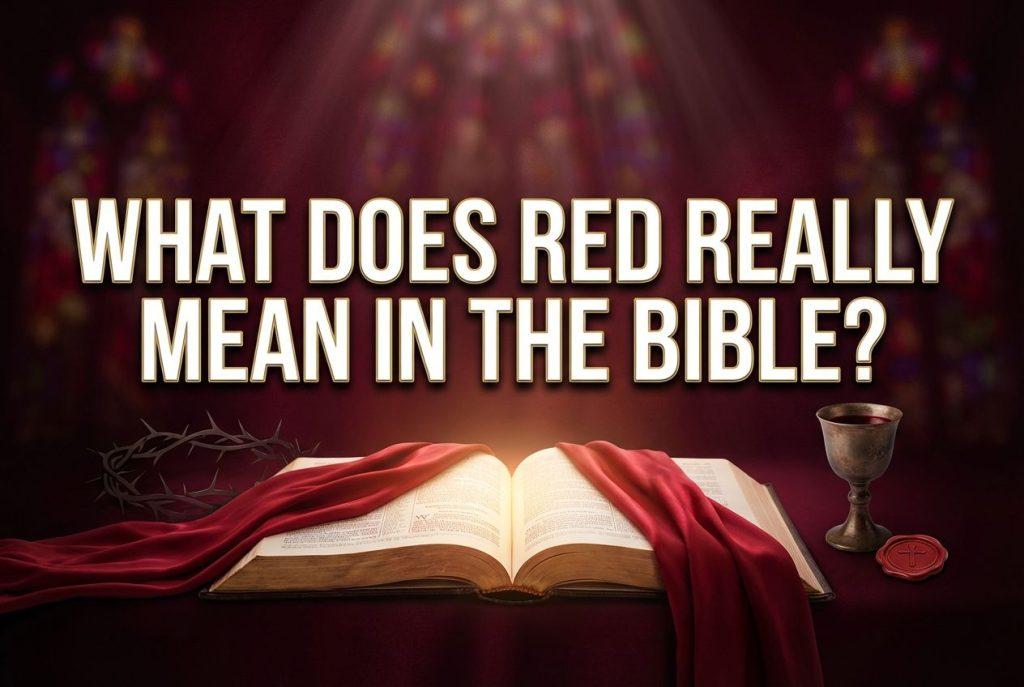
- The color red appears throughout Scripture as one of the most powerful and significant colors, carrying multiple layers of meaning that point to fundamental truths about sin, redemption, and divine love.
- Red primarily symbolizes blood in biblical contexts, which connects directly to themes of sacrifice, atonement, and the life force that sustains all living creatures.
- In the Old Testament, red appears in tabernacle furnishings, priestly vestments, and various sacrificial rituals that foreshadowed the coming Messiah and his redemptive work.
- The New Testament reveals Christ’s blood as the ultimate fulfillment of all the red imagery from earlier Scripture, accomplishing definitive redemption through his passion and death.
- Catholic liturgy continues to use red vestments during specific celebrations, including Pentecost and feasts of martyrs, maintaining the biblical symbolism of fire, sacrifice, and witness.
- The Book of Revelation employs red in both positive and negative ways, showing how the same color can represent either divine power or spiritual corruption depending on the context.
The Foundation of Red in Sacred Scripture
The biblical meaning of red begins with its most fundamental association, which is blood. Blood appears as a central element throughout both the Old and New Testaments, representing life itself according to multiple scriptural passages. The Book of Leviticus states clearly that the life of all flesh is in the blood, establishing this substance as sacred and powerful. This connection between blood and life creates the foundation for understanding why red carries such weight in biblical symbolism. When Scripture uses red or its variations like scarlet and crimson, readers encounter more than simple color descriptions. These words evoke the very essence of life, death, sacrifice, and redemption. The Hebrew language employs several terms for red shades, including adom, which relates to the word for blood and gives us Adam’s name, connecting humanity itself to the red earth from which God formed the first man. Another Hebrew word, shani or tola, refers to the scarlet or crimson color derived from a particular worm used in ancient dyeing processes. This same word appears in significant passages like Psalm 22, where the suffering servant describes himself as a worm, prefiguring Christ’s humiliation. The Greek New Testament uses words like kokkinos for scarlet and eruthros for red, maintaining the rich symbolism established in Hebrew Scripture.
Understanding the cultural context of ancient Israel helps illuminate why certain colors held special significance. Scarlet and crimson dyes were expensive and labor-intensive to produce, making them symbols of wealth, royalty, and importance. The process of creating these dyes involved crushing insects or using specific plants, requiring considerable resources and expertise. Only the wealthy and powerful could afford fabrics dyed in these rich reds. This economic reality adds another layer to biblical passages that mention scarlet or crimson materials. When the tabernacle required scarlet yarn and crimson fabrics, God was commanding the Israelites to offer their most precious resources for his dwelling place. The rarity and value of these colors made them appropriate for sacred spaces and royal garments. Kings and nobles wore purple and scarlet as signs of their elevated status. Religious ceremonies incorporated these colors to signify the holiness and importance of the rituals being performed. The very costliness of red dyes meant that their use communicated reverence, sacrifice, and dedication.
Red’s connection to blood extends beyond mere physical appearance to encompass theological meaning. Blood in Scripture represents not just life but also death, violence, guilt, and the price of sin. When blood is shed, life is lost, creating a somber recognition of mortality and consequence. Yet blood also provides cleansing and atonement according to the Levitical system, where sacrificial blood made reparation for sin. This dual nature of blood as both problem and solution runs throughout biblical theology. Sin brings death and bloodshed, but the blood of sacrifice brings forgiveness and restoration. The entire sacrificial system of ancient Israel operated on this principle, with animals giving their blood to cover human transgressions temporarily. This system pointed forward to a greater sacrifice that would accomplish what animal blood could never fully achieve. The Catholic Church recognizes in Christ’s blood the definitive answer to humanity’s need for redemption, as stated in CCC 613. His blood does not merely cover sin temporarily but washes it away completely, offering true cleansing and new life. The color red thus becomes a visual reminder of both human sinfulness and divine mercy, holding together judgment and grace in a single hue.
Red in the Tabernacle and Temple Worship
The Book of Exodus contains extensive descriptions of the tabernacle’s construction, and red appears prominently throughout these instructions. God commanded Moses to create curtains of fine linen with blue, purple, and scarlet yarn twisted together. These colors appeared in the tabernacle’s innermost spaces, including the veil that separated the Holy Place from the Most Holy Place. Scarlet threads ran through the very fabric that symbolized the boundary between God’s presence and fallen humanity. The high priest’s garments also incorporated these sacred colors, with the ephod and breastplate featuring gold, blue, purple, and scarlet materials. The careful specification of these colors was not arbitrary but carried theological significance. Blue represented the heavenly realm, purple indicated royalty, and scarlet pointed to sacrifice and blood. Together these colors proclaimed truths about God’s character and his relationship with his people. The scarlet in the tabernacle reminded worshipers that approaching God required sacrifice and bloodshed. Sin created a barrier that could not be crossed without atonement. The red threads woven into the sacred spaces visually communicated this reality every time priests entered to perform their duties.
The tabernacle’s design followed a heavenly pattern that God revealed to Moses on Mount Sinai. Every detail held meaning and pointed to greater spiritual realities. The scarlet yarn was not simply decorative but functioned as part of a comprehensive symbolic system. When priests wore garments incorporating scarlet, they represented the mediatorial role between God and humanity that required sacrifice. Their clothing proclaimed that they stood in the place of death and life, handling the blood that made atonement. The materials they wore reminded everyone that drawing near to God cost something precious. The scarlet spoke of life poured out, of sacrifice accepted, of blood that covered transgression. Later Christian interpretation recognized in these Old Testament symbols a foreshadowing of Christ’s priestly work. He would enter the true heavenly sanctuary not with the blood of bulls and goats but with his own blood. The author of Hebrews draws explicit connections between the earthly tabernacle’s symbolism and Christ’s sacrifice, showing how the red threads of the old covenant pointed to the crimson blood of the new.
Specific rituals in Israel’s worship required red materials beyond the tabernacle furnishings. The ceremony of the red heifer described in Numbers 19 stands out as particularly significant. This ritual required a perfect red cow, without blemish or defect, that had never worn a yoke. The heifer was slaughtered and burned completely, including its blood, outside the camp. The ashes were then mixed with water to create a purification solution for those who had become ceremonially unclean through contact with death. The insistence on a completely red animal emphasized the connection between this sacrifice and the removal of death’s defilement. The redness symbolized life and blood, the very things needed to counteract death’s power. Early Christians recognized in the red heifer a type or foreshadowing of Christ. Just as the heifer was perfect and unblemished, so Christ was sinless. Just as the heifer was sacrificed outside the camp, so Christ suffered outside Jerusalem’s gates. Just as the heifer’s ashes provided purification, so Christ’s sacrifice cleanses from sin. Catholic tradition has long understood these Old Testament rituals as preparing God’s people to recognize the Messiah when he came.
The Scarlet Thread of Redemption
Certain Old Testament narratives feature red prominently in ways that reveal God’s redemptive purposes. The story of Rahab and the scarlet cord in the Book of Joshua provides a powerful example. When Israelite spies entered Jericho to scout the land, the prostitute Rahab hid them from the king’s soldiers. In return for her protection, the spies promised to spare Rahab and her family when Israel attacked the city. They instructed her to tie a scarlet cord in the window of her house, marking it for protection during the coming destruction. Rahab obeyed, and when Jericho fell, her household was saved. The scarlet cord functioned similarly to the blood on the doorposts during the Passover in Egypt. Both marked households for deliverance, and both used red to signify protection through blood. Christian interpreters throughout history have recognized Rahab’s scarlet cord as a type of Christ’s blood. Just as the cord saved her household from physical destruction, Christ’s blood saves believers from spiritual death. The color connected both events to the larger biblical theme of salvation through blood sacrifice.
The Passover itself provides the most significant Old Testament use of red for redemption. God commanded the Israelites in Egypt to slaughter a lamb and put its blood on the doorframes of their houses. When the angel of death passed through Egypt striking down the firstborn, the blood marked which houses to pass over. The blood did not prevent the plague from coming, nor did it make the Israelites more righteous than their Egyptian neighbors. Rather, the blood served as a sign of obedient faith and identified those who trusted in God’s provision. The lamb’s blood substituted for the life of the firstborn, accepting death in their place. This substitutionary principle runs throughout Scripture’s teaching on sacrifice and atonement. One life is given so that another might be spared. The Passover lamb’s red blood proclaimed this truth in the most visceral way possible. Every year when Israel celebrated Passover, they remembered that God had delivered them through blood. Later, when Jesus instituted the Eucharist during a Passover meal, he drew explicit connections between the old lamb and himself as the new Paschal Lamb. Catholic theology recognizes Christ as the fulfillment of every Passover ever celebrated, his blood accomplishing definitively what the lambs’ blood foreshadowed.
The prophet Isaiah provides another crucial reference to red and redemption. In Isaiah 1:18, God invites his people to reason together despite their rebellion, saying that though their sins are like scarlet and red like crimson, they can become as white as snow and wool. This passage juxtaposes the deep stain of sin with the pure cleanliness of forgiveness. Scarlet and crimson represented the most intense, permanent dyes available in ancient times. Once fabric was dyed these colors, removing the stain was considered impossible. The dyes penetrated deep into the fibers, creating lasting coloration that could not be washed out. By comparing sin to scarlet and crimson, Isaiah emphasized how deeply sin stains the human soul. It is not a surface mark that can be easily removed but a fundamental corruption that affects everything. Yet God promises to do the impossible, transforming scarlet into snow white. No human effort could accomplish this transformation any more than crimson fabric could be turned white through washing. Only divine power can remove sin’s deep stain. Catholic teaching affirms that Christ’s blood accomplishes what seemed impossible, cleansing souls completely through the sacrament of reconciliation and the ongoing application of his sacrifice in the Eucharist.
Christ’s Blood in the New Testament
The New Testament reveals Jesus Christ as the culmination of everything red symbolized in the Old Testament. His blood is the reality to which all previous blood sacrifices pointed. The Gospels record his passion and death in detail, emphasizing the shedding of his blood at multiple points. He was scourged, causing blood to flow from his back. Thorns were pressed into his head, drawing more blood. Nails pierced his hands and feet on the cross. Finally, a soldier’s spear opened his side, releasing blood and water. These multiple instances of bloodshed were not accidental details but fulfilled prophecy and revealed theological truth. Christ poured out his life completely, holding nothing back in his sacrifice for humanity. His blood was not merely spilled but offered as a gift to the Father and as cleansing for the world. John 1:29 identifies Jesus as the Lamb of God who takes away the sin of the world, connecting him to both the Passover lamb and the daily sacrifices in the Temple. His blood does not merely cover sin as animal sacrifices did but removes it entirely.
The Last Supper provides the key to understanding Christ’s blood in Catholic theology. Jesus took the cup of wine and declared it to be his blood of the new covenant, poured out for many for the forgiveness of sins. This statement transformed the Passover meal into something greater, instituting the Eucharist as the Church’s central act of worship. The wine’s red color visibly represents the blood Christ would shed the next day on Calvary. Every celebration of the Mass makes present Christ’s sacrifice, as CCC 1366 teaches. The Eucharist is not a new sacrifice but the same sacrifice of Calvary represented sacramentally. The blood Christ offered once on the cross continues to be offered to the Father and applied to believers through the Mass. This understanding explains why Catholic liturgy treats the precious blood with such reverence. The wine that becomes Christ’s blood retains its red appearance even as its substance is transformed. The color serves as a visible sign of what is truly present under the appearance of wine.
Other New Testament passages elaborate on the theological meaning of Christ’s blood. The Letter to the Hebrews compares Christ to the Jewish high priest who entered the Most Holy Place once a year with the blood of animals. Christ entered the true heavenly sanctuary with his own blood, obtaining eternal redemption. His blood is more powerful than animal blood, able to cleanse the conscience from dead works to serve the living God. 1 Peter 1:18-19 states that believers were redeemed not with perishable things like silver or gold but with the precious blood of Christ, a lamb without blemish or defect. Revelation 1:5 calls Christ the one who loves us and has freed us from our sins by his blood. Revelation 7:14 describes the multitude in heaven who have washed their robes white in the blood of the Lamb. These passages consistently present Christ’s blood as the means of redemption, purification, and access to God. Catholic doctrine develops these scriptural foundations into a comprehensive understanding of salvation through Christ’s passion and death, as explained in CCC 613 and 614.
Red in the Book of Revelation
The Book of Revelation employs color symbolism extensively, and red appears in both positive and negative contexts. In Revelation 12, a great red dragon appears in heaven with seven heads and ten horns. The text identifies this dragon as Satan, the ancient serpent who deceives the whole world. The red color likely signifies violence, bloodshed, and murderous intent. Satan has been a murderer from the beginning according to John 8:44, and his red color in Revelation emphasizes his destructive nature. The dragon’s redness connects to the blood of those he has killed and continues to pursue. Later in Revelation 17, a woman dressed in purple and scarlet appears, sitting on a scarlet beast. She holds a golden cup filled with abominable things and is drunk with the blood of the saints. This woman represents Babylon, symbolizing worldly power and corruption opposed to God. Her scarlet clothing indicates wealth and luxury obtained through evil means. The red she wears is not the red of legitimate authority or sacrifice but the stain of blood guilt and persecution.
However, Revelation also uses red positively in connection with Christ and his victory. Revelation 19 describes Christ returning as a conquering king, wearing a robe dipped in blood. Some interpreters understand this blood as the blood of his enemies, trampled in God’s wrath. Others see it as Christ’s own blood, shed for redemption and now displayed as the price of victory. The image combines judgment and salvation, showing Christ as both sacrifice and judge. The blood that redeemed humanity also condemns those who reject that redemption. Earlier in Revelation, the multitude in heaven wears white robes washed in the Lamb’s blood, a striking image that combines red and white. The blood that flows red accomplishes cleansing that makes white, fulfilling Isaiah’s prophecy about scarlet becoming like snow. These paradoxical images in Revelation challenge readers to hold together multiple truths simultaneously. Christ’s blood both judges and saves, condemns and cleanses, brings death and gives life.
The martyrs in Revelation connect directly to the theme of red and blood. They have been slain for their testimony to Jesus and the word of God. Their blood cries out from under the altar, seeking vindication. Eventually, they are given white robes and told to rest until the full number of martyrs is complete. Their sacrifice mirrors Christ’s sacrifice, their blood joining his blood as witness to truth. The connection between martyrdom and red runs through Church history. Catholic tradition honors martyrs as the highest category of saints because they imitated Christ most perfectly by laying down their lives. The liturgical calendar commemorates countless martyrs, and red vestments are worn during their feast days. This practice maintains the biblical connection between witness, sacrifice, and blood. The Greek word for witness, martys, gives us the English word martyr, showing how testifying to Christ often led to death in the early Church. Modern persecution continues this pattern, with more Christians martyred in recent centuries than in all previous Church history combined. The red of martyrs’ blood remains a living reality, not merely an ancient symbol.
Liturgical Use of Red in Catholic Worship
The Catholic Church’s liturgical tradition employs colors systematically throughout the year, with each color carrying specific meaning. Red serves multiple purposes in this system, appearing on several significant occasions. Pentecost Sunday, celebrating the Holy Spirit’s descent on the apostles, requires red vestments. The Acts of the Apostles describes tongues of fire resting on the disciples, and red symbolizes that divine fire. The Holy Spirit’s power and presence are associated with fire throughout Scripture, and red captures this connection visually. The Spirit’s work involves both comfort and challenge, warmth and refinement, qualities that fire represents. Red vestments at Pentecost remind the faithful of the Spirit’s transformative power, his role in purifying hearts, and his gift of courage for witness. The same Spirit who empowered the early Church continues to work in believers today, making Pentecost not just a historical commemoration but a present reality.
Red also appears on Good Friday and Palm Sunday, days that focus on Christ’s passion. These liturgies remember the physical suffering Jesus endured and the blood he shed for human redemption. The red vestments visually connect the worship service to the events being commemorated, helping participants enter more fully into the sacred mysteries. Good Friday’s liturgy includes veneration of the cross, the instrument of Christ’s death. The red vestments worn by the priest emphasize the blood that flowed from Christ’s wounds, the cost of salvation purchased by his sacrifice. Palm Sunday begins Holy Week with the reading of the Passion narrative, and again red vestments highlight the blood that would be shed in the coming days. The liturgical color helps focus attention on the central reality being celebrated, ensuring that worshipers grasp the significance of what they are remembering.
Feasts of martyrs require red vestments to honor those who shed their blood in witness to Christ. The Church recognizes martyrdom as the highest form of Christian discipleship, imitating Christ’s self-giving love most completely. Saints who died for the faith demonstrated that they valued Christ more than life itself. Their red blood testified to the truth of the Gospel more powerfully than any words could. When the Church celebrates martyrs’ feast days with red vestments, she makes a statement about the nature of Christian faith. Following Christ may require ultimate sacrifice, and those who gave their lives deserve special honor. The red worn by the priest at these Masses connects contemporary worship to ancient witness, spanning centuries to unite today’s faithful with those who died rather than deny their Lord. This liturgical practice maintains continuity with biblical symbolism while making it relevant for each generation.
The Dual Nature of Red in Scripture
Scripture’s use of red demonstrates how symbols can carry multiple and sometimes opposing meanings depending on context. Red can signify sin, as in Isaiah’s description of scarlet transgressions, or redemption, as in the blood that cleanses from sin. The same color represents both the problem and the solution, both guilt and grace. This complexity reflects the biblical worldview that sees creation as good but fallen, capable of being used for God’s purposes or corrupted by human rebellion. Red materials could adorn the tabernacle in holy service or clothe the prostitute Babylon in wicked splendor. The difference lay not in the color itself but in what it represented and how it was used. Catholic theology recognizes this nuanced approach to symbolism, understanding that the same elements can communicate different truths in different settings.
The concept of blood illustrates this dual nature perfectly. Blood can represent life or death, creation or destruction, depending on how it is shed. The blood of murder cries out from the ground, demanding justice, as Abel’s blood cried to God after Cain killed him. This blood speaks of violence, hatred, and the disruption of right relationships. It stains the earth and the soul of the perpetrator. Yet sacrificial blood sprinkled on the altar speaks differently, communicating atonement, forgiveness, and restored communion with God. Christ’s blood speaks better than Abel’s blood, as Hebrews 12:24 teaches, proclaiming mercy rather than vengeance. The blood is red in both cases, but its meaning changes entirely based on the circumstances of its shedding. One flows from sin, the other removes sin. One brings guilt, the other takes it away. Catholic sacramental theology maintains this distinction while emphasizing that Christ’s blood has definitively tipped the balance toward grace and life.
Understanding red’s dual symbolism helps believers appreciate the full biblical message about humanity’s condition and God’s response. The scarlet of sin reminds everyone of the seriousness of rebellion against God. Sin is not a minor matter or a simple mistake but a deep stain that affects the entire person. The vivid imagery of scarlet and crimson prevents minimizing sin’s reality or power. People need to understand what they are being saved from in order to grasp what they are being saved for. However, the same red that symbolizes sin’s stain also represents the blood that removes that stain. This transformation from scarlet sin to snow white purity through crimson blood shows God’s power and willingness to forgive. The Gospel is not that sin is not really that bad or that God overlooks it but that God has provided a way to cleanse it completely through his Son’s sacrifice. Red thus becomes a color of hope, promising that no sin is too great for God to forgive when approached through Christ’s blood.
Red and the Sacred Heart
Catholic devotion to the Sacred Heart of Jesus provides another context for understanding red’s significance. Images of the Sacred Heart typically show Jesus with his heart visible, often surrounded by flames and bleeding from the wound caused by the soldier’s spear. The red of the blood and the fire emphasizes Christ’s passionate love for humanity, a love that held nothing back but gave everything. The wounded heart bleeding red reminds viewers of the cost of redemption and the depth of divine love. This devotion focuses attention on the emotional and physical reality of Christ’s sacrifice, counteracting any tendency to view the crucifixion as merely a theological concept rather than a historical event involving real pain and real blood. The red in Sacred Heart imagery serves as a visual meditation on love that goes to the point of death and beyond.
The flames often depicted around the Sacred Heart connect to red’s association with fire and the Holy Spirit. The heart burns with love for humanity, and this love is not passive or sentimental but active and purifying. Fire refines gold and consumes impurities, and the fire of divine love works similarly in believers’ hearts. The red of flames shares the color of blood, linking sacrifice and passion, death and love. This integration of symbols helps Catholics understand that Christ’s death was not merely something that happened to him but something he actively willed out of love. His blood was shed willingly, his heart broken deliberately, all motivated by burning love for fallen humanity. The red that dominates Sacred Heart imagery thus carries theological content, teaching doctrines about incarnation, passion, and love through color and symbol.
Private revelations to saints like Margaret Mary Alacoque emphasized the Sacred Heart devotion and influenced how the Church understands Christ’s love. These revelations often included visual elements with red prominently featured, reinforcing the connection between love and blood, passion and sacrifice. While private revelations do not carry the same authority as Scripture or official Church teaching, they can deepen appreciation for truths already revealed. The Sacred Heart devotion accomplishes this by making abstract theological concepts concrete and personal. The red bleeding heart becomes a tangible way to contemplate intangible spiritual realities. Catholics who pray before images of the Sacred Heart encounter Christ’s love not as an idea but as a visible, visceral reality that demands a response. The color red facilitates this encounter by refusing to let viewers forget the cost of the love being offered.
Red in Salvation History’s Climax
Tracing red through Scripture reveals a consistent pattern that builds to a climax in Christ’s passion, death, and resurrection. From the red earth of creation to the red blood of Calvary, this color marks significant moments in salvation history. Adam’s name connected to red earth reminds readers that humanity comes from the ground and will return to it, establishing mortality as part of the human condition after the fall. The first murder produced red blood on the ground, introducing violence into human relationships. Noah’s flood came in judgment for the earth being filled with violence, more red blood crying out for justice. Abraham was willing to sacrifice Isaac, and though God provided a ram instead, the principle of blood sacrifice was established. Moses led Israel out of Egypt through the red blood of the Passover lambs. The tabernacle and temple incorporated red materials into their worship, maintaining the connection between approaching God and acknowledging the need for blood sacrifice.
The prophets spoke of a coming Messiah who would suffer and die, whose blood would establish a new covenant. Isaiah 53 describes the suffering servant as wounded for humanity’s transgressions and crushed for their iniquities. Though this passage does not specifically mention red, the imagery of wounds and bruises necessarily involves blood. The prophet Zechariah speaks of looking on the one they have pierced, another image of bloodshed and sacrifice. These prophecies prepared Israel to understand that the Messiah’s work would involve suffering and death, not merely political triumph. The red thread running through Scripture converges on Calvary, where all previous uses of red find their fulfillment and explanation. Christ’s blood is the blood the Old Testament anticipated, the sacrifice that gives meaning to every previous sacrifice. His death accomplishes what all the red symbols foreshadowed, providing actual cleansing and eternal redemption rather than temporary covering of sin.
The resurrection adds another dimension to understanding red in Scripture. Christ’s blood was shed and his body died, but death could not hold him. The blood that poured out on the cross becomes, through resurrection, the source of eternal life. Catholic teaching emphasizes that the redemption comes through both Christ’s death and resurrection working together. The cross without the resurrection would be mere tragedy, and the resurrection without the cross would lack redemptive content. Together they accomplish salvation, with the red blood of sacrifice leading to the new life of resurrection. This pattern repeats in Christian experience through baptism and the ongoing life of grace. Believers die to sin, buried with Christ through baptism, and rise to walk in newness of life. The red of Christ’s blood marks the transition point, the price paid that makes new life possible. Catholic sacramental theology recognizes in the blood and water that flowed from Christ’s pierced side a symbol of baptism and Eucharist, the sacraments that apply redemption to individual lives.
Red and Christian Identity
The prominence of red in Scripture and liturgy shapes how Catholics understand their identity and mission. Believers are marked by the blood of Christ, claimed by his sacrifice and called to witness to his love. The red of martyrs’ blood reminds contemporary Christians that following Christ may require sacrifice, perhaps even ultimate sacrifice. While most believers will not face physical martyrdom, all are called to take up their crosses daily and follow Christ. This daily martyrdom involves dying to self, surrendering personal will to God’s will, and prioritizing Christ’s kingdom over earthly concerns. The white martyrdom of asceticism and self-denial participates in the same reality as red martyrdom of bloodshed, both bearing witness to Christ’s lordship.
The blood of Christ creates a new community, the Church, which he purchased with his blood. The New Testament frequently refers to believers as those who have been redeemed by Christ’s blood, emphasizing that salvation is not earned but bought at tremendous cost. This identity as blood-bought people should affect how Christians live. They belong to Christ not by their own choice primarily but by his choice of them. He paid the price, and therefore he owns them. This ownership is not oppressive but liberating, freeing believers from slavery to sin and death. The red blood that redeemed them now defines them, marking them as Christ’s possession and empowering them to live as his representatives in the world. Catholic teaching on the Church as the Body of Christ emphasizes this corporate identity formed by Christ’s sacrifice.
The Eucharist continually renews believers’ connection to Christ’s blood. Every Mass applies the redemption won on Calvary, making participants contemporary with the crucifixion regardless of when they live. The red of the precious blood consumed in communion enters into believers literally, becoming part of their physical bodies even as it nourishes their souls. This intimate connection to Christ’s blood goes beyond mere symbolism to real participation in his life. The blood that flowed from his side now flows through the Church, animating and sustaining the Body of Christ. Catholics who receive communion regularly under both kinds encounter the red of Christ’s blood directly, tasting the redemption he offers. This physical reception of the precious blood reinforces the materiality of redemption; salvation comes through real blood from a real body, not through abstract ideas or spiritual concepts alone. The red wine that becomes Christ’s blood maintains the visual connection to Calvary while making that sacrifice present here and now.
Practical Applications of Red’s Biblical Meaning
Understanding red’s biblical significance has practical implications for Christian living. The color serves as a constant reminder of the cost of discipleship and the seriousness of sin. When believers see red, whether in liturgical settings or daily life, they can recall what Christ suffered to redeem them. This remembrance should produce both gratitude and commitment. Gratitude flows from recognizing that someone else paid the price for sins that the sinner deserved to pay. Christ took the punishment, bore the wrath, and shed the blood that justice required. No one earns or deserves this gift; it is pure grace flowing from divine love. Proper response to such grace includes worship, obedience, and service. Commitment follows from understanding that one who was bought with blood belongs to the buyer. Christians are not their own; they were purchased at a price, as 1 Corinthians 6:19-20 teaches.
Red also reminds believers to take sin seriously rather than minimizing its destructiveness. The vivid imagery of scarlet stains and blood sacrifices prevents trivializing sin or treating it as a minor issue. Something that required the death of God’s Son to resolve cannot be insignificant. When temptation comes, remembering what sin cost can strengthen resistance. Every sin required Christ’s blood; every transgression contributed to his suffering. This does not mean believers should live in perpetual guilt but rather in sober awareness of sin’s reality and grace’s power. The Catholic practice of regular confession flows from this understanding. Sin stains the soul, but Christ’s blood cleanses it through the sacrament of reconciliation. The scarlet becomes snow white again and again as believers confess, receive absolution, and return to communion with God.
Additionally, red calls Christians to live sacrificially as Christ did. The blood he shed was not forced from him but freely given out of love. Believers are called to the same pattern of self-giving love that puts others’ needs ahead of personal comfort. This sacrificial living might not involve literal bloodshed but requires daily dying to self. Parents sacrifice sleep and personal time to care for children. Spouses sacrifice individual preferences to build strong marriages. Christians sacrifice resources to help those in need. These small deaths add up to a life poured out in love, mirroring Christ’s ultimate sacrifice. The red of Christ’s blood thus becomes a model for Christian living, not merely something to appreciate but something to imitate according to each person’s vocation and circumstances.
Conclusion and Integration
Red threads through Scripture from beginning to end, connecting creation to redemption, sin to salvation, judgment to mercy. This single color carries an extraordinary weight of meaning that enriches understanding of God’s character and his plan for humanity. The blood that red represents functions as both the measure of sin’s seriousness and the means of sin’s removal. Human rebellion produced bloodshed and death, but divine love provided blood that cleanses and heals. The scarlet stain that seemed permanent becomes snow white through the crimson blood of the Lamb. This transformation is not magic but the working out of divine justice and mercy meeting at the cross. What God requires, God provides, supplying the sacrifice that satisfies his justice while demonstrating his love.
Catholic theology integrates all these biblical themes into a comprehensive understanding of redemption through Christ’s passion, death, and resurrection. The Church’s teaching maintains the centrality of the cross and the blood shed there while also emphasizing resurrection and new life. The liturgy keeps these truths before the faithful through the sacraments, especially the Eucharist where Christ’s blood is truly present under the appearance of wine. Red vestments at appropriate times remind worshipers of fire, blood, sacrifice, and witness. The Church’s honor for martyrs continues the biblical theme of testifying to truth at any cost. All these elements work together to form Catholics who understand their identity as redeemed by blood and called to sacrificial love.
The study of red in Scripture ultimately points beyond color symbolism to the person of Jesus Christ, who is himself the meaning of all biblical imagery. He is the Lamb whose blood saves, the sacrifice that atones, the Passover that delivers, the scarlet cord that rescues. Every occurrence of red in the Old Testament anticipated him; every reference to his blood in the New Testament proclaims him. The Book of Revelation shows him victorious, his robe dipped in blood, his sacrifice vindicated by resurrection and ascension. Believers who understand red’s biblical meaning gain a deeper appreciation for what Christ accomplished and what it means to follow him. The color becomes a teacher, instructing hearts about sin, sacrifice, love, and redemption every time it appears, whether in Scripture reading, liturgical celebration, or the wider world where God’s truth is revealed through creation and symbol.
Disclaimer: This article presents Catholic teaching for educational purposes. For official Church teaching, consult the Catechism and magisterial documents. For personal spiritual guidance, consult your parish priest or spiritual director. Questions? Contact editor@catholicshare.com
Sign up for our Exclusive Newsletter
- 📌 Add CatholicShare as a Preferred Source on Google
- 🎁 Join us on Patreon for Premium Content
- 🎧 Check Out These Catholic Audiobooks
- 📿 Get Your FREE Rosary Book
- 📱 Follow Us on Flipboard
-

Recommended Catholic Books
Discover hidden wisdom in Catholic books — invaluable guides enriching faith and satisfying curiosity. #CommissionsEarned
- The Early Church Was the Catholic Church
- The Case for Catholicism - Answers to Classic and Contemporary Protestant Objections
- Meeting the Protestant Challenge: How to Answer 50 Biblical Objections to Catholic Beliefs
As an Amazon Associate, I earn from qualifying purchases. Thank you for your support.