
Brief Overview
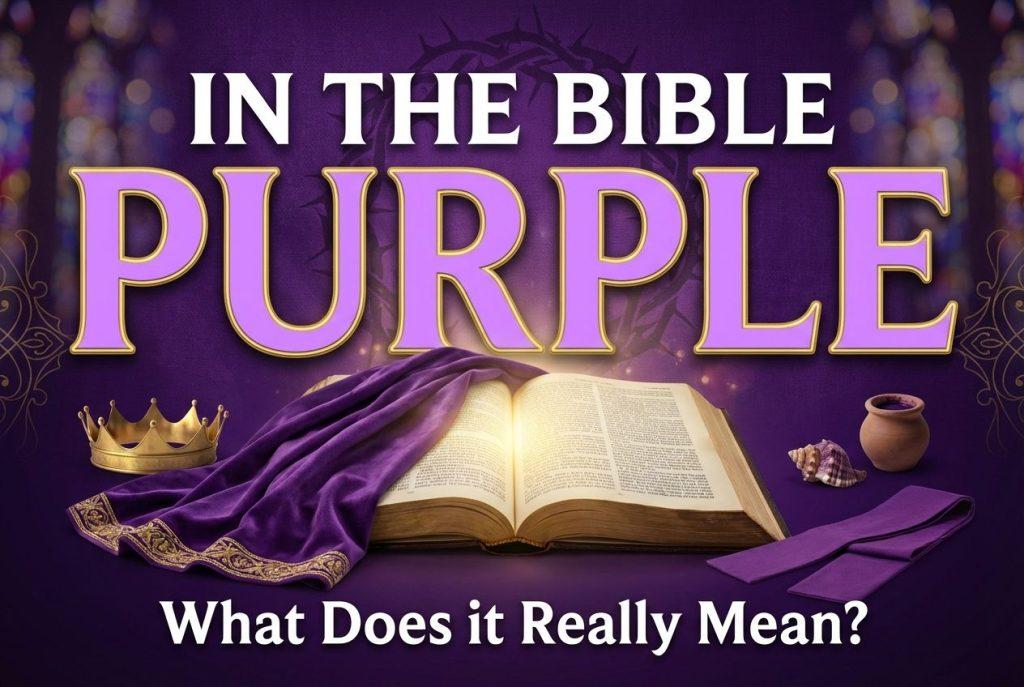
- Purple in the Bible represents royalty, wealth, and authority because the dye was extremely expensive and difficult to produce in ancient times.
- The color appears throughout Scripture in contexts related to kingship, priestly garments, and divine worship in the tabernacle and temple.
- During the Passion, Roman soldiers mockingly dressed Jesus in a purple robe to ridicule His claim to kingship, unknowingly affirming His true identity as King.
- In Catholic liturgy, purple vestments are worn during Advent and Lent to symbolize penance, preparation, and spiritual transformation.
- The production of purple dye from Mediterranean sea snails was so labor-intensive that only the wealthy and powerful could afford garments of this color.
- Biblical figures who wore purple included kings, queens, wealthy merchants, and high priests, signifying their elevated social or spiritual status.
The Ancient Production and Value of Purple Dye
The production of purple dye in biblical times was an extraordinarily complex and costly process that explains why this color became associated with royalty and wealth throughout Scripture. Ancient peoples extracted the dye from several species of sea snails, particularly the murex brandaris, found along the Mediterranean coast. Workers had to collect thousands of these mollusks to produce even a small amount of dye. The snails secreted a mucus that, when exposed to sunlight and air, underwent a chemical transformation to produce the rich purple color known as Tyrian purple. This laborious extraction process required specialized knowledge and enormous amounts of raw materials. A single gram of pure purple dye might require the harvesting of nearly ten thousand snails. The time investment alone made the dye prohibitively expensive for ordinary people. The Phoenicians, particularly those from the coastal city of Tyre, became famous throughout the ancient world for their mastery of this dyeing technique. Archaeological evidence confirms that large-scale purple dye production facilities operated in Tyre and other coastal cities during biblical times. The economic value of this industry was so great that entire communities depended on the trade in purple-dyed fabrics. Because only the extremely wealthy could afford such garments, purple became a visual marker of social status, political power, and economic success. This historical context helps explain why Scripture consistently associates purple with kings, nobles, and persons of high rank.
Purple in the Old Testament: Royal and Priestly Significance
The color purple appears frequently in the Old Testament, where it consistently signifies dignity, authority, and sacred purpose. When God gave Moses detailed instructions for constructing the tabernacle, purple was one of the specified colors for the sacred furnishings and priestly vestments. In Exodus 25:4, God commanded the Israelites to bring offerings including blue, purple, and scarlet yarn for the construction of His dwelling place among them. These colors appeared in the curtains that separated the Holy Place from the Most Holy Place, in the veil of the temple, and in numerous other textile elements of the tabernacle. The recurring combination of blue, purple, and scarlet in these sacred contexts created a visual representation of divine majesty and holiness. The high priest’s ephod, described in Exodus 28:5-6, featured gold, blue, purple, and scarlet yarn woven together with fine linen. This elaborate garment symbolized the priest’s role as mediator between God and humanity, and the purple thread represented the royal dignity of serving in God’s presence. The inclusion of purple in these sacred vestments elevated the priestly office and reminded the people that those who served at the altar were set apart for holy purposes. Beyond religious contexts, purple appears in Scripture as a marker of earthly royalty and political power. In Judges 8:26, the defeated Midianite kings wore purple robes, identifying them as rulers of their people. Similarly, in Esther 8:15, when Mordecai received honor from King Ahasuerus, he departed from the royal presence wearing blue and white royal garments with a large gold crown and a purple robe of fine linen. These passages demonstrate that purple clothing functioned as a universal symbol of authority in the ancient Near East. The virtuous woman described in Proverbs 31:22 makes tapestry for herself and wears clothing of fine linen and purple, indicating not only her industry and skill but also the prosperity and honor of her household.
Purple as a Symbol of Wealth and Prosperity
Scripture presents purple as a clear indicator of material wealth and economic prosperity throughout both testaments. The expensive nature of purple dye meant that wearing purple garments immediately identified someone as belonging to the upper echelons of society. In the parable of the rich man and Lazarus, found in Luke 16:19, Jesus describes the wealthy man as being “clothed in purple and fine linen and living in luxury every day.” This detail was not incidental to the story but served to establish the extreme contrast between the rich man’s opulent lifestyle and the desperate poverty of Lazarus at his gate. The purple garments symbolized not merely wealth but a life devoted to comfort and self-indulgence without concern for those in need. This parable uses purple as shorthand for excessive materialism and the spiritual dangers that accompany great wealth. The book of Revelation employs similar imagery when describing the great prostitute Babylon, clothed in purple and scarlet and adorned with gold, precious stones, and pearls. In Revelation 17:4, these luxurious garments represent the seductive power of wealth and worldly splendor that can turn hearts away from God. The prophetic literature of the Old Testament also mentions purple in contexts of trade and commerce. Ezekiel 27:7 describes the trading activities of ancient Tyre, noting that blue and purple fabrics from the coasts of Elishah served as coverings for the great merchant city. These references indicate that purple textiles were valuable commodities in international trade, sought after by the wealthy across different cultures and kingdoms. The economic realities behind purple production created a social system where color itself became a marker of class distinction. Those who could afford purple demonstrated their elevated status, while the vast majority of people wore garments of undyed wool or less expensive natural colors. This social context helps modern readers understand why biblical writers used purple as a symbol of wealth that could be either legitimate prosperity or dangerous excess.
Lydia: The Dealer in Purple Cloth
One of the most significant individuals associated with purple in the New Testament is Lydia of Thyatira, whose story appears in Acts 16:14-15. Luke identifies her as “a dealer in purple cloth” who worshiped God and listened to Paul’s teaching in Philippi. Lydia’s occupation reveals important details about her social and economic status. As a merchant dealing in luxury textiles, she would have been a woman of considerable means and business acumen. The city of Thyatira, her hometown, was renowned throughout the Roman Empire for producing high-quality purple dye and fabrics. The dyeing industry there used a different process than the Tyrian method, employing the roots of the madder plant to create a reddish-purple color that was slightly less expensive but still luxury goods. Lydia’s position as a trader in these valuable textiles indicates she operated a successful business, unusual for a woman in the first century. She apparently had sufficient resources to own a home large enough to host Paul and his missionary companions, and she possessed the social standing to offer such hospitality. Her occupation connected her to networks of wealthy clients and gave her access to resources that most early Christians lacked. When the Lord opened Lydia’s heart to respond to Paul’s message, she immediately demonstrated her faith through action, insisting that Paul’s group stay at her house. This act of hospitality was not merely generous but strategic, as her home became a base of operations for the early church in Philippi. Lydia represents the way God used people from various economic backgrounds, including the wealthy, to advance the Gospel. Her trade in purple cloth, far from being an obstacle to faith, became an asset to the early Christian community.
The Purple Robe of Mockery
Perhaps the most significant appearance of purple in the New Testament occurs during the Passion of Christ, when Roman soldiers dressed Jesus in a purple robe as part of their cruel mockery. The Gospel accounts describe this scene with vivid detail, though with some variations that actually enrich our understanding of the event. Mark 15:17 states that the soldiers “clothed him in a purple cloak, and twisting together a crown of thorns, they put it on him.” John 19:2 similarly describes how the soldiers “wove a crown of thorns and put it on his head and arrayed him in a purple robe.” Matthew’s account uses the word “scarlet” rather than purple, but scholars understand this as describing the same garment, since the Greek words for these colors were sometimes used interchangeably to describe reddish-purple hues. The soldiers’ actions constituted a theatrical performance of mock homage. By dressing Jesus in purple, they were mimicking the robes worn by kings and emperors, transforming this royal color into an instrument of humiliation. They combined the purple robe with a crown made of painful thorns and a reed placed in his hand as a mock scepter. Then they knelt before him, striking him and saying “Hail, King of the Jews!” in savage parody of royal acclamation. The soldiers meant this display to ridicule Jesus’s claims and diminish his dignity. Yet in the mysterious providence of God, their mockery proclaimed truth. Jesus was indeed a king, though not the kind of king they understood. The purple robe, intended to humiliate, actually testified to his royal identity. Catholic theology has long recognized the profound irony of this scene. The soldiers unknowingly dressed Jesus in the very symbol of the kingship they sought to deny. His crown was thorns rather than gold, his throne a cross rather than an ornate seat, and his kingdom not of this world. The purple robe of mockery became, in God’s plan, a sign of the true King who would reign through suffering and sacrifice.
Purple in Catholic Liturgy and Tradition
The Catholic Church has incorporated purple into its liturgical life with deep theological significance, building on the biblical associations of this color while adding layers of spiritual meaning related to penance and preparation. The General Instruction of the Roman Missal specifies that violet, the liturgical term for purple, should be used during the seasons of Advent and Lent. These two preparatory seasons share certain characteristics despite their different focuses; both call the faithful to deeper conversion, prayer, and spiritual discipline. During Advent, purple vestments remind Catholics of the dual nature of this season. The Church prepares to celebrate the historical coming of Christ at Christmas while also maintaining vigilant expectation of his second coming at the end of time. The purple worn during Advent conveys the seriousness of this preparation without the full penitential character of Lent. The color reminds the faithful that waiting for the Lord requires spiritual readiness and moral transformation. Some traditions distinguish between the purple of Advent and the purple of Lent, with Advent using a slightly more blue-toned violet to represent hopeful expectation. The Lenten use of purple carries stronger associations with penance, repentance, and spiritual discipline. For forty days, purple dominates the church’s visual environment as Catholics enter into Christ’s passion through fasting, almsgiving, and prayer. The purple vestments worn by priests at Mass, the purple cloths that may cover statues and crucifixes, and the purple stoles used for the Sacrament of Reconciliation all reinforce the penitential nature of the season. This consistent visual language helps the faithful internalize the spiritual reality that Lent represents. Purple in this context does not primarily signify royalty or wealth but rather the humility required for authentic repentance and the mourning appropriate to recognizing one’s sins.
The Penitential Character of Liturgical Purple
The adoption of purple as the color of penance in Catholic liturgy reflects both practical and theological considerations that developed over centuries of Christian worship. In earlier periods of church history, the penitential seasons were marked by simpler, less ornate vestments rather than specifically colored ones. As liturgical practices became more standardized, particular colors came to be associated with different seasons and celebrations. Purple emerged as the penitential color partly because it occupied a middle ground between the festive brightness of white and gold and the somber darkness of black. The color itself suggests a kind of subdued dignity, appropriate for seasons that call for serious reflection without complete mourning. The symbolic connection between purple and penance also draws on the royal associations of the color. When Catholics wear purple during Advent and Lent, they acknowledge Christ as King while recognizing their own need for conversion and transformation. The purple vestments remind the faithful that they approach a royal presence, not with presumption but with humility and repentance. This theological nuance distinguishes the Christian understanding of purple from its purely secular associations with earthly power and wealth. In the liturgical context, purple becomes a color of paradox. It retains echoes of royalty and majesty while simultaneously expressing humility and penitential sorrow. This dual significance makes purple particularly appropriate for seasons that prepare Christians to encounter the King who reigned from a cross. The General Instruction of the Roman Missal also permits purple vestments for funeral Masses, though white has become more common in many places. When purple is used for funerals, it expresses the Church’s prayer for the deceased person’s purification and entry into eternal life. This usage connects the penitential character of purple with hope in God’s mercy and the resurrection of the dead.
Theological Significance: From Old Testament to New
The theological trajectory of purple throughout Scripture reveals how God transforms symbols and invests them with deeper meaning through salvation history. In the Old Testament, purple functioned primarily as a marker of earthly power, sacred duty, and material prosperity. Kings wore purple to display their authority, priests incorporated purple into their vestments as part of their sacred ministry, and wealthy individuals wore purple to demonstrate their social status. These uses of purple reflected the legitimate ordering of society and the special dignity of those set apart for service to God. Yet Scripture also contains warnings about the spiritual dangers of excessive attachment to material symbols of status, including expensive purple garments. The New Testament maintains the royal associations of purple while adding crucial new dimensions through the person of Christ. The mockery scene at the Passion represents the climax of this theological development. Roman soldiers dressed Jesus in purple to ridicule his claim to kingship, but their actions paradoxically revealed the truth they sought to deny. Jesus was indeed a king, but his kingship operated according to completely different principles than earthly monarchies. He wore the purple robe of mockery on the way to a throne of suffering. This transformation of purple from a symbol of worldly power to an instrument of divine revelation demonstrates how Christ reinterprets all human symbols and institutions. The purple robe that should have signified earthly glory became instead a sign of humble service and sacrificial love. Early Christians would have understood this reversal as characteristic of the Gospel message. God chose to reveal his glory not through conventional displays of power but through the scandal of the cross. The purple-robed Christ subverted expectations about kingship and forced believers to reconsider what true authority means. This theological insight continues to shape Catholic spirituality and liturgical practice. When the Church uses purple during Advent and Lent, it participates in this biblical transformation of meaning. The color connects contemporary believers to the whole sweep of salvation history, from the tabernacle hangings to the Passion scene to the present moment of spiritual preparation.
Purple in Wisdom Literature and Prophetic Books
The wisdom and prophetic literature of the Old Testament contains additional references to purple that enrich our understanding of this color’s symbolic range. The Song of Solomon, a poetic celebration of love and beauty, mentions purple in contexts that emphasize luxury and aesthetic splendor. In Song of Solomon 3:10, the palanquin made for King Solomon has posts of silver, a base of gold, a seat of purple, and an interior inlaid with love by the daughters of Jerusalem. This lavish description uses purple as part of an overall impression of magnificence and careful craftsmanship. Later in Song of Solomon 7:5, the beloved’s hair is compared to purple. These poetic uses of purple celebrate the goodness of creation and the appropriate enjoyment of beauty. They demonstrate that Scripture does not condemn wealth or fine things in themselves, but only the misuse of material blessings and the elevation of possessions above love of God and neighbor. The prophetic books employ purple in more critical contexts, often as part of oracles against nations that trusted in their wealth rather than seeking justice. When prophets describe the opulent garments and luxurious lifestyles of the wealthy, purple frequently appears in these catalogs of excess. Yet the prophetic critique targets not the color itself but the attitudes and behaviors associated with the accumulation of wealth. Purple garments become problematic when they represent exploitation of the poor, injustice in the marketplace, or the false security that comes from trusting in material possessions. These prophetic passages provide balance to the positive associations of purple found elsewhere in Scripture. They remind readers that external symbols of status mean nothing without interior righteousness and justice. A purple robe cannot cover a corrupt heart or substitute for genuine devotion to God. This prophetic warning remains relevant for contemporary Christians who must continually examine their relationship with material goods and social status.
Purple and the Tabernacle Worship
The detailed instructions for tabernacle construction in the book of Exodus reveal how seriously God took the visual and material aspects of worship in ancient Israel. Purple thread appears repeatedly in these instructions, woven together with blue and scarlet yarn to create the sacred textiles that would define the space where God met with his people. In Exodus 26:1, God commands that the tabernacle curtains be made of fine twisted linen with blue, purple, and scarlet yarn, with cherubim skillfully worked into them. These curtains separated the Holy Place from the outer court and created an atmosphere of beauty and reverence. The combination of colors was not arbitrary but carefully chosen to convey theological truths through visual means. Blue suggested the heavens and transcendence, scarlet represented sacrifice and atonement through blood, and purple indicated royalty and the dignified majesty of God’s presence. The inner veil that separated the Holy Place from the Most Holy Place, described in Exodus 26:31, also featured this same color combination. This veil was not merely decorative but served a crucial theological function, marking the boundary between the ordinary realm and the space where God’s presence dwelt most intensely. Only the high priest could pass through this veil, and only on the Day of Atonement after careful purification. The purple in this veil thus participated in the sacred mystery of access to God’s presence. When the Gospel writers record that this veil was torn in two at the moment of Jesus’s death on the cross, as in Matthew 27:51, they signal a radical transformation in humanity’s access to God. The purple-threaded barrier that once separated now gives way to direct access through Christ’s sacrifice. The priestly garments also incorporated purple in significant ways. The ephod, the breastpiece of judgment, and other elements of the high priest’s vestments all included purple thread as part of their elaborate construction. These garments transformed an ordinary man into a sacred figure who could approach God on behalf of the people.
Purple in the Early Church and Martyrdom
The early Christian community inherited the biblical symbolism of purple but began to develop new associations as the Church grew and defined itself over against both Jewish and pagan cultures. Christian writers of the first few centuries occasionally mentioned purple in their works, usually maintaining the traditional connection to royalty while adding specifically Christian interpretations. Some early Christian texts draw parallels between the purple robe placed on Jesus and the imperial purple worn by Roman emperors, suggesting that Christ’s mockery and suffering revealed the emptiness of earthly power. Christian martyrs during the Roman persecutions sometimes wore purple garments, either because they happened to be wealthy individuals before their conversion or because they were deliberately clothed in fine garments before their execution as an ironic commentary on their faith. The martyr accounts preserved by the early Church occasionally mention these details, and later generations of Christians recognized in them echoes of Christ’s own Passion. A Christian martyr wearing purple while being led to execution embodied the paradox of the Gospel that strength comes through weakness and victory through apparent defeat. As Christianity became more established and eventually the official religion of the Roman Empire, the use of purple in Christian contexts became more complex. Bishops and other high church officials sometimes wore purple, adopting the color that had been associated with imperial authority but now redirecting it toward spiritual leadership. This appropriation of imperial symbols was not without controversy, and some Christians worried that the Church was becoming too comfortable with worldly power. Yet others argued that using purple and other symbols of authority appropriately acknowledged the dignity of the Church and its leaders while pointing beyond earthly status to divine realities. The tension between these perspectives has continued throughout church history. Catholic tradition has generally allowed the use of purple and other rich materials in liturgical contexts while maintaining that the outward symbols must always serve spiritual purposes rather than mere display.
Contemporary Liturgical Practice and Purple
Modern Catholic liturgical practice maintains the traditional use of purple while also recognizing variations in custom and legitimate diversity within the Church’s universal tradition. The reforms following the Second Vatican Council clarified and simplified some aspects of liturgical color usage while preserving the essential symbolism that had developed over centuries. The Roman Missal specifies that violet or purple vestments are appropriate for Advent and Lent, for funeral Masses if desired, and for other occasions with a penitential character. Many parishes and religious communities have multiple sets of purple vestments, some more ornate for Advent and others simpler for Lent, though this distinction is not required. The exact shade of purple can vary considerably, from deep blue-violet to reddish-purple, and the Church recognizes this diversity as acceptable. Some communities prefer a more blue-toned violet for Advent to distinguish it visually from Lent, while others use the same purple for both seasons. Rose-colored vestments may be worn on the Third Sunday of Advent and the Fourth Sunday of Lent, providing a brief visual break in the penitential purple. These rose vestments signal the approaching joy of Christmas or Easter while maintaining the overall character of the preparatory season. The use of purple in contemporary Catholic worship serves multiple functions beyond mere tradition. The color creates visual unity across the liturgical year, helping the faithful recognize the rhythms of the Church’s calendar. When purple vestments appear, even small children can understand that something different is happening in the Church’s prayer. Purple also connects contemporary Catholics to the long history of Christian worship and to the biblical roots of their faith. When a priest vests in purple for Mass during Lent, he participates in a symbolic language that extends back through centuries of Christian practice to the purple-threaded curtains of the ancient tabernacle. This sense of continuity with the past can deepen appreciation for the liturgy and strengthen the bonds that unite Catholics across time and space.
Purple and Personal Spirituality
Beyond its liturgical and biblical significance, purple can serve as a meaningful symbol in personal Catholic spirituality. Many Catholics find that the appearance of purple vestments in church serves as a visual reminder to intensify their prayer life and spiritual discipline during Advent and Lent. The color becomes associated with particular interior dispositions, a willingness to examine one’s conscience more carefully and to acknowledge areas of life that need conversion. Some Catholics incorporate purple into their home prayer spaces during penitential seasons, using purple candles, cloths, or other decorative elements to create an environment conducive to serious reflection. This practice extends the liturgical experience into daily life and helps maintain focus on the spiritual work of preparation. The symbolic richness of purple offers multiple entry points for meditation and contemplation. One might reflect on the purple robe of Christ’s Passion, considering the paradox of a king crowned with thorns and mocked by those he came to save. Such meditation can lead to deeper understanding of Christ’s humility and the nature of true greatness. Alternatively, one might contemplate the purple curtain of the temple, thinking about the barriers between humanity and God that Christ’s sacrifice removed. This line of reflection can increase gratitude for the access to God that Christians enjoy through prayer and the sacraments. The color purple can also prompt examination of one’s own relationship with wealth, status, and material possessions. Since purple historically signified luxury and social standing, encountering this color in a liturgical context might raise questions about whether one values material success too highly or finds false security in possessions rather than in God. These are not comfortable reflections, but they align well with the penitential purpose of the seasons when purple appears in the liturgy. Catholics who engage with purple symbolism in their personal prayer often report that it enriches their experience of the liturgical year and helps them enter more fully into the Church’s rhythms of preparation, celebration, and growth.
Catechetical Applications of Purple Symbolism
The rich biblical and liturgical symbolism of purple provides excellent opportunities for catechesis with Catholics of all ages. Teaching about the meaning of liturgical colors helps the faithful become more aware participants in the Church’s worship rather than passive observers. When catechists explain why purple appears during certain seasons, they open doors to deeper understanding of salvation history and the Church’s spiritual life. For children, purple can be an accessible entry point into liturgical catechesis. Young children naturally notice colors and respond to visual elements of their environment. A simple explanation that purple means “getting ready” for Christmas or Easter gives children a concrete way to understand the flow of the Church year. As children mature, catechists can gradually introduce more complex aspects of purple symbolism, including its biblical associations with royalty and its connection to repentance and conversion. Teaching about Lydia, the dealer in purple cloth, can illustrate how God calls people from all walks of life and uses their particular gifts and circumstances in service of the Gospel. Adult faith formation programs can explore purple symbolism at greater depth, examining the historical production of purple dye, the social significance of purple garments in the ancient world, and the theological development of purple’s meaning through Scripture and tradition. Such catechesis connects liturgical practice to the broader context of salvation history and helps adults appreciate the layers of meaning present in seemingly simple liturgical elements. Explaining the purple robe placed on Jesus during the Passion can lead to profound reflections on the nature of Christ’s kingship and the way God transforms human symbols to reveal divine truth. These catechetical conversations should not remain merely academic but should invite participants to consider how purple symbolism might inform their own spiritual lives. How does understanding the historical value of purple affect one’s appreciation for the dignity of the liturgy? What does it mean to stand before God as both subjects before a king and beloved children of a merciful Father? How can the penitential character of purple deepen one’s practice of Lent or Advent? These questions move from information to transformation, the goal of all effective catechesis.
Purple in Art and Sacred Architecture
Catholic artistic tradition has employed purple throughout centuries of sacred art, architectural design, and liturgical furnishing. Medieval and Renaissance artists used purple pigments, often quite expensive, to depict the robes of royalty, including Christ as King. The famous purple used in manuscript illumination required costly materials and skilled technique. Byzantine mosaics frequently featured purple backgrounds or garments on important figures, using the color to convey spiritual authority and sacred status. Stained glass windows in Gothic cathedrals often included purple glass among their palettes, and when light passed through these windows, it cast purple hues across the interior spaces, creating an atmosphere of reverent beauty. The use of purple in church architecture extends beyond windows to include textile arts. Altar frontals, banners, vestments, and other fabric elements have featured purple throughout Christian history. Many historic churches possess elaborate sets of purple vestments embroidered with gold thread and decorated with sacred symbols. These beautiful objects served not merely decorative purposes but teaching functions as well. In ages when many Catholics could not read, the visual language of art and color communicated theological truths and helped the faithful enter into the mysteries celebrated in the liturgy. Contemporary church design and sacred art continue to engage with purple, though modern aesthetics sometimes favor simpler approaches than the elaborate ornamentation of earlier periods. Some contemporary Catholic churches use fields of purple color in abstract ways, creating visual environments that support prayer without necessarily including representational imagery. Textile artists create modern vestments and liturgical hangings that honor tradition while incorporating contemporary design sensibilities. The continuing use of purple in Catholic sacred art maintains connections to historical practice while allowing for creative expression that speaks to contemporary sensibilities. Whether in traditional or modern forms, purple in sacred art serves to elevate the mind and heart toward God, to mark sacred time and space, and to participate in the rich symbolic language that the Church has developed over two millennia. The careful use of color in churches recognizes that humans are embodied creatures who encounter spiritual realities through material means. Purple pigments, fabrics, and glass become vehicles for encountering the sacred, reminding believers that God works through creation to reveal himself and draw people into relationship with him.
Interpreting Purple in Revelation
The book of Revelation presents challenging images that include multiple references to purple, requiring careful interpretation to understand their theological significance. Unlike the generally positive or neutral uses of purple in most biblical texts, Revelation employs the color as part of its description of “Babylon the great,” the symbolic representation of worldly power opposed to God. In Revelation 17:4, the great prostitute is “arrayed in purple and scarlet, and adorned with gold and jewels and pearls.” Later, in Revelation 18:12-16, merchants of the earth mourn because no one buys their cargo anymore, including “fine linen, purple, silk, and scarlet.” The purple in these passages represents seductive luxury and the corrupting influence of wealth divorced from righteousness. Revelation’s use of purple does not contradict the positive associations of the color found elsewhere in Scripture but rather illustrates how good things can be perverted when directed toward evil ends. The purple garments of Babylon symbolize the attractiveness of worldly power and material success that can tempt believers away from faithful discipleship. The apocalyptic imagery warns against being seduced by external splendor that masks spiritual corruption. This critical use of purple in Revelation has influenced Christian interpretation of wealth and luxury throughout church history. Many saints and spiritual writers have reflected on the dangers of attachment to material goods, using Revelation’s imagery as a starting point for examining their own hearts. The purple-clad prostitute represents the opposite of the Church, the Bride of Christ, who is to be clothed in fine linen, bright and pure, representing the righteous deeds of the saints. This contrast illustrates that external symbols like purple garments take their meaning from what they represent and whom they serve. Purple itself remains neutral; it can signify legitimate authority and sacred dignity, or it can represent dangerous attachment to worldly values. The key lies in discerning the proper use of material goods and symbols. Catholics reading Revelation today should recognize that its warnings about purple-clad Babylon remain relevant in a world that often equates success with wealth and encourages pursuit of luxury for its own sake. The book calls believers to examine whether they are being seduced by contemporary versions of Babylon’s purple finery, forgetting that true treasure consists in relationship with God and faithfulness to the Gospel.
Conclusion: The Transformation of Purple
The biblical and liturgical journey of purple reveals how God takes human symbols and transforms them through salvation history. What began as merely an expensive dye produced from sea snails became a marker of royalty, then a priestly adornment, then an instrument of mockery that paradoxically proclaimed truth, and finally a liturgical color that invites believers into deeper conversion. This transformation illustrates a fundamental principle of Catholic theology, that grace does not destroy nature but perfects it. Purple as a color exists in the natural world and human culture. Different societies have assigned various meanings to this color based on practical factors like production difficulty and historical associations. God did not reject these human meanings but incorporated them into the biblical narrative, allowing purple to carry theological significance while retaining its natural and cultural dimensions. The purple robe placed on Jesus during his Passion represents the culmination of this process. Roman soldiers used purple to mock him, drawing on the universal understanding that purple signified kingship. Yet their mockery became proclamation, their cruelty became revelation. The purple-robed Christ embodied the paradox at the heart of the Gospel: that the King of kings reigns from a cross, that true greatness consists in humble service, and that death becomes the pathway to life. When Catholics encounter purple in the liturgy today, they participate in this rich heritage. The purple vestments of Advent and Lent connect contemporary believers to ancient tabernacle worship, to Christ’s Passion, to centuries of Christian practice, and to the ongoing work of conversion that remains central to Christian life. Purple invites examination of conscience, preparation for encounter with the Lord, and recognition that true royalty consists not in worldly power but in conformity to Christ. This color, drawn from the depths of the sea, transformed through human labor, and invested with divine meaning through Scripture and tradition, continues to serve the Church’s mission of drawing people into relationship with God. Understanding what purple really means in the Bible and Catholic tradition enriches participation in worship, deepens appreciation for Scripture, and provides resources for personal spiritual growth. The next time purple vestments appear in church, the faithful can recognize in them layers of meaning that stretch from the ancient tabernacle to the present moment, all pointing toward the King who wore purple as he carried his cross.
Disclaimer: This article presents Catholic teaching for educational purposes. For official Church teaching, consult the Catechism and magisterial documents. For personal spiritual guidance, consult your parish priest or spiritual director. Questions? Contact editor@catholicshare.com
Sign up for our Exclusive Newsletter
- 📌 Add CatholicShare as a Preferred Source on Google
- 🎁 Join us on Patreon for Premium Content
- 🎧 Check Out These Catholic Audiobooks
- 📿 Get Your FREE Rosary Book
- 📱 Follow Us on Flipboard
-

Recommended Catholic Books
Discover hidden wisdom in Catholic books — invaluable guides enriching faith and satisfying curiosity. #CommissionsEarned
- The Early Church Was the Catholic Church
- The Case for Catholicism - Answers to Classic and Contemporary Protestant Objections
- Meeting the Protestant Challenge: How to Answer 50 Biblical Objections to Catholic Beliefs
As an Amazon Associate, I earn from qualifying purchases. Thank you for your support.