
Brief Overview
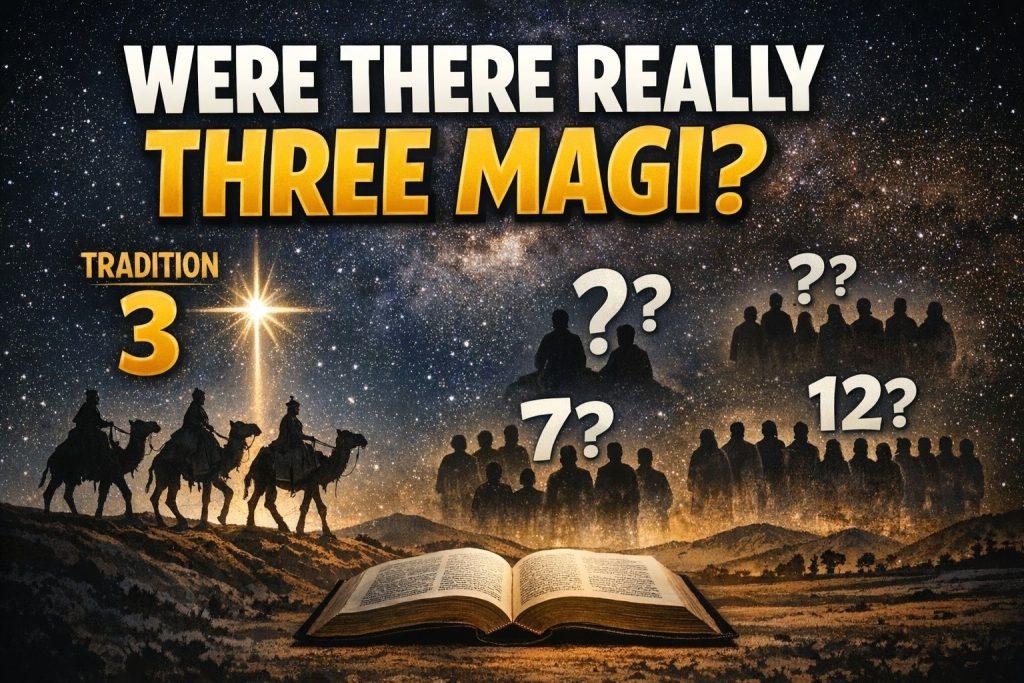
- The Gospel of Matthew mentions “wise men from the East” who came to worship the infant Jesus, but it does not specify how many there were.
- The tradition of three Magi developed because Matthew’s Gospel records three gifts: gold, frankincense, and myrrh.
- Early Christian writers offered varying numbers, with some suggesting two, others twelve, and still others an unspecified multitude.
- By the sixth century, Western Christianity had settled on three Magi, giving them the names Caspar, Melchior, and Balthasar.
- The Magi’s visit carries deep theological significance, showing that Jesus came as Savior for all nations, not just the Jewish people.
- Understanding the historical context and biblical account helps Catholics appreciate both the mystery and the meaning of these mysterious visitors.
The Biblical Account
The only Gospel that mentions the Magi is Matthew’s Gospel, and the passage is surprisingly brief given how much tradition has grown around it. Matthew writes that “wise men from the East” came to Jerusalem asking where they could find the newborn king of the Jews (Matthew 2:1-2). These visitors had seen his star and wanted to worship him. King Herod, troubled by news of a rival king, gathered the chief priests and scribes to ask where the Messiah would be born. They told him Bethlehem, based on the prophecy in Micah 5:2. Herod sent the Magi to Bethlehem, asking them to report back so he could worship the child too, though his real intention was murder. The star led the Magi to the house where Jesus was, and they presented their gifts and worshiped him. After being warned in a dream not to return to Herod, they went home by another route.
The Greek word Matthew uses is “magoi,” which referred to learned men, possibly priests or astrologers from Persia or Babylon. In ancient times, these men studied the stars and were considered wise in matters of religion and natural philosophy. The term did not necessarily mean they practiced magic in the negative sense we might think of today. Rather, they were scholars who interpreted signs in the heavens. Their journey from the East suggests they came from the region of ancient Persia, modern-day Iran, or possibly from Arabia or Mesopotamia. The distance would have been substantial, requiring months of travel by camel or horse. Matthew does not tell us how many there were, what they looked like, or even their names. He focuses instead on their purpose: to worship the newborn king. Their arrival after Jesus’ birth shows that God’s revelation reaches beyond Israel to the Gentile world. The Magi represent all nations coming to acknowledge Christ.
The Origin of the Number Three
The tradition that there were three Magi arose primarily because Matthew mentions three gifts: gold, frankincense, and myrrh (Matthew 2:11). Early Christians reasoned that each visitor brought one gift, leading to the assumption of three people. This interpretation became widespread in Western Christianity, though it was never the only view. Some Eastern Christian traditions maintained different numbers, and early Christian art sometimes depicted two, four, or even more figures. The connection between three gifts and three givers seemed logical and symbolic, fitting with other biblical patterns of three. However, the biblical text itself never makes this connection explicit. Matthew could just as easily have meant that a larger group brought these three types of gifts collectively. The focus in Scripture is on the gifts themselves and what they represent, not on counting the visitors.
The three gifts each carry symbolic meaning that enriches our understanding of who Jesus is. Gold was a gift fit for a king, recognizing Jesus’ royal authority and messianic identity. Frankincense was used in temple worship and priestly ceremonies, pointing to Jesus’ role as our high priest and his divine nature. Myrrh was used for anointing and burial preparation, foreshadowing Jesus’ suffering and death. Each gift tells part of the story of salvation: Jesus is king, priest, and sacrifice. The Magi, guided by God, brought gifts that proclaimed theological truths about the child they came to worship. Whether three people or more brought these gifts, the symbolism remains powerful and instructive. Catholic tradition has embraced the three-gift, three-person interpretation as a way to remember and teach these meanings. The Catechism speaks of the Magi as representing the Gentile nations coming to acknowledge Christ (CCC 528).
Early Christian Sources and Variations
Early Christian writers did not agree on the number of Magi who visited Jesus. The earliest Christian art and writings show considerable variation in how many visitors came to Bethlehem. Some early frescoes in the Roman catacombs depict two Magi, while others show four or more. The Syrian Christian tradition suggested twelve Magi, possibly connecting them to the twelve tribes of Israel or the twelve apostles. An early Christian document called the “Excerpta Latina Barbari” from the eighth century mentions twelve Persian Magi. Armenian tradition also sometimes lists twelve names for these visitors. Other sources left the number vague, simply referring to “Magi” without specifying a count. This diversity shows that the early Church did not consider the exact number a matter of doctrine or essential belief.
Church Fathers commented on the Magi but often focused on their spiritual significance rather than their number. Origen, writing in the third century, suggested there were three based on the three gifts. John Chrysostom, in the fourth century, also spoke of them but did not definitively state their number. Augustine mentioned them in his writings but concentrated on what their visit meant for salvation history. The Latin tradition gradually settled on three, while Eastern traditions maintained more flexibility. By the medieval period in the West, the three Magi had become standard in art, liturgy, and popular devotion. Their names—Caspar, Melchior, and Balthasar—appear in Western sources from the sixth century onward. These names are not biblical and represent pious tradition rather than historical fact. The Church has never required Catholics to believe there were exactly three Magi; this remains a matter of tradition and reasonable interpretation.
The Names and Later Traditions
The names Caspar (or Gaspar), Melchior, and Balthasar for the three Magi first appear in Western sources around the sixth century. These names are not found in Scripture and developed through Christian tradition and piety. An early Greek manuscript called the “Excerpta Latina Barbari” from around the eighth century mentions these names, though earlier references may have existed. Medieval Christian tradition gave each Magus specific characteristics and assigned them different ages and geographical origins. Caspar was often depicted as a young man, Melchior as middle-aged, and Balthasar as elderly. Some traditions described Balthasar as having dark skin, representing Africa. This variation in age and appearance was meant to show that Christ came for all people, young and old, from every continent and race. The tradition emphasized the universal reach of the Gospel message.
Legends about the Magi grew throughout the Middle Ages, including stories about their later lives and eventual martyrdom. According to some traditions, the Apostle Thomas encountered them years later and baptized them, making them Christian bishops. Another legend says they were martyred for their faith and buried together. In the twelfth century, relics claimed to be the remains of the three Magi were moved to Cologne Cathedral in Germany, where they remain a site of pilgrimage today. While these stories are pious traditions rather than verified history, they show the deep devotion Christians felt toward these mysterious figures. The Magi’s feast day, celebrated as Epiphany on January 6, marks the manifestation of Christ to the Gentiles. This solemnity ranks among the most important feasts in the Catholic liturgical calendar, highlighting the theological importance of the Magi’s visit. Their story teaches us that God’s saving plan extends to every person, regardless of nationality or background.
Theological Significance
The visit of the Magi carries profound theological meaning that goes beyond questions about their exact number. These foreign scholars represent the Gentile world coming to worship the Jewish Messiah, fulfilling Old Testament prophecies about all nations coming to God’s light. Isaiah prophesied that nations would come to the brightness of God’s rising, and kings would come to his light (Isaiah 60:3). The Magi fulfill this prophecy, traveling far to see the newborn king. Their arrival shows that Jesus came not only for Israel but for all humanity. The Catechism teaches that the Magi represent the Gentile nations and that their coming signifies that pagans can know God through his creation (CCC 528). God revealed himself to these non-Jewish seekers through the star, showing his desire for all people to know him.
The contrast between the Magi and Herod illustrates different responses to Christ. The Magi traveled a great distance, overcame obstacles, and humbled themselves to worship a child in a simple house. Herod, who lived nearby and had all the religious knowledge of the Jewish scribes at his disposal, rejected Christ and tried to kill him. The religious leaders in Jerusalem knew where the Messiah would be born but did not go to worship him themselves. They had the Scriptures but lacked the faith and humility of the foreign visitors. This pattern repeats throughout salvation history: sometimes those far from God respond more readily to his grace than those who seem close. The Magi’s faith and persistence challenge us to examine our own response to Christ. Their willingness to follow God’s leading, even when it took them far from home and into unfamiliar territory, models the commitment required of all believers. Whether there were three or more, their collective example teaches us about seeking God with our whole heart.
The Star of Bethlehem
The star that guided the Magi has fascinated Christians and scholars for centuries, generating many theories about its nature. Some have suggested it was a conjunction of planets, which would have appeared as an unusually bright light in the sky. Jupiter and Saturn came close together multiple times in 7-6 BC, which falls within the likely timeframe for Jesus’ birth. Others have proposed a comet, a supernova, or another astronomical event. Some scholars suggest the star was a miraculous sign rather than a natural phenomenon, since Matthew describes it as moving and stopping over a specific house. The text says the star “went before them” and “stood over where the young child was” (Matthew 2:9). This description suggests something beyond ordinary stellar movement. Whether natural or miraculous, the star served God’s purpose in bringing the Magi to Jesus.
The star’s significance lies not in its scientific explanation but in its theological meaning. God used the created world to reveal his Son to seekers from distant lands. The Magi studied the heavens as part of their vocation, and God spoke to them through what they understood. This shows God’s willingness to meet people where they are and use their knowledge and experience to lead them to truth. The star was a form of general revelation—God making himself known through creation—that led to the specific revelation of Jesus Christ. Once the Magi reached Jerusalem, they needed more than the star; they needed Scripture to know exactly where to go. The scribes told them about the prophecy in Micah 5:2 pointing to Bethlehem. This combination of natural sign and scriptural guidance shows how God uses multiple means to draw people to himself. The Church teaches that God can be known through creation and through divine revelation in Scripture and Tradition (CCC 31-35).
Historical Context of the Magi
Understanding who the Magi were in their historical context helps us appreciate the significance of their visit. In the ancient Near East, Magi were members of a priestly class in Persia, associated with Zoroastrianism. They studied astronomy, interpreted dreams, and advised kings on religious and political matters. These learned men had high social status and traveled with considerable resources and retinues. By the time of Jesus’ birth, Jewish communities had existed in Persia and Mesopotamia for centuries, since the Babylonian exile. The Magi would likely have encountered Jewish ideas about a coming Messiah through these diaspora communities. Some scholars suggest they may have known about Balaam’s prophecy in Numbers 24:17 about a star rising from Jacob. This would explain why they connected a celestial sign with the birth of a Jewish king.
The journey from Persia or Arabia to Jerusalem would have been dangerous and difficult, taking several months. The Magi would have traveled with guards, servants, and supplies, forming a substantial caravan. Their arrival in Jerusalem asking about a newborn king would have caused quite a stir, which explains why “all Jerusalem” was troubled along with Herod (Matthew 2:3). The city’s residents knew that Herod was paranoid about rivals and would react violently to any threat to his throne. The Magi’s question put everyone in an uncomfortable position. When they finally found Jesus, he was no longer a newborn in a manger but a young child in a house (Matthew 2:11). Some time had passed since the birth, perhaps as much as two years, based on Herod’s later order to kill male children two years old and under (Matthew 2:16). This timeline suggests the Magi’s journey took many months, not the brief span sometimes depicted in Christmas pageants.
Symbolism in Christian Art and Liturgy
Christian art throughout history has depicted the Magi in ways that emphasize their theological significance. Early Christian frescoes in the catacombs sometimes show two or four Magi, while later medieval and Renaissance art typically shows three. Artists often portrayed them wearing exotic clothing and crowns, emphasizing their dignity and foreign origin. The inclusion of different ages and races in their depiction stressed the universal call to worship Christ. Byzantine mosaics, Western paintings, and Eastern icons all include the Magi in their artistic programs. The scene of their adoration became one of the most frequently depicted episodes from Christ’s infancy. Artists used the Magi to teach theological truths about Christ’s identity and mission. The gifts they brought were prominently displayed, reminding viewers of Jesus’ kingship, priesthood, and sacrificial death.
In Catholic liturgy, the Magi’s visit is celebrated on the Solemnity of the Epiphany, a major feast day. The word “epiphany” means manifestation or showing forth. This feast celebrates Christ’s manifestation to the Gentiles, represented by the Magi. In many countries, Epiphany is celebrated with special traditions, including the blessing of homes with chalk marked with the initials of the three traditional names. The formula “20+C+M+B+25” (for example) represents both the year and “Christus Mansionem Benedicat” (Christ bless this house), while also referencing Caspar, Melchior, and Balthasar. The liturgy for Epiphany includes readings that emphasize light coming to the nations and God’s glory being revealed to all peoples (Isaiah 60:1-6, Ephesians 3:2-6). The feast reminds Catholics that the Gospel is meant for everyone, not just a select group. The Church’s missionary nature flows from this truth.
Scripture and Tradition
The Catholic Church teaches that divine revelation comes to us through both Sacred Scripture and Sacred Tradition (CCC 80-83). The biblical account of the Magi in Matthew provides the essential facts: wise men from the East followed a star, brought gifts, worshiped Jesus, and returned home. Tradition has added details like their number, names, and later lives, which help us understand and remember their story. Catholics are not required to believe these traditional details with the same faith we give to Scripture itself. However, Tradition helps us apply scriptural truths to our lives and worship. The three Magi have become part of how the Church tells the story of salvation and celebrates Epiphany. This traditional interpretation, while not divinely revealed, serves a valuable pedagogical and spiritual purpose.
When approaching questions about the Magi, Catholics should distinguish between what Scripture clearly states and what Tradition has added. Scripture tells us there were Magi (plural), they came from the East, they brought three specific gifts, and they worshiped Jesus. Tradition suggests there were three men, gives them names, and provides additional details about their origins and appearance. Both Scripture and Tradition point us to the same truth: Christ came for all nations, and those who seek him in faith will find him. The question of exactly how many Magi there were matters less than what their visit reveals about God’s plan. Whether two, three, twelve, or some other number made the long journey, their purpose was the same. They came to worship the one true King, and in doing so, they became examples for all who would follow Christ. The Church’s liturgy and art have chosen to remember them as three, and this tradition has enriched Catholic worship and devotion for centuries.
Lessons for Modern Catholics
The story of the Magi offers several practical lessons for Catholics today. First, their persistent seeking reminds us to pursue God with determination and faith. They followed a star for months, facing uncertainty and danger, because they believed they would find something precious. Modern Catholics face different obstacles—busy schedules, cultural pressures, doubts, and distractions—but the need for persistent faith remains. The Magi did not give up when the star temporarily disappeared or when they faced Herod’s deception. They kept seeking until they found Jesus. We too must persevere in faith even when God seems distant or the way forward is unclear. Prayer, Mass attendance, and spiritual reading require commitment and effort, just as the Magi’s journey required physical effort and sacrifice. Their example encourages us not to settle for spiritual mediocrity but to keep seeking a deeper relationship with Christ.
Second, the Magi teach us about generous giving. They brought costly gifts—gold, frankincense, and myrrh—and laid them before Jesus. They did not calculate the minimum required or hold back their best treasures. Their generosity reflects the proper response to encountering Christ. Catholics today are called to give generously of their time, talent, and treasure in service of God and neighbor. This means supporting the Church financially, volunteering in ministry, and using our gifts for the common good. It also means giving God our best, not our leftovers. The Magi’s gifts were deliberate and meaningful, chosen to honor the Christ child. Our offerings should likewise be intentional and given with love. Third, the Magi show us the importance of worship. When they found Jesus, they fell down and worshiped him (Matthew 2:11). They recognized his divine dignity and responded with appropriate reverence. Catholic worship in the Mass follows this same pattern of humble adoration before Christ truly present in the Eucharist. The Magi’s prostration before Jesus reminds us to approach God with reverence and awe.
The Magi and Catholic Missions
The Magi’s visit to Jesus has important implications for the Church’s missionary nature and work. As the first Gentile believers, they represent the beginning of the Church’s expansion beyond Israel to all nations. Jesus would later command his disciples to “make disciples of all nations” (Matthew 28:19), and the Magi’s visit foreshadows this universal mission. The Catholic Church sees herself as missionary by nature, called to bring the Gospel to every person and culture (CCC 849-856). The fact that God drew the Magi from a distant land shows his desire for all people to know him. He did not wait for them to stumble upon the truth accidentally but actively revealed himself through signs they could understand. The Church continues this work today, going to those who have not yet heard the Gospel and inviting them to encounter Christ.
The Magi’s story also teaches important lessons about inculturation—bringing the Gospel to different cultures in ways they can understand and embrace. God met the Magi where they were, using astronomical signs that fit their learning and interests. He did not require them to become Jewish first or to understand Hebrew prophecy before seeking Christ. The Church follows this pattern by presenting the Gospel in culturally appropriate ways while maintaining essential truths. Missionaries learn local languages, understand cultural contexts, and find bridges between the Gospel and people’s existing knowledge. At the same time, encountering Christ transformed the Magi. They went home “by another way” (Matthew 2:12), which can be understood both literally and spiritually. Meeting Jesus changed them and the direction of their lives. True evangelization respects culture but also calls people to conversion and transformation in Christ. The Magi model what happens when people from any background genuinely encounter Jesus: they worship him, offer him their best, and return home changed.
Addressing Common Questions
Many Catholics wonder whether the number of Magi matters for their faith. The answer is no; the exact count is not a matter of doctrine or essential belief. What matters is understanding the theological meaning of their visit and applying those lessons to our lives. Whether there were three or more Magi, the truths they teach remain the same. Christ came for all nations, God reveals himself to seekers, faith requires perseverance, and encountering Jesus demands a response of worship and generosity. The Church’s tradition of three Magi serves a purpose in teaching and worship but does not bind anyone’s conscience. Catholics are free to acknowledge the tradition while recognizing that Scripture does not specify the number. This approach respects both biblical authority and the value of Church tradition.
Some also ask about the historicity of the star and whether the story should be read literally. Catholic teaching affirms that the Gospels present reliable historical testimony about Jesus (CCC 515). Matthew recorded the Magi’s visit as a historical event that revealed important truths about Jesus’ identity. Whether the star was a natural astronomical event or a miraculous sign, God used it to guide the Magi to Jesus. The historical core of the story—that learned men from the East came seeking Jesus, found him, and worshiped him—teaches essential truths about salvation history. Some details may be presented with theological symbolism or emphasis, as was common in ancient historical writing, but the fundamental events occurred. The Church encourages Catholics to read Scripture with both faith and reason, understanding the literary genres used while believing in the historical reality of salvation events. The Magi’s visit happened, and it matters for understanding God’s plan to save all nations through Jesus Christ.
The Magi and the Old Testament
The Magi’s visit fulfills several Old Testament prophecies and themes. The prophet Isaiah spoke of nations coming to God’s light and kings coming to the brightness of his rising (Isaiah 60:1-3). He predicted that foreigners would bring gifts of gold and frankincense, proclaiming the Lord’s praise (Isaiah 60:6). This prophecy finds fulfillment in the Magi’s journey and gifts. The Psalms also speak of kings bringing tribute to the Messiah and all nations serving him (Psalm 72:10-11). These texts shaped Jewish expectations of the Messiah’s reign and the inclusion of Gentiles in God’s kingdom. When Matthew records the Magi’s visit, he shows these ancient prophecies coming true. The God of Israel was always meant to be known by all peoples, not just the Jewish nation. Abraham was promised that through his offspring all nations would be blessed (Genesis 22:18), and the Magi’s worship of Jesus demonstrates this promise beginning to be fulfilled.
The story also connects to Balaam’s oracle about a star rising from Jacob (Numbers 24:17). Balaam was himself a foreign diviner from the East who God used to bless Israel despite being hired to curse them. His prophecy about a coming ruler associated with a star may have been known to the Magi through Jewish communities in their homeland. Some early Christian writers made this connection, suggesting the Magi saw the fulfillment of Balaam’s ancient prophecy. Whether or not the Magi knew this specific text, the parallel is instructive. God sometimes speaks through unexpected messengers and reveals his truth to outsiders who seek him sincerely. The Magi, like Balaam, were not part of Israel’s covenant people, yet God used them and spoke to them. This pattern reminds us that God’s ways often surprise us and exceed our expectations. He reaches people we might not expect and uses means we might not choose.
Distinguishing History from Legend
Catholics should understand the difference between the biblical account and later legendary additions to the Magi’s story. The Gospel of Matthew provides the historical core: wise men from the East followed a star, inquired in Jerusalem, found Jesus in Bethlehem, presented gifts, and returned home by another route. These facts are historically reliable and form part of inspired Scripture. Later traditions about the Magi’s names, their appearances, their supposed baptism by Thomas, and their relics in Cologne are pious legends that developed over centuries. While these legends may contain some historical memory, they are not Scripture and do not carry the same authority. Catholics can appreciate these traditions as part of Christian culture and devotion without treating them as established facts. They add color and detail to the story but should not be confused with the biblical narrative itself.
The Church has always distinguished between revealed truth and human traditions that develop around those truths. The core message about the Magi—that they represent Gentile nations coming to worship Christ—is theologically certain and important. The specific details added by later tradition serve to illustrate and remember this core truth but are not themselves revealed. This distinction helps Catholics maintain proper priorities in faith. We believe firmly in what God has revealed through Scripture and apostolic Tradition, while holding other traditions more lightly. The number three, the names Caspar, Melchior, and Balthasar, and the stories of their later lives enrich our imagination and devotion. However, they remain optional traditions rather than required beliefs. Teaching this distinction helps younger Catholics understand how faith develops and how the Church preserves essential truths while allowing for variety in devotional expressions. The Magi’s story, whether featuring three or more visitors, ultimately points us to Jesus and calls us to worship him as they did.
Epiphany in Christian Life
The Solemnity of the Epiphany extends beyond commemorating a historical event; it calls Catholics to experience their own epiphany or manifestation of Christ. Just as Jesus was revealed to the Magi, he seeks to reveal himself to each person today. This happens through prayer, Scripture reading, the sacraments, and the witness of other Christians. The liturgy asks God to lead all people to see his glory, just as the star led the Magi. Every Catholic should pray for this gift of spiritual sight, asking God to show himself more clearly. Sometimes God reveals himself dramatically, but more often the epiphany comes gradually through faithful practice and openness to grace. The Magi’s perseverance reminds us that seeking God requires patience and commitment. They did not see Jesus immediately but traveled for months before their arrival. Our spiritual journey likewise involves persistence through periods of darkness or uncertainty.
Celebrating Epiphany with traditional practices can deepen our connection to this feast. Many Catholic families bless their homes on or near Epiphany, marking their doorways with chalk in the traditional formula. This custom invites Christ to dwell in the home throughout the year and serves as a visible reminder of the faith. Some cultures celebrate Epiphany with special foods, processions, or gift-giving, extending the joy of Christmas through this important solemnity. Children often enjoy learning about the Magi and reenacting their visit to Jesus. These customs help pass on the faith to younger generations and make abstract theological truths concrete and memorable. The blessing of water and the renewal of baptismal promises sometimes accompany Epiphany celebrations, connecting the Magi’s recognition of Jesus with our own commitment to follow him. Whatever practices a family or community adopts, Epiphany offers an opportunity to reflect on how Christ has been revealed to us and how we can reveal him to others.
The Universal Call to Holiness
The Magi’s example illustrates an important Catholic teaching: God calls every person to holiness, regardless of background or circumstances. These foreign scholars heard God’s call through the star and responded with faith and action. They did not wait to be invited officially or to have everything figured out; they set out in faith when they saw the sign. The Second Vatican Council taught that all the faithful are called to holiness, not just priests and religious (CCC 2013). Every baptized Catholic has a vocation to grow in holiness through prayer, virtue, and service. The Magi show us that this call comes to people in different ways, through different signs, but always invites a generous response. Some people hear God’s call through Scripture, others through life circumstances, still others through the example of holy people. God meets each person where they are and invites them forward.
Responding to God’s call requires the same qualities the Magi displayed: faith to believe God is leading, courage to act on that belief, perseverance to continue when the way is difficult, and humility to worship when we reach our goal. Modern Catholics face different challenges than the Magi faced, but the basic pattern remains the same. We must recognize God’s voice, choose to follow, persist through obstacles, and ultimately kneel in worship and surrender. The Magi also show us that holiness does not require us to be perfect before we begin. They were pagans who practiced astrology, yet God used them and they responded faithfully. We too can begin our journey toward holiness right where we are, with our limitations and imperfections. God does not wait for us to become holy before calling us; rather, he calls us so that we might become holy. The Magi returned home changed by their encounter with Jesus; we too are transformed as we respond to God’s call and encounter Christ in prayer and sacrament.
Practical Application for Today
The Magi’s story challenges modern Catholics to examine their own spiritual seeking and commitment. Are we willing to travel far, physically or spiritually, to encounter Christ more deeply? Do we let obstacles stop us, or do we persevere like the Magi who kept following the star? When we do encounter Christ in the Eucharist and in prayer, do we respond with worship and generosity, or do we hold back? These questions help us apply the ancient story to contemporary life. The Magi’s journey can inspire us to be more intentional about spiritual practices like daily prayer, regular Mass attendance, and Scripture reading. Just as they studied the heavens and recognized God’s sign, we can study Scripture and Church teaching to recognize God’s presence and will for our lives. Their expensive gifts remind us to be generous with our time, talent, and treasure in service of Christ and his Church.
The Magi’s interaction with Herod also teaches us about spiritual warfare and the reality of opposition to God’s work. Herod pretended to want to worship Jesus but actually sought to kill him. We face similar deceptions today—ideas, practices, and cultural forces that claim to be good but actually lead away from God. Like the Magi, we need divine guidance (they were warned in a dream) to recognize and avoid these dangers. Prayer, the sacraments, spiritual direction, and accountability within Christian community help us discern truth from falsehood. The Magi’s decision to return by another route shows that encountering Christ changes our direction in life. We cannot meet Jesus truly and continue living the same way. Conversion means turning around, choosing new paths, leaving behind what is harmful. The Magi’s story, whether it features three people or more, ultimately calls us to seek Jesus persistently, worship him humbly, give to him generously, and let meeting him transform our lives completely.
Conclusion
The question of whether there were really three Magi cannot be answered definitively from Scripture alone, which does not specify their number. The tradition of three wise men developed because Matthew mentions three gifts and because this number proved theologically rich and memorable for teaching purposes. Early Christian sources show diversity on this question, with some suggesting two, others twelve, and still others leaving the number unspecified. By the medieval period, Western Christianity had settled on three, assigning them the names Caspar, Melchior, and Balthasar. While Catholics are free to accept this traditional number, it is not a matter of doctrine or required belief. What matters most is not counting the visitors but understanding their theological significance: they represent the nations coming to worship Christ, fulfilling God’s plan to offer salvation to all people.
The Magi teach us about persistent faith, generous giving, humble worship, and the universal scope of the Gospel. Their story reminds us that God reveals himself to sincere seekers from any background and calls us to respond with our whole lives. Whether we celebrate Epiphany remembering three kings or acknowledge that the number remains uncertain, we honor the same truth: Christ came to save all nations, and those who seek him will find him. The historical details we lack do not diminish the story’s power or its relevance for Catholic faith today. By following the Magi’s example of seeking, finding, worshiping, and being transformed, we live out the meaning of Epiphany in our own time. The star that led them to Jesus still shines through Scripture, Tradition, and the Church’s teaching, inviting us to the same encounter with the Savior who came for all humanity.
Disclaimer: This article presents Catholic teaching for educational purposes. For official Church teaching, consult the Catechism and magisterial documents. For personal spiritual guidance, consult your parish priest or spiritual director. Questions? Contact editor@catholicshare.com
Sign up for our Exclusive Newsletter
- 📌 Add CatholicShare as a Preferred Source on Google
- 🎁 Join us on Patreon for Premium Content
- 🎧 Check Out These Catholic Audiobooks
- 📿 Get Your FREE Rosary Book
- 📱 Follow Us on Flipboard
-

Recommended Catholic Books
Discover hidden wisdom in Catholic books — invaluable guides enriching faith and satisfying curiosity. #CommissionsEarned
- The Early Church Was the Catholic Church
- The Case for Catholicism - Answers to Classic and Contemporary Protestant Objections
- Meeting the Protestant Challenge: How to Answer 50 Biblical Objections to Catholic Beliefs
As an Amazon Associate, I earn from qualifying purchases. Thank you for your support.