
Brief Overview
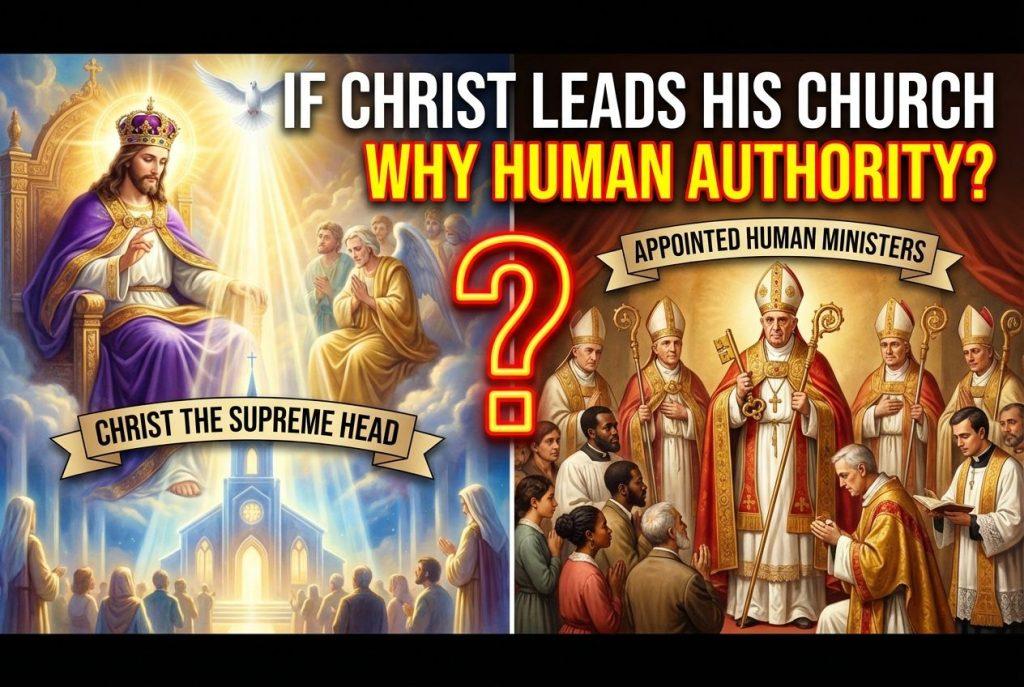
- The Catholic Church teaches that Christ exercises His divine authority through human leaders whom He personally established and commissioned.
- The relationship between Christ and Church authority reflects the pattern God established throughout salvation history, where He works through chosen human agents.
- Human authority in the Church exists to serve and protect the faithful, preserving authentic teaching and guiding believers according to Christ’s plan.
- The apostles received direct authority from Jesus, and this authority passes through apostolic succession to bishops and the Pope today.
- Christ promised to remain with His Church always and guaranteed that the gates of hell would never prevail against it, which includes protecting the teaching authority He established.
- The visible structure of authority in the Church makes Christ’s presence tangible and accessible to believers across time and space.
The Foundation of Authority in Scripture
Christ established human authority in His Church through deliberate actions recorded in the Gospels. When Jesus chose the twelve apostles, He gave them specific powers and responsibilities that extended beyond their own lifetimes. The Gospel of Matthew records one of the most significant moments when Jesus said to Simon Peter, “You are Peter, and on this rock I will build my church, and the gates of hell shall not prevail against it” in Matthew 16:18. This declaration came after Peter confessed Jesus as the Christ, the Son of the living God. Jesus then gave Peter the keys of the kingdom of heaven and the authority to bind and loose. The imagery of keys represented real administrative authority in ancient Jewish culture, similar to how a steward held the keys to a royal household. This authority was not merely symbolic but carried actual power to make decisions that would have heavenly significance. The binding and loosing language referred to the authority to make judgments about what was permitted or forbidden in the community. Jesus gave this authority knowing that human beings would carry on His mission after His ascension. The choice to work through human authority reflects God’s consistent pattern throughout salvation history.
The Gospel of John preserves another crucial moment when the risen Jesus appeared to His disciples. In John 20:21-23, Jesus said to them, “As the Father has sent me, even so I send you.” He then breathed on them and said, “Receive the Holy Spirit. If you forgive the sins of any, they are forgiven; if you retain the sins of any, they are retained.” This passage shows Jesus deliberately transferring His own mission and authority to the apostles. The parallel between how the Father sent Jesus and how Jesus sent the apostles establishes continuity in divine authority. The breathing of the Holy Spirit echoes God breathing life into Adam in Genesis, suggesting a new creation through the Spirit. The power to forgive or retain sins represented extraordinary authority that belonged to God alone in Jewish understanding. By granting this power to the apostles, Jesus made them His representatives with real authority. The conditional phrasing indicates that this authority required human judgment and decision-making. Jesus could have chosen to govern His Church directly through miraculous interventions, but instead He chose to work through human leaders empowered by the Holy Spirit. This choice reveals something important about how God prefers to work with humanity rather than simply overriding human agency.
Jesus commissioned His apostles to teach and make disciples of all nations in Matthew 28:18-20. He declared that all authority in heaven and on earth had been given to Him, and on the basis of that authority, He sent them to baptize and teach. He promised to be with them always, until the end of the age. This promise of perpetual presence meant that Jesus would continue to work through the apostles and their successors. The scope of their mission encompassed all nations and all time, not just the apostles’ own generation. Teaching with authority meant more than sharing personal opinions or interpretations. The apostles received authorization to teach in Jesus’ name with His backing. Jesus linked their teaching authority directly to His own complete authority over heaven and earth. He did not promise that each individual believer would receive direct revelation independently. Instead, He established a teaching authority that would preserve and transmit His message accurately. The promise to remain with them suggests an ongoing relationship between Christ and the teaching authority of the Church. This structure provides stability and continuity across generations and geographical boundaries.
Why God Works Through Human Agents
God’s pattern of working through human authority appears throughout the Old Testament and reaches fulfillment in the Church. When God established the covenant with Israel, He appointed Moses as the mediator between Himself and the people. Moses did not replace God’s authority but served as God’s chosen instrument to communicate His will. The people came to Moses with questions and disputes, and Moses sought God’s guidance to give answers. This pattern continued with the judges, prophets, and kings whom God appointed to lead His people. God could have spoken directly to every Israelite, but He chose instead to work through designated leaders. This choice reflects God’s respect for human nature and social structures. Human beings naturally organize themselves into communities with leaders and authorities. God works within this human reality rather than against it. He elevates and transforms human authority by infusing it with divine purpose and protection. The prophets spoke with divine authority, saying “thus says the Lord,” yet they remained fully human with their own personalities and contexts. God’s word came through human words without being diminished or corrupted.
The Incarnation represents the ultimate example of God working through human nature. When the eternal Word became flesh in Jesus Christ, God united divine and human natures in one person. Jesus possessed full divine authority yet exercised it through a fully human life. He taught, healed, and led people using human words and actions. The disciples experienced God’s presence through their interactions with the man Jesus of Nazareth. This pattern of divine authority working through human agency continues in the Church, which Saint Paul calls the Body of Christ. Just as Christ’s divine nature worked through His human nature, so now Christ’s authority works through the human structure of the Church. The Church is not merely a human organization that tries to follow divine principles. Rather, it is a divine institution that operates through human members and leaders. The Catechism teaches about this mystery, explaining how the Church is both a visible society and a spiritual community. Christ chose to extend His presence in the world through this visible, human institution rather than through purely spiritual or invisible means.
The incarnational principle explains why sacraments use physical elements like water, bread, and wine. God works through material creation to communicate spiritual realities. Similarly, God works through human leaders to communicate divine truth and authority. Saint Paul wrote to the Romans that faith comes through hearing, and hearing comes through the word of Christ preached by those who are sent. This chain of authority runs from Christ through His apostles to their successors. Human preachers and teachers do not replace Christ or compete with Him. They serve as His instruments, making His teaching present and accessible to each generation. The physical, visible nature of Church authority serves practical purposes. Believers need to know where to find authentic teaching when questions arise. They need concrete guidance for living the Christian life in specific circumstances. Disagreements need authoritative resolution to maintain unity. A purely invisible or spiritual authority would leave believers without clear direction. God’s wisdom in establishing visible, human authority becomes evident when we consider the alternative of each person claiming private revelation or personal interpretation as ultimate authority.
The Role of Apostolic Succession
The Catholic Church teaches that bishops are the successors of the apostles, continuing the authority Jesus gave to the Twelve. This doctrine, known as apostolic succession, means that the authority Christ gave to the apostles has been handed down through the centuries through the laying on of hands. When the apostles needed to appoint leaders for new Christian communities, they ordained men by prayer and the laying on of hands. The Acts of the Apostles records several instances of this practice. Saint Paul instructed Timothy and Titus about selecting and ordaining bishops and presbyters. These instructions show that the apostles expected their ministry to continue through successors. They did not view their authority as ending with their deaths. Instead, they took care to establish a structure that would preserve authentic teaching and leadership. The early Church clearly distinguished between the authority of ordained bishops and the role of all believers. While all Christians share in Christ’s priesthood through baptism, ordained ministers receive specific authority to teach, govern, and sanctify.
The unbroken line of bishops stretching back to the apostles provides historical continuity with the apostolic Church. Each bishop can trace his ordination back through previous bishops to the apostles themselves. This physical connection through the laying on of hands creates a living link with the original witnesses to the resurrection. The Holy Spirit, promised by Jesus to guide the Church into all truth, works through this succession to preserve authentic teaching. Apostolic succession does not mean that bishops are perfect or sinless. The apostles themselves were flawed human beings who sometimes disagreed and made mistakes. Peter denied Jesus three times, and Paul confronted him publicly over his behavior in Antioch. Yet Jesus chose these imperfect men to carry His authority. The guarantee of reliable teaching comes not from the personal holiness of individual bishops but from the Holy Spirit’s protection of the college of bishops united with the Pope. The Catechism explains this in sections about the Magisterium, noting that the teaching authority serves the Word of God and cannot depart from it.
Apostolic succession ensures that the Church’s teaching remains consistent across time and place. Without this structured authority, Christianity would fragment into countless competing interpretations with no way to resolve disputes. History shows what happens when this authority is rejected. Protestant denominations that broke from apostolic succession now number in the thousands, each claiming to follow the Bible but reaching different conclusions about essential matters. The Catholic Church maintains unity in teaching because bishops in union with the Pope exercise the teaching authority Christ established. This unity does not suppress legitimate diversity in theology or practice. The Church has always included varied theological schools and spiritual traditions. However, these variations remain within the boundaries of orthodox faith protected by apostolic authority. The Second Vatican Council taught that bishops receive their authority directly from Christ through episcopal ordination, not as delegates of the Pope. Each bishop is a true shepherd of his local church, yet he remains in communion with all other bishops and the successor of Peter.
The Papacy and Petrine Ministry
Jesus gave Peter a unique role among the apostles, as multiple Gospel passages demonstrate. At Caesarea Philippi, Jesus singled out Peter with the name “rock” and the promise that the Church would be built on him. Peter received the keys of the kingdom, an image drawn from Isaiah 22 where the chief steward of the king’s household held the keys. This Old Testament background shows that Jesus established Peter as the chief steward of His household, the Church. Peter’s name appears first in every New Testament list of the apostles. He served as spokesman for the group and took initiative in leadership decisions. After the resurrection, Jesus specifically restored Peter with a threefold commission to feed His lambs and sheep in John 21:15-17. This commission to shepherd the entire flock gave Peter pastoral authority over the whole Church. The early chapters of Acts show Peter exercising this leadership, preaching at Pentecost, making decisions about admission of Gentiles, and settling disputes. The other apostles recognized Peter’s special role, though they also challenged him when necessary.
The authority Jesus gave to Peter did not end with Peter’s death but continues in his successors, the bishops of Rome. The early Church recognized the bishop of Rome as holding Peter’s office and authority. By the late first century, writings show other churches submitting disputes to Rome for resolution. Church fathers from various regions acknowledged Rome’s special authority in matters of faith and practice. This recognition was not based on political power but on the conviction that the bishop of Rome succeeded to Peter’s role. The title “Pope” comes from the affectionate term “papa” used for the bishop of Rome. The Pope exercises a ministry of unity, keeping the whole Church together in one faith and communion. His authority exists to serve the unity Christ willed for His Church. Jesus prayed that His followers would be one, as He and the Father are one. The Petrine ministry answers this prayer by providing a visible center of unity. Without a final court of appeal in doctrinal matters, the Church would split into factions as happened in Protestantism.
The Pope’s authority includes the charism of infallibility in specific circumstances, as defined by the First Vatican Council and explained in the Catechism. Infallibility does not mean the Pope is personally sinless or makes perfect decisions about every matter. It means that when the Pope, as supreme pastor and teacher, defines a doctrine concerning faith or morals to be held by the whole Church, the Holy Spirit preserves him from error. This gift serves the Church’s need for certainty about core teachings. Without it, believers would always wonder whether current teaching might later be reversed as erroneous. Infallibility is exercised rarely and under strict conditions. It applies only to formal definitions about faith and morals, not to personal opinions, policy decisions, or prudential judgments. The Pope cannot invent new doctrines but only clarify and define what the Church has always believed. His teaching authority, whether exercised infallibly or in ordinary teaching, deserves religious submission of intellect and will from Catholics. This submission is not blind obedience but informed trust based on Christ’s promise to protect His Church from error.
The Magisterium as Guardian of Truth
The Magisterium refers to the teaching office of the Church, exercised by the Pope and bishops in communion with him. This teaching authority exists to interpret Scripture and Tradition authentically and to safeguard the deposit of faith. The word comes from Latin magister, meaning teacher or master. The Magisterium does not stand above Scripture and Tradition but serves them. As the Catechism states in paragraph 86, the Magisterium teaches only what has been handed down to it. It listens to the Word of God with reverence, guards it faithfully, and explains it truthfully. This service ensures that believers receive authentic Catholic teaching rather than merely human opinions or contemporary fashions. The Magisterium must discern what belongs to the deposit of faith given by Christ to the apostles and what represents later accretions or distortions. This task requires both scholarly study and reliance on the Holy Spirit’s guidance.
Sacred Scripture needs authoritative interpretation because sincere readers often reach contradictory conclusions. The Bible itself warns against private interpretation of Scripture in 2 Peter 1:20. The Ethiopian eunuch in Acts 8 asked Philip whether he could understand Isaiah without someone to guide him. This pattern appears throughout Christian history. When disputes arose about the meaning of Scripture or the requirements of Christian faith, the Church gathered in councils to make authoritative decisions. The Council of Jerusalem in Acts 15 provided the model for this process. The apostles and elders met to discuss the question of Gentile converts and circumcision. They reached a decision and announced it with the words “it has seemed good to the Holy Spirit and to us.” This formula shows both divine and human elements working together. The Holy Spirit guided the human leaders to the correct decision. Later ecumenical councils followed this pattern, gathering bishops from across the Church to define doctrine and condemn errors. These conciliar definitions carry the full authority of the Magisterium and bind the faithful.
The ordinary and universal Magisterium operates when the Pope and bishops dispersed throughout the world agree on a matter of faith or morals as requiring definitive assent. This agreement does not require a formal council or papal definition. When the bishops in union with the Pope consistently teach something as part of the faith, that teaching participates in infallibility. For example, the Church has always taught that abortion is gravely wrong, even though this has never been the subject of a papal definition. The consistent teaching of the ordinary Magisterium carries the same authority as solemn definitions. Catholics must accept both as part of the faith. This reality protects the Church from novel interpretations that contradict traditional teaching. Theologians and scholars play an important role in exploring questions and developing understanding, but their conclusions remain subject to the judgment of the Magisterium. Academic freedom in Catholic theology means freedom to investigate within the boundaries of defined doctrine, not freedom to contradict Church teaching. The Magisterium respects legitimate theological diversity while maintaining the unity of faith.
Christ’s Presence Through Human Authority
Jesus promised to remain with His Church always, and He fulfills this promise partly through the successors of the apostles. When bishops teach in communion with the Pope, Christ teaches through them. When they celebrate sacraments, Christ acts through their ministry. This represents true divine presence, not merely human activity undertaken in Christ’s name. The priest who baptizes acts as an instrument of Christ, who is the true baptizer. The bishop who confirms acts as Christ’s representative, conferring the Holy Spirit. The successors of the apostles who define doctrine speak with Christ’s authority because He commissioned them for this task. This sacramental principle extends beyond the seven sacraments to the whole life of the Church. Christ governs His Church through the pastoral leadership of bishops. He sanctifies believers through the teaching and discipline they provide. Human authority in the Church becomes a channel for divine authority rather than a replacement for it.
The visible structure of authority makes Christ’s presence tangible and accessible to ordinary believers. A mother teaching her child about Jesus can point to the local bishop and explain that he teaches what Jesus wants us to know. When questions arise about faith or morals, Catholics can consult the Catechism, papal encyclicals, and conciliar documents with confidence that these express authentic Christian teaching. This certainty frees believers from the anxiety of wondering whether their understanding of Scripture is correct. Protestant friends often express frustration about competing interpretations within their traditions. They must choose which pastor or scholar to trust, with no objective criterion for the choice. Catholics face a different situation. While they may study various theological opinions and consult different experts, they know that the Magisterium provides definitive answers when needed. This does not eliminate all questions or resolve every theological debate. Many matters remain open to discussion and development. However, the core deposit of faith stands secure under the protection of apostolic authority.
Critics sometimes charge that Catholic emphasis on human authority diminishes Christ’s immediate presence and the role of the Holy Spirit. This objection misunderstands the Catholic position. The Church teaches that Christ acts through the ordained ministry, not instead of acting directly. Every Catholic has a personal relationship with Christ through baptism and receives the Holy Spirit. The sacraments bring believers into direct contact with Christ’s saving power. Prayer opens communication between the individual soul and God. Scripture read prayerfully becomes God’s living word to the reader. None of this requires permission from ecclesiastical authority. However, the interpretation of revelation and the definition of doctrine do require authoritative guidance. The Holy Spirit works through multiple channels, inspiring individual believers, gifting teachers and prophets, and guiding the Magisterium. These different workings of the Spirit complement rather than contradict each other. The Spirit who inspires a theologian’s insights also guides the bishops who evaluate those insights. The Spirit who moves a believer’s heart in prayer is the same Spirit who protects the Church’s official teaching from error.
Historical Evidence of Apostolic Authority
The earliest Christian writings outside the New Testament show that the postapostolic Church understood authority the way Catholics understand it today. Clement of Rome, writing around 96 AD, intervened in a dispute at Corinth and commanded the church there to restore deposed presbyters. His letter assumes that the church at Rome has authority to settle disputes in other churches. Ignatius of Antioch, writing around 107 AD as he traveled to martyrdom, repeatedly emphasized the authority of bishops and warned against separating from them. He told the church at Smyrna to do nothing without the bishop, and to regard the bishop as they would regard Christ. These early witnesses wrote when some people who had known the apostles personally were still alive. They present episcopal authority as normal and expected, not as an innovation. If the early Church had understood Christian community as essentially egalitarian or congregational, Ignatius could not have written as he did without being contradicted.
Irenaeus of Lyons, writing around 180 AD, defended apostolic succession as the guarantee of authentic teaching against gnostic heresies. He argued that the true faith could be identified by tracing teaching back through the succession of bishops to the apostles. He specifically pointed to the church at Rome, founded by Peter and Paul, as a reliable witness to apostolic teaching. Any church that maintained communion with Rome could be confident it held the apostolic faith. Irenaeus was not Roman but wrote from Gaul. His testimony shows that recognition of Roman primacy existed throughout the Church by the late second century. Cyprian of Carthage in the third century called Rome “the chair of Peter” and “the principal church whence priestly unity takes its source.” These witnesses wrote long before Christianity became the Roman Empire’s official religion. They could not have been motivated by political considerations to exalt ecclesiastical authority. Their testimony reflects what they received from earlier generations.
The ecumenical councils of the early Church exercised magisterial authority to define doctrine. The Council of Nicaea in 325 defined the divinity of Christ against Arianism. The Council of Ephesus in 431 condemned Nestorianism and declared Mary to be Theotokos, Mother of God. The Council of Chalcedon in 451 defined Christ’s two natures against monophysitism. These councils did not simply report what various Christians believed but made authoritative decisions about what must be believed. They condemned heresies and occasionally deposed bishops who taught error. The assembled bishops understood themselves to have authority from Christ to bind the whole Church to their decisions. When Pope Leo I’s letter to Flavian was read at Chalcedon, the bishops responded “Peter has spoken through Leo.” This acclamation shows their conviction that papal teaching carried apostolic authority. The ancient Church practiced what Catholics practice today, recognizing that Christ guides His Church through the teaching authority of bishops united with the successor of Peter.
The Necessity of Visible Authority
Human nature requires visible structures and authorities for social life. God created humans as social beings who naturally form communities with leaders and governance. The Church, though supernatural in origin and purpose, includes a human element that functions according to human nature. A purely invisible or spiritual church might sound appealing in theory but would prove impossible in practice. How would such a church make decisions, resolve disputes, or maintain unity? How would new believers learn authentic Christian teaching or distinguish true doctrine from error? The invisible church idea, popular in some Protestant theology, reduces the church to the sum of all true believers known only to God. This concept provides no basis for corporate worship, organized mission, or authoritative teaching. It cannot explain the New Testament’s detailed instructions about church order, leadership qualifications, and disciplinary procedures. Jesus clearly intended His Church to be a visible community with identifiable leaders and membership.
The Church’s teaching authority protects the faithful from false doctrine and maintains unity in faith. Throughout Christian history, charismatic leaders have arisen claiming special revelation or insight. Without authoritative teaching to judge these claims, believers would be vulnerable to deception. The Magisterium provides a stable reference point for discerning truth from error. When a popular preacher teaches something contrary to Catholic doctrine, the faithful can recognize the error because they have been taught what the Church believes. This protection becomes especially important during times of cultural change and challenge. Modern Western culture promotes ideas about human nature, sexuality, and social relationships that contradict Christian teaching. Catholics face pressure to accommodate their faith to contemporary values. The Magisterium’s clear teaching gives them confidence to resist this pressure and maintain countercultural positions. Without authoritative teaching, individual Catholics might gradually drift away from Christian truth under cultural influence.
Unity in teaching makes possible unity in communion and mission. Catholics throughout the world share the same basic beliefs about God, Christ, salvation, and the moral life. This unity allows genuine communion across cultural and linguistic boundaries. A Catholic from Nigeria can attend Mass in Korea and recognize the same faith despite differences in language and culture. The shared beliefs make possible cooperative efforts in evangelization, education, and charitable works. Different Catholic organizations can work together confidently because they share fundamental commitments. This unity contrasts sharply with Protestant division into thousands of denominations disagreed about basic doctrines. The disunity weakens Christian witness in the world. When Christians cannot agree about baptism, the Eucharist, or moral teaching, why should non-Christians take Christianity seriously? Jesus prayed for unity among His followers so that the world might believe. The visible unity of the Catholic Church, maintained by adherence to apostolic authority, serves the mission of evangelization.
Submission to Authority as Discipleship
Following Christ includes following those He appointed to teach and govern in His name. Jesus said in Luke 10:16, “Whoever listens to you listens to me, and whoever rejects you rejects me.” This statement applied first to the seventy-two disciples Jesus sent out, but its principle extends to all who exercise authority in His Church. To reject legitimate Church authority is to reject Christ who established that authority. This teaching challenges modern individualism and the desire for autonomy. Contemporary culture exalts personal freedom and resents institutional authority. Many people want to be “spiritual but not religious,” claiming direct access to God without Church mediation. This attitude fundamentally contradicts how Jesus organized His followers. He established a community with structure, leadership, and teaching authority. True Christian freedom exists within this structure, not apart from it. Freedom means liberation from sin and death, not independence from divine authority exercised through human leaders.
Submission to Church authority requires humility and trust. Catholics must believe that Christ keeps His promises to protect His Church from teaching error. This trust can be tested when Church teaching contradicts personal desires or contemporary opinions. Many Catholics struggle with particular doctrines, especially in areas of sexual morality or gender. The temptation arises to reject difficult teachings while claiming to remain Catholic. However, genuine Catholicism means accepting the whole deposit of faith as taught by the Magisterium, not selecting personally appealing elements while rejecting others. This submission is not blind or irrational. Catholics have good reasons to trust Church teaching based on Christ’s promises, historical evidence of apostolic succession, and the coherence of Catholic doctrine. They can study theology, ask questions, and work to understand difficult teachings. However, understanding must ultimately yield to faith when human reason cannot fully grasp divine truth.
The obedience owed to Church authority has limits because human authority derives from divine authority. Catholics must never obey commands that contradict God’s law or the clear teaching of Christ. History provides examples of corrupt or unworthy church leaders whose personal behavior contradicted their office. In such cases, Catholics respect the office while refusing to follow immoral commands. The validity of sacraments does not depend on the minister’s personal holiness but on Christ’s action through the sacred rites. A priest living in sin can still validly celebrate Mass and forgive sins in confession because Christ, not the priest, is the true minister. Similarly, a bishop’s teaching authority remains valid even if his personal life is scandalous. This distinction between the office and the person holding it preserves divine authority from being undermined by human weakness. However, clergy who abuse their authority or give scandal deserve criticism and correction. The Church has mechanisms for disciplining wayward ministers, though these have not always been applied adequately.
Common Objections Addressed
Some people object that emphasizing human authority contradicts Scripture’s teaching about Christ as the sole mediator between God and humanity, citing 1 Timothy 2:5. This objection misunderstands both mediation and Catholic teaching. Christ is indeed the one mediator who reconciles humanity with God through His death and resurrection. No other person or being can perform this salvific work. However, Christ chooses to work through human agents in applying the fruits of His mediation. The apostles were mediators in a subordinate sense, bringing Christ’s message to people who had not heard it. Priests are mediators in a subordinate sense, making Christ’s saving action present through sacraments. This delegation of authority does not diminish Christ’s unique role but extends it. Parents mediate God’s love to their children by teaching them about Jesus. Does this make parents competitors with Christ as mediator? Obviously not. Human mediation becomes problematic only when it claims to replace or supplement Christ’s saving work rather than serving it.
Others object that the Catholic Church has sometimes taught error or acted unjustly, citing examples like the Galileo case or medieval abuses. These objections confuse different aspects of Church life and teaching. The Church’s infallibility extends to formal definitions of doctrine about faith and morals, not to scientific judgments, historical interpretations, or disciplinary decisions. The Church has never taught formally that the sun orbits the earth. Individual churchmen, including popes, held mistaken scientific views common in their time, but these views were never proposed as doctrines of faith. Similarly, failures in governance and discipline, however serious, do not contradict the promise that the Church will not teach error in faith and morals. The Spanish Inquisition and clerical sexual abuse represent terrible failures to live up to Christian standards, but they do not invalidate the doctrines the Church teaches. Catholics can and must acknowledge these sins while maintaining confidence in the Church’s teaching authority. The distinction between disciplinary or prudential failures and doctrinal error is crucial.
Some people claim that recognizing apostolic authority diminishes the role of Scripture or places human tradition above God’s Word. Catholic teaching firmly rejects this error. Scripture holds supreme authority as the inspired Word of God. However, Scripture itself emerged from Tradition and requires authoritative interpretation. The New Testament books were written within the apostolic Church and were recognized as canonical by the Church’s authority. No inspired table of contents lists which books belong in the Bible. The canon of Scripture was determined through the exercise of apostolic authority. The same authority that identified which books were inspired has authority to interpret those books. Scripture and Tradition are not competing authorities but complementary sources of revelation, both requiring the guidance of the Magisterium for authentic interpretation. The Second Vatican Council’s document Dei Verbum explains how Scripture, Tradition, and Magisterium work together as a unified whole. The Magisterium serves Scripture by preventing misinterpretation while Scripture judges any claimed tradition by the standard of God’s revealed Word.
The Authority of Love and Service
Jesus redefined authority as service rather than domination. He told His disciples, “The kings of the Gentiles exercise lordship over them, and those in authority over them are called benefactors. But not so with you. Rather, let the greatest among you become as the youngest, and the leader as one who serves” in Luke 22:25-26. He exemplified this servant leadership by washing the disciples’ feet at the Last Supper. Church authority, when exercised properly, follows this pattern. The Pope takes the title “Servant of the servants of God.” Bishops are called to shepherd the flock entrusted to them with love and care, not to lord it over them. The Second Vatican Council emphasized the pastoral nature of Church authority. Bishops govern through teaching, sanctifying, and loving service, not through coercion or political power. This ideal has not always been realized in practice, as history shows. However, the failures of individual leaders do not invalidate the principle of servant authority.
Church authority exists for the sake of believers, to help them grow in faith and reach salvation. Every use of magisterial authority should serve this ultimate purpose. When the Church defines a doctrine, it clarifies truth so that believers can hold the faith with confidence. When the Church teaches moral principles, it guides believers toward holy living and away from sin. When Church leaders provide pastoral care and discipline, they help believers overcome obstacles to spiritual growth. The exercise of authority becomes problematic when it serves leaders’ interests rather than believers’ good. Unfortunately, this has sometimes occurred. Some medieval popes acted more like political rulers than spiritual fathers. Some bishops today focus more on institutional preservation than evangelization. These failures represent corruption of authority, not its proper use. They call for reform and renewal, not rejection of authority itself. The Church constantly needs to return to its authentic nature as servant of humanity’s salvation.
The authority of love ultimately rests on Christ’s own love for humanity demonstrated on the cross. He laid down His life for His sheep, as He said a good shepherd would. The successors of the apostles share in Christ’s shepherding authority precisely by sharing His self-sacrificial love. A bishop who truly loves his people will guide them faithfully even when doing so brings criticism or persecution. He will speak uncomfortable truths because love desires the beloved’s true good, not mere comfort. Church history provides countless examples of bishops and popes who suffered for maintaining unpopular truths. Athanasius endured exile multiple times for defending Christ’s divinity. Thomas More chose martyrdom rather than accept royal supremacy over the Church. These witnesses show that apostolic authority, exercised in love, can require tremendous courage and sacrifice. Such witness validates the authority it serves by demonstrating that the shepherd truly cares for the sheep.
The Wisdom of God’s Design
God’s decision to govern His Church through human authority reflects divine wisdom working with human nature. Rather than bypassing human limitations through miraculous interventions, God chose to work through flawed human beings empowered by grace. This choice respects human dignity and freedom while providing the guidance people need. It creates a school of holiness where believers learn obedience, humility, and trust. The visibility of Church authority tests and purifies faith. It would be easier to believe if God spoke to everyone directly through private revelation, leaving no room for doubt. However, such an arrangement would remove the need for faith. God asks believers to trust the witnesses He has appointed and the successors who carry their authority. This trust involves real risk and requires genuine faith. The human element in Church authority can scandalize believers when leaders fail or teach difficult doctrines. Working through this scandal strengthens faith and deepens understanding of how divine grace operates in and through human weakness.
The structure of Church authority mirrors the Incarnation in making divine reality present through human means. Just as Jesus was fully God and fully human, so the Church has both divine and human dimensions. The human aspect includes all the limitations and potential failures of any human institution. Bishops can make poor administrative decisions. Priests can be uninspiring preachers. Church bureaucracies can be frustrating and inefficient. Yet through all these human limitations, divine authority operates to teach truth, confer grace, and guide believers toward salvation. This paradox reflects the mystery of divine condescension throughout salvation history. God works through human speech in Scripture, human nature in Christ, human elements in sacraments, and human authority in the Church. Each case involves risk that the human element might obscure the divine reality. Yet God apparently considers this risk worthwhile for the sake of respecting human nature and engaging humans as real partners in His work.
The Catholic understanding of authority ultimately rests on trust in Christ’s promises and His continuing presence in the Church. Jesus said the gates of hell would not prevail against His Church. He promised to send the Holy Spirit to guide the Church into all truth. He assured the apostles of His continuing presence until the end of the age. These promises mean that despite all human weakness and failure, the Church will never completely fail in its mission or teach fundamental error in faith and morals. This confidence allows Catholics to trust Church teaching even when they struggle to understand or accept it. They know that human leaders remain subject to correction by their successors or by ecumenical councils. They understand that disciplinary practices can change while doctrinal truth remains constant. They distinguish between the infallible core of faith and the many matters on which legitimate disagreement exists. This sophisticated understanding of authority prevents both naive uncritical acceptance and cynical rejection of Church teaching. It recognizes both divine protection and human limitation in the visible structures Christ established for His Church’s governance.
Disclaimer: This article presents Catholic teaching for educational purposes. For official Church teaching, consult the Catechism and magisterial documents. For personal spiritual guidance, consult your parish priest or spiritual director. Questions? Contact editor@catholicshare.com
Sign up for our Exclusive Newsletter
- 📌 Add CatholicShare as a Preferred Source on Google
- 🎁 Join us on Patreon for Premium Content
- 🎧 Check Out These Catholic Audiobooks
- 📿 Get Your FREE Rosary Book
- 📱 Follow Us on Flipboard
-

Recommended Catholic Books
Discover hidden wisdom in Catholic books — invaluable guides enriching faith and satisfying curiosity. #CommissionsEarned
- The Early Church Was the Catholic Church
- The Case for Catholicism - Answers to Classic and Contemporary Protestant Objections
- Meeting the Protestant Challenge: How to Answer 50 Biblical Objections to Catholic Beliefs
As an Amazon Associate, I earn from qualifying purchases. Thank you for your support.