
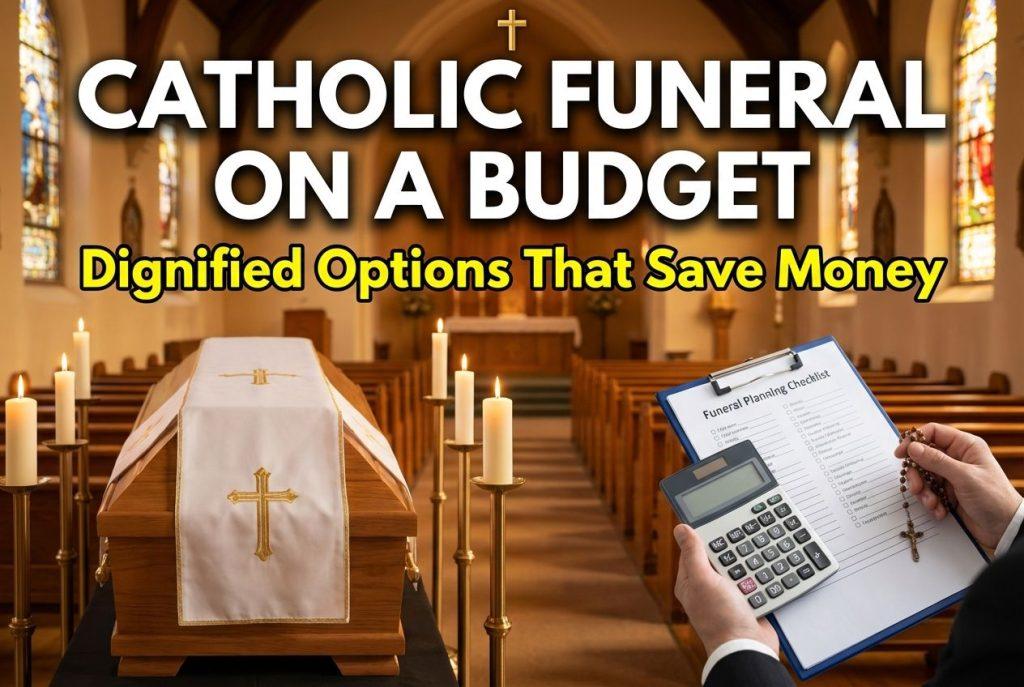
Brief Overview
- Planning a Catholic funeral on a budget requires understanding Church teachings about respecting the deceased while making practical financial decisions.
- The Catholic Church permits both traditional burial and cremation as valid options for honoring the dead, with cremation often providing a more affordable alternative.
- Parish fees for funeral services typically range from modest stipends to several hundred dollars, but financial hardship should never prevent a Catholic from receiving proper funeral rites.
- Families can reduce costs significantly by choosing direct burial or cremation, selecting simple caskets or containers, and utilizing parish resources rather than expensive funeral home packages.
- Catholic teaching emphasizes that the dignity of funeral rites comes from faith and prayer, not from the amount of money spent on external arrangements.
- Various organizations including Catholic Charities, parish communities, and government programs offer financial assistance to families struggling with funeral expenses.
Understanding Catholic Teaching on Funerals and Burial
The Catholic Church maintains clear and compassionate teachings about how Catholics should honor the deceased while recognizing the reality of financial constraints. The Catechism teaches that bodies of the dead must be treated with respect and charity, in faith and hope of the Resurrection, as stated in CCC 2300. This fundamental principle guides all Catholic funeral practices but does not require expensive expenditures. The burial of the dead stands as one of the corporal works of mercy, honoring the children of God who are temples of the Holy Spirit. This sacred obligation focuses on reverence and prayer rather than costly displays. The Church recognizes that financial limitations should never prevent families from providing dignified funeral rites for their loved ones. Understanding these foundational teachings helps families make informed decisions that honor both their faith and their financial realities. The essence of a Catholic funeral lies in the prayers of the Church, the celebration of the Mass, and the community’s support rather than in elaborate commercial arrangements. Families facing financial difficulties can find comfort in knowing that simple, modest funerals fully align with Catholic tradition and teaching. The Church throughout history has always advocated for the poor and vulnerable, including in matters of death and burial. This compassionate approach extends to funeral planning, where simplicity and dignity work together. Catholic teaching emphasizes that every person, regardless of economic status, deserves proper funeral rites that acknowledge their baptism and membership in the Body of Christ.
The Church also permits cremation, provided it does not demonstrate a denial of faith in the resurrection of the body, as noted in CCC 2301. This permission, granted more widely since 1963, offers families an option that often costs substantially less than traditional burial. Cremation has become increasingly accepted within Catholic communities as a legitimate and respectful way to care for the deceased. The key requirement remains that cremated remains must be treated with the same respect as a body and must be buried in a sacred place rather than scattered or kept at home. Families choosing cremation can still have a full funeral Mass with the body present before cremation, or they may have the funeral liturgy with the cremated remains. Both options maintain the dignity and prayerful nature that Catholic funerals require. The Church’s acceptance of cremation acknowledges practical realities while maintaining theological consistency about the resurrection of the body. This teaching provides families with meaningful choices that can significantly reduce financial burden without compromising their faith commitments. The cremation option demonstrates the Church’s pastoral sensitivity to modern economic challenges while preserving essential elements of Catholic funeral tradition.
Assessing Your Financial Situation and Available Resources
Before making any funeral arrangements, families should take time to assess their complete financial situation honestly and thoroughly. This assessment includes examining available assets, insurance policies, savings accounts, and potential sources of assistance. Many people have small life insurance policies through their employers or private policies that can help cover funeral expenses. Checking with the deceased’s employer about any death benefits or final paycheck owed can provide additional resources. Veterans and their spouses may qualify for burial benefits through the Department of Veterans Affairs, including free burial in national cemeteries and modest allowances for burial costs. Social Security provides a one-time death benefit of 255 dollars to eligible surviving spouses or children, which, while modest, can help offset some costs. Family members should contact the Social Security Administration promptly to claim this benefit and stop any ongoing payments. Some credit unions and banks offer small burial insurance products or emergency loans for funeral expenses at reasonable interest rates. Families should avoid taking on crushing debt for funeral expenses when more affordable options exist that fully honor Catholic traditions. Creating a realistic budget before meeting with funeral homes or making arrangements helps families maintain control over spending decisions.
Parish communities often maintain discretionary funds specifically designated to help families in financial need with funeral costs. Many parishes will waive or reduce stipends for funeral Masses when families face genuine hardship. Speaking honestly with the parish priest or pastoral associate about financial constraints allows the Church to provide appropriate assistance and guidance. Catholic Charities agencies throughout the country offer burial assistance programs, with some providing up to 5,000 dollars for qualifying low-income families. Local St. Vincent de Paul Societies and Knights of Columbus councils frequently assist parishioners with emergency funeral needs. Community organizations, fraternal societies, and religious groups may offer memorial funds or assistance programs for members. Some dioceses maintain Catholic cemetery foundations that help indigent families with burial plot costs and related expenses. Families should not feel embarrassed about seeking help, as the Christian community traditionally supports its members during times of loss and need. Asking for assistance honors the principle of Christian charity and allows others to practice the corporal works of mercy. The process of seeking help can strengthen community bonds and demonstrate the practical love that should characterize Catholic parishes. Many priests and pastoral ministers actively want to help families avoid financial distress while still providing dignified funeral rites.
Working Directly With Your Parish
The Catholic parish serves as the primary community for funeral planning and should be the first contact when arranging a Catholic funeral. Parish staff members understand Church requirements and can guide families through decisions that honor both tradition and budget constraints. Most parishes charge modest fees for funeral services, typically ranging from 150 to 500 dollars, which covers the use of the church, coordination services, and sometimes music. These fees are significantly lower than commercial funeral home chapel charges and provide the appropriate sacred setting for Catholic funeral rites. The stipend for the priest celebrating the funeral Mass is usually a separate, voluntary offering, commonly ranging from 100 to 250 dollars, though this is never required. Parishes recognize that families in financial difficulty should not be turned away from proper funeral rites due to inability to pay. Speaking directly and honestly with parish staff about financial limitations allows them to work within available resources. Many parishes will reduce or waive fees entirely for registered parishioners experiencing genuine hardship. The Church building itself, consecrated for worship, provides the most fitting environment for a funeral Mass without any need for additional decoration or expense.
Music for the funeral Mass can be arranged through parish musicians who typically charge less than outside professionals or may volunteer their services for parishioners. Many parishes have established funeral choirs or cantors who regularly assist with funeral liturgies for reasonable fees or donations. Families can also choose to have the congregation sing familiar hymns without professional musicians, which costs nothing and can be deeply meaningful. The parish may have hymnals or worship aids available that eliminate the need to print special programs. Simple, photocopied programs listing the Order of Mass and basic information about the deceased serve just as well as expensive printed memorials. Parish secretaries or volunteers often assist with program preparation as part of their ministry to bereaved families. The church sacristy typically provides all necessary liturgical items including candles, holy water, and the pall that covers the casket. Families need not purchase or rent any special religious items for the funeral Mass itself. Some parishes maintain a lending library of memorial items such as photograph displays or memory tables that families can use at no cost. The focus should remain on the prayers and ritual of the Mass rather than on elaborate decorations or arrangements. A simple arrangement of flowers from a grocery store or garden honors the deceased just as effectively as expensive florist arrangements.
Choosing Affordable Burial or Cremation Options
The choice between traditional burial and cremation represents one of the most significant financial decisions families face when planning a Catholic funeral. Traditional burial with a full casket and cemetery plot typically costs between 7,000 and 12,000 dollars or more, depending on location and choices made. Cremation, by contrast, generally costs between 1,500 and 4,000 dollars for basic services, offering substantial savings while remaining fully acceptable to the Church. Direct cremation, where the body goes directly from place of death to crematory without embalming or viewing, represents the most economical option. Families choosing cremation can still have a funeral Mass with the cremated remains present in a suitable urn or container. The Church requires that cremated remains be placed in a worthy vessel and buried in a Catholic cemetery or placed in a columbarium rather than scattered or kept at home. Many Catholic cemeteries offer columbarium niches for cremated remains at costs significantly lower than traditional burial plots. Understanding cremation as a legitimate Catholic option opens possibilities for families who struggle with the high costs of traditional burial while maintaining full respect for Church teaching.
For families preferring traditional burial, several strategies can reduce costs without compromising dignity or reverence. Direct burial, similar to direct cremation, involves burying the body shortly after death without embalming or an extended viewing period. This option eliminates embalming costs, which typically range from 500 to 900 dollars, and reduces other funeral home charges. Simple wooden caskets or basic metal caskets cost substantially less than elaborate models, with acceptable options available for 800 to 2,000 dollars. Some Catholic cemeteries allow families to purchase simple caskets directly from third-party retailers or even build simple wooden burial containers themselves. Buying a casket online or from a discount supplier is legal, and funeral homes must accept caskets provided by families without charging handling fees. Green burial or natural burial, which uses biodegradable caskets or shrouds without embalming, aligns with Catholic teaching about returning to the earth and often costs less than conventional burial. Purchasing cemetery plots in advance or through diocesan programs sometimes offers cost savings compared to immediate-need purchases. Some Catholic cemeteries maintain sections for indigent burials or offer subsidized plots for low-income families. Family members can often serve as pallbearers rather than paying funeral home staff to perform this service.
Understanding Funeral Home Services and Alternatives
Funeral homes provide valuable services but often encourage expensive packages that go beyond what Catholic funerals require or families can afford. Understanding which services are truly necessary versus optional helps families make informed decisions that control costs. The Federal Trade Commission’s Funeral Rule requires funeral homes to provide itemized price lists and allow families to select only the services they want. Basic services of the funeral director and staff, required for any arrangement, typically cost between 1,500 and 2,500 dollars and cover paperwork, coordination, and facility overhead. Transportation of the body from place of death to the funeral home or crematory is necessary and usually costs 200 to 400 dollars. Families should carefully evaluate whether embalming is actually needed, as many states do not require it unless burial is significantly delayed. Refrigeration offers a less expensive alternative to embalming for short-term preservation. Extensive viewing periods and elaborate casket displays often drive up costs without adding spiritual value to Catholic funeral rites. A brief viewing period before the funeral Mass, or no viewing with a closed casket, can significantly reduce costs while maintaining appropriate reverence.
Alternative arrangements can further reduce funeral expenses while complying with Catholic requirements. Some families choose to work with funeral cooperatives or memorial societies that offer simplified services at lower costs. These organizations, which exist in many areas, provide basic services without the pressure to purchase expensive packages or merchandise. Direct disposal services focus on the essential legal and logistical tasks of caring for the body without offering elaborate facilities or ceremonies. Families can then arrange the funeral Mass and related gatherings separately through their parish and community. Some Catholic dioceses operate their own funeral and cemetery operations, which may offer more affordable options than commercial funeral homes. Families can transport bodies themselves in some states if they meet legal requirements, though this requires careful attention to regulations and procedures. Home funerals, where the body remains at home until burial or cremation, represent an ancient Christian practice that some families are reviving as a way to reduce costs and increase personal involvement. This option requires coordination with local authorities and the parish but can provide meaningful family participation in caring for the deceased. Rental caskets, available at many funeral homes for 700 to 1,200 dollars, allow families choosing cremation to have a viewing with a dignified casket before the body is cremated in a simple container.
Planning the Funeral Liturgy and Related Services
The Catholic funeral liturgy consists of three main components: the vigil or wake service, the funeral Mass or funeral liturgy, and the committal service at the cemetery or crematorium. Understanding the essential elements of each helps families plan meaningful services without unnecessary expenses. The vigil service, traditionally held the evening before the funeral, can take place at the funeral home, parish, or family home. This prayer service led by a priest, deacon, or trained lay minister focuses on Scripture readings, psalms, and prayers for the deceased. Families can host this service at home with simple refreshments, eliminating facility rental costs entirely. The vigil provides opportunity for family and friends to share memories and support one another in a less formal setting than the funeral Mass. Some families choose to omit the separate vigil service and incorporate those elements into the time before the funeral Mass begins. This consolidation reduces both costs and the number of events grieving family members must coordinate. The essential element is gathering the community in prayer, which can happen in various ways without significant expense.
The funeral Mass itself represents the heart of Catholic funeral rites and should take place in the parish church whenever possible. The Mass includes the Liturgy of the Word with Scripture readings, the homily, and the Liturgy of the Eucharist if a full Mass is celebrated. Alternatively, a funeral liturgy outside of Mass includes prayers and readings but not the celebration of the Eucharist. Both forms provide the prayerful setting that honors Catholic tradition and accompanies the deceased to eternal rest. Family members can serve as lectors for the Scripture readings, gift bearers, and pallbearers, which increases personal participation while reducing any need for hired assistants. Choosing Scripture readings from those suggested in the Church’s funeral rites ensures appropriate content without requiring extensive research or planning. The homily, given by the priest or deacon, proclaims the paschal mystery and offers hope in the resurrection rather than serving as a eulogy. If families desire a eulogy or personal remembrances, these can occur at the vigil service, at a reception after the funeral, or briefly at the beginning or end of the funeral liturgy. Keeping the funeral Mass focused on prayer and sacrament rather than extensive personal tributes maintains appropriate reverence while simplifying planning.
Arranging the Committal and Reception
The committal service at the graveside or columbarium completes the funeral rites and should be simple, prayerful, and brief. This service includes Scripture readings, prayers of committal, and the final blessing as the body or cremated remains are placed in their resting place. The graveside service requires no special decoration or equipment beyond what the cemetery provides as part of its services. Family and friends gather around the grave or columbarium niche for this final farewell, which typically lasts 15 to 20 minutes. Some families choose to have the committal service privately with only immediate family present, which can reduce certain costs and create a more intimate final moment. The priest or deacon who celebrated the funeral Mass often leads the committal service, usually without additional charge beyond the funeral stipend already given. If distance or scheduling makes this impractical, a local priest or deacon can lead the committal, or in some cases a trained layperson can offer the prayers. Cemetery staff typically coordinate the logistics of opening the grave, placing the casket or urn, and closing the grave without additional family involvement needed.
Following the funeral, many families host a reception or meal for mourners, which can become another significant expense if not carefully planned. The parish hall often provides a suitable venue for this gathering at minimal or no cost for registered parishioners. Families can organize a simple potluck meal where attendees bring dishes to share, which honors Catholic traditions of community support while eliminating catering costs. Church ministry groups or parish organizations sometimes volunteer to prepare and serve a meal for bereaved families as part of their service. A simple menu of coffee, tea, and bakery cookies or homemade items provides appropriate hospitality without elaborate expense. The reception focuses on community support and sharing memories rather than on impressive food presentations or formal service. Some families choose to have no formal reception at all, which is perfectly acceptable when financial or emotional resources are limited. Others limit the reception to immediate family and close friends, reducing both cost and complexity. The purpose of gathering after the funeral is mutual support and consolation, which happens just as effectively over simple refreshments as over catered meals. Families should not feel obligated to provide elaborate hospitality when doing so creates financial hardship or additional stress during an already difficult time.
Reducing Costs for Flowers, Programs, and Memorial Items
Flowers traditionally express sympathy and honor the deceased but can quickly become a major funeral expense if not carefully managed. Families can significantly reduce flower costs by purchasing arrangements directly from grocery stores, farmers markets, or wholesale flower suppliers rather than through funeral home florists. A single modest arrangement near the casket or urn suffices for the funeral Mass, as the church building itself provides the appropriate sacred setting. Some families request donations to charity instead of flowers, which honors the deceased through practical good works rather than temporary decorations. Garden flowers arranged by family members or friends often carry more personal meaning than expensive florist arrangements and cost little or nothing. The parish may have permanent flower arrangements or decorative elements that families can use during the funeral Mass. After the funeral, flower arrangements can be taken to nursing homes, hospitals, or homebound parishioners, extending their usefulness and meaning. Single flowers provided to mourners as they leave the church or cemetery offer a meaningful keepsake at minimal cost. The Catholic tradition emphasizes prayer and sacrament over decorative elements, so minimal flowers never detract from the dignity of the funeral rites.
Funeral programs or worship aids help mourners participate in the liturgy but need not be expensive or elaborate productions. Simple programs photocopied on standard paper provide all necessary information about the Order of Mass, readings, and hymns. Many parishes have template programs that families can customize with basic information about the deceased. Free online templates allow families to create and print programs at home using standard computer equipment. Including only essential information such as the order of service, key prayers, and basic biographical details keeps programs simple and costs low. Some families forgo printed programs entirely, instead writing the hymn numbers on a board in the church or relying on the regular worship aids already in the pews. Memorial cards with the deceased’s name, dates, and a prayer can be printed inexpensively through online services or at home. These small cards provide mourners with a tangible keepsake without the cost of elaborate memorial folders or booklets. Photo displays can be created using pictures printed at home or through inexpensive pharmacy photo services rather than through professional designers. A simple poster board or digital slideshow shares memories effectively without professional production costs. The focus should remain on the person’s life and faith rather than on creating impressive memorial materials.
Considering Body Donation and Pre-Planning Options
Whole body donation to medical schools or research institutions represents an option some Catholics consider that can eliminate most funeral costs entirely. The Catholic Church permits body donation when done for legitimate medical education or research purposes and when the remains will eventually be treated respectfully. CCC 2301 specifically mentions that the free gift of organs after death is legitimate and can be meritorious. Most medical schools that accept whole body donations cover the cost of transportation, cremation, and return of cremated remains to the family. This arrangement eliminates funeral home costs, cremation fees, and related expenses, though families should understand that the donation process may take months or even years. Families choosing body donation can still hold a memorial Mass without the body present, focusing on prayers and remembrance. The cremated remains, when returned, can then be buried in a Catholic cemetery or placed in a columbarium according to Church requirements. Not all medical schools accept donations, and various health conditions or circumstances may disqualify a potential donor, so families should investigate requirements carefully. This option requires advance planning and registration with the accepting institution before death occurs.
Pre-planning and pre-paying for funeral arrangements can help families secure current prices and reduce the burden on survivors during emotional times. However, families should approach pre-paid funeral plans carefully to avoid problems. Some pre-need funeral contracts include high fees, unclear terms, or restrictions that limit flexibility. Working with Catholic cemeteries or diocesan funeral planning programs often provides more reliable pre-planning options than commercial funeral homes. Setting aside money in a designated savings account or purchasing a small life insurance policy specifically for funeral expenses gives families control over funds while earmarking them for this purpose. Pre-planning does not require pre-payment; simply documenting preferences and sharing them with family members helps survivors make informed decisions. Families can record desired Scripture readings, hymn preferences, and other liturgical choices without financial commitment. Discussing funeral preferences openly while still healthy removes guesswork and potential family disagreements during the grief-filled time after death. Many parishes offer workshops or resources on Catholic funeral planning that help parishioners understand options and make informed decisions. Some dioceses maintain funeral planning forms that guide families through decisions about liturgy, burial, and related matters. Taking time to plan thoughtfully, whether years in advance or immediately after a death, leads to better decisions that honor both faith and financial realities.
Navigating Family Expectations and Social Pressures
Families planning funerals on limited budgets often face pressure from relatives, friends, or funeral industry professionals to spend more than they can afford. Well-meaning family members may suggest expensive options based on ideas about what the deceased “would have wanted” or what seems socially appropriate. Extended family members who are not paying for the funeral may not understand or respect the financial limitations the immediate family faces. Funeral home staff, even with good intentions, are trained to suggest additional services and merchandise that increase costs. These various pressures can make families feel guilty about choosing simple, affordable options that fully align with Catholic teaching. Understanding that dignity and respect do not require expensive expenditures helps families stand firm in their decisions. Clear communication about financial limitations and faith-based priorities can help relatives understand that a simple funeral honors both the deceased and Catholic tradition. Reminding family members that the Church emphasizes prayer, community, and hope in resurrection rather than elaborate displays can redirect conversations toward spiritual rather than material concerns.
Social media and cultural expectations can create additional pressure to perform grief publicly or to demonstrate love through expensive funeral arrangements. These external pressures have little to do with genuine Catholic teaching or authentic mourning. Families should feel free to keep funeral arrangements private or limited to close family and friends when that serves their emotional and financial needs. The size of the funeral or the expense of arrangements does not measure the love family members held for the deceased. Quiet, simple funerals can be deeply meaningful and prayerful, often more so than large public events. Some families benefit from clearly communicating their financial situation and decisions to extended family early in the planning process. Explaining that choices are based on financial necessity and Church teaching can reduce criticism and second-guessing. Families should not allow others to pressure them into debt or financial hardship to satisfy social expectations or family politics. The immediate family, who typically bears both the emotional burden of loss and the financial burden of funeral costs, has the right and responsibility to make final decisions. Parish priests and pastoral staff can help families address unrealistic expectations from relatives or deal with family conflicts about funeral arrangements. Sometimes having a third party explain what Catholic funerals require and what is optional helps families resist pressure to overspend.
Finding Community Support and Practical Assistance
The Catholic community traditionally rallies around families experiencing loss, offering practical support that can significantly reduce funeral-related burdens and costs. Parish communities often have established bereavement ministries that coordinate meals, childcare, housekeeping assistance, and other practical help for grieving families. These volunteer services allow family members to focus on mourning and planning without worrying about daily tasks. Meals provided by parish members or church groups eliminate the need for expensive catered food during the days surrounding the funeral. Offers to help with errands, transportation, or lodging for out-of-town family members reduce logistical stress and associated costs. Some parishes maintain funds specifically designated to help with funeral expenses for parishioners in need. Catholic Charities organizations throughout the country offer burial assistance programs that provide direct financial help to qualifying low-income families. Local St. Vincent de Paul conferences, Knights of Columbus councils, and other Catholic organizations often assist members with emergency funeral needs. Families should not hesitate to ask for help, as allowing others to practice charity honors Christian community and mutual support. Many Catholics want to help grieving families but may not know what is needed unless asked directly.
Beyond formal parish programs, informal networks of friends, neighbors, and coworkers often provide substantial support during bereavement. Workplace bereavement leave, sympathy gifts, and collections organized by colleagues can provide both time and financial assistance during the funeral period. Professional organizations, unions, and fraternal groups may offer death benefits, memorial funds, or practical assistance to members. Online fundraising platforms allow extended networks of friends and acquaintances to contribute small amounts that collectively provide meaningful financial help. Families need not feel embarrassed about accepting help or establishing memorial funds when facing genuine financial hardship. The Christian tradition of caring for widows, orphans, and those in distress extends naturally to supporting families dealing with death and burial costs. Community support not only reduces financial burden but also provides the consolation and solidarity that help families process grief. Accepting help acknowledges our fundamental interdependence as members of the Body of Christ. The funeral planning process itself can become an opportunity for community to demonstrate Christian love in practical, tangible ways. Families who receive help during their time of need often find themselves later able to support others facing similar circumstances, creating ongoing cycles of Christian charity.
Maintaining Focus on Faith and Eternal Hope
Throughout all funeral planning decisions, families should maintain focus on the central purpose of Catholic funeral rites: to commend the deceased to God’s mercy, to pray for the soul, and to comfort the living with hope in the resurrection. The funeral liturgy proclaims that death is not the end but the gateway to eternal life with God. This fundamental Christian belief should shape all decisions and provide perspective on questions of cost and arrangement. As stated in Scripture, 1 Thessalonians 4:13-14 reminds Christians not to grieve as those without hope, for Jesus died and rose again. Expensive caskets, elaborate flowers, and impressive receptions contribute nothing to the deceased’s eternal destiny or to the prayers the Church offers. What matters is faith, prayer, and the sacramental life of the Church community. A simple funeral celebrated with genuine faith and heartfelt prayer honors the deceased far more than elaborate arrangements made merely for appearance. The Church has ministered to rich and poor alike for two thousand years, offering the same sacred rites to all regardless of economic status. This egalitarian approach reflects the Gospel truth that all are equal before God and equally dependent on divine mercy.
The financial challenges surrounding funerals can become opportunities for spiritual growth and deepened trust in God’s providence. Families who must plan simple funerals due to limited resources often discover that simplicity brings its own graces. Without the distraction of elaborate arrangements and expensive decisions, attention can focus more fully on prayer, Scripture, and the supportive presence of the Christian community. Many families find that simple funerals feel more personal, more genuine, and more spiritually meaningful than elaborate productions. The early Christians buried their dead simply, often in community catacombs, with prayer and faith as their primary resources. This historical perspective reminds contemporary Catholics that simple funerals connect with ancient Christian practice. Trusting in God’s mercy for the deceased and in divine providence for the living can bring peace even amid grief and financial stress. Parish communities that support families in planning affordable, dignified funerals witness to Catholic social teaching about human dignity, solidarity, and preferential option for the poor. The way Catholics care for their dead, including those who die in poverty, reveals the authenticity of faith and commitment to Gospel values.
Conclusion and Encouragement
Planning a Catholic funeral on a budget requires balancing respect for Church teaching, reverence for the deceased, practical financial realities, and pastoral sensitivity to grieving families. The Church provides clear guidance about essential elements of Catholic funerals while showing flexibility about external arrangements and costs. Families should remember that financial limitations never prevent Catholics from receiving proper funeral rites and burial. The dignity of Catholic funerals comes from faith in the resurrection, the prayers of the Church, and the support of the Christian community rather than from money spent. Simple funerals can be deeply prayerful, personally meaningful, and fully in accord with Catholic tradition. Parishes exist to serve their members, especially during times of crisis and need, and pastoral ministers want to help families honor their deceased loved ones appropriately. Open communication about financial constraints allows the parish to provide appropriate assistance and guidance. Making decisions based on faith rather than social pressure or commercial marketing leads to funeral arrangements that truly honor both the deceased and Catholic teaching. The focus should always remain on commending the deceased to God’s mercy and supporting the living with Christian hope.
Families facing the death of a loved one carry heavy emotional burdens; they should not compound this grief with crushing financial debt or unrealistic arrangements. God’s mercy extends to all who die in friendship with Him, regardless of the cost or elaborateness of their funerals. The Church accompanies families through loss with prayer, sacrament, and practical support, not with judgment about funeral arrangements. Every Catholic deserves dignified funeral rites that acknowledge their baptism and membership in the Body of Christ. These rites can be celebrated simply and affordably while maintaining full reverence and respect. Families should not hesitate to seek help from their parish, Catholic Charities, and other community resources when facing genuine financial hardship. The Christian community exists precisely to support its members during times of need, including death and bereavement. By planning thoughtfully, making informed decisions, and accepting community support, families can provide meaningful Catholic funerals that honor the deceased, comfort the living, and maintain financial responsibility. The hope of resurrection proclaimed in every Catholic funeral reminds us that death is not defeat but the doorway to eternal life, a truth that no amount of money can purchase but that God freely offers to all who believe.
Disclaimer: This article presents Catholic teaching for educational purposes. For official Church teaching, consult the Catechism and magisterial documents. For personal spiritual guidance, consult your parish priest or spiritual director. Questions? Contact editor@catholicshare.com
Sign up for our Exclusive Newsletter
- 📌 Add CatholicShare as a Preferred Source on Google
- 🎁 Join us on Patreon for Premium Content
- 🎧 Check Out These Catholic Audiobooks
- 📿 Get Your FREE Rosary Book
- 📱 Follow Us on Flipboard
-

Recommended Catholic Books
Discover hidden wisdom in Catholic books — invaluable guides enriching faith and satisfying curiosity. #CommissionsEarned
- The Early Church Was the Catholic Church
- The Case for Catholicism - Answers to Classic and Contemporary Protestant Objections
- Meeting the Protestant Challenge: How to Answer 50 Biblical Objections to Catholic Beliefs
As an Amazon Associate, I earn from qualifying purchases. Thank you for your support.