
Brief Overview
- False prophets are individuals who claim to speak for God but lead people away from divine truth through deceptive teachings or false predictions that contradict the authentic message of Christ.
- Scripture provides clear standards for identifying false prophets, particularly in Matthew 7:15-20, where Jesus teaches that false prophets can be recognized by their fruits or the results of their teachings and actions.
- The Catholic Church teaches that all charisms and prophetic claims must be submitted to the authority of the Magisterium for proper discernment, as stated in the Church’s official teaching.
- Biblical tests for false prophecy include examining whether the prophet’s words align with revealed truth, whether predictions come true, and whether the message leads people toward or away from Christ.
- The Catechism addresses the danger of false prophecy in relation to the end times, warning that before Christ’s second coming there will be religious deception through false messianism.
- Catholics have a responsibility to develop spiritual discernment through prayer, study of authentic Church teaching, and reliance on the guidance of legitimate Church authority rather than private interpretation.
Understanding the Nature of False Prophecy
False prophecy represents a serious spiritual danger that has threatened the faithful since ancient times. The phenomenon involves individuals who claim divine inspiration or special revelation while actually leading others away from truth. These figures can appear in various forms throughout history, from those who predict specific future events that fail to occur to those who subtly distort doctrine in ways that seem harmless on the surface. Understanding what constitutes false prophecy requires examining both Scripture and the consistent teaching of the Catholic Church. The threat posed by false prophets remains relevant in every age because the temptation to seek new revelations or special knowledge outside proper channels persists in human nature. People naturally desire certainty about the future or confirmation of their beliefs, making them vulnerable to those who claim special access to divine wisdom. The Church recognizes this vulnerability and provides clear guidance for protecting the faithful from deception. False prophets do not always appear obviously evil or malicious; many sincerely believe their own claims while remaining deceived themselves. This complexity requires Catholics to develop genuine discernment rather than relying on superficial judgments. The consequences of following false prophecy can range from wasted time and resources to serious spiritual harm and separation from the Church. Therefore, learning to identify false prophets represents an essential aspect of mature Christian living.
The Catholic understanding of prophecy differs significantly from popular conceptions that focus primarily on predicting future events. True prophecy in the Christian tradition primarily involves speaking God’s word to the present moment, calling people to conversion and faithfulness. Prophets in Scripture often addressed contemporary situations, challenging injustice and calling people back to covenant fidelity. While some prophecies included predictions about future events, this represented only one aspect of the prophetic mission. False prophets invert this priority, often emphasizing sensational predictions while neglecting the call to repentance and holiness. The Church teaches that public revelation ended with the death of the last apostle, meaning that no new doctrines can be added to the deposit of faith. Any authentic private revelation must remain consistent with this established truth. False prophets frequently claim to possess new doctrines or corrections to Church teaching, immediately identifying themselves as inauthentic. Catholics must remember that the Holy Spirit guides the Church through the ordinary Magisterium, not through private individuals claiming special revelation. This understanding helps establish the proper context for evaluating prophetic claims. The Church’s careful approach to alleged prophecy protects the faithful from the chaos that would result if every claimed revelation required consideration.
Biblical Foundations for Discernment
Sacred Scripture provides multiple passages that establish clear criteria for identifying false prophets. In the Old Testament, Deuteronomy 18:20-22 establishes a fundamental test for prophecy. The text explains that if a prophet speaks in the Lord’s name but the prophecy does not come true, that prophet has spoken presumptuously and should not be feared. This standard requires that genuine prophets demonstrate accuracy in their predictions when they speak of future events. However, Deuteronomy 13:1-5 adds a crucial additional criterion by explaining that even if a prophet’s signs or wonders come true, if that prophet leads people toward false gods, the prophet must be rejected. This second principle reveals that truth matters more than spectacular displays of power. These two tests work together to prevent both false predictions and theologically accurate predictions that serve evil purposes. The combination protects against simplistic approaches to discernment that might focus on only one dimension of prophecy. Catholics today can apply these ancient standards when evaluating contemporary prophetic claims. The requirement for theological orthodoxy remains absolute, regardless of whether predictions prove accurate or miraculous signs occur.
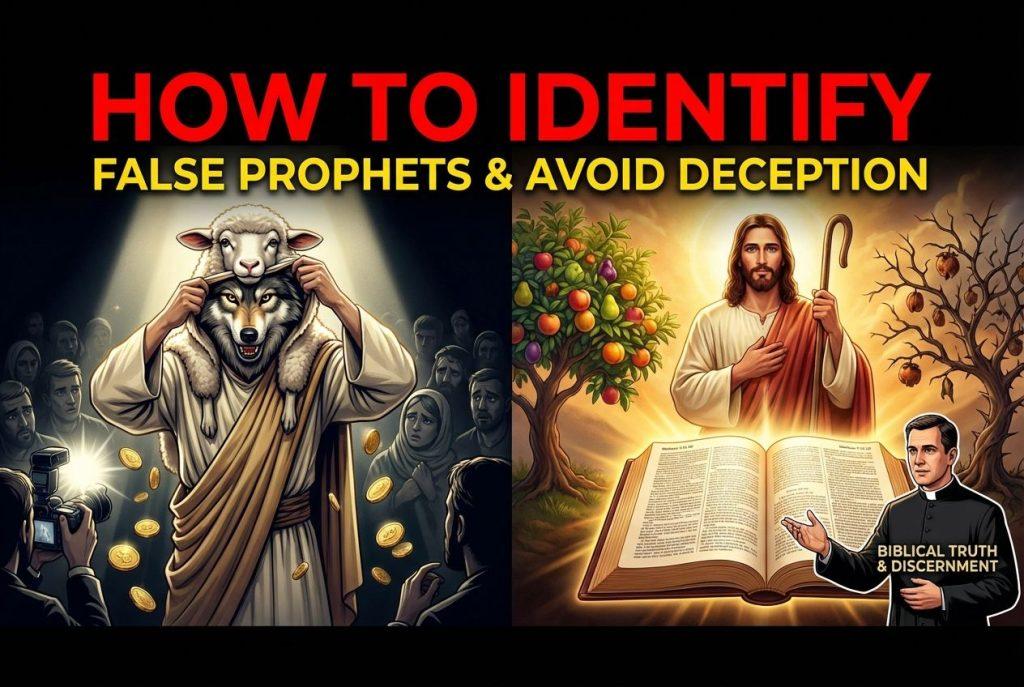
The New Testament expands and clarifies these Old Testament principles for the Christian context. Jesus addresses false prophecy directly in Matthew 7:15-20, warning His disciples to beware of false prophets who come in sheep’s clothing but inwardly are ravenous wolves. He provides a simple but profound test for evaluation, stating that false prophets can be recognized by their fruits. A good tree cannot bear bad fruit, and a bad tree cannot bear good fruit. This fruit-based test requires examining the results that flow from a prophet’s teaching and influence. Good fruit includes spiritual growth, increased charity, deeper faith, and movement toward holiness. Bad fruit manifests as division, confusion, moral compromise, and separation from the Church. The test requires patience and observation over time since fruits take time to mature and become visible. Superficial appearances can deceive, which is why Jesus emphasizes sustained examination of results rather than immediate impressions. This standard applies universally across different times and cultures, making it perpetually relevant for discernment. The simplicity of the fruit test makes it accessible to ordinary believers while remaining theologically sound.
Saint John provides additional guidance in his first epistle where he addresses the need to test spirits. In 1 John 4:1-3, he warns believers not to believe every spirit but to test the spirits to see whether they are from God, because many false prophets have gone out into the world. John provides a specific theological test, explaining that every spirit that acknowledges Jesus Christ come in the flesh is from God, while every spirit that does not acknowledge Jesus is not from God but is the spirit of the antichrist. This Christological test centers discernment on the person and nature of Jesus Christ. Any teaching that diminishes Christ’s divinity, His humanity, His salvific work, or His unique role as mediator between God and humanity fails this test. The test applies not only to explicit denials of Christ but also to subtle reductions of His significance or mission. False prophets throughout history have attempted various compromises regarding Christ’s identity, making this test perpetually necessary. John’s emphasis on testing demonstrates that gullibility does not equal faith; genuine faith requires intelligent engagement with truth claims. The early Church faced numerous false teachers, making these apostolic warnings immediately relevant to the first Christians and permanently relevant to all subsequent generations.
The Church’s Teaching on Discernment
The Catholic Church provides systematic teaching on how to approach claims of prophecy and private revelation. The Catechism addresses the role of charisms in the Church, including the charism of prophecy. According to Church teaching, charisms are graces of the Holy Spirit that benefit the Church and serve the good of humanity. However, the Catechism clearly states in its teaching that discernment of charisms remains always necessary. No charism exists exempt from being referred and submitted to the Church’s shepherds. This principle establishes the authority structure for evaluating prophetic claims. The Magisterium holds the responsibility for judging whether alleged charisms genuinely come from the Holy Spirit. Individual believers cannot simply accept prophetic claims based on personal conviction; proper ecclesial authority must evaluate these matters. This structure protects against the chaos and division that would result from unchecked claims of private revelation. The requirement for submission to Church authority immediately identifies false prophets, who typically resist or reject ecclesiastical oversight. Authentic prophets throughout Church history have welcomed examination by proper authority and submitted humbly to the Church’s judgment.
The Church distinguishes carefully between public revelation and private revelation. Public revelation refers to the deposit of faith given through Scripture and Tradition, which ended with the death of the last apostle. This revelation binds all Christians to belief and contains everything necessary for salvation. Private revelation, by contrast, refers to messages or visions given to individuals that may help people live the Gospel more faithfully but do not add to the deposit of faith. The Church may approve private revelations as worthy of belief, but such approval means only that the revelation contains nothing contrary to faith or morals and may be safely believed. Catholics remain free to accept or reject even approved private revelations without sinning. This framework helps believers maintain proper perspective when evaluating prophetic claims. False prophets often confuse these categories by presenting private revelations as if they were public revelation binding on all believers. They may claim that their messages correct or complete the Gospel, directly contradicting the teaching that public revelation is complete. Understanding this distinction enables Catholics to recognize immediately when someone oversteps the proper bounds of private revelation. The Church’s careful protection of the deposit of faith prevents the introduction of novelties that would corrupt Christian doctrine.
The Catechism also addresses false prophecy in relation to the end times. The teaching found in CCC 675 explains that before Christ’s second coming, the Church must pass through a final trial that will shake the faith of many believers. The supreme religious deception will be that of the Antichrist, a false messianism by which humanity glorifies itself in place of God and of His Messiah come in the flesh. This teaching warns that false prophecy will reach its culmination in a deception so powerful that it will test the faith of believers worldwide. The Antichrist will not simply deny Christ openly but will present a substitute that appears to fulfill human religious aspirations while actually rejecting divine truth. This warning helps Catholics recognize that false prophecy represents not merely individual errors but a spiritual warfare that intensifies as history approaches its fulfillment. The teaching also clarifies that false prophecy often appeals to religious sentiment while directing worship away from the true God. Many false prophets throughout history have not rejected religion but have offered false religious alternatives that satisfy human desires without requiring genuine conversion. This insight helps identify false prophets who cloak their deception in religious language and imagery.
Practical Signs of False Prophecy
Several practical signs help identify false prophets in concrete situations. First, false prophets typically demonstrate an unhealthy focus on themselves rather than on Christ and His Church. They position themselves as indispensable mediators between God and people, creating dependency on their ministry. Authentic prophets point away from themselves toward Christ, diminishing their own importance while magnifying God’s glory. False prophets cultivate personality cults where their followers show greater loyalty to the prophet than to the Church. They often display pride, refusing correction and claiming special status that exempts them from normal accountability. Their messages emphasize their own importance, often including claims that God has chosen them uniquely for a special mission that others cannot fulfill. This self-focus contrasts sharply with genuine prophets who maintain humility and submit readily to Church authority. The question of who receives glory provides a reliable test for discernment. When a prophet’s ministry results in people praising the prophet more than God, something has gone wrong. True prophets actively resist attempts to elevate them, while false prophets welcome and encourage such elevation.
Second, false prophets commonly generate fear and anxiety rather than the peace that comes from God. Their messages emphasize dire predictions and imminent catastrophes, creating a sense of urgency that pressures people to follow the prophet’s guidance. They may set dates for apocalyptic events or claim special knowledge about the timing of God’s judgments. While authentic prophecy sometimes includes warnings about consequences of sin, these warnings serve to call people to conversion rather than to create panic. The overall effect of authentic prophecy produces hope and trust in God’s providence, even when addressing serious matters. False prophets manipulate fear to control followers and maintain their relevance. They may revise failed predictions with explanations about why the timing changed, never acknowledging fundamental error. This pattern of generating fear and revising predictions indicates inauthentic prophecy. Catholics should remember that God does not operate through manipulation or coercion. The Holy Spirit produces the fruit of peace, not anxiety and turmoil. When alleged prophecy consistently produces agitation rather than peace, this signals a problem requiring investigation.
Third, false prophets typically show an obsession with money and material gain. They monetize their ministry in ways that go beyond reasonable support for their work. Their messages may include appeals for donations linked to promises of special blessings or warnings about consequences for not contributing. They live lavishly while asking followers to sacrifice financially, demonstrating hypocrisy between their teaching and their lifestyle. Authentic prophets have historically lived simply, often accepting poverty as part of their vocation. While not all true prophets must be poor, the absence of financial transparency and the presence of manipulative fundraising techniques indicate false prophecy. Jesus warned that people cannot serve both God and money, and this warning applies especially to those claiming prophetic gifts. The use of prophetic ministry for personal enrichment directly contradicts the nature of genuine charisms, which exist for the common good rather than private benefit. False prophets may defend their wealth by claiming that God blesses financial success, but this prosperity gospel conflicts with both Scripture and Church teaching. Catholics should examine how prophetic figures handle money and whether their financial practices demonstrate integrity and appropriate use of resources.
Testing Contemporary Prophetic Claims
When evaluating contemporary claims of prophecy, Catholics should follow a systematic process grounded in Church teaching. The first step involves examining the content of the message for theological accuracy. Any message that contradicts defined Church teaching automatically fails the test of authenticity, regardless of any accompanying signs or popularity. This requires familiarity with Catholic doctrine, particularly regarding essential beliefs about the Trinity, the Incarnation, salvation, the sacraments, and moral teaching. False prophets often introduce subtle distortions rather than obvious heresies, making careful examination necessary. A message might sound spiritual and use religious language while actually contradicting Catholic truth. For example, messages that suggest salvation without the Church, deny the Real Presence in the Eucharist, minimize the gravity of certain sins, or propose doctrines not found in the deposit of faith reveal themselves as inauthentic. The doctrinal test serves as the foundation for all other discernment because truth matters most. No amount of emotional appeal, apparent miracles, or personal testimony can override clear doctrinal error. Catholics uncertain about doctrinal matters should consult reliable sources such as the Catechism or seek guidance from faithful priests rather than making independent judgments about complex theological questions.
The second step examines the prophet’s character and lifestyle. Scripture teaches that prophets can be known by their fruits, which includes examining the prophet’s moral life. Does the prophet demonstrate genuine holiness through humility, charity, chastity, obedience, and other virtues? Or does the prophet’s life reveal pride, manipulation, moral compromise, or scandal? While prophets remain human and capable of sin, a pattern of serious moral failure or persistent unrepentant sin indicates false prophecy. Particular attention should focus on whether the prophet submits to legitimate authority, including both ecclesial authority and civil law where applicable. False prophets often claim that their special calling exempts them from normal rules, creating separate standards for themselves. They may excuse moral failures by claiming that others cannot understand their unique situation or that God has granted them special permissions. These rationalizations indicate corruption rather than genuine prophecy. Catholics should also examine whether the prophet shows genuine love for the Church or demonstrates contempt and criticism that goes beyond legitimate concerns about human failings. True prophets love the Church even when calling for reform, while false prophets attack the Church’s divine constitution and established teaching.
The third step investigates the effects of the prophet’s ministry on followers. Does the ministry produce genuine spiritual fruit such as increased faith, hope, charity, peace, and growth in holiness? Or does it generate division, confusion, financial exploitation, personality cult behavior, or separation from the Church? The effects of ministry become visible over time as patterns emerge. Initial enthusiasm or apparent conversions may occur even in false movements, so sustained observation matters. Catholics should ask whether followers grow in authentic Catholic practice including regular sacramental life, submission to Church authority, charitable works, and integration into parish life. False prophetic movements often create parallel structures that compete with regular Catholic life, leading followers to prioritize the movement over their parish and to view other Catholics as less enlightened. This separatism indicates problems with the movement’s spiritual health. Additionally, the presence of manipulation, control, or abuse within the movement reveals false prophecy. God does not lead people through fear, manipulation, or violation of human dignity. The Holy Spirit’s work produces freedom, peace, and genuine conversion rather than bondage to human authority figures.
The Role of Church Authority
The Catholic Church provides institutional structures for evaluating prophetic claims, protecting believers from having to make these judgments alone. Local bishops hold primary responsibility for investigating alleged apparitions, visions, or prophetic messages that occur in their dioceses. The Church has established norms for proceeding with such investigations, ensuring systematic and thorough evaluation. When reports of supernatural phenomena arise, the bishop typically appoints a commission of theologians and other experts to examine the evidence. This commission investigates the credibility of witnesses, examines the content of messages for theological soundness, and evaluates the overall effects of the phenomenon. The process can take years or even decades because the Church acts carefully, recognizing that hasty judgments could either suppress authentic movements of the Holy Spirit or give credence to false claims. During the investigation period, Catholics should maintain a respectful but cautious attitude, neither promoting the alleged revelation as certainly true nor condemning it without proper authority. The Church’s deliberate pace in these matters reflects wisdom gained through centuries of experience.
The bishop can reach several possible conclusions after investigating alleged prophecy. He may judge the events as supernatural in origin and worthy of belief, meaning Catholics may safely accept them though they remain free not to do so. He may judge them not supernatural, meaning Catholics should not consider them genuine divine revelation. He may declare the matter uncertain, requiring more time or evidence for proper judgment. In rare cases, the Holy See may become involved, either because the bishop requests assistance or because the matter has implications for the universal Church. Throughout this process, faithful Catholics should respect the Church’s authority and follow the guidance provided by legitimate leadership. False prophets typically resist or reject this process, claiming that Church officials lack the spiritual sensitivity to recognize genuine prophecy. This resistance itself reveals the false nature of their claims because authentic charisms operate within the Church’s structure rather than in opposition to it. The Church’s authority in these matters flows from Christ’s promise to guide His Church through the Holy Spirit, making ecclesial judgment reliable and trustworthy.
Private individuals should not promote alleged prophecies before the Church has rendered judgment. This restriction applies especially to messages that claim urgent importance or immediate dissemination. False prophets often claim that Church authorities move too slowly and that the urgent nature of their message justifies bypassing proper channels. However, truly important divine messages would certainly receive proper ecclesial confirmation rather than requiring promotion outside official channels. The spread of unapproved prophetic messages through social media and other means creates confusion among the faithful and undermines proper authority. Catholics bear responsibility to exercise restraint regarding such matters, refusing to share or promote alleged revelations that lack Church approval. This restraint demonstrates trust in the Church’s guidance and recognition that individual judgment cannot substitute for proper authority. When doubt exists about whether a message or movement has Church approval, Catholics should investigate before accepting or promoting the claims. The Church maintains records of approved apparitions and messages, making verification possible. If verification cannot be obtained, caution dictates restraint.
Common Tactics of False Prophets
False prophets employ recognizable tactics that Catholics should learn to identify. One common approach involves claiming special revelation about timing of future events, particularly regarding the end times. These prophets set dates for the Second Coming, major catastrophes, or divine interventions, creating urgency around their messages. When the predicted events fail to occur, they revise their predictions or offer explanations about why the timing changed, often claiming that prayer altered God’s plans. This pattern of failed predictions followed by explanations repeats throughout history. True prophets do not presume to know the day or hour of events that Jesus Himself said remain known only to the Father. The obsession with dates and timelines indicates false prophecy rather than genuine revelation. Catholics should remember that authentic Christian living focuses on daily faithfulness rather than calculating apocalyptic timetables. The attempt to discern precise timing distracts from the call to conversion and holiness that characterizes genuine prophecy.
Another tactic involves creating an “us versus them” mentality that divides followers from the broader Church. False prophets claim that only their followers possess true understanding while the rest of the Church remains spiritually blind or compromised. They may refer to their group as a remnant that will remain faithful when others fall away, positioning themselves as special and elite. This divisive approach contradicts the Church’s catholicity and the communion of saints. While the Church certainly contains both faithful and unfaithful members, genuine prophets work toward unity rather than fostering division. False prophets exploit legitimate concerns about problems in the Church to justify separation from normal Catholic life and structures. They may claim that attending regular parish masses or following episcopal guidance constitutes compromise with error. This separatism indicates false prophecy because authentic charisms build up the Church rather than creating competing structures. Catholics should be wary of movements that discourage integration into regular parish life or that suggest their special insights make normal Catholic practice insufficient.
False prophets also frequently employ emotional manipulation rather than reasonable persuasion. They use fear, guilt, sentimentality, or sensationalism to evade critical examination of their claims. Their messages target emotions while avoiding logical analysis or theological scrutiny. They may respond to questions or challenges with accusations of spiritual weakness, lack of faith, or demonic influence rather than providing reasoned responses. This emotional manipulation prevents followers from exercising the discernment that the Church requires. Authentic prophecy welcomes examination because truth can withstand scrutiny. The resistance to questioning indicates that the prophet knows their claims cannot survive careful analysis. Catholics should insist on using reason alongside faith, recognizing that God gave humans intellect for a purpose. Emotional experiences can accompany genuine spiritual encounters, but emotion alone cannot validate prophetic claims. The ability to produce emotional responses through various psychological techniques means that emotional impact proves nothing about divine origin. Wise discernment requires intellectual engagement with claims rather than accepting them based solely on feelings.
Developing Personal Discernment
Catholics bear responsibility to develop their own capacity for discernment while remaining properly submitted to Church authority. This development begins with solid catechetical formation, knowing what the Church actually teaches about faith and morals. Ignorance of Catholic doctrine leaves believers vulnerable to deception because they cannot recognize when teaching contradicts authentic Catholic truth. Regular study of the Catechism, reading of Scripture with proper interpretation, and learning from reliable Catholic sources builds the foundation for discernment. This formation should include understanding the nature of public versus private revelation, the role of the Magisterium, the criteria for evaluating charisms, and the Church’s teaching on the end times. With this foundation, Catholics can evaluate claims more effectively while avoiding either gullibility or cynicism. The formation process continues throughout life as believers deepen their understanding of the faith. Those who remain content with childhood levels of religious knowledge will struggle to discern more sophisticated forms of deception.
Regular sacramental life provides essential nourishment for developing discernment. Frequent participation in the Eucharist and regular confession strengthen the spiritual senses and increase sensitivity to truth. The sacraments provide objective encounters with divine grace rather than subjective experiences that depend on emotion or persuasive personality. This sacramental foundation keeps Catholics grounded in the Church’s life rather than seeking spiritual experiences outside proper channels. The Devil can counterfeit many spiritual experiences, but he cannot duplicate the sacraments instituted by Christ. Catholics who prioritize sacramental life over exotic spiritual experiences protect themselves from deception. Prayer life also contributes to discernment, particularly prayer that includes Scripture reading, meditation on Church teaching, and seeking wisdom from the Holy Spirit. The daily practice of prayer develops familiarity with how God actually speaks to the soul, making false voices more recognizable. This authentic spiritual life produces the peace, humility, and clarity that characterize genuine relationship with God, contrasting with the agitation and confusion that often accompany false prophecy.
Consulting with wise spiritual guides provides another important dimension of personal discernment. Catholics should not attempt to evaluate complex spiritual matters in isolation. Faithful priests, spiritual directors with proper formation, and mature Catholic believers can offer perspective that individuals lack when examining claims affecting themselves. The consultation process itself demonstrates humility and recognition of human limitation. False prophets discourage such consultation, preferring that followers trust only the prophet’s judgment. Authentic spirituality welcomes multiple perspectives and values the wisdom found in the broader Catholic community. When seeking guidance, Catholics should approach sources known for fidelity to Church teaching rather than those known for novelty or sensationalism. The advice received should be evaluated against Church teaching, recognizing that even well-intentioned guides can err. However, the convergence of multiple reliable sources pointing in the same direction provides strong indication of truth. The isolation that false prophets cultivate prevents this type of confirmation, keeping followers dependent on single sources of interpretation.
Historical Examples and Lessons
Church history provides numerous examples of both authentic and false prophets, offering lessons for contemporary discernment. Authentic prophets like Saint Catherine of Siena, Saint Hildegard of Bingen, and Saint John of the Cross received genuine charisms while remaining firmly submitted to Church authority. They endured investigation of their claims, welcomed theological examination, and accepted correction when appropriate. Their prophecies led people toward greater faithfulness to Catholic teaching rather than away from the Church. Their personal holiness supported their prophetic claims, demonstrating consistency between message and life. These saints maintained humility even when receiving extraordinary graces, attributing everything to God rather than claiming personal spiritual superiority. Their example shows what authentic prophecy looks like in practice. Modern prophetic claims should be evaluated against this standard, asking whether the prophet demonstrates similar characteristics. The absence of humility, submission, or genuine holiness indicates problems regardless of how impressive the claimed revelations might be.
History also records numerous false prophets whose movements caused harm before being rejected by the Church. Some claimed to be Christ returned, others predicted specific dates for the end of the world, and still others taught doctrines incompatible with Catholic faith. These movements often began with sincere believers who became deceived, demonstrating that good intentions do not guarantee authentic prophecy. The movements typically exhibited common patterns including rejection of Church authority, failed predictions, moral compromise among leaders, and eventual dissolution or transformation into heretical sects. Studying these historical examples helps Catholics recognize similar patterns in contemporary movements. The tactics used by false prophets remain remarkably consistent across centuries, suggesting common spiritual dynamics at work. Learning from past errors prevents repeating them in new contexts. The Church’s experience in dealing with false prophecy throughout history informs current norms and procedures, representing accumulated wisdom rather than arbitrary rules.
The example of Montanism in the early Church illustrates several important principles. This movement began in the second century with Montanus, who claimed to receive new revelations from the Holy Spirit. The movement emphasized ecstatic prophecy and predicted the imminent return of Christ. Initially, the movement attracted sincere believers seeking deeper spiritual experience, but it gradually developed into a separate sect. The Church rejected Montanism because it claimed continuing revelation equivalent to apostolic teaching, emphasized prophecy over the established structure of Church authority, and created division rather than building up unity. This historical example demonstrates that false prophecy can begin within the Church community before separating from it. The appeal to spiritual experience and the promise of special knowledge that characterized Montanism continue to attract people in every age. Modern Catholics should recognize these same appeals in contemporary movements claiming special revelations or offering spiritual experiences beyond normal Catholic practice. The Church’s rejection of Montanism established important principles about the completeness of public revelation and the proper role of charisms within Church structure.
Responding to False Prophecy
When Catholics encounter false prophecy, proper response requires both charity and firmness. The initial response should involve charitable conversation with those promoting the false prophecy, helping them understand concerns about the teaching or claims. Many people accept false prophecy through innocent mistake rather than malicious intent, and gentle correction may help them recognize problems. This conversation should reference specific concerns grounded in Church teaching rather than merely expressing personal disagreement. The explanation should clarify why the prophecy contradicts Catholic faith or fails to meet standards for authentic revelation. However, this charitable approach has limits. If the person promoting false prophecy refuses correction and continues spreading error, firmer responses become necessary. Catholics should clearly distance themselves from the false teaching and may need to publicly clarify that the claims lack Church approval. This public clarification protects others who might be misled by the false prophecy. The goal remains restoration and truth rather than condemnation of persons, but truth must be defended even when this creates tension.
Church authority should be informed when false prophecy spreads in ways that threaten the faithful. Local pastors and bishops need to know when their flocks face spiritual danger so they can provide appropriate guidance and protection. The report should present facts rather than speculation, documenting specific claims and effects rather than sharing rumors. Church leaders can then investigate and respond according to their pastoral judgment and canonical authority. This cooperation with Church authority differs from the tale-bearing or gossip that damages community; it represents responsible concern for the common good. False prophets often characterize any reporting to authorities as persecution, but authentic accountability serves the Church’s health. Catholics should not feel guilty about alerting proper authorities to serious spiritual problems. The alternative would be allowing false prophets to operate without challenge, potentially causing significant harm.
Personal boundaries may need to be established with individuals heavily involved in false prophetic movements. While maintaining charity, Catholics need not continue relationships that repeatedly expose them to false teaching or pressure to accept questionable claims. Family relationships present particular challenges when relatives embrace false prophecy, requiring balance between love and truth. In such cases, clear but gentle boundaries protect both parties from the damage that can result from ongoing conflict over these matters. The boundaries might include agreements not to discuss the prophetic claims or limiting contact to situations where the topic can be avoided. These practical measures do not mean abandoning people to error but rather recognizing human limitations and maintaining one’s own spiritual health. Prayer for those deceived by false prophecy should continue even when direct contact decreases. The ultimate hope remains that those caught in false movements will return to authentic Catholic faith and practice.
Protecting Vulnerable Populations
Certain populations face particular vulnerability to false prophets and require special protection. New converts to Catholicism often lack the formation necessary to evaluate complex theological claims, making them easy targets for false teachers. These converts bring enthusiasm and sincerity but may not yet understand Catholic teaching well enough to recognize contradictions. Parishes and sponsors should provide solid catechetical formation to help new Catholics develop discernment skills. This formation should specifically address how to evaluate prophetic claims and why submission to Church authority matters. New converts should be encouraged to build relationships with mature Catholics who can help them process questions and concerns that arise. The excitement of new faith can make people vulnerable to movements promising deeper experiences or special knowledge, so wise guidance during this formative period proves essential. Warning new converts about false prophecy without creating paranoia requires balance, emphasizing both the Church’s reliable guidance and the need for personal vigilance.
The elderly and those experiencing grief or crisis also face heightened vulnerability. False prophets often target people dealing with loss, offering messages supposedly from deceased loved ones or predictions about reuniting in the afterlife. The emotional vulnerability during grief makes people less able to evaluate claims critically. These tactics exploit pain rather than providing genuine comfort. Catholic teaching about death, judgment, and eternal life should be clearly explained to those in grief, offering real hope grounded in faith rather than the false comfort of unauthorized revelations. Similarly, elderly people may be targeted with predictions about the end times or claims about special preparations needed for coming events. The combination of natural concern about mortality and possible cognitive decline can make evaluation of such claims difficult. Families should monitor what spiritual materials elderly relatives consume and gently redirect them away from questionable sources. This protection demonstrates love and respect rather than infantilizing or controlling. The goal involves helping vulnerable people access authentic Catholic teaching rather than false alternatives.
Young people face particular challenges in the digital age where false prophecy spreads rapidly through social media and online platforms. The combination of limited formation, natural idealism, and constant exposure to unverified claims creates significant vulnerability. Young Catholics need explicit instruction about evaluating online content and understanding that not everything presented as Catholic actually reflects authentic Church teaching. They should learn to verify claims by checking official Church sources rather than accepting information from unknown social media accounts. Youth ministry should include media literacy alongside traditional catechesis, equipping young people to discern truth in the digital environment. Parents bear primary responsibility for monitoring and guiding their children’s online consumption, but parishes can support families through education and resources. The pervasive nature of online false prophecy makes this protection increasingly urgent as technology continues developing new platforms for spreading questionable content. Young people’s natural skepticism toward institutional authority can be channeled positively by teaching them critical thinking skills grounded in faith.
Living with Uncertainty
Catholics must learn to live with appropriate uncertainty about matters that the Church has not definitively judged. Not every prophetic claim receives quick resolution, and believers sometimes face extended periods without clear guidance about specific movements or messages. This uncertainty can feel uncomfortable for those seeking definitive answers about complex situations. However, the uncertainty itself provides an opportunity for growth in faith and trust. Catholics can maintain a position of respectful caution, neither embracing claims prematurely nor condemning them without authority. This middle position acknowledges human limitation while trusting that God will guide the Church to truth in His timing. The patience required by this approach forms character and teaches reliance on God rather than human certainty. False prophets often exploit the desire for certainty by offering clear answers about matters properly left to mystery. They promise to explain exactly how future events will unfold or claim to possess definitive interpretations of complex situations. This false certainty appeals to the human desire for control but ultimately leads to disappointment when reality proves more complex than predicted.
The uncertainty applies particularly to end-times speculation where numerous questions lack definitive answers. Catholics know that Christ will return and that history has a goal, but the specific timing and many details remain unknown. The Church has defined certain truths about the last things but has left many questions open to theological speculation. Living with this uncertainty means focusing on daily faithfulness rather than attempting to decode prophetic timetables. The attempt to gain certainty about these matters through private revelation actually represents a lack of faith in God’s providence. True faith trusts God with the future while attending to present responsibilities. This trust produces peace and freedom rather than the anxiety that characterizes false prophetic movements. Catholics who have developed this trust find themselves less vulnerable to manipulation through fear or false promises of insider knowledge. The spiritual maturity to live without complete certainty about every question represents significant growth in faith.
The Church’s careful processes for evaluating prophetic claims acknowledge legitimate uncertainty while working toward truth. The investigation periods can last years or decades because rushing to judgment serves no one well. Catholics should respect this deliberate pace rather than demanding quick answers. The Church’s two-thousand-year perspective helps leaders recognize that matters appearing urgent in the moment often prove less significant over time. This long view prevents overreaction to contemporary claims while ensuring that genuinely important revelations receive proper recognition. The measured approach also protects the Church’s credibility by avoiding the embarrassment of approving movements that later prove false or rejecting movements that prove authentic. Living with the Church’s careful process means trusting that divine providence operates through the institution Christ established rather than demanding that the Church conform to contemporary expectations for immediate resolution. This trust in the Church’s processes represents mature faith that understands the difference between legitimate authority and personal preference.
The Positive Role of Prophecy
While much of this discussion has focused on identifying false prophecy, Catholics should remember that authentic prophecy plays a valuable role in Church life. The Holy Spirit continues to bestow charisms on believers for the building up of the Church. Genuine prophetic gifts help the community hear God’s word in contemporary situations, calling people to conversion and faithfulness. These gifts should be welcomed and encouraged within proper structures. The Church’s concern about false prophecy does not mean rejecting all prophetic activity. Rather, careful discernment distinguishes authentic from false prophecy, allowing genuine charisms to flourish while protecting against deception. Catholics should cultivate openness to how the Holy Spirit might speak through various members of the Body of Christ. This openness combined with proper discernment creates healthy spiritual life.
Authentic prophecy typically manifests in less dramatic ways than the spectacular claims of false prophets. A wise spiritual director who helps someone recognize God’s call, a preacher who applies Scripture powerfully to contemporary life, or a simple believer who speaks an encouraging word at a crucial moment all exercise prophetic gifts. These ordinary manifestations of prophecy serve the Church constantly without generating publicity or claiming special status. The focus on dramatic revelations and spectacular predictions often causes people to miss the quiet ways God speaks through His people. Catholics should appreciate these humble forms of prophecy that characterize daily Church life. The recognition that prophecy operates in ordinary ways helps maintain realistic expectations and prevents the fascination with sensationalism that makes people vulnerable to false prophets. God’s usual method involves working through normal Church structures and ordinary believers rather than through spectacular interventions that bypass established channels.
The ultimate purpose of all prophecy involves pointing toward Christ and building up His Church. Any alleged prophecy that fails this purpose reveals itself as inauthentic regardless of other characteristics. True prophets decrease so that Christ might increase, directing attention toward the Savior rather than toward themselves. Their messages call people to deeper conversion, more faithful practice of the faith, and greater charity toward others. These effects identify authentic prophecy far more reliably than spectacular claims or detailed predictions. Catholics should evaluate prophetic claims primarily by asking whether they lead toward Christ and strengthen the Church. This simple test cuts through much confusion and helps maintain focus on what matters most. The Church ultimately needs not sensational revelations but faithful disciples who live the Gospel authentically, and true prophecy serves this fundamental need.
Conclusion and Final Guidance
The task of identifying false prophets requires vigilance, wisdom, and reliance on Church teaching and authority. Catholics need not fear false prophets but should approach all prophetic claims with appropriate caution grounded in faith. The scriptural standards of examining fruits, testing messages against revealed truth, and requiring submission to Church authority provide reliable guidance. Personal discernment develops through formation, sacramental life, and consultation with wise guides. The Church’s institutional processes protect believers from having to make complex judgments alone. Historical experience offers lessons about common patterns in false prophecy that repeat across ages. Appropriate responses balance charity with firmness, protecting truth while seeking the good of all involved. Special attention to vulnerable populations prevents exploitation of those less able to defend themselves. Living with proper uncertainty about matters not definitively judged requires faith and patience. Recognizing the positive role of authentic prophecy prevents cynicism while maintaining necessary discernment. The ultimate goal involves following Christ faithfully within His Church, trusting His promise to guide believers into all truth through the Holy Spirit working in and through the community of faith.
Catholics should remember that the ordinary Magisterium provides reliable guidance for Christian living, making dependence on extraordinary revelations unnecessary for salvation. The deposit of faith contains everything needed for knowing God and living according to His will. Private revelations may help individuals apply this truth to their lives but cannot replace or supplement public revelation. This understanding liberates believers from anxiety about missing important messages or failing to follow the latest claimed revelation. Faith in Christ and obedience to Church teaching suffice for authentic Christian life. The peace that comes from this realization contrasts sharply with the agitation produced by false prophets who claim that their messages provide essential information unavailable elsewhere. Catholics who grasp this truth find themselves protected from much deception simply by remaining focused on established teaching rather than pursuing novel revelations. The simplicity of this approach does not indicate spiritual mediocrity but rather mature faith that trusts God’s providence and the Church’s guidance. May all believers grow in this mature faith, developing both the openness to the Holy Spirit’s work and the discernment to recognize false prophecy when it appears.
Disclaimer: This article presents Catholic teaching for educational purposes. For official Church teaching, consult the Catechism and magisterial documents. For personal spiritual guidance, consult your parish priest or spiritual director. Questions? Contact editor@catholicshare.com
Sign up for our Exclusive Newsletter
- 📌 Add CatholicShare as a Preferred Source on Google
- 🎁 Join us on Patreon for Premium Content
- 🎧 Check Out These Catholic Audiobooks
- 📿 Get Your FREE Rosary Book
- 📱 Follow Us on Flipboard
-

Recommended Catholic Books
Discover hidden wisdom in Catholic books — invaluable guides enriching faith and satisfying curiosity. #CommissionsEarned
- The Early Church Was the Catholic Church
- The Case for Catholicism - Answers to Classic and Contemporary Protestant Objections
- Meeting the Protestant Challenge: How to Answer 50 Biblical Objections to Catholic Beliefs
As an Amazon Associate, I earn from qualifying purchases. Thank you for your support.