
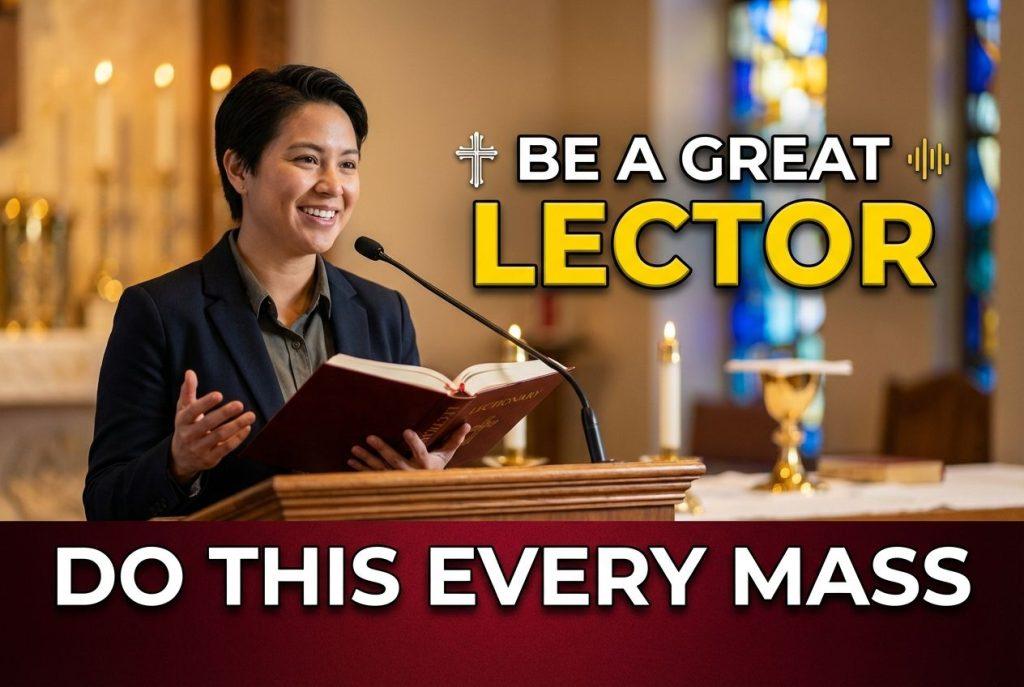
Brief Overview
- The ministry of lector holds a sacred place in Catholic worship because lectors proclaim the Word of God to the assembled faithful during Mass.
- Reading at a slower pace allows the congregation to absorb the meaning of Scripture and creates space for the Holy Spirit to work in hearts.
- Proper preparation includes spiritual prayer with the readings, understanding the biblical context, and practicing the text aloud multiple times.
- Good lectors use clear pronunciation, proper breathing, varied pacing, and appropriate eye contact to serve the assembly effectively.
- The role requires both technical skills such as articulation and volume control, as well as spiritual qualities including reverence and love for Scripture.
- Serving as a lector means becoming an instrument through which Christ himself speaks to his people in the liturgy.
Understanding the Sacred Ministry of the Lector
The role of lector stands as one of the most ancient and honored ministries in the Catholic Church. When lectors proclaim Scripture during Mass, they fulfill a function that dates back to the earliest Christian communities. The Church teaches that when Sacred Scriptures are read during the liturgy, God himself speaks to his people, and Christ becomes present in his word. This reality places an enormous responsibility on those who serve in this ministry. Lectors do not simply read words from a book; they become living vessels through which the living Word of God reaches the hearts of the faithful. The General Instruction of the Roman Missal makes clear that the function of proclaiming the readings is ministerial rather than presidential, meaning that it belongs properly to lay faithful rather than to the priest. Every baptized Catholic who takes on this ministry enters into a tradition that stretches back through centuries of Christian worship. The lector serves the entire assembly by making the Word accessible and allowing it to penetrate deeply into the consciousness of those gathered. This service requires both technical competence and spiritual depth. Understanding the sacred nature of this ministry forms the foundation for everything else a lector must learn and practice.
The Church’s liturgical documents emphasize that readings from Scripture form an element of the greatest importance in the liturgy. The Catechism references how the Liturgy of the Word includes the writings of the prophets from the Old Testament and the memoirs of the apostles from the New Testament (CCC 1349). These readings are not meant to be rushed through or treated as mere preliminaries to the Eucharistic prayer. Instead, they deserve to be proclaimed with reverence, clarity, and conviction. The faithful have a right to hear God’s Word proclaimed in a way that allows them to listen reverently and receive it with gratitude. When lectors fail to prepare adequately or rush through readings without attention to pacing and meaning, they deprive the assembly of the full richness of Scripture. The ministry of lector thus carries both privilege and responsibility. Those who serve in this capacity must recognize that they are not performing but rather proclaiming. Their voices become instruments of divine communication. The words they speak are not their own but belong to God himself. This understanding should shape every aspect of how lectors prepare for and execute their ministry at Mass.
The Critical Importance of Reading Slowly
One of the most common mistakes lectors make involves reading too quickly. The temptation to rush through a reading can stem from nervousness, from a desire to finish quickly, or simply from not understanding how differently people process spoken words compared to written text. When someone reads silently to themselves, they can control the pace, reread confusing passages, and take time to absorb meaning. The congregation listening to a lector has none of these advantages. They hear the words only once, in real time, with no opportunity to pause or review. If a lector reads at a conversational pace or faster, much of the meaning will be lost on listeners. The acoustics of most churches, the presence of background noise, and the natural time lag in mental processing all require a significantly slower pace than feels natural to the reader. Experts in lector training consistently emphasize that it is almost impossible to read too slowly during the liturgy. What feels painfully slow to the person at the ambo often registers as just right for the assembly. Lectors must train themselves to read at a pace that feels uncomfortably slow at first.
Reading slowly serves multiple theological and practical purposes. From a theological perspective, slower reading allows the assembly time for meditation and reflection on God’s Word. The General Instruction of the Roman Missal specifically instructs that the Liturgy of the Word should be celebrated in a way that favors meditation, and any haste that hinders recollection should be avoided. Brief periods of silence are recommended after readings so that the Word of God may be grasped by the heart. However, even within the reading itself, a slower pace creates natural space for the Holy Spirit to work. When words are proclaimed deliberately and with appropriate pauses, listeners have time to let meaning sink in rather than simply wash over them. From a practical perspective, slower reading improves comprehension dramatically. Studies of oral communication show that listeners need significantly more processing time than readers realize. A reading that takes three minutes at a rushed pace might take four or even five minutes at an appropriate liturgical pace. That extra time makes an enormous difference in how much the congregation actually understands and retains. Lectors who read slowly demonstrate respect for the text, respect for the assembly, and ultimately respect for the Word of God itself.
Spiritual Preparation for the Ministry
Before a lector can effectively proclaim Scripture, they must first allow that Scripture to speak to their own heart. Spiritual preparation forms the essential foundation for liturgical service. This preparation begins with prayer, as the lector asks the Holy Spirit to illuminate the meaning of the text and to work through them as an instrument. Many experienced lectors recommend praying with the assigned readings every day in the week leading up to their scheduled Mass. This daily meditation allows the readings to become familiar and to reveal layers of meaning that might not be apparent on first reading. The lector should ask themselves what God might be saying through this particular passage. They should consider how the reading connects to the overall liturgical season and to the other readings for that Sunday. They should reflect on which phrases or images seem most powerful and how the text might speak to the specific needs of their parish community. This prayerful engagement transforms the reading from a task to be performed into a message to be shared. The lector becomes not just a voice but a witness who has personally encountered the Word.
Spiritual preparation also involves examining one’s own life in light of the Scriptures to be proclaimed. If a lector is proclaiming a passage about forgiveness, they should consider whether they are living that message in their own relationships. If the reading speaks of faith in times of trial, the lector might reflect on their own trust in God. This personal application does not mean the lector imposes their own interpretation onto the text or proclaims it in an overly dramatic or emotional way. Rather, it means they proclaim from a place of authentic engagement rather than mere performance. The congregation can sense when a lector has prayed with a reading and when they have not. There is a quality of presence and conviction that comes through only when the proclaimer has first allowed themselves to be addressed by God’s Word. Many parishes encourage lectors to participate in Bible studies or lectionary reflection groups where they can discuss the upcoming readings with others. This communal preparation enriches individual understanding and helps lectors recognize connections and themes they might have missed on their own. The ministry of lector calls for genuine love of Scripture and a commitment to making it part of daily spiritual life rather than something encountered only minutes before Mass begins.
Understanding the Biblical Context
Effective proclamation requires more than just reading words correctly; it requires understanding what those words mean and how they fit into the larger biblical narrative. A lector should approach each reading with basic exegetical preparation. This means looking up unfamiliar names and places to learn their pronunciation and significance. It means reading the verses that come before and after the assigned passage to understand its context. It means consulting a good Catholic commentary or study Bible to grasp the historical background and theological meaning of the text. For example, if the reading comes from one of Paul’s letters, the lector should know which community Paul was addressing and what situation prompted the letter. If the reading is a prophetic oracle from the Old Testament, the lector should understand something about that prophet’s ministry and the historical circumstances of Israel at that time. This contextual knowledge affects how a lector proclaims the text. Understanding that a passage comes from a time of exile or persecution might lead the lector to emphasize certain themes. Recognizing that a text contains wordplay or irony in the original language might influence pacing and emphasis.
The Catholic Church provides excellent resources for this kind of biblical preparation. The Lectionary itself includes brief introductions to the readings. The United States Conference of Catholic Bishops website offers extensive materials for understanding the Sunday readings. Various publishers produce workbooks specifically designed for lectors that include pronunciation guides, contextual information, and suggestions for proclamation. Lectors should take advantage of these resources rather than approaching their ministry unprepared. Some readings contain difficult concepts or challenging passages that require careful thought. A reading about the covenant at Sinai means more when the lector understands the significance of covenant in ancient Near Eastern culture. A passage from the Sermon on the Mount carries greater impact when the lector grasps how Jesus was both affirming and radically reinterpreting the Jewish law. A text from the Book of Revelation makes more sense when the lector knows something about apocalyptic literature. This intellectual preparation complements the spiritual preparation discussed earlier. Together, they equip the lector to serve as more than just a voice but as a true minister of the Word who helps the assembly encounter Scripture in its fullness.
Practical Preparation and Practice
Once a lector has engaged in spiritual and intellectual preparation, they must turn to the practical work of preparing to proclaim the text aloud. This means reading the passage out loud multiple times, not silently. The human voice behaves differently than the internal reading voice, and tongue, lips, and breath need practice to coordinate smoothly. Experts recommend that lectors practice their assigned reading aloud at least six to ten times before Mass. This repetition serves several purposes. First, it helps the lector become comfortable with difficult words or phrases so they do not stumble during the actual proclamation. Second, it allows the lector to experiment with pacing, emphasis, and pauses to find what works best for that particular text. Third, it builds the lector’s confidence so they can proclaim with authority rather than anxiety. During practice, the lector should pay attention to where they need to breathe. Proper breathing supports good vocal projection and prevents the lector from running out of air mid-sentence. The lector should practice breathing from the diaphragm rather than shallow chest breathing.
Practice should also involve careful attention to pronunciation. The biblical text contains many names and places that are unfamiliar in everyday speech. Mispronouncing a name shows lack of preparation and can distract the congregation from the message. Lectors should consult pronunciation guides, which are available in most lector workbooks and online resources. When in doubt, it is better to ask someone knowledgeable than to guess. Practice should happen in an environment similar to the actual proclamation setting when possible. Some lectors practice at the church itself, standing at the ambo and using the microphone to get a feel for the acoustics and equipment. This allows them to adjust their volume and pacing appropriately. Other practical considerations include marking the Lectionary to note where pauses should occur or which words require emphasis. Many experienced lectors use a pencil to mark their text with breathing points, underlining key phrases, or adding notes about pacing. These markings serve as helpful reminders during the actual proclamation. The goal of all this practical preparation is to become so familiar with the text that the lector can proclaim it with naturalness and confidence, making eye contact with the assembly at key moments rather than keeping their head buried in the book.
Mastering Vocal Technique
The physical act of proclaiming Scripture requires attention to several vocal techniques that may not come naturally but can be learned and improved with practice. Volume control stands as one of the most basic requirements. A lector must speak loudly enough to be heard clearly by everyone in the church, including those sitting in the back pews or those with hearing difficulties. However, shouting or straining the voice is neither necessary nor desirable. Proper breath support and microphone technique allow a lector to project their voice without undue stress. When using a microphone, lectors should position themselves about six to eight inches away from it and speak directly into it rather than to the side. They should test the microphone volume before Mass begins if possible. Some lectors make the mistake of speaking too softly out of nervousness or false modesty, but this serves no one. The assembly has a right to hear God’s Word clearly, and the lector has a responsibility to make that possible. Vocal projection comes from good posture, deep breathing, and confident delivery rather than from forcing the voice.
Articulation and enunciation matter enormously for comprehension. Every word should be pronounced clearly and completely, with all consonants crisp and all vowels fully formed. Sloppy articulation causes words to run together and makes it difficult for listeners to follow the reading. Lectors can improve their articulation through specific exercises. Tongue twisters help train the mouth to move quickly and precisely. Reading poetry aloud builds sensitivity to the sound and rhythm of language. Recording oneself and listening back reveals articulation problems that might not be apparent while speaking. Pacing and rhythm also contribute to effective proclamation. While reading slowly remains crucial, this does not mean reading in a monotone or at exactly the same pace throughout. Good oral interpretation involves varying the pace to match the content and mood of the text. Narrative passages might move slightly faster, while poetic or particularly significant phrases might slow down even more. Pauses serve as vocal punctuation, giving the assembly time to absorb what they have just heard before moving to the next thought. A well-placed pause can be more effective than any amount of dramatic emphasis. Lectors should look for natural pause points at commas, periods, and the ends of sense units. They should pause for at least a full second at commas and two seconds at periods.
Appropriate Use of Inflection and Emphasis
How a lector uses their voice to convey meaning without adding artificial drama requires careful balance. The lector’s role is to proclaim, not to perform or interpret dramatically. At the same time, monotone reading that shows no awareness of the text’s meaning serves the assembly poorly. The key lies in what might be called interpretive clarity; letting the text’s own emotional tone and meaning come through naturally. When reading a passage that contains questions, the lector’s voice should rise slightly at the end as questions naturally do in speech. When reading direct quotations, the lector might use subtle changes in tone to distinguish the quoted speech from the narrative frame. When the text contains a list, the lector might emphasize the rhythm that links the items. These techniques help listeners follow the structure and meaning of the text without the lector imposing artificial theatrics. Most Scripture readings contain what might be called a “most important phrase,” a key sentence or image that carries the central message. Through prayerful preparation, the lector should identify this phrase and give it appropriate emphasis through slower pacing, clear articulation, or a slight pause before and after.
Eye contact represents another important element of proclamation that requires skill to execute properly. The lector should not keep their head buried in the Lectionary throughout the reading, as this creates a barrier between the Word and the assembly. Instead, the lector should practice making eye contact at key moments, particularly on the opening and closing sentences and on the most important phrases. This eye contact creates connection and engagement, reminding the assembly that these words are addressed to them personally. However, eye contact should not become a distraction or interfere with smooth proclamation. The lector should not scan constantly back and forth or stare at individuals, which can feel uncomfortable. Rather, they should lift their eyes at natural pause points to include the assembly in their delivery. This takes practice and familiarity with the text. A lector who has practiced many times will know the text well enough to look up without losing their place. Vocal variety also helps maintain listener attention. This does not mean adopting different character voices or dramatic affectations, but simply using the natural range of one’s voice. The human voice naturally rises and falls in pitch during normal conversation, and this same variation should be present in proclamation.
The Physical Aspects of Ministry
The ministry of lector begins before the lector ever opens their mouth to speak. Physical presence and deportment matter because they either support or undermine the sacred nature of what is about to occur. Lectors should arrive at church early enough to check the Lectionary and verify which readings they will proclaim. They should confirm that the ribbon markers are in the correct places so they do not have to search for their reading at the last minute. They should test the microphone if possible and adjust it to an appropriate height. Appropriate attire shows respect for the ministry and for the assembly. While specific dress codes vary by parish, lectors should dress modestly and professionally, avoiding anything that would draw attention to themselves rather than to the Word they proclaim. When processing to the altar at the beginning of Mass, if the lector carries the Book of the Gospels, they should hold it slightly elevated and walk at a reverent pace, neither rushing nor moving so slowly as to seem artificial. Upon reaching the altar, they place the Gospel book reverently and then take their seat.
When the time comes to proclaim the reading, the lector should walk to the ambo at a measured pace, neither rushing anxiously nor dawdling. At the ambo, the lector should take a moment to settle, adjusting the Lectionary and microphone if needed. This brief pause also allows the assembly to settle into silence and prepare to listen. Posture at the ambo should be upright but not rigid, with both feet flat on the floor and weight evenly distributed. Hands can rest lightly on the sides of the ambo or on the Lectionary itself. Some lectors grip the ambo tightly out of nervousness, which restricts breathing and creates tension. Others gesture dramatically, which distracts from the text. The goal is to be present but not to draw attention to oneself. The lector’s body language should convey confidence and reverence. After proclaiming the reading, the lector should pause for a full two seconds before saying “The Word of the Lord.” This pause gives the assembly time to absorb what they have heard and marks the transition from proclamation to acclamation. The lector should then step back slightly, make eye contact with the assembly, and wait for their response before returning to their seat.
Common Mistakes and How to Avoid Them
Despite good intentions, lectors can fall into several common errors that diminish the effectiveness of their ministry. One of the most frequent mistakes involves inadequate preparation. Some lectors glance at the reading for the first time in the sacristy five minutes before Mass. This last-minute approach shows disrespect for the Word of God and for the assembly. It leads to mispronunciations, poor pacing, stumbling over unfamiliar words, and an overall lack of confidence. The solution is simple but requires discipline. Lectors must commit to reviewing and practicing their readings well in advance. Another common error involves reading at a conversational pace rather than a liturgical pace. As discussed earlier, what feels normal to the lector will be too fast for the assembly. Lectors must consciously slow down, even though this feels awkward at first. Some lectors add words that are not in the text, typically by way of introducing the reading with phrases like “Today’s first reading is from…” or “The Psalm response is…” These additions are unnecessary; the Lectionary already includes the proper introduction.
Other lectors fall into the trap of over-dramatization, treating the proclamation as a performance opportunity. They adopt artificial voices, exaggerate emotional expression, or add theatrical gestures. This draws attention to the lector rather than to the Word and can seem manipulative rather than authentic. The opposite error, monotone reading with no inflection or awareness of meaning, also fails to serve the assembly well. The right approach lies between these extremes, proclaiming with clarity and appropriate expression while remaining transparent to the text rather than imposing upon it. Technical errors with the microphone are also common. Some lectors speak too far from the microphone, making themselves difficult to hear. Others crowd the microphone, creating popping sounds and distortion. Some forget to turn off the microphone before leaving the ambo, broadcasting their return to their pew. Familiarity with the audio equipment through practice before Mass can prevent these problems. Finally, some lectors fail to observe the appropriate periods of silence before and after the reading. They rush into the proclamation as soon as they reach the ambo, not giving the assembly time to prepare to listen. They rush away from the ambo immediately after the concluding acclamation, not allowing time for meditative response.
The Role of the Assembly in the Proclamation
Understanding how the assembly receives the Word of God helps lectors serve more effectively. The Catechism teaches that when Sacred Scriptures are read in the Church, God himself speaks to his people (CCC 1184). This means the assembly does not simply hear human words but encounters divine communication. However, this encounter requires active participation on the part of listeners. The General Instruction of the Roman Missal indicates that readings from the Word of God should be listened to reverently by everyone. This active, reverent listening forms the counterpart to the lector’s proclamation. The lector’s role is to facilitate this listening by removing barriers and distractions. Clear volume makes listening possible. Slow pacing allows comprehension. Appropriate pauses create space for reflection. Good articulation prevents confusion. When lectors fulfill their ministry well, they enable the assembly to do its part. The assembly’s “Amen” at the end of the reading is not merely a formulaic response but a manifesting of their participation, their agreement that they have indeed heard the Word of the Lord.
The communal nature of liturgical worship means that the lector serves not as an individual but as a representative of and servant to the gathered People of God. Every Catholic who serves as a lector should remember that they are participating in the Church’s ancient tradition of proclaiming Scripture in the assembly. This tradition connects current lectors to the readers in the early Church described by Saint Justin Martyr in the second century, who read the memoirs of the apostles and the writings of the prophets to the gathered community. Understanding this historical continuity can deepen a lector’s appreciation for their ministry. The lector also serves a teaching function, though not in the same way as the homilist. By proclaiming Scripture clearly and with appropriate emphasis, the lector helps the assembly understand the structure, meaning, and significance of the biblical text. This pedagogical role requires the lector to have sufficient understanding of what they are reading. The assembly relies on the lector’s preparation and skill to access God’s Word, especially those who have difficulty reading or who are unfamiliar with the Bible.
Developing a Spirituality of the Word
Long-term effectiveness as a lector requires more than mastering techniques; it requires developing a genuine spirituality centered on God’s Word. This means making Scripture a regular part of daily prayer and life rather than something encountered only when preparing for liturgical service. Many lectors find that serving in this ministry transforms their relationship with the Bible. As they regularly prepare readings, they become more familiar with biblical books, themes, and styles. This familiarity bears fruit in their personal faith life. Lectors might consider praying with the daily Mass readings through resources like Magnificat or Give Us This Day. They might join a parish Bible study to deepen their understanding of Scripture. They might practice lectio divina, the ancient monastic practice of praying with Scripture through slow, meditative reading. These practices form the lector spiritually and make their liturgical proclamation flow from a life saturated in God’s Word rather than being an isolated task.
The spirituality of the lector also involves recognizing their ministry as a form of service to the Body of Christ. The Church teaches that all baptized Catholics share in the priesthood of Christ, though in different ways (CCC 1348). Lay liturgical ministers like lectors exercise this common priesthood by taking active parts in the celebration, each in their own way. This service is not about personal fulfillment or recognition but about building up the Church. A lector serves the assembly by using their gifts of clear speech and biblical knowledge to make Scripture accessible. This service requires humility because the lector must decrease so that the Word may increase. The moment a lector begins to think about how they sound or whether people are impressed becomes the moment they stop truly proclaiming and start performing. Authentic liturgical ministry empties the self to become a transparent vessel for God’s communication. Many lectors find it helpful to pray before proclaiming, asking the Holy Spirit to work through them and to speak to the hearts of those who hear. Some use the traditional lector’s prayer, asking God to invest them with power as they prepare to proclaim the marvel of his message.
Receiving Feedback and Continuing Formation
Even experienced lectors can benefit from ongoing formation and honest feedback. Many parishes offer periodic training sessions for liturgical ministers, and lectors should take advantage of these opportunities to refresh their skills and learn new approaches. These sessions might cover topics like vocal technique, biblical interpretation, or the theology of liturgy. They provide chances to practice with guidance from experienced trainers who can offer specific suggestions for improvement. Lectors should also be open to constructive criticism from liturgy coordinators or other experienced ministers. It can be difficult to hear that one is reading too fast, speaking too softly, or pronouncing words incorrectly. However, receiving this feedback with humility allows for growth and better service to the assembly. Some lectors find it helpful to record themselves proclaiming their reading during practice and then listen back critically. This self-assessment can reveal habits and patterns that are not apparent while speaking. A lector might notice that they drop their volume at the end of sentences, or rush through certain types of passages, or consistently mispronounce particular letter combinations.
Continuing formation might also involve studying the Church’s teaching on liturgy. The Second Vatican Council’s Constitution on the Sacred Liturgy, the General Instruction of the Roman Missal, and various documents from the United States Conference of Catholic Bishops all provide rich theological and practical guidance. Understanding why the Church structures the Liturgy of the Word as it does, and what goals the Church has for Scripture proclamation, helps lectors appreciate the significance of their ministry beyond mere technique. Reading books by authors like James Wallace, who has written extensively on the ministry of lectors, can provide both practical tips and spiritual inspiration. Participating in lectionary preparation groups with other lectors allows for mutual encouragement and shared learning. These groups might meet weekly or monthly to discuss upcoming readings, share insights, and practice together. This communal approach to formation builds relationships among lectors and creates a supportive environment for growth. No lector should feel they have arrived at perfection and need no further development. The ministry of proclaiming God’s Word is so rich and multifaceted that there is always more to learn and ways to improve.
Special Circumstances and Adaptations
While most of this article has focused on Sunday Mass in typical parish settings, lectors may encounter various special circumstances that require adaptation. Weekday Masses often have smaller congregations in more intimate spaces. Lectors at these Masses might adjust their volume accordingly while maintaining clear articulation and appropriate pacing. However, the same principles of reverent, well-prepared proclamation apply regardless of congregation size. Special feast days and solemnities may include readings that are particularly important or that the congregation knows well. Lectors should prepare even more carefully for these occasions, as the assembly’s familiarity with the text means they will notice errors or poor proclamation more readily. Weddings and funerals present unique challenges because the lector may be proclaiming to an assembly that includes many people who are not regular churchgoers or who are not Catholic. In these situations, especially clear and slower proclamation becomes even more important. The lector may also need to be particularly sensitive to the emotional state of those present, proclaiming with appropriate gravity at funerals or with appropriate joy at weddings while still maintaining liturgical decorum.
Some lectors serve in multicultural or multilingual parishes where readings may be proclaimed in multiple languages. This requires careful coordination to ensure that all proclamations maintain the same high quality and that the assembly understands which language is being used for which reading. Lectors who proclaim in a language other than English should follow the same principles of preparation and technique adapted to the phonetic and grammatical patterns of that language. Lectors with disabilities may need to work with their parish to ensure they can fulfill their ministry effectively. A lector who uses a wheelchair might need the ambo adjusted to an appropriate height. A lector with vision difficulties might need a large-print Lectionary or might memorize the reading if unable to see the text clearly. The Church encourages full participation by all the baptized, and parishes should make reasonable accommodations to enable qualified lectors to serve regardless of physical challenges. In some circumstances, such as outdoor Masses or Masses in unusual venues, sound equipment may be limited or absent. Lectors in these situations must rely entirely on natural vocal projection, which requires even more attention to breath support, articulation, and volume.
The Lector’s Relationship with Other Liturgical Ministers
Lectors do not serve in isolation but as part of a coordinated team of liturgical ministers. Understanding how the lector’s role relates to other ministries helps the whole liturgy flow smoothly. The lector works most closely with the psalmist or cantor who leads the responsorial psalm. In many parishes, the same person serves as both lector and psalmist, while in others these are separate roles. When they are separate, the lector proclaims the first reading, and the psalmist then leads the psalm before the lector returns for the second reading. Smooth transitions between these ministers require awareness and coordination. The lector should know whether they or the psalmist will adjust the microphone or Lectionary stand. If the lector also proclaims the Universal Prayer, they need to coordinate with the priest about when to return to the ambo for the petitions. Clear communication before Mass prevents awkward moments and confusion during the liturgy. Lectors should also understand how their ministry relates to that of the priest or deacon.
The priest or deacon proclaims the Gospel, and the lector should remain seated during the Gospel acclamation and proclamation, standing only for the acclamation itself along with the rest of the assembly. In the absence of a deacon, the lector may proclaim the Universal Prayer, but this is a separate function from reading the Scripture lessons. Some parishes have lectors announce the page numbers for hymns or make other announcements, though this is not properly part of the lector’s liturgical role. If asked to make such announcements, lectors should do so with the same clarity and reverence they bring to Scripture proclamation. Altar servers, extraordinary ministers of Holy Communion, music ministers, and ushers all contribute to the liturgical celebration. Lectors should be aware of the overall flow of the Mass and how their actions affect others. For example, if a lector takes too long walking to or from the ambo, this delays the entire liturgy. If a lector forgets to turn off the microphone, this can create awkward situations for other ministers. Mutual respect and coordination among all liturgical ministers creates a prayerful and smooth celebration.
Handling Difficult Situations with Grace
Despite careful preparation, lectors sometimes face unexpected challenges during the actual proclamation. Technical difficulties with sound equipment can occur. The microphone might not work, might produce feedback, or might be set at the wrong volume. If the microphone fails completely, the lector should project their voice as much as possible without the microphone and continue the proclamation. After Mass, they should inform those responsible so the problem can be fixed before the next liturgy. If feedback occurs, the lector should step back slightly from the microphone or turn their head at a different angle. If the volume is too loud or too soft, the lector should continue and not try to adjust it mid-reading, as this causes more distraction than it solves. Occasionally, a lector might lose their place in the text or skip a line. If this happens, the best response is to pause briefly, find the correct place, and continue. There is no need to apologize or draw attention to the error. The assembly will understand, and pausing to correct is better than continuing with confused or incomplete text.
A lector might encounter a word they suddenly realize they do not know how to pronounce. In this situation, the lector should make their best attempt rather than stopping or asking for help. After Mass, they can verify the correct pronunciation for future reference. Occasionally, the wrong Lectionary ribbons are placed, or the lector discovers at the last moment that they have prepared the wrong reading. This requires quick thinking and grace under pressure. If there is time before the reading begins, the lector can verify which reading is correct by checking the date and liturgical season. If not, they must proclaim whatever reading is marked, doing their best despite lack of preparation. This underscores the importance of arriving early and checking the Lectionary well before Mass begins. In rare cases, a physical emergency might occur, such as the lector feeling suddenly ill. If the lector is unable to continue, they should make a discreet signal to the priest or another minister that assistance is needed. Most parishes have backup plans for such situations. All of these difficult circumstances call for the lector to remain calm, to prioritize the assembly’s experience and the Word of God above personal embarrassment, and to handle the situation with as much grace and reverence as possible.
The Long-Term Impact of Faithful Service
Serving faithfully as a lector over many years can have effects that extend far beyond the immediate liturgical celebration. Many lectors report that their ministry has transformed their relationship with Scripture and deepened their faith. The regular engagement with biblical texts, the discipline of preparation, and the privilege of proclaiming God’s Word all contribute to spiritual growth. Lectors often develop increased biblical literacy, becoming more familiar with different books of the Bible, understanding theological themes more deeply, and recognizing connections between Old and New Testament texts. This knowledge enriches not only their ministry but their entire Christian life. The skills developed through lector training also benefit other areas of life. Improved public speaking ability serves people well in professional contexts. The discipline of preparation transfers to other responsibilities. The confidence gained from proclaiming before the assembly helps in other situations requiring courage and self-presentation. More importantly, lectors model engaged participation in the liturgy for the rest of the community.
When lectors take their ministry seriously, preparing well and proclaiming with reverence, they demonstrate that liturgical service matters. This can inspire others to participate more fully in worship and perhaps to consider their own call to liturgical ministry. Young people especially benefit from seeing adults take lay ministry seriously. A parish blessed with skilled, dedicated lectors tends to have a congregation that listens more attentively to Scripture and values God’s Word more highly. Over time, good lector ministry contributes to building up the Body of Christ in that place. The cumulative effect of hearing Scripture proclaimed well week after week, year after year, forms the consciousness of the community. People internalize biblical language and themes. Children grow up hearing the sacred texts and begin to recognize stories and passages. The lector’s faithful service thus participates in the Church’s broader mission of evangelization and formation. This long view of lector ministry can sustain people through periods when the ministry feels difficult or thankless. Knowing that each proclamation, prepared with care and delivered with reverence, contributes to the spiritual life of the community provides motivation and meaning. The lector can trust that their service matters to God and to the Church, even when they receive no visible appreciation or recognition for it.
Final Reflections on a Sacred Ministry
The ministry of lector occupies a central place in Catholic worship because of what happens when Scripture is proclaimed. The Church teaches that Christ is present in the word when Scripture is read in the assembly. This real presence of Christ means that every proclamation of Scripture offers an encounter with the living God. Lectors who understand this reality approach their ministry with appropriate reverence and seriousness. They recognize that they have been entrusted with a sacred responsibility, that of giving voice to God’s own communication to his people. This is not a minor task or a simple matter of reading words printed on a page. It is participation in the Church’s most important work, the celebration of the sacred liturgy. The practical skills of pacing, volume, articulation, and expression all serve this theological reality. When lectors read slowly, they make space for the Holy Spirit to work. When they prepare thoroughly, they honor the Word they will proclaim. When they proclaim with clarity and reverence, they remove barriers between the assembly and God’s message. All the technical aspects of good lector ministry ultimately serve the single purpose of facilitating the assembly’s encounter with Scripture.
The ideal toward which every lector should strive can be described as transparent proclamation. The lector should neither be invisible nor be the center of attention, but rather should serve as a clear window through which the Word shines. This balance requires both skill and humility. The lector must be skilled enough that technical problems do not distract or impede communication. They must be humble enough that personal ego does not intrude into the proclamation. When these elements align, something remarkable happens. The assembly hears not just human words but God’s Word. They are addressed personally by Scripture that is often centuries old but remains ever relevant. They encounter Christ who speaks to them in their specific circumstances and needs. This transformative potential of Scripture proclaimed in the assembly is why the Church values the ministry of lector so highly and why those who serve in this ministry should give it their best effort. May all lectors grow in love for God’s Word, in skill at proclaiming it, and in understanding of the sacred ministry they have been privileged to exercise for the building up of the Body of Christ and the glory of God.
Disclaimer: This article presents Catholic teaching for educational purposes. For official Church teaching, consult the Catechism and magisterial documents. For personal spiritual guidance, consult your parish priest or spiritual director. Questions? Contact editor@catholicshare.com
Sign up for our Exclusive Newsletter
- 📌 Add CatholicShare as a Preferred Source on Google
- 🎁 Join us on Patreon for Premium Content
- 🎧 Check Out These Catholic Audiobooks
- 📿 Get Your FREE Rosary Book
- 📱 Follow Us on Flipboard
-

Recommended Catholic Books
Discover hidden wisdom in Catholic books — invaluable guides enriching faith and satisfying curiosity. #CommissionsEarned
- The Early Church Was the Catholic Church
- The Case for Catholicism - Answers to Classic and Contemporary Protestant Objections
- Meeting the Protestant Challenge: How to Answer 50 Biblical Objections to Catholic Beliefs
As an Amazon Associate, I earn from qualifying purchases. Thank you for your support.