
Brief Overview
- Nigerian priests and clergy worldwide sometimes receive inappropriate sexual images and videos from parishioners through digital communication platforms.
- This behavior constitutes sexual harassment that violates the dignity of both the priest and the person sending the materials.
- Catholic teaching on modesty, chastity, and appropriate boundaries provides clear guidance on how to address this serious matter.
- Priests must establish and maintain professional boundaries while responding with pastoral care and firmness.
- The Church teaches that such behavior is sinful because it violates modesty, creates occasions of sin, and causes scandal.
- Both priests and laypeople need education on proper conduct in the digital age to prevent these violations and protect everyone’s spiritual well-being.
Understanding the Seriousness of This Behavior
The situation facing Nigerian priests and clergy worldwide represents a significant challenge in modern ministry that requires serious attention from the Catholic community. When parishioners send unsolicited nude photographs or sexually explicit videos to their priests, this behavior crosses fundamental boundaries established by Catholic teaching and basic human respect. Such actions create deeply problematic situations that affect both the spiritual life of the sender and the pastoral work of the priest. The Church has always maintained clear teachings about human dignity, modesty, and appropriate relationships between clergy and laity. These teachings apply just as much to digital communication as they do to in-person interactions. The problem has grown with the widespread use of smartphones and social media platforms that make sending images and videos instantaneous and easy. Many people fail to recognize that digital communication carries the same moral weight as face-to-face interaction. The Catechism addresses human dignity in its teaching that every person is made in the image and likeness of God, which forms the foundation for how we treat ourselves and others (CCC 1700). When someone sends sexually explicit materials to another person without consent, they violate this fundamental dignity. This violation becomes even more serious when directed at a priest who holds a sacred office and deserves particular respect.
Understanding this issue requires recognizing that it constitutes a form of sexual harassment as defined in both civil and Church contexts. Sexual harassment includes unwanted sexual advances, requests for sexual favors, and other verbal or physical conduct of a sexual nature. When a parishioner sends explicit images to a priest, the sender imposes unwanted sexual content on someone who did not ask for it and does not want it. Many diocesan policies recognize that sexual harassment can occur in pastoral relationships and specifically prohibit such behavior. These policies exist to protect both clergy and laypeople from situations that compromise ministerial relationships. The power dynamic inherent in the priest-parishioner relationship makes such harassment particularly serious because priests often feel unable to respond firmly without damaging their pastoral relationship with the sender. Some people sending these images may believe they are expressing attraction or affection, but this misunderstands the nature of the priestly vocation and appropriate boundaries. Others may act from psychological struggles, attachment issues, or misplaced spiritual feelings. Regardless of motivation, the behavior itself violates Catholic moral teaching and creates serious problems that must be addressed directly and clearly.
Catholic Teaching on Modesty and Purity
The Church’s teaching on modesty provides essential guidance for understanding why sending explicit images violates fundamental Catholic principles. Modesty protects the intimate center of the person and means refusing to display what should remain hidden (CCC 2521). This virtue guides how we present ourselves to others and respects the sacred nature of human sexuality. Modesty is not merely about clothing choices but encompasses all aspects of how we conduct ourselves in relation to our bodies and sexuality. The Catechism teaches that modesty is integral to the virtue of temperance, which helps us maintain proper order in our desires and actions. When someone sends nude photographs or sexually explicit videos, they violate modesty by deliberately exposing their intimate self to someone who has neither requested nor consented to see such images. This violation becomes particularly serious when the recipient is a priest who has taken vows and dedicated his life to serving God and His people. The Church recognizes that modesty includes both physical modesty regarding the body and modesty of feelings that protests against inappropriate displays of intimacy (CCC 2523). Modern technology has created new ways to violate modesty that previous generations never imagined, but the underlying principle remains constant.
Purity and chastity form central components of Catholic moral life for all believers, not just priests and religious. Chastity means the successful integration of sexuality within the person and requires maintaining inner unity between body and spirit (CCC 2337). Every baptized person is called to live chastely according to their state in life, whether married, single, or consecrated. The virtue of chastity protects the intimate center of the person and ensures that sexuality serves its proper purposes within God’s plan. When laypeople send explicit materials to priests, they create occasions of sin for both themselves and the priest. For the sender, creating and distributing such images constitutes an offense against chastity because it removes sexual expression from its proper context. For the priest, receiving such images creates an unwanted temptation and forces him into a situation where he must confront explicit sexual content. The Church teaches that we must avoid not only sin itself but also near occasions of sin that could lead us or others away from God. Sending sexually explicit materials to anyone, much less a priest, clearly creates such an occasion.
The Catechism specifically addresses pornography as removing real or simulated sexual acts from the intimacy of partners to display them deliberately to third parties (CCC 2354). This definition helps us understand why sending nude photos or explicit videos to a priest falls under the Church’s condemnation of pornography. Even if the person in the images is the sender themselves, making such images and distributing them to others removes sexuality from its proper intimate context and turns the body into an object for viewing. The teaching emphasizes that pornography offends against chastity because it perverts the conjugal act and does grave injury to the dignity of all participants. When someone takes explicit images of themselves and sends them to a priest, they participate in creating and distributing pornographic material. This behavior damages their own dignity and that of the priest who receives such images. Many people today fail to recognize that self-produced explicit content carries the same moral weight as commercially produced pornography. The ease of taking photos and videos with smartphones has normalized behaviors that remain seriously sinful regardless of how common they have become.
The Nature of Scandal and Leading Others to Sin
Catholic teaching on scandal provides crucial insight into why sending explicit materials to priests constitutes such a serious offense. Scandal is defined as an attitude or behavior that leads another person to do evil (CCC 2284). The person who gives scandal becomes their neighbor’s tempter, damaging virtue and integrity, potentially drawing others into spiritual death. This teaching recognizes that our actions affect not only ourselves but also those around us. When a parishioner sends explicit images to a priest, they create a scandal by tempting the priest and potentially leading him into sin. Even if the priest resists temptation and handles the situation appropriately, the sender has still committed the sin of scandal by creating the temptation. The seriousness of scandal increases based on the authority of those who cause it or the weakness of those scandalized. Priests hold positions of spiritual authority and trust within the community, which makes targeting them with inappropriate materials particularly grave.
The Gospel warning about scandal emphasizes its severity when Jesus states that anyone who causes others to sin would be better off with a millstone around their neck, drowned in the sea. This stark language indicates how seriously God views actions that lead others away from Him. The Church teaches that scandal takes on particular gravity when given by those obliged to teach and educate others, but it also applies to anyone whose actions tempt others toward sin (CCC 2285). When laypeople send explicit materials to priests, they fail to recognize their responsibility to support their priests in living holy lives. Instead of helping their spiritual fathers maintain their commitment to chastity and purity, they actively work against it. This behavior also creates scandal for others who may learn about it, damaging the reputation of both the sender and the priest. Communities of faith depend on mutual support and encouragement toward holiness. Behavior that undermines this mutual support tears at the fabric of Christian community.
Understanding scandal also means recognizing how such behavior affects the broader Church community. When priests receive inappropriate materials from parishioners, they must spend time and energy addressing the situation rather than focusing on their legitimate pastoral duties. The emotional and spiritual toll of dealing with such harassment can affect a priest’s ability to serve his people effectively. Other parishioners may sense that something is wrong even if they don’t know the details, creating an atmosphere of discomfort and mistrust. The sender’s behavior can also encourage others to act inappropriately if word spreads that such actions occur without consequences. Some people may see that others behave this way and assume such behavior is acceptable or normal. The Church has always recognized that sin spreads through communities like disease, affecting not just individuals but the whole body of believers. This reality makes addressing inappropriate behavior essential for maintaining the health of the entire parish community.
Proper Boundaries in Priestly Ministry
The Catholic Church has developed extensive guidelines for maintaining appropriate boundaries between priests and those they serve. These boundaries exist to protect both clergy and laypeople from inappropriate relationships that could harm either party. Professional boundaries in ministry ensure that priests can serve effectively without compromising their vocations or creating confusion about the nature of pastoral relationships. Every diocese maintains codes of conduct that specify appropriate and inappropriate behaviors for clergy. These codes typically address physical contact, private meetings, gift-giving, social media interaction, and many other aspects of ministerial relationships. The fundamental principle underlying all boundary guidelines is that the priest-parishioner relationship must remain focused on spiritual care and never become romantic, sexual, or inappropriately intimate. Priests dedicate their lives to serving God and His people through their sacred office, not to pursuing personal relationships with parishioners.
Digital communication has created new challenges for maintaining proper boundaries that earlier generations of priests never faced. Email, text messaging, social media, and video calls provide instant access to priests in ways that would have been impossible decades ago. While these technologies can enhance pastoral care, they also create opportunities for boundary violations. Many dioceses now provide specific guidelines for clergy use of digital communication. These guidelines typically recommend that priests maintain professional communication at all times, avoid private social media friendships with parishioners, and never engage in communication that could be construed as romantic or sexual. When parishioners send inappropriate materials through digital channels, they violate these boundaries just as seriously as they would through in-person behavior. The relative anonymity and distance of digital communication sometimes leads people to act in ways they would never consider face-to-face, but this does not reduce the seriousness of their actions.
Priests must balance accessibility and appropriate boundaries in their ministry. While priests should be available to their people for legitimate pastoral needs, they also need to protect their own well-being and maintain the integrity of their vocation. A priest who receives unwanted explicit images should respond clearly and firmly to establish that such behavior is unacceptable. This response protects both the priest and the sender from further inappropriate interaction. Setting clear boundaries is not unkind but rather necessary for healthy relationships. The priest might explain that sending such images violates Church teaching, creates serious problems for both parties, and must stop immediately. He should document the incident and report it to appropriate authorities within the diocese according to established protocols. Depending on the situation, the priest might need to limit or terminate his pastoral relationship with the sender. While this may seem harsh, protecting the integrity of ministry sometimes requires difficult decisions. The priest must also care for his own spiritual health after such incidents by seeking support from brother priests, spiritual direction, or counseling as needed.
Responding with Pastoral Care and Firmness
When a priest receives unwanted explicit images, his response must combine pastoral sensitivity with absolute clarity about the unacceptability of such behavior. The first step involves immediately making clear that the behavior must stop. The priest should respond promptly, stating firmly that sending such images is inappropriate, unwelcome, and contrary to Catholic teaching. This initial response sets a clear boundary and prevents any misunderstanding about whether the behavior is acceptable. The tone should be professional and direct without being cruel or inflammatory. Many priests struggle with how to respond because they fear damaging their pastoral relationship with the sender or causing embarrassment. However, allowing such behavior to continue without a firm response actually causes greater harm in the long run. Clear communication protects both parties and creates an opportunity for the sender to recognize their mistake and seek appropriate help.
After the initial boundary-setting response, the priest must assess whether continued pastoral care is possible or advisable. In some cases, the sender may genuinely not understand that their behavior was inappropriate and will respond with sincere apology and change. These situations may allow the priest to continue serving as pastor to that person while maintaining appropriate boundaries. The priest might recommend that the person seek spiritual direction or counseling to address whatever led to the inappropriate behavior. He should also ensure that future communication remains strictly professional and focused on legitimate spiritual matters. In other cases, the sender may respond defensively, continue the behavior, or show no genuine remorse. These situations may require the priest to end the pastoral relationship and refer the person to another priest or parish. This decision protects the priest from ongoing harassment and makes clear that such behavior has serious consequences. The priest should consult with his bishop or diocese officials when making such decisions to ensure proper procedures are followed.
Throughout this process, the priest must remember that the sender is also a child of God who deserves respect despite their inappropriate behavior. Catholic teaching calls us to love the sinner while hating the sin. The priest’s response should aim to help the sender recognize their error, repent, and return to living according to Catholic moral teaching. This goal requires balancing firmness about the unacceptability of the behavior with openness to repentance and reconciliation. The priest might explain how the behavior violates Catholic teaching on modesty, chastity, and respect for persons. He could recommend resources for learning about these teachings and growing in virtue. If the sender is struggling with habitual sin in this area, the priest might suggest participation in support groups, spiritual direction focused on chastity, or counseling from qualified professionals. The sacrament of confession provides the opportunity for forgiveness and grace to change, though the priest who received the images should not be the one hearing that particular confession to avoid any appearance of impropriety.
The Sender’s Moral Responsibility
Laypeople who send explicit images to priests bear serious moral responsibility for their actions. Such behavior violates multiple aspects of Catholic moral teaching and cannot be excused as harmless or minor. The person sending such materials commits sins against modesty, chastity, and respect for the dignity of both themselves and the priest. They also commit the sin of scandal by creating temptation for the priest and potentially damaging the faith community. Understanding the moral gravity of these actions is essential for those who have committed them or who might be tempted to do so. Ignorance may somewhat lessen culpability in some cases, particularly if someone genuinely does not understand Catholic teaching on these matters. However, ignorance does not eliminate moral responsibility, especially when that ignorance results from failure to learn and follow Church teaching. Every Catholic has an obligation to form their conscience according to Church teaching and to seek understanding when uncertain about moral questions.
Several factors might influence someone to send explicit images to a priest, but none of these factors justify the behavior. Some people may struggle with inappropriate attachment to their priest, confusing spiritual feelings with romantic or sexual attraction. Others might act from loneliness, need for attention, or disordered understanding of relationships. Mental health issues, past trauma, or addiction to pornography and sexual behaviors may also play roles. While these factors help explain why someone might act inappropriately, they do not excuse the behavior or remove moral responsibility. The person must still take ownership of their actions, seek help for underlying issues, and make concrete changes to avoid repeating the behavior. Catholic moral theology recognizes that psychological factors can affect culpability, but it also maintains that people generally retain the capacity to choose good over evil even when struggling with difficulties.
Those who have sent inappropriate materials to priests need to take specific steps toward repentance and amendment of life. First, they must acknowledge that their behavior was wrong and violated Catholic teaching. This acknowledgment requires honest self-examination and willingness to face the seriousness of their actions. Second, they should seek the sacrament of confession to receive forgiveness and grace for change. The person should confess not only the specific act of sending explicit images but also any underlying sins of lust, immodesty, or disrespect. Third, they must make concrete plans to avoid repeating the behavior. This might include deleting existing explicit images, installing filters or accountability software on devices, avoiding situations that led to the behavior, and seeking ongoing spiritual direction or counseling. Fourth, they should make amends where possible, though this must be done carefully to avoid creating further problems. A sincere apology to the priest is appropriate, but the person should respect any boundaries the priest establishes and not use the apology as an excuse for continued contact. Finally, they must commit to growing in virtue, particularly modesty, chastity, and respect for appropriate boundaries in relationships.
Education and Prevention
Preventing inappropriate behavior requires comprehensive education for both clergy and laypeople about proper conduct in digital communication. Many Catholics receive little formation about how Catholic moral teaching applies to modern technology. This gap leaves people vulnerable to serious moral errors that they might have avoided with proper education. Parishes and dioceses should provide regular teaching on Catholic sexual ethics, including modesty, chastity, appropriate boundaries, and the moral implications of digital communication. This education should not assume that Catholics already understand these teachings but rather provide clear, concrete guidance that applies to contemporary situations. Young people especially need formation in this area as they grow up with technology integrated into every aspect of their lives. However, adults of all ages also need ongoing education as technology continues to evolve and create new moral challenges.
Education about proper boundaries should begin with solid teaching on human dignity and the meaning of sexuality in Catholic thought. When people understand that their bodies are temples of the Holy Spirit and that sexuality is a sacred gift ordered toward specific purposes, they gain a foundation for making good choices. They can begin to see how casual treatment of sexuality, including creating and sharing explicit images, contradicts the dignity God has given them. Teaching should also address the particular nature of the priest-parishioner relationship and why certain behaviors are always inappropriate in that context. Many Catholics may not fully understand the priestly vocation and why priests maintain celibacy. Education about the beauty and purpose of priestly celibacy helps laypeople appreciate why they should support their priests in living this commitment rather than undermining it through inappropriate behavior.
Practical guidelines for digital communication should be clear and specific. Education materials should explain what types of communication are appropriate between priests and parishioners and what types cross boundaries. Examples help people understand abstract principles in concrete terms. For instance, teaching might specify that text messages to priests should be brief and focused on legitimate spiritual or parish matters, not personal conversation that would be inappropriate for a priest. Social media interaction should be professional and limited. Private messaging should be avoided when possible in favor of communication through official parish channels. Most importantly, any communication of a sexual or romantic nature is absolutely prohibited. Creating explicit images of oneself is sinful regardless of whether they are shared, and sending such images to anyone, particularly a priest, compounds the sin. These guidelines protect everyone involved and create clear expectations that reduce opportunities for boundary violations.
Cultural and Social Factors
Understanding the specific context of Nigerian priests receiving such materials requires attention to cultural and social factors that may contribute to this problem. Nigeria, like many parts of the world, has experienced rapid adoption of digital technology alongside complex attitudes toward sexuality, relationships, and clergy. The combination can create situations where traditional respect for priests coexists with behavior patterns enabled by modern technology. Some people may view digital communication as less serious or real than in-person interaction, leading them to act in ways they would never consider otherwise. The relative privacy of sending images via phone or social media may lower inhibitions that would prevent inappropriate behavior in public settings. Additionally, exposure to Western media and pornography through the internet has influenced attitudes and behaviors in ways that may conflict with traditional cultural values and Catholic teaching.
The particular challenges facing African clergy in maintaining appropriate boundaries deserve attention and support from the broader Church. African priests often serve in contexts where traditional social structures emphasize close personal relationships and where the boundaries common in Western contexts may seem foreign or inappropriate. However, these cultural differences do not change fundamental Catholic teaching about appropriate conduct between clergy and laity. The Church’s teaching on human dignity, modesty, chastity, and appropriate boundaries applies universally regardless of cultural context. African dioceses have begun addressing these issues through policies, education, and support for priests dealing with boundary violations. The broader Catholic community should support these efforts rather than dismissing such problems as uniquely African or suggesting that different standards apply in different cultural contexts.
Social media and smartphone use have created particular challenges that affect Catholics worldwide, not just in Nigeria. The ease of taking and sharing photographs and videos has normalized behaviors that previous generations would have found shocking. Young people especially may grow up viewing explicit images as routine rather than recognizing their moral significance. The prevalence of pornography on the internet has desensitized many people to sexual content and may lead them to act in ways they would not otherwise consider. Dating apps and social media platforms sometimes encourage sharing intimate images as part of romantic or sexual interaction. These broader social trends affect how Catholics think about and use digital technology, often in ways that contradict Church teaching. Addressing inappropriate behavior toward priests requires engaging with these larger cultural shifts and providing clear Catholic teaching that helps people resist harmful trends.
The Role of Spiritual Direction and Accountability
Both priests and laypeople benefit from spiritual direction and accountability relationships that help them maintain appropriate boundaries and grow in virtue. Priests who have received inappropriate materials should seek support from trusted brother priests, spiritual directors, or their bishops. Sharing the burden of such experiences helps priests process their reactions and receive guidance on responding appropriately. Fellow priests can offer understanding based on their own experiences and help ensure that the priest takes appropriate steps to protect himself and address the situation. Spiritual directors can help priests examine any ways the situation might affect their spiritual lives and provide guidance for continued growth in holiness despite the difficulty of the experience. Bishops and diocesan officials should create environments where priests feel safe reporting such incidents without fear of blame or inadequate support.
Laypeople who struggle with inappropriate behavior toward priests or with related issues like immodesty or disordered sexual desires need the support of spiritual direction as well. A good spiritual director helps the directee grow in understanding God’s love and in living according to Catholic moral teaching. For someone who has sent inappropriate materials to a priest, a spiritual director can provide ongoing guidance and accountability as the person works to change their behavior and address underlying issues. The spiritual director helps the person understand the roots of their behavior, develop a plan for growth in virtue, and recognize patterns that might lead to future problems. Regular spiritual direction creates a relationship of trust and honesty that supports real change. The directee knows they will discuss their struggles regularly, which creates healthy accountability and motivation for continued effort.
Accountability relationships with trusted friends or formal accountability partners can also support growth in virtue. Many Catholics find help through programs designed to support chastity and purity in the digital age. These programs often include accountability software that monitors internet and phone use, regular check-ins with accountability partners, and resources for growing in virtue. While such programs were originally designed primarily for men struggling with pornography, they can benefit anyone working to maintain appropriate boundaries in digital communication. The key is having someone who knows about the struggle and regularly asks how the person is doing. This accountability creates external motivation to make good choices and provides support during times of temptation. The Church has always recognized that we need one another in our journey toward holiness. No one successfully lives the Christian life in isolation. Building networks of support and accountability helps everyone maintain their commitments and grow in virtue.
Protecting the Dignity of All Persons
Catholic social teaching on the dignity of the human person provides essential grounding for understanding how to prevent and respond to inappropriate behavior. Every person possesses inherent dignity as someone made in God’s image and likeness (CCC 1700). This dignity cannot be earned or lost but belongs to every person simply because they are human. Recognizing this dignity requires treating ourselves and others with profound respect in all circumstances. When someone sends explicit images of themselves, they fail to respect their own dignity by treating their body as an object to be displayed rather than as a temple of the Holy Spirit. When someone sends such images to a priest, they fail to respect the priest’s dignity and right to be free from sexual harassment. Both the sender and the recipient suffer harm from such behavior, though in different ways.
Respecting human dignity in the context of digital communication means recognizing that the same moral principles that govern in-person interaction apply online. Some people treat digital communication as somehow less real or less significant than face-to-face interaction. They may say or do things online that they would never consider doing in person. However, Catholic moral teaching recognizes that digital actions are real actions with real consequences. The person on the other end of a text message or email is a real human being who experiences real effects from what we communicate. Sending explicit images digitally affects both sender and recipient just as much as displaying such images in person would. The relative anonymity and distance of digital communication do not reduce moral responsibility. If anything, the ease of causing harm through digital means should make us more careful about how we use such technology.
Building a culture of dignity and respect within Catholic communities requires ongoing attention and commitment from everyone. Parish leaders should regularly address issues of appropriate boundaries, respect for persons, and living Catholic values in all areas of life including digital communication. Parishioners should hold one another accountable for behavior that respects the dignity of all persons. When someone acts inappropriately, the community should respond clearly that such behavior violates Catholic principles and cannot be tolerated. At the same time, the community should offer support and pathways to repentance for those who have failed to respect appropriate boundaries. The goal is creating an environment where everyone feels safe, respected, and supported in living faithfully. This requires balancing clear standards with mercy, firmness about right and wrong with compassion for those who struggle. The Catholic Church has always maintained this balance by teaching objective moral truth while offering forgiveness and grace for those who repent.
Practical Steps for Priests
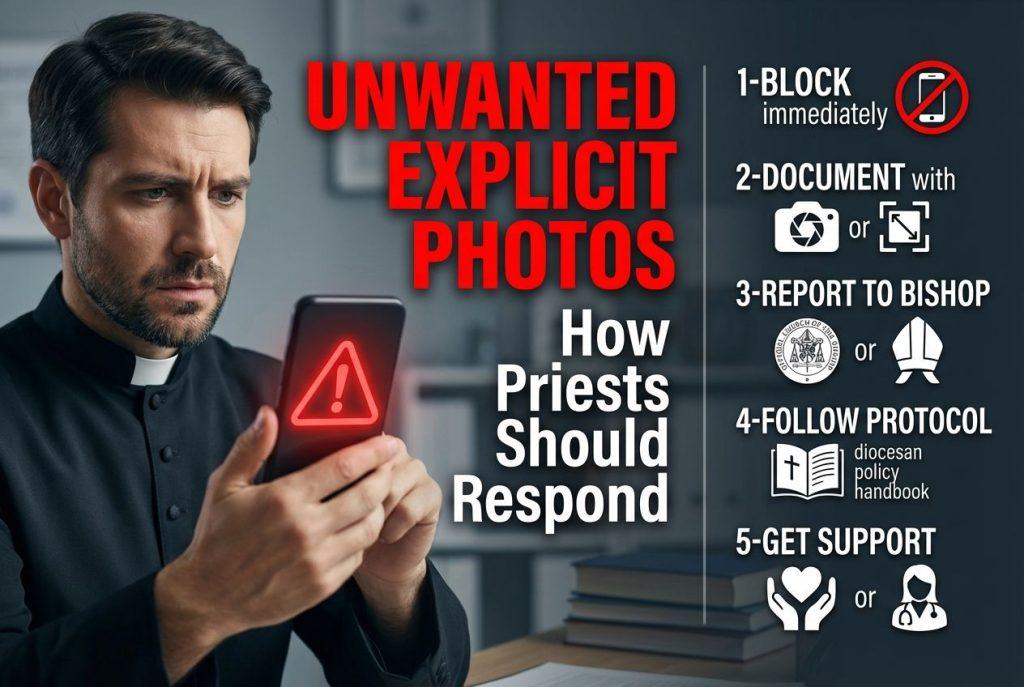
Priests need concrete guidance on how to handle situations where they receive inappropriate materials from parishioners. The first practical step is to immediately stop viewing any explicit content and delete or report it according to diocesan policies. Looking at such materials, even briefly, creates temptation and could affect the priest spiritually. Many phones and computers allow users to report and block content without viewing it fully. The priest should then respond to the sender with a clear, firm message that such behavior is inappropriate and must stop. This message should be brief and professional, avoiding any language that could be construed as encouraging continued contact. The priest should then document the incident by saving relevant communications, noting dates and times, and writing a brief account of what occurred. This documentation protects the priest should any questions arise later and provides evidence if formal action becomes necessary.
After handling the immediate situation, the priest should report the incident to his bishop or the appropriate diocesan official according to established protocols. Many dioceses have specific procedures for reporting sexual harassment or boundary violations. Following these procedures protects the priest and ensures that the situation is handled appropriately. The priest should also seek support from trusted brother priests, his spiritual director, or a counselor. Processing such experiences with trustworthy confidants helps the priest maintain his own emotional and spiritual health. He should assess whether he can continue serving as pastor to the person who sent the materials or whether reassigning that person to another priest would be advisable. This decision should be made in consultation with diocesan officials and based on factors including the sender’s response, the likelihood of recurrence, and the priest’s own comfort level.
Going forward, the priest should implement or strengthen practices that protect appropriate boundaries in his ministry. This might include policies about digital communication such as only accepting messages through official parish channels, not engaging in private social media messaging with parishioners, and establishing clear times when he is and is not available for communication. The priest might share these policies publicly so parishioners understand expectations and boundaries from the beginning. He should also ensure that his own digital conduct models appropriate behavior. Priests should avoid any communication or social media activity that could be misinterpreted as romantic or personal rather than pastoral. Regular self-examination and discussion with other priests about maintaining boundaries helps prevent small problems from becoming larger issues. The priest should remember that establishing and maintaining clear boundaries is not unkind but rather necessary for healthy ministry and protects everyone involved.
The Path Forward for the Church
The Catholic Church must continue developing policies, education, and support systems that address inappropriate behavior in digital communication. Dioceses should ensure that all policies regarding sexual harassment and boundary violations explicitly include digital communication and provide clear procedures for reporting and responding to such incidents. These policies should protect both clergy and laypeople while ensuring that violations are taken seriously and addressed appropriately. Regular review and updating of policies ensures that they remain relevant as technology continues evolving. Policies alone are insufficient without accompanying education and formation. Every diocese should provide regular training for clergy on maintaining appropriate boundaries, recognizing and responding to harassment, and using digital technology appropriately in ministry. Similar education should be available for laypeople through parish programs, adult faith formation, and youth ministry.
Supporting priests who face inappropriate behavior from parishioners requires creating a culture where priests feel comfortable reporting such incidents without fear of blame or inadequate response. Too often, victims of sexual harassment worry that reporting will cause them more problems than remaining silent. The Church must ensure that priests who report receiving inappropriate materials receive support, guidance, and protection rather than questioning or minimization of their experiences. Bishops and diocesan officials should respond promptly and seriously to such reports, following established protocols consistently. Brother priests should support one another by listening without judgment and helping their brothers access appropriate resources. Creating this supportive environment helps priests serve more effectively and protects the entire faith community from the damage that unaddressed boundary violations can cause.
The broader Church community must also engage in ongoing reflection about how Catholic teaching applies to rapidly changing technology. The fundamental principles of Catholic moral teaching remain constant, but their application to new situations requires careful thought and clear articulation. Church leaders should provide regular teaching that helps Catholics understand how to live their faith in an increasingly digital world. This teaching should address not only sexual ethics but also broader questions about human dignity, community, authentic communication, and the proper use of technology. Young people especially need formation that helps them develop habits of virtue in using technology rather than simply learning rules to follow. The goal is forming Catholics who understand deeply why certain behaviors violate human dignity and Christian love, not merely people who follow rules without understanding. This deeper formation creates the foundation for making good choices even when facing new situations not explicitly addressed in existing teaching.
Conclusion and Hope
The problem of Nigerian priests receiving unwanted explicit images from parishioners, while serious and distressing, can be addressed through faithful application of Catholic teaching and pastoral care. The Church possesses rich resources for understanding human dignity, sexuality, appropriate relationships, and the path to virtue. When these teachings are shared clearly and applied consistently, they provide guidance for both preventing such incidents and responding appropriately when they occur. Priests who face this situation should know that they are not alone, that the behavior directed at them is genuinely wrong and harmful, and that they have every right to establish firm boundaries to protect themselves and their ministry. Laypeople who have sent such materials should know that repentance and change are always possible through God’s grace. The path may be difficult, but the Church offers the sacraments, spiritual direction, community support, and clear teaching to help everyone grow in holiness.
Building a Catholic culture that respects appropriate boundaries and supports virtue requires commitment from everyone in the faith community. Bishops and priests must provide clear teaching and good example. Laypeople must take seriously their responsibility to form their consciences according to Church teaching and to support their priests in living their vocations faithfully. Parents must educate their children about Catholic sexual ethics and appropriate use of technology. Youth ministers and educators must address these issues honestly and provide young people with the tools they need to live virtuously in a digital world. Everyone must be willing to have sometimes difficult conversations about behavior that violates Catholic principles and to offer both correction and support to those who struggle. This work is challenging but essential for the health and holiness of the Church.
Ultimately, addressing inappropriate behavior toward priests is part of the broader call to live the Gospel fully in every aspect of our lives. The same Jesus who calls us to love one another also calls us to purity, modesty, respect for appropriate boundaries, and protection of human dignity. The same Holy Spirit who empowers us to resist temptation also gives us the grace to change destructive patterns and grow in virtue. The same Church that clearly teaches moral truth also offers mercy, forgiveness, and pathways to healing for those who have fallen short. Catholics confronting the challenges of living faithfully in the digital age can trust that they do not face these challenges alone. The entire tradition of Catholic wisdom, the support of the faith community, the power of the sacraments, and most importantly the grace of God are available to help everyone live according to their dignity as children of God. With commitment, education, support, and reliance on divine grace, both priests and laypeople can maintain the appropriate boundaries that allow ministry to flourish and relationships to reflect the love of Christ.
Disclaimer: This article presents Catholic teaching for educational purposes. For official Church teaching, consult the Catechism and magisterial documents. For personal spiritual guidance, consult your parish priest or spiritual director. Questions? Contact editor@catholicshare.com
Sign up for our Exclusive Newsletter
- 📌 Add CatholicShare as a Preferred Source on Google
- 🎁 Join us on Patreon for Premium Content
- 🎧 Check Out These Catholic Audiobooks
- 📿 Get Your FREE Rosary Book
- 📱 Follow Us on Flipboard
-

Recommended Catholic Books
Discover hidden wisdom in Catholic books — invaluable guides enriching faith and satisfying curiosity. #CommissionsEarned
- The Early Church Was the Catholic Church
- The Case for Catholicism - Answers to Classic and Contemporary Protestant Objections
- Meeting the Protestant Challenge: How to Answer 50 Biblical Objections to Catholic Beliefs
As an Amazon Associate, I earn from qualifying purchases. Thank you for your support.