
Brief Overview
- The Catholic Church recognizes that laypeople can bless their own homes as part of their baptismal priesthood.
- House blessings are sacramentals that sanctify ordinary life and invoke God’s protection through prayer and sacred signs.
- The Church provides official rituals in the Book of Blessings that families can use without requiring a priest or deacon.
- Holy water serves as the primary sacramental used in home blessings to recall baptism and invoke divine grace.
- The Epiphany season offers a special tradition for blessing homes through the chalking of doors with sacred inscriptions.
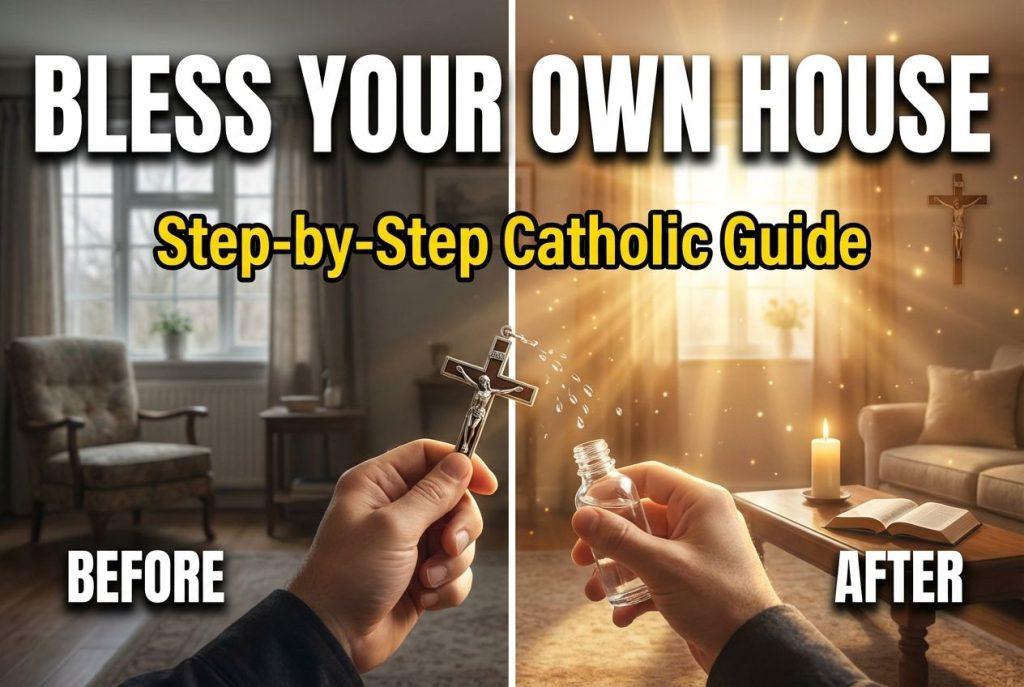
- A proper house blessing includes reading Scripture, offering prayers of intercession, and sprinkling holy water in each room.
Understanding the Catholic Foundation for Home Blessings
The Catholic Church has maintained a rich tradition of blessing homes since the earliest centuries of Christianity. This practice finds its roots in the understanding that every baptized person participates in the common priesthood of the faithful. The Church teaches that through baptism, all Christians are called to be a blessing and to bless others. This fundamental principle allows families to sanctify their homes without always needing to wait for a priest or deacon to become available. The Catechism addresses this reality when it discusses sacramentals and their purpose in Christian life. These sacred signs bear resemblance to the sacraments and help prepare believers to receive grace more fully. The Church instituted sacramentals to sanctify various circumstances in Christian life, including the blessing of places where families live and gather. Unlike sacraments, which confer grace directly, sacramentals work through the prayers of the Church and the faith of those who use them. The blessing of a home falls into this category of sacred actions that render ordinary occasions holy. When families bless their homes, they acknowledge God’s sovereignty over their dwelling and invite His presence into their daily lives. This act transforms a house into a domestic church where faith is nurtured and passed on to the next generation. The practice also fulfills the biblical mandate to make every aspect of life sacred and ordered toward God. Catholic teaching emphasizes that the home serves as the first school of Christian life, where children learn to pray and experience God’s love through their parents.
The authority for laypeople to bless their homes comes from the Book of Blessings, which the Church promulgated to guide the faithful in these sacred actions. This official liturgical book contains specific rites adapted for use by priests, deacons, and lay ministers. The introduction to the blessing of homes explicitly states that laypeople may use these prayers and rituals, following the adaptations designated for lay ministers. This permission reflects the Church’s recognition that families need not remain passive recipients of blessings but can actively participate in sanctifying their living spaces. The Book of Blessings provides two main contexts for blessing homes. The first applies to the blessing of a new home, which marks the occasion of a family moving into a residence. The second applies to the seasonal blessing of homes during Christmas or Easter, particularly during the Epiphany season. Both forms maintain the essential structure of Catholic liturgical prayer while remaining accessible to families without theological training. The rites follow a pattern familiar to Catholics who regularly attend Mass, including opening prayers, Scripture readings, intercessions, and a concluding blessing. This structure helps families understand that their home blessing connects to the broader liturgical life of the Church. The prayers themselves invoke God’s protection, peace, and presence while asking Him to make the home a place of love, hospitality, and Christian witness. By following these official texts, families ensure their blessing aligns with Catholic tradition rather than introducing innovations that might dilute the meaning of the sacramental.
The Theology Behind Blessing Your Home
Catholic theology views the home as far more than a physical structure where people eat and sleep. The Church refers to the Christian family as the domestic church, a concept rooted in Scripture and developed through centuries of theological reflection. This designation appears in Church documents going back to the Second Vatican Council and receives extensive treatment in the Catechism. When the Church calls the family a domestic church, it acknowledges that the home serves as the primary place where faith is lived, taught, and celebrated. Parents function as the first teachers of religion to their children, introducing them to prayer and the practice of Christian virtues. The family gathers for meals, celebrates feasts, observes Sundays, and marks significant moments with prayer and blessing. These domestic practices mirror the larger Church’s liturgical life and participate in the same mission of salvation. The concept of domestic church does not diminish the importance of parish life or suggest families can replace participation in Sunday Mass. Rather, it emphasizes how family life extends and complements what happens in the parish church. Families bring the faith home from Mass and allow it to permeate their daily routines, conversations, and decisions. The home becomes a sanctuary where God dwells among His people, just as He promised to be present wherever two or three gather in His name. This theological understanding gives profound meaning to the act of blessing a home.
When families bless their homes, they perform an action with both vertical and horizontal dimensions. Vertically, they acknowledge God as the source of all blessings and the ultimate owner of their property. They recognize that their home is a gift from divine providence rather than merely the result of their labor or financial planning. This acknowledgment cultivates gratitude and humility while reminding family members that material possessions exist to serve spiritual purposes. The blessing also invokes God’s ongoing protection over the household, asking Him to guard residents from spiritual and physical dangers. Horizontally, the blessing commits the family to use their home in ways that honor God and serve others. It represents a pledge to practice hospitality, to resolve conflicts with forgiveness, and to make the home a place where Christian love is visible. The blessed home becomes a witness to neighbors and visitors, demonstrating what family life looks like when ordered toward God. This horizontal dimension also includes the family’s commitment to support one another in living the faith. Parents promise to create an environment where children can grow in virtue and knowledge of God. Children, in turn, learn to respect the sacred character of their home and contribute to its peaceful atmosphere. The blessing thus establishes the home as a place set apart for holy purposes while remaining fully engaged with the world around it.
Preparing to Bless Your Home
Successful preparation for a house blessing begins with gathering the necessary materials and understanding the ritual’s structure. The most important item is holy water, which you can obtain from your parish church. Most Catholic churches maintain a font of holy water near the entrance where parishioners can fill small bottles or containers at any time. Some parishes provide holy water in the narthex specifically for people to take home. If you cannot find holy water readily available, ask a priest or parish staff member where to obtain it. You will also need a container to hold the holy water during the blessing, which can be a simple bowl or cup. Some families use a special aspergillum, which is a liturgical instrument designed for sprinkling holy water, but this is not necessary. A small branch, such as rosemary or evergreen, can serve the same purpose and adds a natural element to the blessing. Additionally, you should have a Bible or printed copies of the Scripture readings required by the ritual. The Book of Blessings specifies particular biblical passages appropriate for home blessings, though families have some flexibility in their selection. A crucifix is also recommended, as it serves as the central Christian symbol and reminds the family of Christ’s presence in their home. Some families choose to enthrone the crucifix or a religious image during the blessing ceremony, giving it a permanent place of honor in their home.
Beyond the physical materials, spiritual preparation matters greatly for those who will participate in the blessing. The ritual works most effectively when family members approach it with faith, reverence, and understanding. Parents should explain to their children what the blessing means and why the family is performing it. This explanation need not be lengthy or complicated but should communicate that the family is asking God to make their home holy and protect everyone who lives there. If children are old enough, involving them in the preparations helps them appreciate the significance of what will happen. They might help fill the holy water container, select where to place the crucifix, or choose hymns to sing during the blessing. Family members should also prepare their hearts through prayer and, if possible, by receiving the sacrament of Reconciliation beforehand. The Catechism teaches that sacramentals produce better effects in people who approach them with proper dispositions. While God’s grace is not limited by human worthiness, our openness to that grace makes a real difference in how sacramentals affect us. Families might spend time in the days before the blessing praying for their home and reflecting on what it means to live as a domestic church. This preparation transforms the blessing from a mere ceremony into a genuine encounter with God’s love and power.
The Basic Structure of a Home Blessing
The official rite for blessing a home follows a clear structure that families can easily adapt to their circumstances while maintaining the essential elements. The blessing begins with the Sign of the Cross, which should be made by all present. The person leading the blessing then offers a greeting that acknowledges God’s presence among the gathered family. If a layperson leads the blessing, the Book of Blessings provides a specific greeting that differs slightly from what a priest or deacon would say. This greeting typically invokes God’s name and expresses the family’s desire to live in harmony as followers of Christ. After the greeting comes an introduction that explains the purpose of the gathering. The leader reminds everyone that Christ made His home with us through the Incarnation and that the family now invites Him to dwell in their particular home. This introduction can be simple and brief but should help focus everyone’s attention on the sacred action about to take place. The language should be accessible to all family members, including children, while maintaining the dignity appropriate to a liturgical action. Some families choose to process through the house together during this introduction, moving from room to room, though this is optional. Others gather in the main living area or dining room for the entire ceremony.
The Word of God forms the heart of any Catholic liturgical action, and the home blessing is no exception. At least one Scripture reading should be proclaimed, with several options provided in the Book of Blessings. The Gospel according to Luke offers particularly appropriate passages for home blessings. One common selection recounts how Jesus visited the house of Zacchaeus and declared that salvation had come to that household. This passage reminds families that Christ desires to enter their homes and transform them through His presence. Another option comes from Luke’s account of Jesus visiting the home of Simon Peter, where He healed Simon’s mother-in-law. This passage emphasizes Christ’s power to bring healing and wholeness to our domestic spaces. After the reading, the leader or another family member may offer a brief reflection on the Scripture passage, connecting it to the family’s own situation and hopes for their home. This reflection need not be long or scholarly but should help everyone understand how God’s Word speaks to their lives. Following the reflection, the family prays the intercessions, which are petitions asking for God’s help in various aspects of family life. The Book of Blessings provides sample intercessions that cover needs such as making the home a place of love, protecting it from harm, and using it to serve others. Families may adapt these intercessions or add their own to reflect particular concerns or circumstances.
Performing the Blessing Prayer
The blessing prayer itself represents the climax of the entire ceremony and requires careful attention to its wording and meaning. If a layperson leads the blessing, they should keep their hands joined while praying rather than extending them as a priest or deacon would do. This distinction matters because it preserves the proper distinction between ordained and lay ministry while still allowing laypeople to lead the blessing. The prayer text invokes God’s presence and asks Him to bless the home and all who live in it. The words typically reference how Christ accepted hospitality during His earthly life and ask Him to become a permanent guest in this household. The prayer asks God to make the home a shelter when family members are present and a companion when they are away. It petitions for protection against dangers both physical and spiritual. The prayer also commits the family to practices that honor God, such as hospitality toward visitors, love for one another, and faithful adherence to Christian teaching. The specific wording varies slightly depending on whether the blessing occurs during the Christmas season, Easter season, or at another time of year. The Book of Blessings provides different prayers for these various contexts, each emphasizing themes appropriate to the liturgical season. Families should use the prayer text that corresponds to the time when they perform their blessing.
After the main blessing prayer, the sprinkling with holy water takes place, marking each room as sacred space. The leader takes the container of holy water and moves through the house, room by room, sprinkling holy water in each space. While sprinkling the water, the leader may say a brief prayer appropriate to each room’s purpose. For example, in the bedroom, one might pray that God grant peaceful rest and protection during sleep. In the kitchen, the prayer might ask for God’s blessing on the meals prepared there and the conversations shared around the table. In children’s rooms, parents might pray for their growth in wisdom and virtue. These room-specific prayers are not required by the official rite but many families find them meaningful. The sprinkling of holy water serves multiple purposes in Catholic tradition. It recalls our baptism, when we were claimed for Christ and incorporated into His Church. It invokes God’s blessing and protection, asking Him to drive away any evil influences and fill the space with His grace. The water also symbolizes purification, representing the family’s desire to keep their home free from sin and discord. As each room receives the sprinkling, family members should make the Sign of the Cross, joining their personal prayers to the action taking place. This participation helps everyone present engage actively with the blessing rather than simply observing it.
Seasonal Traditions for Home Blessings
The Epiphany season provides a particularly rich tradition for blessing Catholic homes, one that has been practiced for centuries across many cultures. The feast of the Epiphany celebrates how the Magi, guided by a star, came to worship the infant Jesus in Bethlehem. This event reveals Christ to the nations and reminds believers that He came as Savior for all people. The tradition of blessing homes at Epiphany connects to this theme of Christ’s manifestation and His desire to dwell among His people. Many parishes bless chalk at the Masses celebrated for Epiphany, though families can also ask a priest to bless chalk at another time. Using blessed chalk, family members write an inscription above their front door that asks Christ to bless their home. The inscription follows a specific pattern, using crosses and letters to convey multiple layers of meaning. The current year is divided in half, with the first two digits at the beginning and the last two at the end. Between these numbers appear the letters C, M, and B, separated by crosses. For example, in 2026, the inscription would read 20+C+M+B+26. The letters represent both the traditional names of the three Magi and a Latin phrase asking for blessing.
The letters C, M, and B stand for Caspar, Melchior, and Balthasar, the names traditionally assigned to the three wise men who visited Jesus. These names do not appear in Scripture but developed through Christian tradition and piety over the centuries. The same letters also abbreviate the Latin phrase Christus Mansionem Benedicat, which means May Christ bless this house. This dual meaning enriches the tradition, connecting the historical visit of the Magi to the ongoing reality of Christ’s presence in our homes. The crosses between the letters represent the cross of Christ, through which all blessings come to us. They also serve as a public witness to neighbors and visitors that this household follows Christ and seeks His blessing. Some families add decorative elements to the inscription, though the basic format should be preserved. After writing the inscription, families typically gather at the door to pray the blessing of the home provided by the United States Conference of Catholic Bishops. This prayer includes Scripture reading, intercessions, and a final blessing that asks Christ to dwell with the family, keep them from harm, and unite them in mind and heart. The chalked inscription remains above the door throughout the year, serving as a daily reminder of the family’s commitment to Christ and their petition for His blessing.
Maintaining a Blessed Home Throughout the Year
Blessing your home is not a one-time event but rather establishes a commitment to ongoing spiritual practices that keep the home sacred. The blessing creates a foundation that requires regular maintenance through prayer, virtue, and attention to the home’s spiritual atmosphere. Catholic tradition offers numerous practices that help families sustain the grace received through their home blessing. Establishing a family altar or prayer corner provides a focal point for daily prayer and reminds everyone of God’s presence. This space might include a crucifix, sacred images, blessed candles, and a Bible. Families can gather at this altar for morning or evening prayer, using traditional Catholic prayers or more spontaneous forms of prayer. Some families pray the Rosary together regularly, while others use the Liturgy of the Hours adapted for family use. The key is establishing a rhythm of prayer that fits your family’s circumstances and that everyone can participate in according to their age and ability. Consistency matters more than the length or complexity of the prayers. Even brief daily prayer together reinforces the understanding that your home is a place where God is honored and His will is sought.
Keeping holy water available in your home allows for frequent renewal of the blessing you performed. Many Catholic families maintain a small holy water font near their front door, similar to the fonts found in church entrances. Family members can bless themselves with this water when leaving or entering the home, making the Sign of the Cross while praying for God’s protection. This practice recalls baptism and reinforces your identity as a child of God. Holy water can also be sprinkled through the house during times of particular need or challenge, such as when a family member is ill or when conflicts arise. The use of sacramentals like blessed candles, sacred images, and religious medals throughout the home creates a physical environment that supports spiritual growth. These objects serve as visual reminders of spiritual realities and help direct thoughts and conversations toward God. However, families should avoid treating these objects superstitiously, as if they work like magic charms. Their effectiveness depends on faith and prayer rather than on any inherent power in the objects themselves. The Catechism teaches that sacramentals prepare us to receive grace and dispose us to cooperate with it, but they require our active participation to be fully effective. Displaying these sacred objects with reverence, keeping them clean and properly maintained, and using them in prayer demonstrates the respect they deserve as blessed items set apart for holy purposes.
Special Circumstances for Home Blessings
Certain situations call for blessing a home even if you have blessed it before. Moving into a new residence clearly requires a fresh blessing, as you are claiming this particular space for Christ and establishing it as your domestic church. The transition to a new home often brings both excitement and anxiety, making it an ideal time to invoke God’s protection and guidance. Many families choose to bless their new home on the day they move in or shortly thereafter, before they become too busy with the tasks of settling in. This timing emphasizes that inviting Christ into your home takes priority over arranging furniture or decorating. If possible, perform the blessing while the house is still empty or nearly empty, allowing you to process through each room without obstruction. This approach also prevents the blessing from becoming an afterthought that gets postponed indefinitely. Some families repeat the blessing after major renovations that significantly alter the home’s structure or purpose. For example, finishing a basement to create additional living space or converting a room to serve a different function might occasion a fresh blessing. This practice acknowledges that physical changes to our environment can affect its spiritual atmosphere and that we want God’s blessing on these new or modified spaces.
Difficult circumstances sometimes require blessing your home to restore peace and spiritual health. If your home has been the site of serious sin, violence, or occult activity, a blessing helps reclaim the space for Christ and drive away evil influences. In such cases, families should seek guidance from their parish priest, who can offer advice on appropriate steps to take. Some situations may require more than a simple home blessing. If there is reason to believe demonic activity has occurred, only a priest with permission from the bishop can perform an exorcism. However, the vast majority of homes simply need the regular blessing that laypeople can perform, perhaps with extra attention to prayer and spiritual renewal. After the blessing, the family should commit to regular spiritual practices that maintain the home’s sacred character. This might include more frequent use of holy water, daily family prayer, regular confession for all family members, and careful attention to what enters the home through media and entertainment. The goal is not to create a fortress isolated from the world but rather to establish a home that transforms the world around it through witness and love. When struggles arise within the family, which inevitably happens, addressing them promptly through prayer, forgiveness, and sacramental grace prevents them from poisoning the home’s spiritual atmosphere. The blessed home becomes a place of healing and reconciliation rather than a place where wounds fester.
The Role of Holy Objects in Your Blessed Home
Sacred images and objects play a significant role in maintaining your home’s identity as a blessed space dedicated to God. The crucifix should hold the place of honor in a Catholic home, as it represents the central mystery of our faith and the source of all blessing. Many families display a crucifix in each bedroom, in the main living area, and sometimes in other rooms as well. Traditionally, Catholics would kiss the crucifix before bed and upon rising as a way of offering the day to God. The crucifix reminds family members of Christ’s love and sacrifice while also serving as a protection against evil. Images of the Blessed Virgin Mary and the saints provide models of holiness and remind us that we belong to a communion that extends beyond earthly life. These images should be chosen thoughtfully and displayed with reverence rather than treated as mere decoration. The saints depicted might include your family members’ patron saints, saints you have particular devotion to, or saints connected to needs your family faces. For example, a family struggling financially might display an image of Saint Joseph the Worker, while a family with students might honor Saint Thomas Aquinas, patron of students and schools. These images become points of prayer and conversation, helping children learn about the saints and ask for their intercession.
Blessed candles offer another way to maintain your home’s sacred character and can be used during family prayer or in times of special need. The Church blesses candles for various purposes, including Candlemas candles blessed on the feast of the Presentation, which traditionally are lit during storms or when someone is dying. Advent candles mark the liturgical season of preparation for Christmas, while Easter candles celebrate the Resurrection and the light of Christ. Families might keep blessed candles in their prayer corner, lighting them during family prayer to create a sense of sacred time and space. The soft light of candles also creates an atmosphere conducive to prayer and reflection, drawing people away from electronic distractions. However, families must always use candles safely, keeping them away from flammable materials and never leaving them burning unattended. The reverence we show toward blessed objects includes using them responsibly so they do not cause harm. Religious medals offer personal protection and remind wearers of their faith commitment. Many Catholic families give blessed medals to children for First Communion or Confirmation, establishing a practice of wearing them regularly. Some families bury a Saint Benedict medal in their yard or place one above doors as a protection against evil. While these practices have no magical effect, they express faith in God’s protection and the intercession of the saints.
Teaching Children About Your Blessed Home
Children learn most effectively through experience and repetition, making it essential to help them understand what it means to live in a blessed home. Begin by explaining in age-appropriate language that your house is special because you have asked God to protect it and fill it with His love. Young children can grasp this concept through simple comparisons, such as explaining that just as they invite friends to their house, the family has invited Jesus to live with them. As children mature, you can introduce more theological depth, explaining concepts like the domestic church and the sacramental nature of the blessing. Involve children in maintaining the home’s sacred character through appropriate responsibilities. Even young children can help refill holy water fonts, dust sacred images, or place flowers near a statue of Mary. Older children might participate more fully in family prayer, taking turns reading Scripture or leading the prayers. These practices form habits that children will likely carry into their own homes as adults. They also create positive associations between faith and family life, helping children see that Catholicism is not confined to Sunday Mass but permeates every aspect of life.
Regular family discussion about the meaning of your blessed home reinforces these lessons and allows children to ask questions. You might talk about how we show respect for our blessed home by keeping it clean, speaking kindly to one another, and choosing entertainment that honors God. These conversations need not be heavy or preachy but should occur naturally as part of family life. When conflicts arise, parents can reference the home’s blessed status, reminding everyone that this is a place where Christ dwells and where we treat each other with His love. When children misbehave or family members argue, these moments become opportunities to practice forgiveness and reconciliation, showing that a blessed home is not one where no problems occur but one where problems are resolved in Christian ways. As children approach adolescence, they may question or resist religious practices that seemed natural when they were younger. Parents should respond with patience and continued example rather than coercion, trusting that the foundation laid in childhood will bear fruit even if it seems dormant for a season. The goal is to raise children who choose to bless their own homes as adults because they have experienced the peace and grace that flow from this practice.
Common Questions About Blessing Your Own Home
Many Catholics wonder whether a blessing performed by a layperson has the same effect as one performed by a priest. The Church clearly states that laypeople can bless their homes using the rites provided in the Book of Blessings. These blessings are authentic sacramentals that invoke God’s protection and grace. However, the Church also recognizes that certain blessings require ordained ministry because they relate more closely to the sacramental life of the Church. The blessing of a home by a layperson differs from one performed by a priest primarily in the prayer texts used and in the gesture of extending hands, which lay ministers do not do. The essential effect remains the same, asking God to bless the home and all who live there. Some families choose to have a priest bless their home initially and then renew that blessing themselves at Epiphany or other appropriate times. This practice honors both the ordained priesthood and the common priesthood of the faithful without suggesting that lay blessings are somehow deficient. Priests often have busy schedules and cannot accommodate every request for home blessings, making it necessary and appropriate for families to perform these blessings themselves using the approved rites.
Another common question concerns how often one should bless a home. The Church does not mandate any particular frequency, leaving this to family discretion. Many Catholic families bless their homes annually during the Epiphany season, making this a regular part of their liturgical year observance. Others bless their homes only when moving to a new residence or after significant events like major renovations. Some families sprinkle holy water through their homes regularly, perhaps weekly or monthly, as a way of renewing the blessing without performing the full ritual each time. The appropriate frequency depends on your family’s circumstances, devotion, and need. What matters most is that the blessing reflects genuine faith rather than superstition and that it leads to ongoing efforts to make your home a place where God is honored. A home blessed once with deep faith and maintained through prayer and virtue receives more spiritual benefit than one blessed frequently but without corresponding efforts to live according to the blessing’s meaning. Families should approach this question in conversation with their spiritual director or parish priest, who can offer guidance based on knowledge of the family’s particular situation and needs.
Connecting Your Home Blessing to Parish Life
While families can and should bless their own homes, this practice should connect to the broader life of the parish rather than replacing it. The domestic church exists in relationship to the parish church, not in competition with it. Families might ask their pastor to bless chalk at Epiphany Masses so they have blessed chalk for their door inscription. This practice links the home blessing to the liturgical celebration of the feast and reminds families that their domestic practices flow from the Church’s public worship. Attending Mass regularly as a family demonstrates that the blessed home is oriented toward participation in the Eucharistic sacrifice, which remains the source and summit of Christian life. Parents should help children understand that what they practice at home prepares them for fuller participation in the Mass and that what they receive at Mass should influence how they live at home. This reciprocal relationship between home and parish strengthens both and helps children develop an integrated faith rather than seeing religion as something that only happens at church. Families might also participate in parish programs that support domestic church practices, such as parent education sessions, family prayer resources, or blessing ceremonies for homes.
Some parishes organize group home blessings during the Epiphany season, with a priest or deacon visiting multiple homes in a neighborhood on the same day. Families who participate in these communal blessings receive the grace of having their home blessed by ordained ministry while also building relationships with Catholic neighbors. These events can include shared meals or refreshments, creating community among parishioners who might not otherwise know each other well. Even families who bless their homes privately can report this to their parish, perhaps through a simple note to the pastor or a mention in casual conversation with parish staff. This communication helps the parish understand how families are living their faith at home and allows pastoral leaders to offer encouragement and support. It also witnesses to other parishioners that blessing one’s home is a normal Catholic practice rather than something unusual or reserved for especially devout families. As more families embrace the practice of blessing their homes, it can spread through the parish community, strengthening the domestic church throughout the entire parish. This organic growth reflects how Catholic tradition passes from generation to generation and from family to family through example and shared experience.
Overcoming Obstacles to Blessing Your Home
Some families hesitate to bless their homes because they feel unworthy or insufficiently holy to perform such a sacred action. This hesitation reflects a good instinct to approach holy things with reverence but can become an obstacle if it prevents families from receiving the graces God wants to give. The Church established the rites for lay blessings precisely because she recognizes that ordinary Catholic families, with all their imperfections, need God’s blessing on their homes. You do not need to be a saint or have perfect family harmony before blessing your home. In fact, the blessing itself can help your family grow in holiness and peace by focusing everyone’s attention on God’s presence and calling. If serious sin has created obstacles in family relationships, addressing these through the sacrament of Reconciliation before blessing your home makes sense. However, do not use the pursuit of perfection as an excuse for indefinite delay. God meets us where we are and works with us in our current circumstances, not only after we have achieved some level of spiritual advancement. The blessing expresses your family’s desire to do better and invites God to help you, making it appropriate for families at any stage of their spiritual growth.
Practical obstacles like lack of time or uncertainty about how to perform the ritual can be overcome through planning and simplification. The full blessing rite as presented in the Book of Blessings can be adapted to fit your family’s situation. If you cannot gather everyone at once, perform the blessing with whoever is available and then explain it to absent family members later. If the full ritual feels too long or complex, use a shorter version that includes the essential elements: opening prayer, Scripture reading, main blessing prayer, and sprinkling with holy water. The Church provides both longer and shorter forms of most blessings, recognizing that different circumstances require different approaches. Some families feel self-conscious about religious practices that seem unusual in contemporary culture. If this describes your situation, remember that blessing your home is a private family activity that does not require public explanation or defense. The chalk inscription on your door may prompt questions from neighbors or visitors, giving you an opportunity to explain your faith if you wish. However, you can also simply perform the interior blessing without the exterior sign if that suits your circumstances better. The primary goal is inviting God’s blessing into your home, which you can accomplish through various means without following any single prescribed approach.
The Fruits of a Blessed Home
Families who regularly bless their homes and maintain them as sacred spaces often report tangible benefits in their family life and spiritual growth. These benefits do not occur automatically or magically but flow from the combination of God’s grace and the family’s cooperation with that grace. A home that has been blessed and maintained through prayer tends to have a more peaceful atmosphere, with family members more conscious of God’s presence in their interactions. This awareness often leads to greater patience, more frequent forgiveness, and a stronger commitment to resolving conflicts charitably. The physical signs of the blessing, such as holy water fonts and sacred images, serve as constant reminders to moderate speech and behavior. When tempted to speak harshly or act selfishly, family members may notice a crucifix or blessed image that prompts them to reconsider their choices. These prompts help form conscience and build virtue gradually through repeated small decisions. Children raised in homes where blessing and prayer are normal practices often develop a natural ease with religious expressions that serves them well throughout life. They learn to integrate faith with daily activities rather than compartmentalizing religion as something separate from ordinary life.
The blessed home also provides protection against spiritual dangers, though not in a mechanical or superstitious way. When families invite God into their homes and regularly renew that invitation through prayer and sacramentals, they create an atmosphere where evil has less opportunity to take root. This protection becomes especially important in contemporary culture, where media and technology can introduce harmful influences into homes without parents even realizing it. A family committed to maintaining their home’s sacred character will more naturally evaluate entertainment choices, online activities, and social relationships according to Christian standards. The blessing reminds parents of their responsibility to guard what enters their home and gives them confidence to establish appropriate boundaries. This vigilance does not mean creating a bunker isolated from the world but rather developing discernment about what helps or hinders spiritual growth. The blessed home becomes a place of refuge where family members can retreat from worldly pressures, recharge spiritually, and prepare to engage the world from a position of faith strength. This refuge quality helps everyone in the family maintain their Catholic identity even when surrounded by secular influences at work, school, or in social settings.
Conclusion and Encouragement
Blessing your own home represents an accessible way for every Catholic family to live their baptismal priesthood and establish their household as a domestic church. The Church provides clear guidance through the Book of Blessings, making this practice available to families regardless of their theological education or spiritual development. You do not need special training or permission beyond what the Church already grants to all baptized persons through the published rites. The blessing requires minimal materials, takes a modest amount of time, and can be adapted to various family circumstances and needs. What matters most is approaching the blessing with faith, reverence, and a sincere desire to honor God in your home. The act itself transforms your understanding of your living space from merely functional rooms to sacred places where God dwells among His people. This transformation affects how you treat your home, how family members interact with one another, and how you extend hospitality to visitors. The blessed home witnesses to the reality that faith should permeate every dimension of life rather than being confined to church buildings or formal religious activities. By blessing your home, you claim your family’s identity as part of the Church and commit to raising children who know God’s love through daily experience.
Begin today by gathering the materials needed for a home blessing and setting a date when your family can perform the ritual together. If obtaining holy water requires a trip to your parish church, make that trip this week rather than postponing indefinitely. Read through the blessing rite from the Book of Blessings, which you can find online through various Catholic resources or at your parish office. Familiarize yourself with the structure and prayers so you can lead the blessing confidently when the time comes. Prepare your family members by explaining what will happen and why this blessing matters for your household. Invite them to participate according to their abilities, giving children appropriate roles that help them engage with the ritual. After performing the blessing, establish practices that maintain your home’s sacred character throughout the year. Regular family prayer, appropriate use of holy water, and attention to the home’s spiritual atmosphere all flow naturally from the initial blessing. Remember that your home’s blessed status does not depend on perfect behavior or constant religious fervor but on your ongoing commitment to welcome God’s presence and cooperate with His grace. When failures occur, as they inevitably will, respond with repentance and renewal rather than discouragement. The blessed home is not a place without sin but a place where sin is confronted, confessed, and overcome through God’s mercy. This lifelong process of sanctification begins with the simple act of blessing your home and inviting Christ to dwell within its walls.
Disclaimer: This article presents Catholic teaching for educational purposes. For official Church teaching, consult the Catechism and magisterial documents. For personal spiritual guidance, consult your parish priest or spiritual director. Questions? Contact editor@catholicshare.com
Sign up for our Exclusive Newsletter
- 📌 Add CatholicShare as a Preferred Source on Google
- 🎁 Join us on Patreon for Premium Content
- 🎧 Check Out These Catholic Audiobooks
- 📿 Get Your FREE Rosary Book
- 📱 Follow Us on Flipboard
-

Recommended Catholic Books
Discover hidden wisdom in Catholic books — invaluable guides enriching faith and satisfying curiosity. #CommissionsEarned
- The Early Church Was the Catholic Church
- The Case for Catholicism - Answers to Classic and Contemporary Protestant Objections
- Meeting the Protestant Challenge: How to Answer 50 Biblical Objections to Catholic Beliefs
As an Amazon Associate, I earn from qualifying purchases. Thank you for your support.