Why Do Catholics Still Use Latin in Some Sacraments?
Brief Overview Latin remains a sacred language in the Catholic Church, valued for its historical and spiritual significance. The use of Latin in sacraments like confirmation and certain…
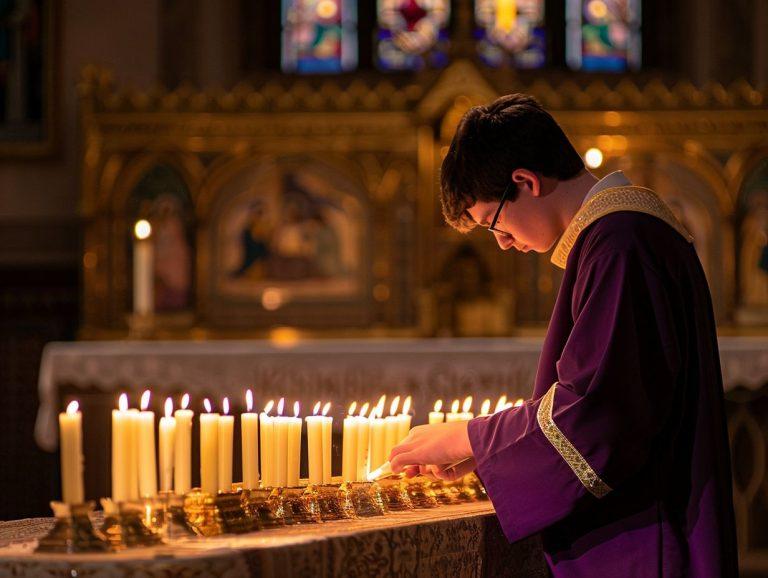
Brief Overview The minor orders and subdiaconate were hierarchical ranks in the Catholic Church, established to assist in liturgical and administrative functions before the 1970 reforms. These ranks…
Brief Overview The Catholic Church uses three holy oils—Chrism, Oil of Catechumens, and Oil of the Sick—in its sacramental life. These oils are blessed by a bishop during…
Brief Overview Acolytes in the Catholic Church are individuals who assist priests and deacons during liturgical celebrations, particularly the Mass. The role has roots in ancient Church traditions…
Brief Overview Archbishop Peter Chung Soon-taek ordained 16 new priests and 25 new deacons in Seoul’s Myeongdong Cathedral on February 1 and 2, 2024, strengthening the clergy in…
Brief Overview A religious order in the Catholic Church is a community of men or women who live according to specific rules and vows, dedicating their lives to…
Brief Overview A novitiate is a specific period in the Catholic Church during which a person prepares to enter religious life. It serves as a time of discernment,…
Brief Overview The clerical collar is a distinctive garment worn by Catholic priests and some other Christian clergy. It serves as a visible sign of their vocation and…
Brief Overview The role of deacons in the Catholic Church is rooted in scripture and tradition, serving as ordained ministers who assist in the Church’s mission. Deacons are…
Brief Overview Consecrated life in the Catholic Church is a state of life where individuals dedicate themselves fully to God through vows of poverty, chastity, and obedience. This…